Will a Cat Eventually Come Down From a Tree? Vet-Approved Tips to Help Them


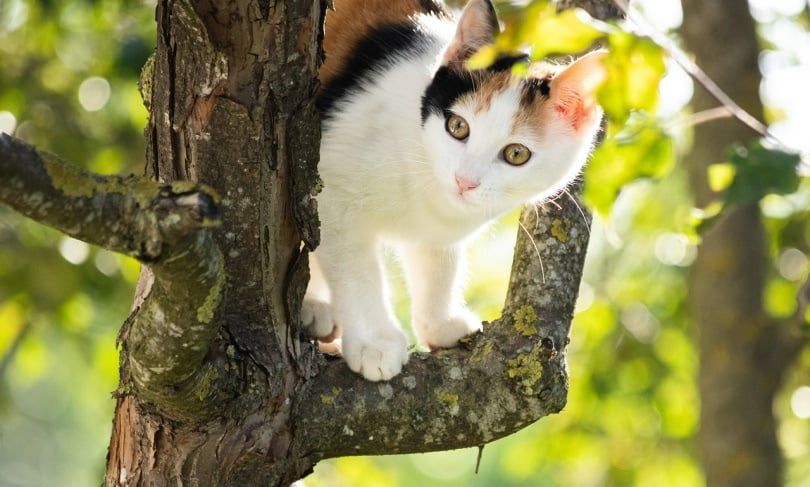
Cats are extremely athletic animals and exceptional climbers. While climbing is a great way for a cat to burn excess energy and get some exercise and enrichment, not all cats are great at coming back down from the places they climb.
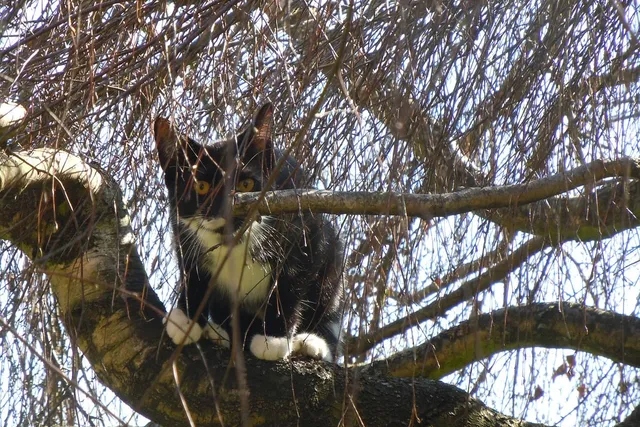
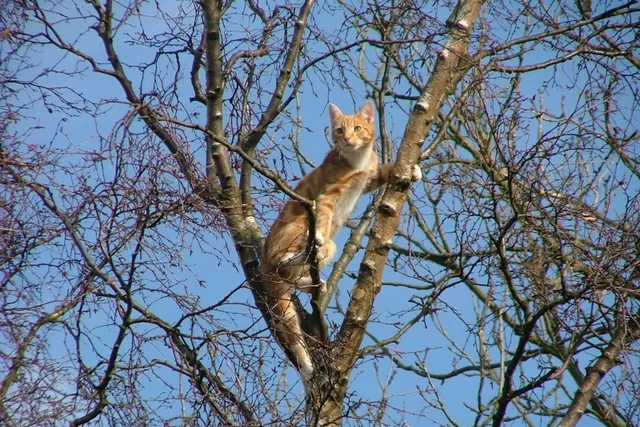
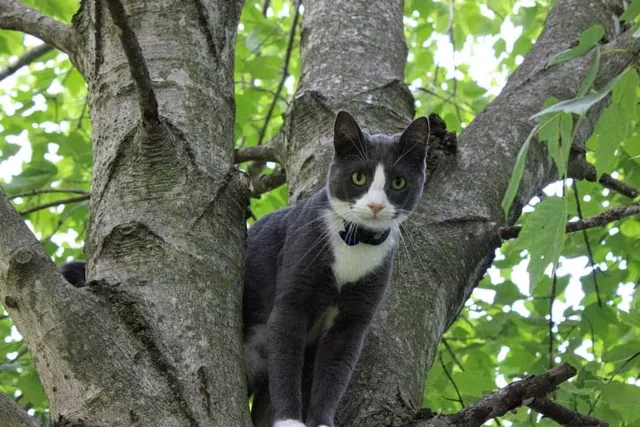
We’ve all heard anecdotes about firefighters having to be called to get cats down out of trees. Will a cat come down if you leave them long enough, though? With very few exceptions, cats will eventually come down from a tree.

Can Cats Get Themselves Down from Trees?
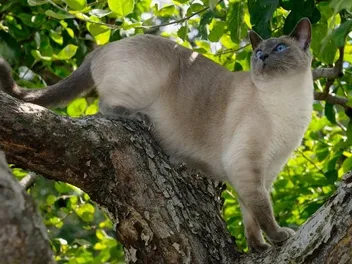
With very few exceptions, cats will get themselves down from trees. As some people like to put it, you don’t see cat skeletons in trees. That is not to say that your cat can not get stuck in a tree, though. Some cats may climb a tree in a pinch to get out of an unsafe situation without realizing they won’t be able to get back down. There’s also the possibility that you just have a scaredy cat that is afraid to try.
The primary reason that your cat may struggle to come down from a tree is how awkward it might be for them - climbing down is generally learned by cats through trial and error. Cats have curved claws that make climbing up relatively easy, but trying to climb down is more difficult because the direction of the claws is reversed. For this reason, you are likely to see your cat climb up to the favorite vantage point, but opt to jump down instead of climb down.
A Note About Collars

How to Help Your Cat Get Down
There is a belief that putting down your cat’s favorite food will help coax them down, which is true. However, the food issue is that it can attract other animals. Dogs, raccoons, foxes, and even other cats may discourage your cat from coming down.
If you’re going to use food to lure your cat down, do not leave the food unattended. Things that are unlikely to attract other animals but that may appeal to your cat include articles of your clothing, a favorite bed or pillow, and a carrier that your cat is accustomed to.
You may try sitting near the base of the tree and coaxing your cat down. If your cat isn’t responsive to this after a little while, you may try sitting quietly nearby. Your presence alone may soothe your cat enough to encourage them to come down. If the cat isn’t familiar or comfortable with you, it may be better to sit quietly where you are close enough to keep an eye on things but far enough away that your presence won’t scare the cat.
Before calling the fire department, it’s also worth a shot to place a ladder on the tree and see if your cat can use the ladder to get down. You shouldn’t, however, attempt to climb the ladder for safety reasons, as there’s no telling if the tree can support your weight. However, if you’re experienced in tree climbing and your cat is in a tree you’re familiar with, you can attempt a climb yourself.
It’s always safest to ask a relevant authority (such as the fire department) to help you retrieve your cat from a tree. In some areas, you may be able to find a rescue organization with the resources to help you get a cat down. There are even some companies that will help you get your cat down from a tree.
How Long Can My Cat Stay in a Tree?
How long your cat can stay in a tree is dependent on factors like your cat’s age and health status, as well as the weather conditions and whether your cat is primarily indoor or outdoor. If the weather is too hot or too cold for you to comfortably be outside, then the temperature is too extreme for you to leave your cat in the tree through the hottest or coldest part of the day.
Without food and water, cats can quickly enter the realm of medical complications. Dehydration can take effect in as little as a day or two, while cats will begin to enter hepatic lipidosis within just a couple of days without eating.
Generally speaking, a cat needs veterinary assistance to eat if they’ve gone without food for at least 3 days. In addition, the ordeal itself can be quite stressful for a cat, and some cats might hold their bowels while in a tree. This can culminate in complications such as constipation or urinary tract issues, which also warrant a thorough checkup from a veterinarian. It’s always best to immediately take your cat in for a vet checkup if they’ve spent over a day or two in a tree. If they’ve been in a tree for 3 days, a veterinary visit should be considered mandatory.


In Conclusion
With very few exceptions, cats will eventually come down from a tree. They may need a little bit of encouragement to come down, but it is important to not use methods that may attract other animals that will discourage your cat from coming down. Cats should not be allowed to stay in a tree during extreme weather, nor should they stay for more than a day or so since this can lead to health complications such as dehydration and hepatic lipidosis, both of which can be deadly.
If your cat is regularly getting stuck in trees, you should consider implementing interventions to prevent this from occurring. Ideally, your cat should be kept indoors and only allowed outside on a leash and harness. Having your cat spayed or neutered will decrease wandering behaviors, and a microchip will increase the chances of your cat getting back home to you if they get stuck in a tree in someone else’s yard.
Sources
Featured Image Credit: minka2507, Pixabay
Expert cat care, straight to your inbox
News, insights, and useful advice, delivered to you.

No spam — unsubscribe anytime.
By signing up, you agree to our Terms & Conditions and Privacy & Cookies Policy.
How useful was this post?
Click a star to rate. You can leave written feedback afterwards. (We read all feedback.)
Brooke Billingsley, a former veterinary assistant for nine years, became a nurse in 2013. She lives in Arkansas with her boyfriend of five years, surrounded by her beloved pets: three dogs, two cats, five fish, and two snails. Brooke has a soft spot for special needs animals, caring for a three-legged senior dog and a widely known cat with acromegaly and cerebellar hypoplasia. She has developed a keen interest in fish keeping and is always learning how to provide the best environment for her aquatic pets. In addition to her passion for animals, Brooke enjoys gardening and maintains a vegetable garden during the summer. She stays active with yoga and received her 200-hour yoga teacher certification in 2020. Brooke also hosts a podcast that delves into folklore and myth, dedicating her spare time to research and writing. She embraces the philosophy that every day is an opportunity for learning and growth, continually working to acquire new skills and knowledge.