Is Human Lotion Safe for Cats? Vet-Reviewed Safety & Toxicity Explained


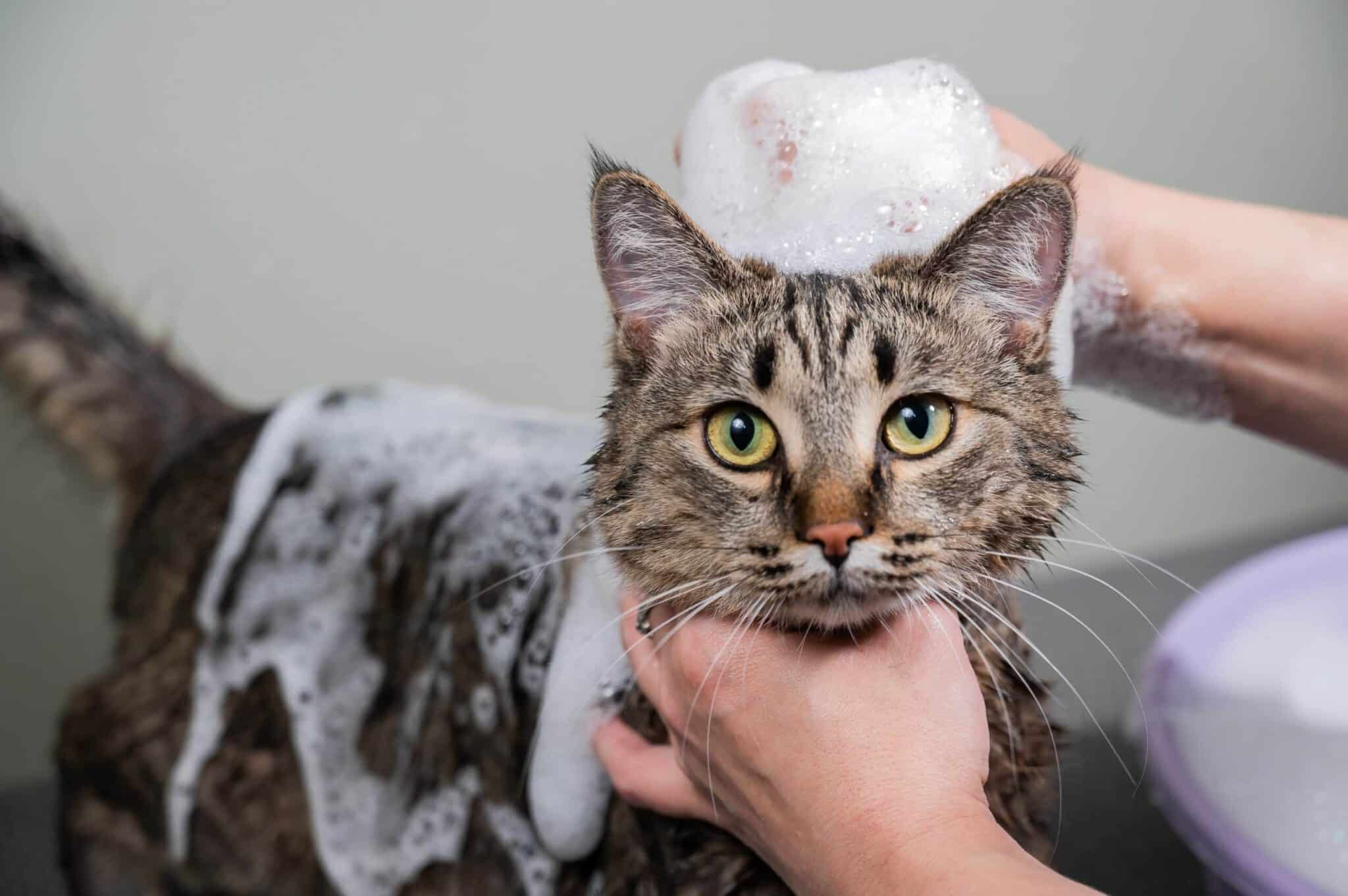
If your cat has dry skin, you may be wondering if you can apply a bit of your own lotion to ease their discomfort. As much as you want to help your cat, human lotion and other personal care items like moisturizers, shampoos, shower gels, and conditioners should never be used on cats because this can be dangerous.
In this guide, we'll explain why we shouldn't apply human lotion to our feline friends.

Why Can't I Use Human Lotion on My Cat?
There are a few reasons why using human lotion on a cat—even those labeled as natural—could do more harm than good. For one thing, products for humans are formulated to be suitable for our skin, not for a cat's skin, which is very different from ours. Human skin is thicker and has a different pH level from that of a cat 1.
This means that the ingredients and chemicals in human lotions and other personal care products like shampoos and shower gels may irritate a cat's skin, causing redness, flakiness, and soreness. If you apply human lotion to a cat's already dry skin, it could make matters much worse.
Cat skin conditions should always be checked and treated by a veterinarian, especially since there are so many potential causes—including fleas, mites, allergies, and underlying diseases— that could require a special kind of treatment. Treatments and products recommended by your vet are the only ones you should use on your cat.
What's more, applying human lotion to your cat's skin comes with the risk of toxicity due to the chemicals inside them. This occurs when the cat licks the product off and can manifest with signs like vomiting, diarrhea, and drooling. In serious cases, toxicity can be severe; this doesn’t usually happen with plain moisturizers but does occur with medicated products 2 or those containing essential oils. Please contact a vet immediately if you spot signs of toxicity.


What About Medical Ointments?
Whether or not you can use medical ointments formulated for humans on your cat depends on what they contain, so we strongly recommend running any products you're thinking of using by your vet first to make sure it's a good idea. Let's look at three common medical ointments often found in our bathroom cabinets.
Antibiotic Ointments
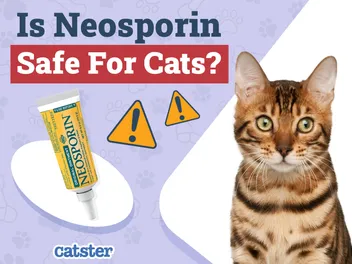
Antibiotic ointments are used to treat minor abrasions and reduce the risk of infection. Some antibiotic ointments are used in veterinary medicine. These include iodine and chlorhexidine based products, mupirocin You'll need to keep a close eye on your cat for 10–15 minutes after you apply them to make sure the product doesn't get licked off. Ingesting these products could give your cat an upset tummy. Other types of antibiotics however, are harmful to cats; neosporin for example can cause cats to have an anaphylactic reaction.
Hydrocortisone Ointments
Hydrocortisone products are formulated to soothe itchy skin and are commonplace in our medicine cupboards. However, it's not a good idea to apply hydrocortisone products formulated for humans to cats (or dogs, for that matter) because they're made differently from those formulated for cats.
As with antibiotic creams, ingestion could cause some unpleasant gastrointestinal issues, so again, it's best to speak to your vet about the best kind of treatment for your itchy kitty.
NSAIDs
NSAID (nonsteroidal anti-inflammatory drug) products are used for pain and inflammation linked to conditions like arthritis. NSAID creams formulated for humans should not be used on cats because they often contain ingredients that are toxic to cats.
Two of these toxic ingredients are diclofenac and flurbiprofen. Flurbiprofen isn't safe for cats, even in very small amounts, as it leads to kidney damage and ulceration in the stomach. Without prompt treatment, this kind of toxicity can be fatal.
Which Products Can I Use to Moisturize My Cat's Paws?

If your goal is simply to moisturize your cat's dry and cracked paws (this can be very uncomfortable for cats), there are several products you can safely use. Avoid adding extra ingredients like essential oils to these products, though, as these can be toxic to cats. Home remedies for dry paws include:
Final Thoughts
It's never a good idea to use human personal care products on cats without veterinary approval because there are so many risks attached to doing so, including toxicity, gastrointestinal upset, and skin irritation. This is why there are products—including lotions, shampoos, and medical ointments—that are formulated specifically for cats and the skin conditions they may experience.
Featured Image Credit: Morning Babe, Shutterstock
Expert cat care, straight to your inbox
News, insights, and useful advice, delivered to you.

No spam — unsubscribe anytime.
By signing up, you agree to our Terms & Conditions and Privacy & Cookies Policy.
How useful was this post?
Click a star to rate. You can leave written feedback afterwards. (We read all feedback.)
Kit Copson is a freelance writer and lifelong animal lover with a strong interest in animal welfare. She has parented various furry beings over the years and is currently a proud cat mom of two—one very chilled (unless hungry) Siamese and a skittish but adorable Domestic Shorthair—and dog mom of one—an adopted Bichon Poodle cross. When not writing about or spending time with animals, Kit can be found doodling in her sketchpad, reading, or more often than not, drinking tea.