Get

In Your Inbox

Catster is reader-supported. When you buy via links on our site, we may earn an affiliate commission at no cost to you. Learn more.

Why Is My Cat Scared of Strangers? 5 Possible Causes & Solutions (Vet-Reviewed)

Share

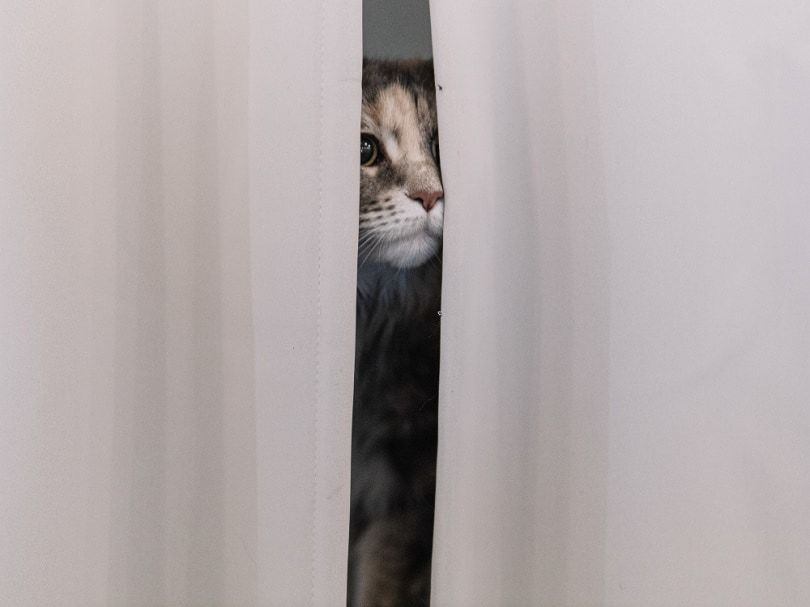
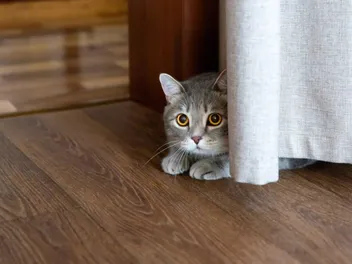
cat hiding behind the curtain

Cats are sometimes inaccurately described as unemotional, unsympathetic, and supernaturally aloof. You may have heard catchy expressions like “a dog is man’s best friend, but a cat is man’s best observer.” However, over the years, countless research has shown that felines are emotional beings that react in different ways to their environments than canines and other pets.

Understanding a feline’s behavior is complex. There’s still an element of mystery surrounding the curious animals. However, as a pet parent, you can help your cat overcome their fears regarding strangers and unannounced visits. If your cat runs away at the sight of a new face and that worries you, then your priority should be determining the cause of the behavior to ascertain whether it’s something you can help your cat with.

divider 3 paws

The 5 Reasons Your Cat Is Scared of Strangers:

1. Lack of Early Socialization

Whether you adopted a kitten or a full-grown feline, the animal’s behavior is related to their upbringing. Like most creatures, cats learn by watching their parents. Compared to dogs, cats have a briefer socialization period from 3 to around 9 weeks old. Kittens are also very impressionable from their mothers; if their mothers are timid around people, they too will likely be very shy around people.

A cat that’s older than 9 weeks can also be socialized. However, the degree of success varies with such endeavors. There’s also a degree of ethical conundrum regarding attempting to socialize an older cat. Though many rescuers often think that it might be beneficial for the cat, others argue that an older cat might be incredibly stressed if forced to interact with people against their will.

How to Remedy the Behavior:

Young cats introduced to children, neighbors, car rides, and loud noises are less likely to fear them as adults. Exposing your kitten to multiple stimuli can help them develop into a more sociable adult cat. If you have an adult that’s skittish of strangers, you can encourage them to warm up to other people in small increments, but it will probably take more time for an adult to adapt than a kitten.


2. Past Trauma

When a cat fears a person or loud noise, they may have had a previous traumatic experience that caused the behavior. For instance, a cat may have been hit, yelled at, or punished by a former owner. Though such cats may warm up to certain individuals, they may still have a tough time socializing with strangers.

When someone visits the cat’s home out of the blue, the cat may associate the event with fear and run the other way.

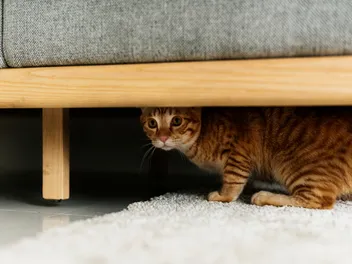
A cat hiding under a couch
Image Credit by: Rawpixel.com, Shutterstock
How to Remedy the Behavior:

Cats that have been exposed to trauma in the past require professional training and intervention from a cat behavior specialist. Their rehabilitation with people (if possible) will involve a program tailored to their specific needs, which factors in the extent of their fear.


3. Environmental Stress

Past trauma or socialization issues may not be the reasons for your cat’s behavior. If you recently moved into a new house, your cat may take several days or weeks to get used to the new environment. Until your cat feels safe in its home, they may react with fear when a stranger enters.

Cats need to explore and sniff around their new habitat. Until they know that every square inch is safe, they can experience anxiety when additional stimuli like a loud stranger disrupt the process.

How to Remedy the Behavior:

Give your cat time to accept the new home, and watch your cat when they pick a favorite spot to hide. By creating a safe zone  for your pet near the hiding spot, you provide a comfortable area where they can relax and avoid frightening encounters.

You can set up a cozy room with toys, water, a scratching post, litter boxes, and their favorite bed. Allow your cat to slowly get acclimated to their new environment at their own pace. A cat that’s familiar with their house will likely be less threatened by a stranger’s approach.


4. Other Pets

If visitors in your house bring along their own pets, your cat might likely refuse to interact with them. At other times, when your feline feels threatened by the new animal, they may resort to attacking the new animal and may even turn aggressive toward you. This form of aggression is also known as redirected aggression.

dog and cat with parcel at door
Image Credit by: WiP-Studio, Shutterstock
How to Remedy the Behavior:

Cats are instinctively territorial, and it’s unrealistic to expect them to cooperate with strange pets in their territory. Though some cats may be incredibly friendly and outgoing, the fact is that whenever two strange animals meet, the results can be unpredictable, as both of them do have a degree of autonomy over their actions. Therefore, it’s best to ask people to not bring pets to your house.


5. Medical Issues

If your  cat hides or displays aggression to strangers, the cause may be related to an illness. A veterinarian can determine the cause and provide treatment. In addition, you should avoid treating your pet with over-the-counter medications without consulting a veterinarian .

How to Remedy the Behavior:

If you suspect that your cat is avoiding interacting with strangers (or you) due to the pain associated with illness, they need to be looked over by a veterinarian.

If you need to speak with a vet but can't get to one, head over to PangoVet. It's an online service where you can talk to a vet online and get the advice you need for your pet — all at an affordable price!

PangoVet_Mention-in-Content for PangoVet2 save money

divider 1 paws

Additional Tips for Socializing Your Cat

We discussed how you can slowly convince your cat to accept strangers, but here are some additional suggestions to help you manage the process.

  • Avoid harsh corrections: When your cat escapes to hide from someone, let them find peace in their hiding spot. Yelling at them and calling for them to meet your friends will only increase the fear.
  • Remove noisy distractions: Before company visits, turn down the stereo or television and eliminate as much background noise as possible. Visitors will add to the noise when they enter the house, and it may be too much for the cat to handle.
  • Instruct visitors to refrain from antagonizing the animal: Everyone has an irritating friend who enjoys teasing pets, but you can keep problematic humans from chasing after the cat when they run. Even if the person were joking, the cat would not interpret the action as humorous.
  • Be patient: Socialization is a slow process, especially for newly adopted adult cats, and you cannot expect the cat to warm up to strangers quickly. By providing rewards when the feline remains calm and slowly moving the visitor closer, your cat will gradually become more comfortable around new faces.
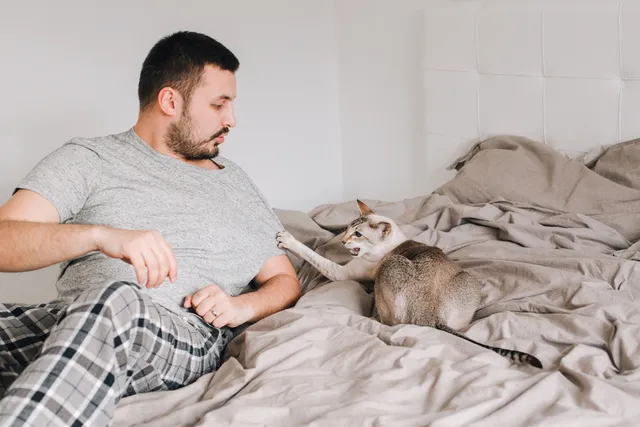
Tortoiseshell with owner
Image by: Page Light Studios, Shutterstock

divider 2 cats

Final Thoughts

Cat behavior is mysterious to many, but we know a little more, thanks to research, about why felines run for shelter when they feel threatened.

Hiding from strangers is often instinctual for cats, but training cats to regard strangers as friends rather than enemies takes time. After identifying the origin of the distress, you can, at times, work with your cat and friends to make subsequent visits less traumatizing.

Sources
 

Featured Image: llaszlo, Shutterstock

Want content like this delivered to you?

Sign Up For Our Newsletter

News, insights, expert advice, and everything cat

* By submitting, you agree to our Terms & Conditions and Privacy & Cookies Policy.


How useful was this post?

Click on a star to rate (you can leave written feedback after clicking submit)

Help us improve Catster for pet parents!

Your feedback really matters.

What did you like about this post? Also how can we improve it?

Join the conversation

Leave a Reply

You’re very welcome to leave a comment or question. Please know that all comments must meet our community guidelines, and your email address will NOT be published. Let’s have a positive and constructive conversation.


Talk With A Vet Online

Peace of mind,
anywhere, anytime

Affordable vet advice

The 10 Common Causes of Sudden Death in Cats (And Which Ones Are Preventable)

Most cat owners don’t think much about heart disease, internal hemorrhage, or viral infections until they’re staring at an empty bed. Sudden death...

Ask Dr. Paola – Help! My Cat Suddenly Has Dandruff! (March 30, 2026)

Welcome to our “Ask Dr. Paola” series, where every Monday we bring expert advice straight from Dr. Paola Cuevas (MVZ) to help our...

Your Cat Keeps Vomiting After Eating: Here’s What’s Going On

Cats vomit. It’s one of the less glamorous facts of life with a feline, and most cat owners have cleaned up more than...

Ask Dr. Paola – Help! My Cat Gets Diarrhea from Wet Food! (March 23, 2026)

Welcome to our “Ask Dr. Paola” series, where every Monday we bring expert advice straight from Dr. Paola Cuevas (MVZ) to help our...

More related

Rare Cannabinoid Company Hawaiian Choice Pet CBD Oil Review 2026: A Detailed Look

By now you’ve no doubt heard about the benefits of CBD for humans. You’ve probably also heard that this hemp product can be...

CoyoteVest Pet Body Armor Review 2026: A Detailed Look

If you have an adventurous cat, you probably worry about them more than you would like. CoyoteVest is a company that started to...

Magical Disappearing Cats: Zazzles & Alex’s Vanishing Acts

Hi, I’m Dr. Karyn! Read my introduction to learn more about me and meet my five hilarious cats: Clutch, Cyril, Alex, Zelda, and...

Is It True That All Cats Have White Whiskers? Vet-Verified Facts & FAQ

It appears that nearly all cats have white, almost transparent-looking whiskers, but there are some exceptions. Cats can come in a range of...

Keep reading

10 Best Cat Treats for Picky Cats (2026) – Reviews & Top Picks

You spend hours at the pet store picking out the best treats for your cat, only for them to be rejected without so much as a taste! Cats are notoriously picky, but some of them are obviously pickier than others....

devon rex cat eating

10 Best Cat Toothpastes of 2026 – Reviews & Top Picks

Oral hygiene plays a significant role in the overall health of our feline friends. As humans do, cats also need a regular dental hygiene routine to keep their teeth and gums in top condition, prevent tartar buildup, and freshen their...

cat getting teeth brushed

How Can I Soothe My Cat’s Itchy Skin: 9 Natural Home Remedies

If you notice that your cat is scratching incessantly, losing hair, or developing a rash, they are likely having an allergic reaction. Skin allergies are fairly common in cats, affecting around 10% of felines, with causes ranging from fleas to...

cat itchy

Why Does My Cat Sleep On My Legs? 11 Vet-Reviewed Explanations For This Behavior

If you own a cat, there is a good chance you woke up on several occasions to find your cat sleeping on your legs. If you are puzzled by this strange behavior and would like to learn more about the...

cute cat sleeping on its owners lap

5 Health Benefits of Grain-Free Cat Food: Vet-Approved Facts

These days, you can find all kinds of diets and meals for cats. While not all cats need to eat a grain-free diet, some cats may benefit from making the switch. Cats with certain health issues, such as food allergies...

brown white cat eating from feeding table

7 Best Cat Cone Collars of 2026: Reviews & Top Picks

If your cat is licking a spot on their body to the point of baldness or they are recovering from surgery, you’ll need to use a cone collar, also known as an e-collar and the “cone of shame.” It effectively...

orange-cat-with-veterinairy-cone

Is Jasmine Poisonous to Cats? Vet-Reviewed Houseplants Examined

Most of us love the look of live houseplants and gorgeous, colorful gardens. However, many of these plants can pose an unexpected threat if we also own curious pets. Plenty of houseplants are toxic to cats, including some types of...

Catster_Are Jasmine Poisonous to Cats

What Are Cats Scared Of? 8 Vet-Reviewed Feline Fears & How to Help 

Cats are highly attuned to their environment and are sticklers for routine. This sensitivity can make them easily startled by certain objects, sounds, and situations, and it all comes down to a cat’s natural instinct for self-preservation and unease surrounding...

scared cat hiding behind the drawer

Love Cats? So Do We! Join the Catster Community

Stay informed with expert pet care insights delivered straight to your inbox! Discover professional guidance on animal behavior, feeding tips, trusted product picks, and much more.


Sign up for the Catster Email Newsletter

Stay informed with expert pet care insights delivered straight to your inbox! Discover professional guidance on animal behavior, feeding tips, trusted product picks, and much more.