Why Does My Cat Bite My Feet? 6 Vet-Approved Reasons for This Behavior


In this article
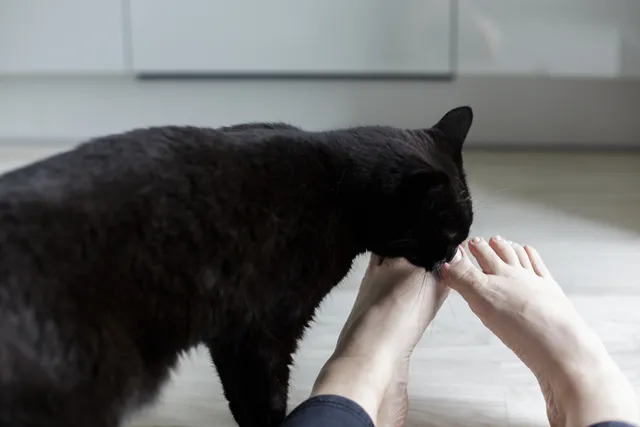
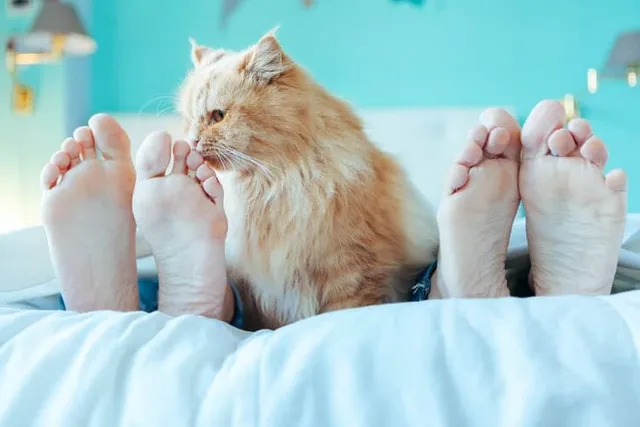
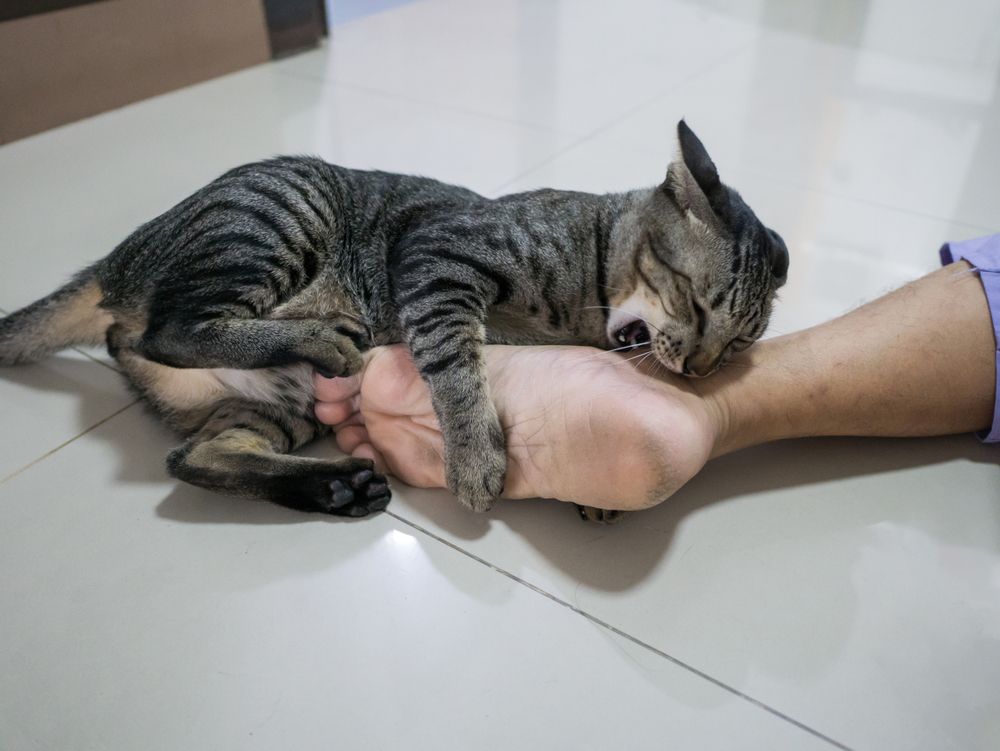
As cat owners, we know that the price of being owned by a cat also means dealing with a lot of crazy and inexplicable behavior. But this is why we love our cats. Chances are, at some point in time, you’ve experienced a cat chomping down on your feet, toes, ankles, or shins.
Now you’re here, reading this article and looking for answers. We can probably understand why cats go after our fingers and hands, but the feet might seem a little, well, strange. We’ll do our best to explore this odd and yet rather endearing behavior.
We’ll cover six reasons we believe cats like to bite our feet. We’ll also discuss methods to help prevent it from happening. Unless you enjoy foot attacks and you just want to know why they do it, that is.

The Top 6 Reasons That Your Cat Bites Your Feet
There are various scenarios for the foot-biting behavior. Is it mainly occurring when your feet are under the blankets or when you’re walking around the house? Are the bites gentle or hard and accompanied by grabbing and even scratching?
Each circumstance will tell a different story into the whys, so this is something to think about when you’re interested in stopping the behavior.
1. Play
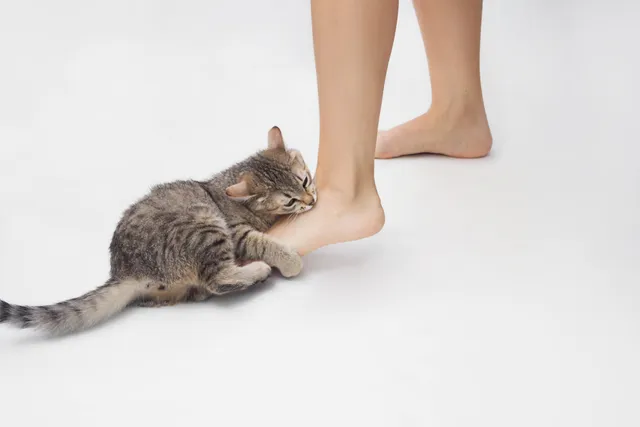
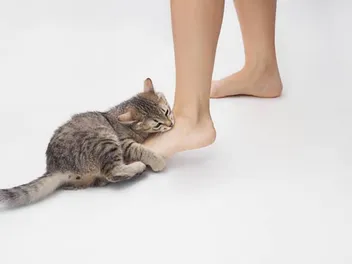
Play is probably the number one reason why cats enjoy biting out feet. Your feet are accessible to a cat. They’re on the ground and are tantalizingly close enough that a cat might just not be able to resist lunging, grabbing, and biting them, especially because you’re moving. Cats have instincts that are triggered when they see a moving object.
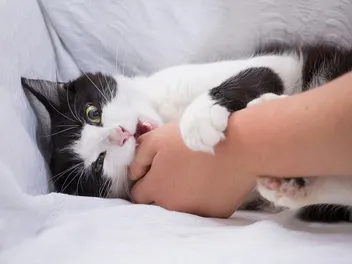
What makes it even more fun is they usually will get a reaction from you. You jerk away, maybe jump and probably make a noise—shriek, scream, yell, laugh. The bites that accompany this kind of playful behavior aren’t typically hard and don’t usually penetrate your skin. Your cat is just having some fun, obviously at your expense.

2. The Hunt
Hunting is also another top reason why cats enjoy attacking your feet. As we are all aware, cats are known to be superb hunters. This instinct is still quite powerful, even after centuries of domestication.
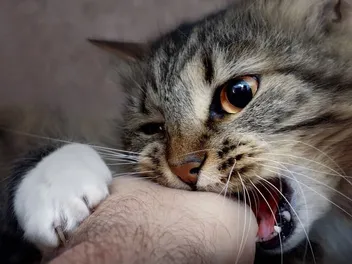
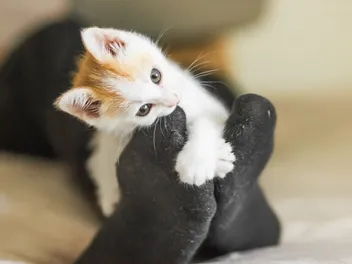
In this case, your cat might engage in stalking behavior before attacking your feet, and the bites might be more painful, even drawing blood. Keep in mind that this kind of attacking behavior is not personal. Your cat’s instincts have taken over, and your feet might as well be a mouse or a rabbit; your feet are prey at that moment. Your feet are also just the right size for your cat, and if you’re wearing fuzzy slippers or socks, they can appear even more prey-like to your cat.
This hunting behavior is more common with younger cats, as well as indoor cats that might not be given enough opportunity to play and hunt.

3. Boredom
If your cat is bored and has not had enough opportunities to play, particularly with you, they might be attacking your feet out of boredom. A bored cat is likely to find ways of expending excess energy, which might include going after your feet.
This behavior falls somewhat into the playful category, so the cat’s bite might be gentle, but if your cat is frustrated enough, they might be a harder bite than usual.
Cats are intriguing animals who sometimes have odd interests and indulge in unusual behavior. Understanding them might be tough but providing a toy that fosters their instinctual needs and curiosities is simple.The Hepper Hi-Lo Cat Scratcher encourages playtime and offers a cat-appropriate place to scratch.
It’s unique 3-position design and cardboard scratch pad allow your cat to explore different levels, improves their health, satisfies natural feline impulses, and deters your cat from delving into places they should not. Show your cat how much you love and appreciate their quirks by gifting them the Hepper Hi-Lo Cat Scratcher.
At Catster, we’ve admired Hepper for many years, and decided to take a controlling ownership interest, so that we could benefit from the outstanding designs of this cool cat company!
4. Attention
If you’ve noticed that your cat appears to attack or bite your feet when you’re busy or not paying attention to them, it might be that they are looking to get your attention. Maybe they're looking for food or a treat, or want to get into a room that has its door closed. In any case, this would be the worst moment to give the treat, as the biting behavior will only increase.
Try to identify the scenarios when the biting for attention happens and engage in playing sessions or cuddles and treats before there is any sign that the cat will bite. Likewise, do not open the room after a bite if that is what the cat wants, as they will learn this is how to achieve their goal and the biting will only increase.
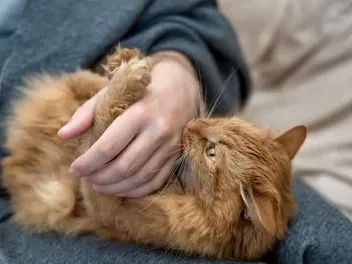
Sometimes your cat might bite because you’re giving them too much attention. This is overstimulated aggression, in which your hands are usually the victims. You’re having a lovely petting session with your adorable cat when they suddenly turn on you, bite, and run away. It also sometimes occurs when your cat is tired of playing and might lash out at the closest thing—your feet.
5. Affection
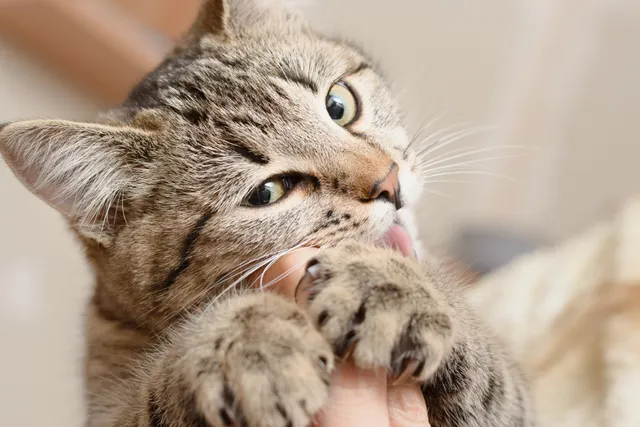
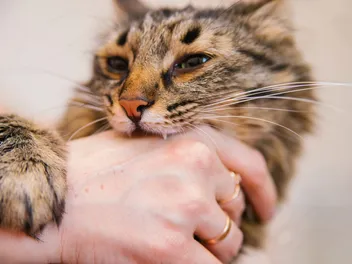
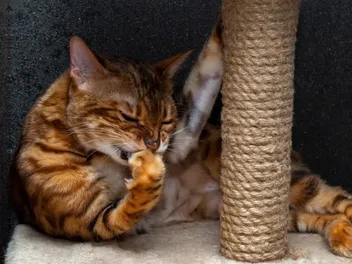
Our cats love to bite out of love and affection. If you’ve been preparing your cat’s dinner and they gently bite your foot, they're showing you some love and appreciation.
Cats are known to give us love bites, which is believed to come from behavior learned from their mothers. Sometimes a mother cat will gently bite her kittens while grooming. Even in a litter of kittens, the siblings will bite while playing as a method of bonding, and it teaches the kitten how to be an adult.

6. Medical Issue
Unfortunately, some medical issues might make your cat more aggressive than usual, and they might lash out at your feet since they are the closest thing to them. For example, hyperthyroidism can lead to more aggression in cats.
If you notice other unusual signs in your cat other than foot biting, take them to the vet to help rule out any health issues.
The 4 Tips to Stop Your Cat Biting Your Feet
Cats are kind of like Goldilocks from the children’s story Goldilocks and the Three Bears. Everything has to be just right. Not too many pets, and not too few. Not too much play, but not too little. So, if you would prefer for your cat not to bite your toes, here are some tips to help stop this behavior.
1. Ignore It
When they are kittens, they learn that playing too roughly is not fun. If a kitten bites their sibling too hard, the other kitten will stop playing and walk away. This way, they learn that biting hard equals no more fun.
If you stop reacting to the foot attacks and immediately and calmly remove yourself from your cat, they will learn to stop. This includes not looking at or speaking to your cat, walking into a room, and closing the door to separate yourself - just for a few minutes to give your cat some time to calm down.
2. Redirect
Once you’ve removed yourself from your cat and have given them those few minutes to quiet down, you can redirect their energy to a toy. Another option is to study the biting scenarios and plan something else before the biting idea has even crossed your cat’s mind. Having a toy on hand and anticipating before there is the slightest sign of an impending ankle attack could make all the difference.
Also, toys that you can throw across the room for your cat will encourage them to take chase instead of biting. You may also find anything that your cat likes and will provide entertainment for redirection. Giving treats or praise to your cat for playing will make the positive behavior more rewarding and exciting. Ignoring the biting behavior combined with redirecting your cat’s biting will decrease it until it disappears.
3. Discourage
One problem with removing yourself is that you’ll be moving, and your cat might continue chasing and attacking your feet. Another option is to crouch down and either distract them with an unusual sound or by snapping your fingers and clapping your hands. Once you have their attention, you tell them “no.” Again, consistency is essential.

4. Playtime
Be sure that you have enough options for your cat to keep them entertained—toys that they can bite and kick, cat trees for climbing and scratching, access to windows, etc. You should also make time to play with your cat several times each day. Experts say that cats only need about 5 to 10 minutes of intense play every day, which will help to mentally stimulate and tire them out.
If you give your cat as much attention as you are able, then they'll be less likely to lash out at your feet. However, if you're unable to give your cat the time and attention they need, you might want to consider bringing another cat into your home so they'll have a playmate.
Our Favorite Cat Toys Right Now
Here are a some of our favorite toys, each catering to a variety of senses and play preferences. Which one will your feline fancy?
| Image | Product | Details | |
|---|---|---|---|

|
Hepper Catnip Mice Toy Set |
|
Check Price |

|
Hepper Furball Set |
|
Check Price |
At Catster, we've admired Hepper for many years, and decided to take a controlling ownership interest so that we could benefit from the outstanding designs of this cool cat company!

Conclusion
Cats are wonderful, zany, and loving members of our families that we often need time to figure out. A visit to the vet might be in order; vets can provide advice if you are concerned about any behavioral issues.
You’ll also need to spend some time understanding your cat’s body language. The more you know your cat, the easier it will be for you to figure them out. Lots of love and attention (but not too much!) should help protect your feet, which will make you both much happier at the end of the day.
See also:
Featured Image: Chomphuphucar, Shutterstock
Expert cat care, straight to your inbox
News, insights, and useful advice, delivered to you.

No spam — unsubscribe anytime.
By signing up, you agree to our Terms & Conditions and Privacy & Cookies Policy.
How useful was this post?
Click a star to rate. You can leave written feedback afterwards. (We read all feedback.)
Kathryn was a librarian in a previous lifetime and is currently a pet writer. When she was a child, she hoped to work in ZOOs or with wildlife in some way, thanks to her all-consuming love for animals. Sadly, she's not strong in the sciences, so she fills her days with researching and writing about all kinds of animals and spends time playing with her adorable but very naughty tabby cat, Bella. Kathryn is hoping to add to her family in the near future – maybe another cat and a dog.