Why Do Cats Pounce? Feline Instinctive Behavior Explained (Vet-Reviewed)


In this article
Have you ever watched your cat bound around the house, seemingly jumping on random things? You may have wondered why they do it. The answer is simple: Cats love to pounce! But why? Cats pounce as an instinctive behavior and may do it just for the fun of being playful. Let’s dive into the wild world of cats and pouncing to find out.

What Does It Mean When a Cat Is Pouncing?
From the moment they’re born, cats are hardwired to hunt and pounce. It is an instinctive behavior that helps them capture their prey. Even though house cats don’t actually have to hunt for food, they still have the urge to practice those pouncing skills.
So, when you see your kitty pouncing around the house, they’re doing something quite natural. They’re honing their skills for hunting and, ultimately, survival.

Why Do Cats Pounce for No Reason?
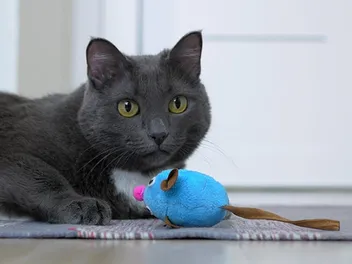
While cats may seem like they’re pouncing on objects for no reason, a lot is going on underneath. For one, cats are naturally curious. They may be drawn to a particular object or toy because of its texture, color, sound, and shape.
Cats also pounce to practice their hunting skills. They may be honing the skill of stalking and trapping prey or simply getting used to the sensation of pouncing on something.
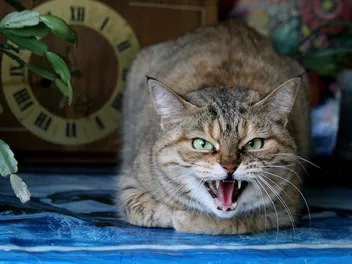
Some cats might pounce because they’re in a playful mood. After all, cats are known for their quirky and mischievous behavior. Still, others do so because they’re agitated or anxious. Perhaps not surprisingly, when cats display what we attribute as “playful” behavior, they are in fact hunting or perfecting the art of the hunt 1.
You have to remember that cats are predators by nature. If you catch your kitty pouncing around the house, don’t be alarmed. It’s just part of their natural behavior.
What Do Cats Do When They Are About to Pounce?
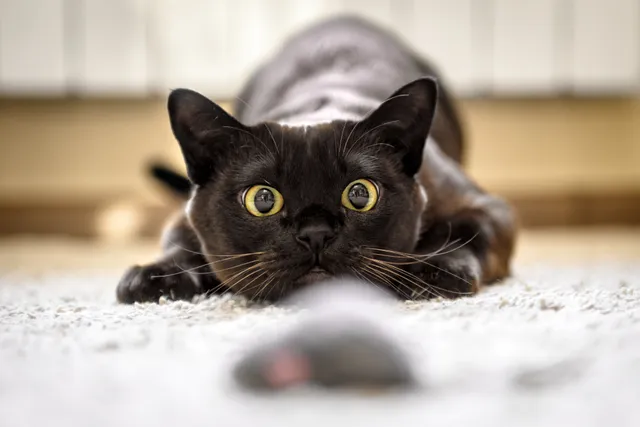
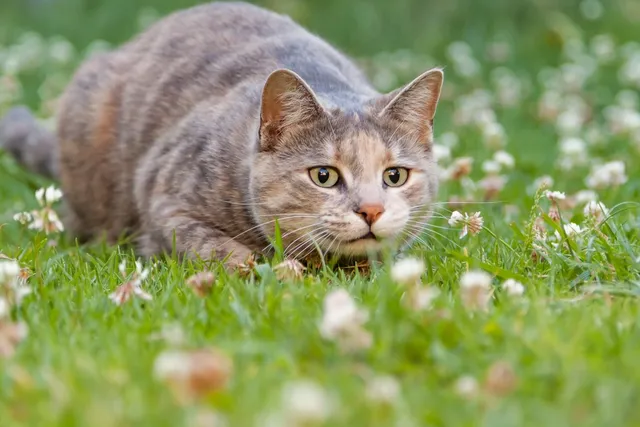
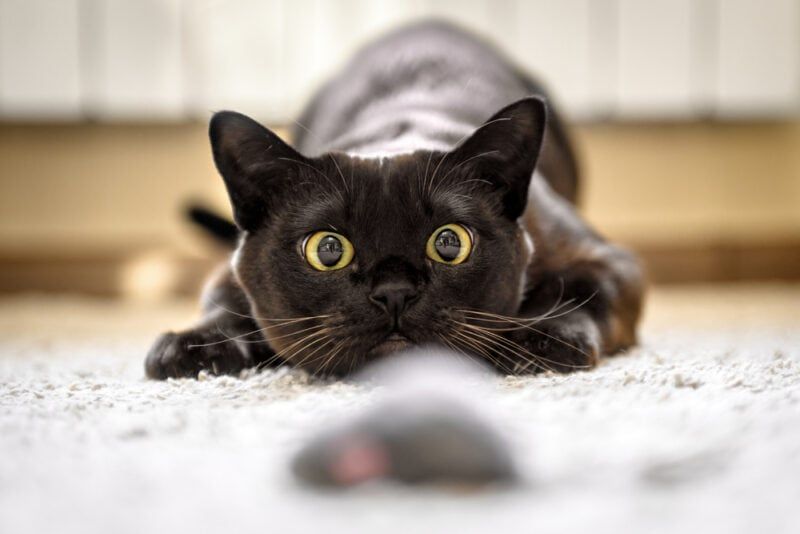
When cats are about to pounce, they’ll often crouch low to the ground and focus intently on their target. They’ll also often move very slowly, inching ever closer to their intended victim. The reason that cats take this slow and stealthy approach is to avoid detection.
As you’ve learned, cats are predators. So, even if they’re not hunting for prey, their body language and behavior mimic that of a hunter stalking their target.

Why Do Cats Sometimes Lift One Paw Before Pouncing?
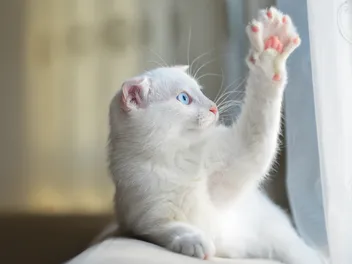
This action is yet another part of their instinctive behavior. By lifting one paw before pouncing, your cat is displaying their anticipation and readiness to strike. This may also help your cat gain a better grip on the surface that they're pouncing on and help their body stay balanced while they are mid-pounce.
Tips to Promote a Safe Environment for Your Cat
Since cats are naturally drawn to pounce, you must create a safe environment for them at home. This means providing plenty of toys for them to play with and areas for them to hide should they get scared or agitated.
You should also ensure that any cords or electrical wires are hidden away, as cats may also try to pounce on those. Preventive steps like these can help ensure your cat’s safety while they practice their pouncing skills.
Playing is an important part of keeping your cat mentally and physically engaged, and a great toy will make it much easier. We like Hepper's Catnip Stick Toys because they're sturdy enough to handle intense play and completely filled with organic catnip. You'll love the fun range of pastel colors and your cat will enjoy the prey-like shape!

- No Filler - Like all the best cat toys our is stuffed with 100% organic catnip. Cheap cat toys with filler leave your cat bored and disinterested. Our pets deserve to be excited and engaged.
- Flexible Play - Simple plush shape is great for biting, scratching and pawing. It can start life as a teething toys for kittens then soon your furry friend will be using it as a cat kick stick. Play for any mood
- Durably Designed - Our cat safe toys are hand-stitched with a double-lined exterior construction for hours of playtime, perfect cat kicker toys for cats indoors and even outdoors. Your cat will tire out before the toy does!
At Catster, we’ve admired Hepper for many years and decided to take a controlling ownership interest so that we could benefit from the outstanding designs of this cool cat company!

Conclusion
Cats are delightful and mysterious creatures with lots of unique behaviors. As you now know, pouncing is one of their most common and instinctive behaviors.
So, the next time you catch your kitty pouncing around the house, try to appreciate it for what it is: a natural and instinctive behavior that cats have been doing since they were kittens.
Featured Image Credit: Viacheslav Lopatin, Shutterstock
Expert cat care, straight to your inbox
News, insights, and useful advice, delivered to you.

No spam — unsubscribe anytime.
By signing up, you agree to our Terms & Conditions and Privacy & Cookies Policy.
How useful was this post?
Click a star to rate. You can leave written feedback afterwards. (We read all feedback.)
Christian started writing for a local newspaper as a teenager, and he's been involved in the publishing industry for most of his adult life. Combining his love of writing with a passion for animals, he is currently the Director of Editorial at Pangolia and the Editor-in-Chief at Catster.
Christian lives in the Philippines with his wife, son, and four rescue cats: Trixie, Chloe, Sparky, and Chopper.