Why Are Cats So Much Sassier Than Dogs? Vet-Verified Personality Traits Differences


Before attempting to answer whether cats are sassier than dogs, it's important to ensure we're all on the same page, as the term sassy is a bit imprecise. According to the Merriam-Webster dictionary, sassy has three meanings—impudent, lively, and stylish 1—none of which describes cats accurately. Also, the word even has a slightly negative connotation.
To answer this question without the negative connotation, we're going to go out on a limb and create a new definition: able and more than willing to use precisely calibrated conduct to elicit desired responses in humans. In short, cats seem sassier than dogs because they use different tactics to get what they want and because of their domestication history.

Wait, Are You Saying Cats Aren't Impudent?
Impudent technically means not just rude but somehow showing a lack of respect involving some sort of moral failure.2 But that assumes that cats are somehow required to live by human rules and standards of conduct.
They're actually not. It's not a violation of etiquette when cats act like cats, even when they flatulate under dinner tables, jump on grandma's lap, or urinate on the floor when the litter box is filthy. None of these behaviors are examples of feline moral failures, as all are perfectly acceptable in the cat world.

Now You're Going to Say Cats Aren't Lively!
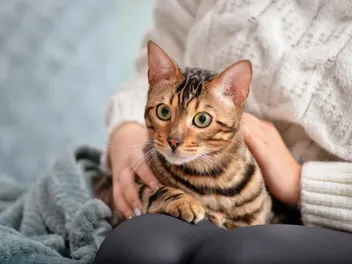
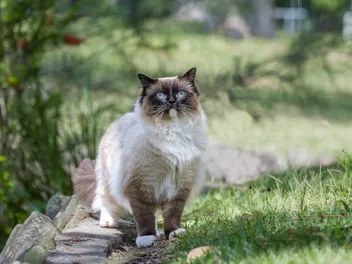
Cats are cats; some are young and lively, and others have more modest activity needs. While kittens are usually quite active, not all adult cats have the same desire to run about and wreak havoc. Bengal and Savannah cats, for instance, typically require far more physical activity than Ragdoll cats. Senior cats and those with mobility impairment may spend more time napping in the sun than running around chasing imaginary mice. The canine kingdom is just as diverse and includes lapdogs like Russian Toys that don't require as much activity when compared to serious athletes like Greyhounds. Cats and dogs require physical activity and mental stimulation to stay stimulated, active, and healthy, and we will call this one even.
See Also: Will the Smell of My Cat Keep Mice Away?
Cats Are Different From Dogs!
Cats have a different relationship with humans than dogs do. This can be traced back to their domestication. Dogs are considered the first domesticated animal. Dogs were domesticated because they were able to help hunter gatherers on their hunting excursions by helping them track prey. In turn, dogs benefited from domestication as well. In fact, many people believe that dogs benefited more from domestication than humans did from domesticating them.
The Benefits Dogs Acquired From Humans Domesticating Them
Because dogs benefitted so much from domestication, they would’ve been more favored by humans if they were easily trainable and easily able to pick up commands that humans gave them. This would’ve led dogs to be more receptive to instructions and training, a trait seen in present day pet dogs.
Cats, on the other hand, are thought to have domesticated themselves. When humans turned to agriculture, the high abundance of crops that humans domesticated and cultivated would’ve attracted unwanted attention from vermin and birds. Cats were not interested in the crops humans were growing, but saw human settlements as an excellent source of prey. They would hang out near humans and have more chances at hunting. In turn, humans appreciated the free pest control cats offered them. Because of this, cats were not domesticated to be trainable, but rather to offer companionship and assistance with pest control (a role they’ve largely been phased out of today). Therefore, our pet cats are considered “sassier” than dogs because they weren’t domesticated to be easily trainable. Blame our ancestors for this oversight!

A Unique Relationship
Cats have primarily maintained the same cooperative but not entirely dependent relationship with humans since the beginning of domestication. Feral cats often stay close to human settlements, where they can scavenge from trash and get hold of rodents attracted to an easy dinner. Others move indoors and become companion animals, but there's no genotype difference between pet and feral cats.
Because dogs evolved mainly to work and live with humans, the two species have a symbiotic relationship. Cats are more opportunistic and happy to do their own thing if human contact offers little interest. Cats are good at communicating their needs and are not terribly inclined to care about human rules and limits without motivation, such as kisses, cuddles, or treats.
Independence and Reliance on Humans
Cats behave in ways that make sense and feel good to them. Remember that affection isn’t the only thing people can give these incredible animals that cats can't arrange for themselves. Pet cats rely on their human companions for food, fun, and to create a feline-friendly environment. Their lives are also drastically different from wild cats. Wild cats are essentially almost always in survival mode, whereas our pets have different requirements, as their basic needs of food, water, and shelter are not of concern to them.
Your cat may take “measures” to ensure their needs are met, like sitting on laptop keyboards for your attention or sleeping on your head when they want a bit of cozy companionship and comfort. Dogs appear more cooperative because they've evolved to enjoy working with humans to pursue mutual goals, and it goes without saying that dogs love their human companions deeply.

Conclusion
Cats aren't necessarily sassy; they have different ways of going through life than dogs. Dogs have evolved over millennia to work and live with people, while cats have primarily adapted to live with people or independently, depending on the circumstances and what works best for them.
Many dogs are happy to do what their human wants as long as they understand the behavior that’s expected of them. Cats, on the other hand, may choose whether or not to interact based on their needs. Of course, cats and dogs have individual personalities, and some dogs may seem sassier than some cats. Ultimately, the interpretation of the term “sassy” is what would influence your response to this question.
See Also:
Sources
Featured Image Credit: Yan Laurichesse, Unsplash
Expert cat care, straight to your inbox
News, insights, and useful advice, delivered to you.

No spam — unsubscribe anytime.
By signing up, you agree to our Terms & Conditions and Privacy & Cookies Policy.
How useful was this post?
Click a star to rate. You can leave written feedback afterwards. (We read all feedback.)