When Can Kittens Eat Solid Food? Vet-Approved Facts & FAQ


Adopting a kitten is a wholesome moment, but it comes with many responsibilities. While their sleeping requirements are usually easier to manage, their nutritional needs require extra effort and care. Considering how fast felines grow, you must act fast to ensure their optimal health and happiness.
Newborn kitties depend on their mother’s milk for nutrition. But as they turn 4 weeks old, their nutritional needs increase and evolve, requiring them to eat other food items to achieve their daily requirements. Kittens can start eating solid food when they are about 4 weeks old, and they may be fully weaned by 6 to 8 weeks.
That’s when their weaning process must start. It’s best to start with wet food and then move to dry ones once the kitten turns 6 to 8 weeks.
As a responsible cat owner, you should know the right time and way to practice weaning for your little furball. Typically, mother cats do the job themselves, but when they are not around, the human parent has to intervene. Let’s dig into more details.

What Is Weaning?
If you’re new to cat parenting, you must first understand the meaning behind weaning. This phenomenon refers to making an infant or a juvenile mammal accustomed to solid food other than their mother’s milk. Weaning is also generally used when someone starts to live without something they depend on.
So, in the context of your kitten, it means to gradually stop the kitten from suckling their mother’s milk and to introduce other solid food items to fulfill their nutritional needs. This happens when the kitty is around 4 weeks old.
While some believe the kitten should be completely separated from their mother, this shouldn’t be the case. Kittens can become anxious when their mum suddenly disappears. They may also depict many behavioral changes, which can be hard to cope with.
Therefore, it’s best to keep the little ball of fur with their mother for at least a month, even after they have started eating solid food. This will make them wean gradually and healthily. It used to be the case that kittens were sent off to their new homes around 6 to 8 weeks of age but this is usually now recommended to be around 12 weeks of age.

The Right Time for Kittens to Eat Solid Food
Cats grow the most in their first year of being born. Their weight and size increase tremendously during this period, especially in the first 6 months. You will find your kitten growing from 100 to 200 grams in the first 2 weeks, which rises to about 6 pounds in 6 months.
The kittens depend on their mother’s milk for about 4 weeks from their birth. So, you must keep them with their mum all the time. The lactating mother also needs special nutrition, access to water, and a clean litter box to continue feeding the kitten. So, provide them with kitten food multiple times a day to keep them energized enough to produce milk.
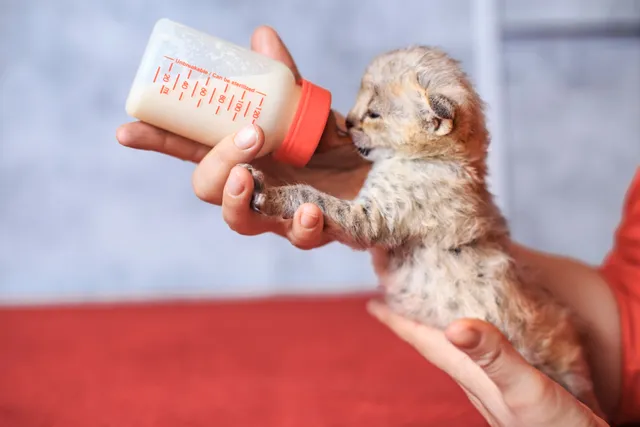
But what if the kitten’s mother isn't around? In that case, you should use a bottle feeder to feed them the milk replacer.
When the little felines turn 3 to 4 weeks old, they become more curious about their surroundings. You will find them crawling, playing with their siblings, and showing interest in their mother’s foods. That’s when their milk teeth start to erupt, making them wean from their mother’s milk to other food items.
The kitten then occasionally starts to nibble on their mother’s wet, solid food. While they do it out of curiosity, it also helps them fulfill their increasing appetite and nutritional needs. That’s especially the case with a larger litter. During 6 to 8 weeks, the kitten becomes strong enough to handle dry, solid food. So, if their mother hasn’t weaned them already, you can try offering dry foods and see whether they like it or not.
What to Feed to Weaning Kittens
As your kitten turns 4 weeks old, you should start giving them formulated kitten foods certified by the American Association of Feed Control Officials (AAFCO). It indicates that the product fulfills the standard nutrition requirements for felines. It’s best to consult a vet to find the best food brand for your kitten.
When buying solid food for your kitten, check all or some of the below things on the packaging to ensure you’re making a good choice:
- Animal feeding tests using AAFCO procedures
- Formulated to meet standards
- Complete and balanced nutrition
- The main ingredients (meat) must be mentioned in the first three to four entries on the list
No matter what brand you choose, ensure that it’s appropriate to your kitten’s age. Never feed dog or cat supplements to these little creatures since these products lack the proper formulation for the kitten’s healthy development.
How to Feed Solid Food to Kittens
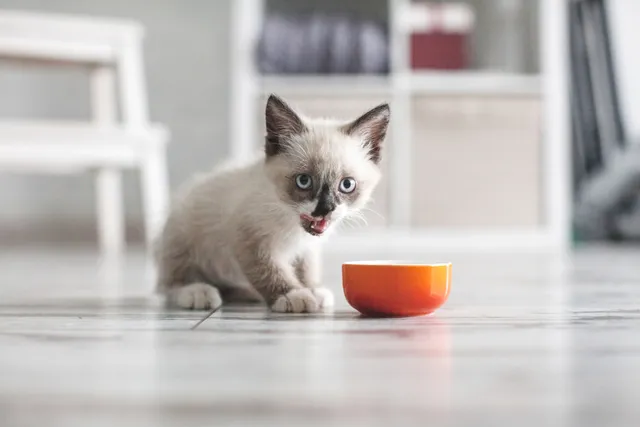
To start giving a solid diet to your pet, mix their wet food with kitten formula while ensuring it’s moderately warm. You can decrease the quantity of the formula over time. Once prepared, put the food in a shallow dish and place it close to the kittens.
The ideal quantity of the food should be a teaspoon so that the kitten has sufficient time to feed. If the kitty hesitates to eat from the dish, their mother will step forward to show them how to eat and nudge them to do the same.
If your vet agrees, you can also try giving kibbles to your kitten during this period. But ensure they are perfectly moistened with warm water, so they won’t struggle to chew them. Doing so will introduce the kitten to different food textures.
As they turn 6 weeks old, their teeth will start maturing. That’s when they can crunch and chew dry food comfortably. Some cats prefer soft food, while others like munching on dry ones. So, observe what your kitty loves and feed them accordingly!

The Optimal Feeding Time for Kittens
There is no hard and fast schedule for feeding kittens. According to the Cornell Feline Health Center, kittens should have a “free-choice” eating routine, meaning they must have small amounts of food available all the time. Cats naturally eat around 8 to 10 times a day, little and often.
Monitor their food intake so they don’t over or under eat and monitor their weight weekly. Kittens also have special nutrient needs that must be fulfilled for optimal growth. It’s best to consult a vet, as these experts can determine the right quantity of food and nutrients based on your kitten’s requirements.
As their weaning process is completed in 6 to 8 weeks, you can move on to including dry kibbles in their diet. They will like this type of food around three or four times daily.
If you bottle-feed your kitten for the first 4 weeks, you should introduce them to solid food a bit later. Also, if your little pet doesn’t eat enough in one sitting, try increasing the frequency of the meals to let them meet their daily calorie goal.
What Should You Feed Your Kitten After Weaning?
The free-feeding technique applies to kittens until they are 9 months old. As they grow older or are sterilized, their nutritional requirements change. Most kittens start eating adult maintenance meals as they turn a year old. However, it may depend on their breed and size.
Some cats become chubby when they are 9 to 10 months old. If your feline also seems a bit chunky, you should focus on creating structured meal amounts instead of free-feeding them. You can also add small quantities of adult cat food to make them feel full.
Whatever feeding method you choose for your pet, ensure your vet agrees. That’s because every cat has different nutritional needs and digestive capabilities, so a thing that works for one kitten may not be ideal for the other.

Conclusion
Kittens are delicate, adorable balls of fur requiring special care to grow healthily. Like other mammals, they depend on their mothers for their initial nutritional needs. But as kittens turn 4 weeks old, they require additional food to fulfill their daily nutritional needs.
That’s when their weaning starts, the period in which the kitten leaves their mother’s milk and tries other solid foods. However, you shouldn’t give them dry, solid food right away. Instead, start with wet food and gradually shift to solid ones when the kitten is around 6 to 8 weeks old.
Sources
Featured Image Credit: Patcharida, Shutterstock
Expert cat care, straight to your inbox
News, insights, and useful advice, delivered to you.

No spam — unsubscribe anytime.
By signing up, you agree to our Terms & Conditions and Privacy & Cookies Policy.
How useful was this post?
Click a star to rate. You can leave written feedback afterwards. (We read all feedback.)
Jeff is a pet parent who loves writing. He is a data privacy tech professional with 20 years of experience leading teams at various Fortune 100 startups. Jeff's hobby is photography.