Vestibular Disease vs. Stroke in Cats: What's The Difference? Vet-Approved Insights


In this article
Strokes in cats are very rare. The symptoms that cat owners most often associate with a "stroke" in cats result from vestibular disease. However, veterinarians may describe the vestibular disease as a "stroke" to aid the pet parents in understanding what's happening to their cat, further muddying the waters of understanding.

What Is a Stroke?
Understanding what a stroke is should be the first step to understanding why vestibular disease and strokes shouldn't be mistaken for each other, even if the symptoms look similar.
A stroke is clinically described as a "cerebrovascular accident." Cerebro, meaning "brain", and vascular, meaning "veins or arteries", helps us understand what's happening during a stroke. The brain requires blood flow from the heart to deliver oxygen and nutrients. When this blood flow is reduced, a stroke may occur.
There are two kinds of strokes in cats: ischaemic and hemorrhagic. Each is caused by something different, but the symptoms are essentially the same.
Ischaemic strokes occur when the blood flow to the brain suddenly stops. This can result from an artery narrowing or closing and can occur with cardiac arrest when the arteries are blocked.
A burst artery causes hemorrhagic strokes. This causes internal bleeding and reduces the blood flow throughout the body. In severe cases, a stroke may occur when internal bleeding in the brain causes the accumulated blood to press against the brain tissues and damage that part of the brain.

Signs of a Stroke in Cats
- Unequal pupil sizes
- Muscle spasms
- Arched body
- Abnormal eye movements
- Falling and/or circling
- Head pressing
- Vision loss
- Loss of balance
- Head turning or tilting
- Weakness
- Coma
If your pet is showing these signs, we suggest you speak to a vet.
What Tests Are Performed to Diagnose a Stroke in a Cat?
Diagnostic testing through fecal exams, urinalysis, and blood tests can rule out other causes of your cat's signs. At the same time, CT imaging and MRIs may be used to detect abnormalities in the brain.
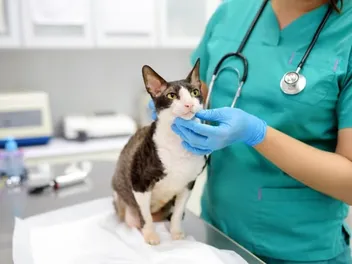
Your veterinarian will perform a thorough examination of your cat and ask questions about their signs, like how quickly they came on and how they have changed over the time you've been observing them.

What Treatments Are Available for Strokes in Cats?
Treatments such as oxygen therapy to promote the healing of brain tissue, seizure medications to decrease the pressure in the skull, physical rehabilitation to address neurological deficits and improvements to diet and nutrition can be recommended for cats who have had a stroke.
What Is Vestibular Disease in Cats?
Vestibular disease or vestibular syndrome is any inflammation or damage to the vestibular nerve and the body system. The vestibular system controls the cat's center of balance, and inflammation of the system can make it hard for a cat to maintain their balance and movement.
The vestibular system contains sensors in the inner ear and a control center in the back of the brain. These centers work together to keep the cat from falling over and are responsible for its righting reflex that allows them to land on their feet when falling consistently.

The vestibular system uses minute movements in the head, eyes, and body to keep the cat upright. The control center in the brain processes the information from the rest of the vestibular system and then sends signals to the body to move the muscles to keep the body upright.
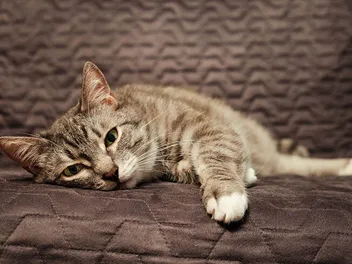
When this area is inflamed, the cat may suffer from balance problems like falling over and may not right themselves if they fall from a height.
Signs of Vestibular Syndrome
- Falling
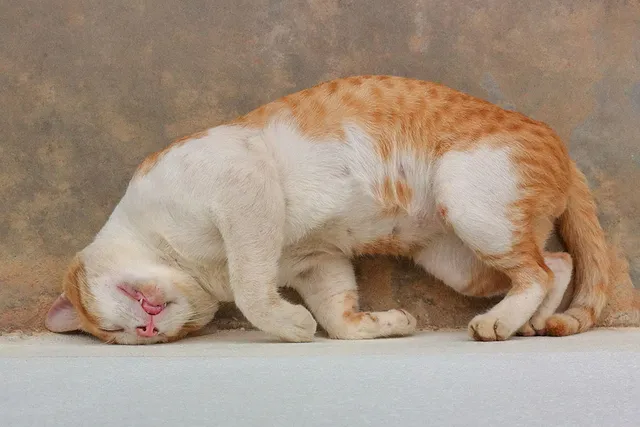
- Head tilting (head is rotated so that the ears are not level)
- Nystagmus (flickering of the eyeball from side-to-side or up and down)
- General instability (Animal may be seen drifting to one side as he moves around) and/or circling
- Nausea and vomiting (the vestibular system is close to the part of the brain that controls vomiting)
- Loss of hearing (vestibular nerves are also close to the ears)
- Drooping of face muscles (vestibular nerves are close to the nerves controlling the movement of the facial muscles)
What Causes Vestibular Syndrome?
Vestibular syndrome has many possible causes. Any disease that affects part of the brain that controls the vestibular system or the vestibular nerves in the ears could result in a case of vestibular syndrome.
A deep ear infection (otitis), ear tumors, polyps, damage to the ears or skull, nerve inflammation (neuritis), and an underactive thyroid gland could all cause the vestibular system to go haywire.
Damage to the brain, brain tumors, inflammation (encephalitis), strokes, head trauma, vitamin deficiencies, and some brain malformations like cysts can also cause vestibular syndrome to develop in cats.
Additionally, some antibiotic treatments can cause symptoms of vestibular syndrome in cats who are sensitive to antibiotics. So, there are many ways your cat could end up with vestibular syndrome.

What Tests Are Performed to Diagnose Vestibular Syndrome?
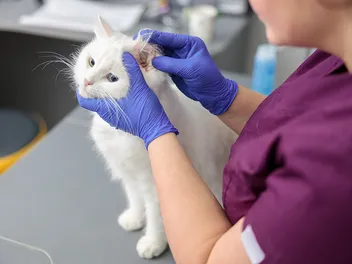
Your vet will perform a thorough examination of your cat. The ears should be checked with a scope, and an ear cytology should be performed if your cat is suspected of having an ear infection. In addition, X-rays, CT scans, and MRIs may be performed to see the inside of your cat's head. These may help determine if your cat has an inner ear infection or brain damage.
Your vet may order a test of your cat's cervical spinal fluid (CSF) to determine if your cat has inflammation or disease of the brain.
What Treatment is Provided for Vestibular Syndrome?
If the veterinarian can determine an underlying condition, your cat will be treated for the situation your vet has found. Their vestibular syndrome should clear up the underlying cause of the syndrome.
Cats with significant nausea and vomiting may be given antiemetics to help control their vomiting and provide them with comfort in their day-to-day lives.
If no underlying cause can be found (idiopathic), no treatment can be provided for your cat's condition except for supportive care. However, the good news is that idiopathic vestibular disease tends to get better over time on its own.
Final Thoughts
While the description of vestibular disease as a "stroke" can help cat parents understand what's happening to their cats, it creates a critical misunderstanding of what's happening to their cats in general. Understanding our pets' ailing is the first step to treating their ailments and making them healthy again!
While vestibular syndrome and a stroke may look very similar, they have vastly different causes and need to be treated differently!
Featured Image Credit: Elpisterra, Shutterstock
Expert cat care, straight to your inbox
News, insights, and useful advice, delivered to you.

No spam — unsubscribe anytime.
By signing up, you agree to our Terms & Conditions and Privacy & Cookies Policy.
How useful was this post?
Click a star to rate. You can leave written feedback afterwards. (We read all feedback.)
Luxifa is a freelance writer with a passion for animal science and technology. She loves to share the world of animal science with people to help them make informed decisions for themselves and their pets. Luxifa has worked in professional pet care for over six years and strives to help change the world of pet care by bringing the information people need to them in terms they can understand. Knowledge is power, and Luxifa loves to help everyone become the most informed they can be.