Get

In Your Inbox

Catster is reader-supported. When you buy via links on our site, we may earn an affiliate commission at no cost to you. Learn more.

My Cat Ate a Poisoned Mouse! Crucial Vet Reviewed Next Steps

Share

My Cat Ate a Poisoned Mouse

Cats are natural predators. They love to hunt toys, bugs, and small animals if they get the opportunity. Many people have cats as pets for companionship and to help protect their homes from rodents and other pests (like cockroaches).

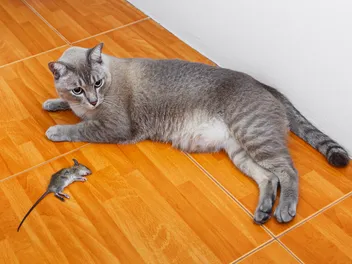
Not all cats eat the mice they catch and kill, but some do. If your cat eats a rat or mouse, it is unlikely they will get ill, even if the rodent has been poisoned. The idea of your kitty eating a poisoned mouse might seem scary, but if you know the risks and the signs to look out for, you can have the confidence of knowing that you can handle the situation.

divider cat paws 2 oct 2024

The 3 Steps to Follow After Your Cat Ate a Poisoned Mouse

1. Understand the Risk

While it is possible, it is not commonly reported for a cat to get seriously ill after consuming some or even all of a poisoned rodent. The amount of poison a rodent must eat to be deadly is much less than a cat would need. This does not mean that the poison won’t affect your cat in any way, and it is always recommended to contact your vet if you have concerns your cat may have been exposed to a poison.

Poisoning is not the only risk of a dead rat or mouse. The rodents harbor mites, roundworms, and fleas—none of which you want your cat to become infested with. If your cat is your designated rodent hunter, they should receive regular parasite prevention medications and treatments.

sick ginger cat
Photo Credit: JumpStory

2. Keep an Eye Out for Signs

If you notice that your cat has eaten some or all of a rodent, it is a good idea to watch for signs of poisoning or illness for about 48 hours. During this time, your pet may display the following clinical signs if the poison in the rodent has affected them:

  • Lethargy
  • Vomiting
  • Diarrhea
  • Abdominal discomfort

If any of these signs arise, contact your veterinarian and visit an emergency veterinary clinic. But you can relax if no signs of poisoning are displayed 48 hours after your cat eats a mouse.

Parasites take longer to settle in and do not pose as much of an immediate danger as poisoning does. However, you should continue to keep an eye out for signs of parasite infestation, which include:

  • Dull coat
  • Coughing
  • Bloody feces
  • Loss of appetite
  • A “pot belly”

If your cat gets infested with parasites, a veterinarian can treat the problem. Afterward, your cat will live a happy, healthy, and safe life.

If you need urgent veterinary advice, consult a vet online.

If you need to speak with a vet but can't get to one, head over to PangoVet. It's an online service where you can talk to a vet online and get the advice you need for your pet — all at an affordable price!

PangoVet_Mention-in-Content for PangoVet2 save money


3. Consider Other Forms of Rodent Management

One of the best ways to ensure that your cat does not eat a poisoned mouse is to avoid using rat poison on your property. An effective option is a mechanical “snap trap” that lets you load it with treats that mice and rats like, such as peanut butter or small pieces of meat.

When a rat goes to eat the treat, the trap snaps closed and kills them. This type of trap requires you to clean it frequently, but it will ensure your cat stays safe from poisons.

Other options include:

  • Sonic Pest Repellents — These are designed to repel rodents with noise frequencies that they can hear but humans, dogs, and cats cannot. Keep in mind that little research exists to verify the effectiveness of these products. Some people report that they work, while others say they don’t. The only way to know if a sonic pest repellent will work for you is to try it.
  • Humane Release Traps — These are usually designed to look and function like pet habitats, but they are meant to be temporary and are not that large. The idea is for you to put a snack inside, and when a mouse enters to retrieve the snack, the habitat automatically closes, and the rodent is trapped until you let it loose somewhere else.
  • A Professional Pest Control Specialist — Let your service provider know that you are trying to keep rodents away while protecting your cat, and they should be able to present you with humane pest control options to consider.

The idea is to keep rodents out of your house without endangering your pet cat’s health and happiness. If one pest control method doesn’t work, you can try another.

Pest Repeller
Photo Credit: GS23, Shutterstock

divider cat paws 2 oct 2024Conclusion

While it’s true that cats can become sick after eating a poisoned mouse, few cats become ill, and prompt veterinary intervention can help those affected recover. Cats are at higher risk of contracting a parasitic infestation than anything else. Now, you know the signs to look for if your kitty eats a mouse and what to do about it if you notice any problems.


Featured Image Credit: Viacheslav Lopatin, Shutterstock

Want content like this delivered to you?

Sign Up For Our Newsletter

News, insights, expert advice, and everything cat

* By submitting, you agree to our Terms & Conditions and Privacy & Cookies Policy.


How useful was this post?

Click on a star to rate (you can leave written feedback after clicking submit)

Help us improve Catster for pet parents!

Your feedback really matters.

What did you like about this post? Also how can we improve it?

Join the conversation

Leave a Reply

You’re very welcome to leave a comment or question. Please know that all comments must meet our community guidelines, and your email address will NOT be published. Let’s have a positive and constructive conversation.


Talk With A Vet Online

Peace of mind,
anywhere, anytime

Affordable vet advice

The 10 Common Causes of Sudden Death in Cats (And Which Ones Are Preventable)

Most cat owners don’t think much about heart disease, internal hemorrhage, or viral infections until they’re staring at an empty bed. Sudden death...

Ask Dr. Paola – Help! My Cat Suddenly Has Dandruff! (March 30, 2026)

Welcome to our “Ask Dr. Paola” series, where every Monday we bring expert advice straight from Dr. Paola Cuevas (MVZ) to help our...

Your Cat Keeps Vomiting After Eating: Here’s What’s Going On

Cats vomit. It’s one of the less glamorous facts of life with a feline, and most cat owners have cleaned up more than...

Ask Dr. Paola – Help! My Cat Gets Diarrhea from Wet Food! (March 23, 2026)

Welcome to our “Ask Dr. Paola” series, where every Monday we bring expert advice straight from Dr. Paola Cuevas (MVZ) to help our...

More related

How Do Sand Cats Survive in the Desert? Adaptation Methods & FAQ

Sand cats are a unique species of cat that are adapted to survive in the harsh desert environment. These small, sandy-colored felines have...

Feline Fine: Acupuncture in Cats, Part Two

Hi, I’m Dr. Lauren! Read my introduction to learn more about me and my two adventurous cats, Pancake and Tiller. Note: This is...

Dwarfism in Cats: Causes & Care Tips (Vet-Verified)

Different cat breeds are predisposed to certain genetic conditions, and knowing which conditions your cat may be prone to can help you prepare...

Chinchilla British Shorthair Cat: Info, Pictures, Facts & History

The Chinchilla British Shorthair has a gorgeous white coat with silver highlights. If you’ve ever seen one of these kittens, you’ll be struck...

Keep reading

Why Does My Cat Sleep at My Feet? 6 Vet-Reviewed Reasons Behind This Behavior

Cats love to nap, with some spending more than 15 hours per day asleep. But cats can be pretty particular about where they snooze. Most have favorite places they return to over and over when it’s time to get some...

Bengal cat hugging their owners feet to sleep

10 Best Grain-Free Cat Foods in 2026 – Reviews & Top Picks

Cats can be picky eaters, making deciding what to buy challenging. Sometimes, it takes trial and error to find a cat food your cat will actually eat, and it may take a while to find something your cat will scarf...

Orange and calico cats with brown and white kittens eating from their food bowls

Why Is My Cat Not Losing Weight? Vet Approved Reasons & Advice

Weight control is critical for your cat—and you! If you’ve ever tried to shed a few pounds, you know how challenging it can be. Temptation is everywhere, and it’s not too different for your pet. However, the secret to losing...

veterinarian weighs an overweight pet on a scale

Will a Cat Purr When They’re Dying? Vet-Reviewed Facts & FAQ

Unfortunately, losing our pets is one of the many things in life that owners will have to face. Aside from saying goodbye to our feline companions, is it essential to know what their behaviors are like before they go? Maybe...

Sick cat in animal hospital

Is My Cat’s Jaw Broken? Vet-Reviewed Signs to Be Aware

Cats instinctively hide their pain, so it can be difficult to tell if something is amiss. If your cat is in pain, you will want to look out for subtle signs. These can include changes in behavior, routines, or posture....

Red cat dropping his jaw surprisingly

Rachael Ray Nutrish Cat Food Review of 2026: Recalls, Pros & Cons

Review Summary Chef Rachael Ray shifted her focus from creating cuisine in the kitchen to extending her passion to animals. After deciding that she wanted her beloved Pit Bull, Isaboo, to enjoy the same kind of delicious nutrition she cooked...

Rachael Ray Nutrish Cat Food Review

Is Your Cat Winking, or in Pain? 4 Eye Problems Every Owner Should Know

Think your cat is just winking at you in a mysterious, adorable way? Think again! If your furry friend keeps one eye closed most of the time, it might be more than a quirky habit. It could signal an underlying...

A photo of a lazy Cat winking at the camera

Can Catnip Cause Seizures in Cats? Vet-Reviewed Facts & FAQs

Catnip is a perennial herb popular with felines for its stimulating, possibly hallucinogenic effects. Catnip is generally safe for healthy adult cats, but some veterinarians suggest that kitties with histories of seizures avoid it, as concerns have been raised regarding...

Orange stray cat drooling with one hand scratch its chin

Love Cats? So Do We! Join the Catster Community

Stay informed with expert pet care insights delivered straight to your inbox! Discover professional guidance on animal behavior, feeding tips, trusted product picks, and much more.


Sign up for the Catster Email Newsletter

Stay informed with expert pet care insights delivered straight to your inbox! Discover professional guidance on animal behavior, feeding tips, trusted product picks, and much more.