Is Prescription Cat Food Necessary? Vet-Verified Health & Nutrition Facts


In this article
There are so many types of cat food on the market, and a glance at the cat food section in a pet store proves this. With so many options, you might be confused as to which foods are truly good for your cat and which foods are possibly just a money-making gimmick.
Cat foods have different textures, tastes, nutritional values, and even fancy names likely to grab your attention. Furthermore, some of these foods are sold as a prescription diet for cats with certain health issues.
You might understand why cats may need different textured or flavored foods, but is it really necessary for them to eat a prescription diet? This article has the answers for you.

How Does It Work?
Prescription or therapeutic cat foods are prescribed by a veterinarian for cats with specific dietary needs. These dietary needs are usually the result of chronic health conditions or medical needs that may make other diets unsuitable. The truth is that there is no one-size-fits-all when it comes to a cat's diet. Some cats have different dietary requirements based on several factors such as breed, health, weight, and lifestyle.
Prescription cat foods can be great at helping cats manage their medical needs. They are usually fed like medicine and should not be fed to cats that don’t need it. That’s why you should only buy prescription cat food if it has been prescribed by a veterinarian.
They are usually only sold from vet-based stores or directly from veterinary clinics. You will need a prescription note from a veterinarian before you can buy the food. It's not a food you can buy for your cat off the shelf because you want to prevent or treat specific health conditions yourself.
Despite the possible confusion with the name, prescription cat food doesn’t contain any prescription drugs. It is tailored for cats with specific health issues and shouldn’t be fed to a cat unnecessarily if they do not need it.

The 3 Different Types of Prescription Cat Food
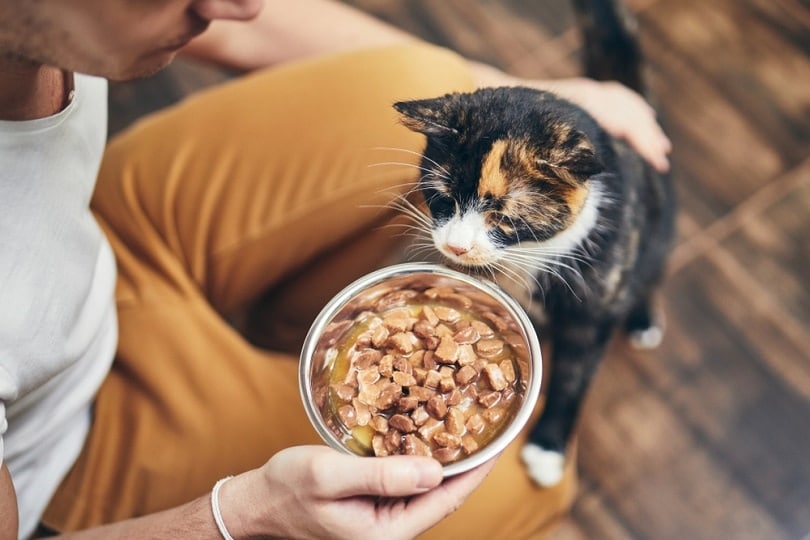
There are various types of prescription cat food formulated by different brands. Some popular ones include Hill’s, Purina, and Royal Canin. Prescription cat foods are available as kibble or wet foods and come in different flavors, so they can easily be eaten by most cats.
Here are some of the different types of prescription cat foods.
1. Kidney Care
There are different types of kidney diseases affecting cats, but chronic kidney disease (CKD) is the most common. An estimated 30% to 40% of cats over 10 years old are affected by chronic kidney disease and more than 10% percent of cats over 15 years old.1 Cats with chronic kidney disease may need lifelong management with the right treatments.
According to the Cornell Feline Health Center, diet modification is a proven aspect of chronic kidney disease treatment. This is because prescription cat diets for kidney care have fewer proteins, sodium, and phosphorus while being higher in B vitamins and antioxidants. This makes kidney care prescription diets necessary for cats with specific dietary needs because of kidney issues.
2. Diabetes Care
Diabetic cats can benefit from a prescription diet that helps with weight management and blood sugar regulation. This prescription cat food is usually high in protein but low in carbohydrates, which is ideal for diabetic cats.
3. Urinary Care
Urinary care prescription cat foods are formulated for cats that suffer from various urinary conditions. This includes the formation of urinary stones or crystals. This prescription diet contains restricted mineral levels, such as phosphorus, which may lead to urinary stone development.
Furthermore, urinary care prescription diets can help to maintain a lower pH level in the urine to avoid bladder stones.

Where Is It Used?
Prescription cat foods are prescribed to cats who require a specialized diet for specific health conditions. It is not usually used to prevent certain health conditions, but rather fed as part of treatment or management plan.
Cats who do not need a prescription diet shouldn’t be fed it unnecessarily. Although a normal, healthy cat is unlikely to be affected by having a nibble of the food occasionally, it should not be fed as a daily diet. Prescription cat foods have restricted amounts of certain minerals, proteins, or carbohydrates which aren't necessary for most healthy cats.
Prescription cat foods are not luxury food, but rather fed for medical reasons and shouldn’t be misused.
Advantages of Prescription Cat Food
- Helps to treat and manage specific health conditions.
- Available as either a wet or dry food to cater to cats with food preferences or dental issues.
- Have different flavors to appeal to even the pickiest eaters.
- Contain specific ingredients and nutrients tailored to cats with certain health conditions.
- Formulated to contain the nutrients your cat requires to be healthy despite their health conditions.
Disadvantages of Prescription Cat Food
- Expensive compared to other cat foods that do not require a veterinary prescription.
- Can only be purchased with a veterinarian's note.
- Not guaranteed to work for every cat with health conditions the food is formulated for.
- Should only be fed under the guidance of a veterinarian as it is unnecessary for cats who do not need it.

Frequently Asked Questions (FAQ)
Why is prescription cat food so expensive?
Although prescription cat foods can be helpful for cats with tailored dietary needs, they can leave a dent in your wallet. The price is likely from the extensive testing the food undergoes before it can be marketed as “therapeutic”. Don’t hesitate to speak with a veterinarian if you feel like you cannot afford the prescription diet your cat has been prescribed.
Why can’t I purchase prescription cat food from the pet store?
Prescription cat foods can only be purchased if you have a veterinary note or card. You cannot purchase the food without one, even if you simply want to test whether your cat will like it or not. Prescription cat food is generally sold by veterinary clinics and pet stores but won’t be sold to you without a veterinary prescription.
Are prescription cat foods really necessary?
Prescription cat foods are necessary for some cats with certain health conditions that require diet modifications. They are not sold for the money-making aspect, hence why they can only be purchased with a prescription. Prescription cat foods are not necessary for all cats and have different uses than regular cat foods that don’t require a prescription.

- NO MESS - The 360° tray on this cat food and water bowl set has a raised design to catch and contain stray crumbs and drips. Protect your indoors and floors from wet and messy meals!
- WHISKER FRIENDLY - Shallow and wide metal containers with flat bottoms ensure your kitty can enjoy mealtime free from whisker fatigue!
- CHEW-SAFE MATERIALS - Kittens and cats love chewing on silicone and soft rubber - but it's a choking hazard. Our cat feeding station materials are anti-chew for a 100% safe feeding frenzy!
Feeding your cat a high-quality diet is important for keeping them healthy and happy. But it goes beyond the food you choose; the dishes they use also matter. The Hepper NomNom Cat Bowl is our favorite for its unique, five-star design that protects from whisker fatigue and promotes good posture which also aids in better digestion. As an added bonus, it’s beautifully crafted and offers a modern take on the traditional cat bowl that fits seamlessly with all home stylings. Learn more about the NomNom by clicking here.
At Catster, we’ve admired Hepper for many years and decided to take a controlling ownership interest so that we could benefit from the outstanding designs of this cool cat company!
Conclusion
Prescription cat foods are prescribed when normal foods are no longer an option. Cats with health conditions such as chronic kidney disease, hyperthyroidism, and diabetes can benefit from a prescription diet. They are typically fed to help manage an existing health condition and not to cats who don’t need it.
Prescription cat foods are intended to be used as a preventative for healthy cats and are only necessary for cats who are prescribed them by a veterinarian.
Sources
Featured Image Credit: Dmitry Naumov, Shutterstock

Expert cat care, straight to your inbox
Vet-reviewed advice, behavior tips, and the best of Catster. Free, and you can unsubscribe anytime.
By signing up, you agree to our Terms & Conditions and Privacy & Cookies Policy.
Sarah Psaradelis is an avid young writer with dual passions for literature and animals. She enjoys sharing knowledge of animal care and helping others. Sarah has over 8 years of writing experience and is currently studying veterinary science. She resides in South Africa where she takes care of fish, aquarium snails, dogs, and rodents. Sarah is a passionate vegan activist and animal rescuer pursuing her path to make the world a better place for humans and animals alike.
Join the conversation
Ask a question, share your story, or send private feedback.