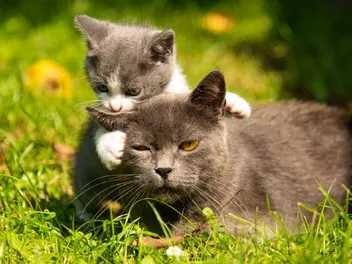
Is It True That Male Cats Kill Kittens? Vet-Reviewed Behavior Explanation


In this article
If you've heard that male cats might sometimes harm or kill kittens, you're likely reading this now to see if there's any truth to it. This is particularly critical if you have a male cat and are considering adopting a kitten.
Unfortunately, this is a brutal truth to hear. While it isn't common, male cats have been known to kill kittens they have not fathered.
We'll get into why a male cat might hurt a kitten and any other reactions they might have towards a kitten. In the end, it is best to have as much information as possible so you are better prepared to keep your kitten safe.

Why Would a Male Cat Hurt or Kill a Kitten?
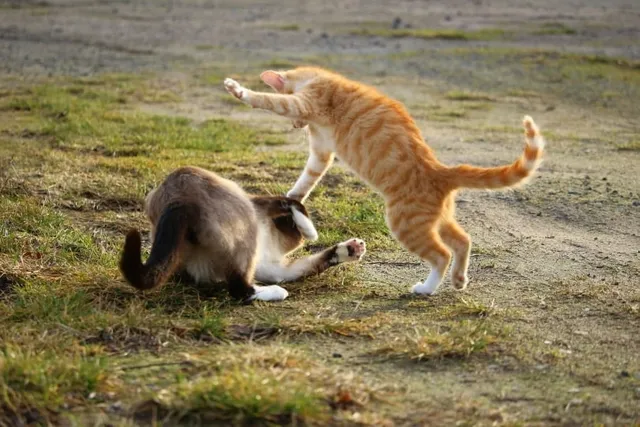
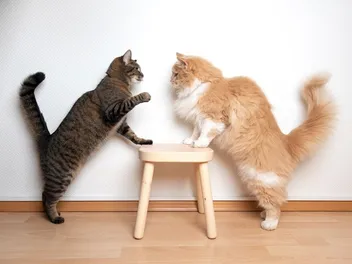
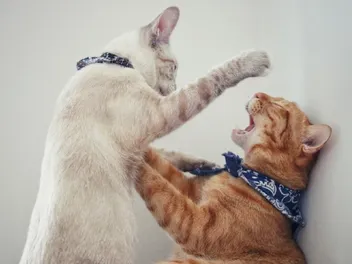
It’s not uncommon to see cats of either sex showing aggression or fighting, which is typically based on territoriality. Instinctively, male cats fight for territory so that they get to mate with the females in their territory and father kittens.
If a male cat encounters a kitten that he hasn’t fathered, he may instinctively kill it for one of two reasons.
Instinct
A male cat’s instinct may drive him to kill kittens he hasn’t fathered. This can cause their mother to go into heat again, and therefore, it may allow him the opportunity to mate with her and father his own kittens, thereby passing his genes along.
This is the most common reason why a male cat may kill kittens, and it serves an evolutionary purpose of ensuring that a male who is strong enough to claim a territory passes his genes along to produce genetically strong offspring.
This form of infanticide is very common in many species of cats. It is most often attributed to lions; however, even leopards, tigers, pumas, and many other feline species display this trait. Domestic cats, who share ancestry with the African wild cat, have retained this instinct. In cats, this behavior is most observed among feral animals and unneutered males.
Territory
Male cats may also kill kittens if they feel as the kittens are a threat to their territory and may lead to competition for resources. This behavior may be observed in feral cats but is considered very rare in pet cats. The rationale is that a mature cat may pose a threat to their territory and longevity and might put up a better fight than a smaller kitten.

Can Female Cats Defend Their Kittens?
Female cats are not entirely defenseless against a male’s hostile approach and may be able to protect their kittens at times. The females of some species, such as lions, form groups (known as prides). One of the benefits of a pride is that several female lionesses are able to put up a fight against an intruding male better than a lone lioness can. They can also share mothering duties with each other.
Feral cats also live in colonies, and these colonies are referred to as a clowder or glaring. At times, the females may fight off an intruding male together, as none of the females would want to risk losing their kittens to an intruder, even if he’s after the kittens of another cat in their clowder. At other times, even a lone female may fight a male out of maternal instincts.
A female cat in heat may mate with several males and produce a litter that is fathered by more than one tomcat. This is a strategy to reduce incidences of losing their kittens to a male, as a male that has mated with the female may not attack a kitten even if he hasn’t fathered the kitten.
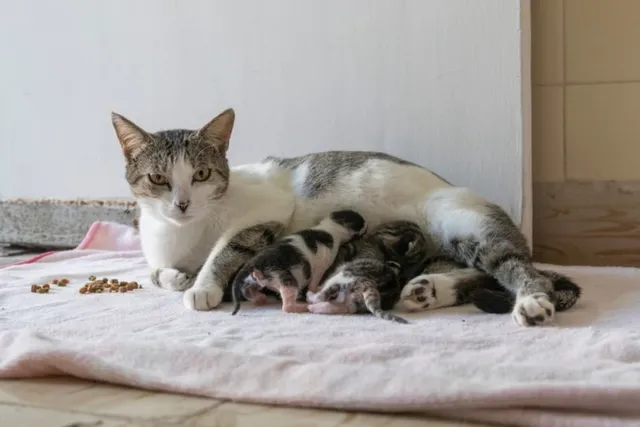
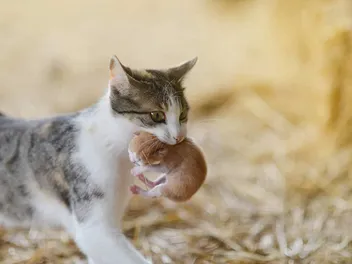
Finally, almost all female cats, regardless of their species, opt to give birth in a very quiet, secluded area, thus minimizing the risk of a male finding their kittens. They also tend to frequently transport their kittens to other places if they feel as if something is amiss. This is part of the reason why a female cat may, at times, bring her kittens to you - she might associate you with safety!
Do Female Cats Kill Kittens?
Unfortunately, this is also something that can occur, although it is quite rare. The most common reason a mother cat will kill her own kittens is that she senses something is wrong with one or more of her young.
This behavior could be due to her maternal instincts sensing an illness or some kind of abnormalities in her kitten. It’s thought that the mother might view this kitten as a risk for herself or the rest of her kittens, as a dead kitten might attract other predators to her den.
Another possible reason why a mother cat might harm her kittens is stress. This is more likely to happen with first-time mothers or if they give birth in a stressful environment. But again, we must stress that this is a very rare occurrence. Most mother cats take very good care of their young.

Female cats may, at times, kill the young of other females they’re in competition with. Again, this sort of instinctive approach to infanticide is most commonly observed in feral cats and other species of wild cats.
Can Male Cats Take Care of Kittens?
There have been many cases of adult male cats taking care of kittens that are not their own. This isn’t typical behavior in feral colonies since taking care of the young is usually a task done by female cats; males are often vying for territory.
Feral males (or tomcats) don’t typically work on raising or protecting their own kittens since they are busy breeding and marking their territory.
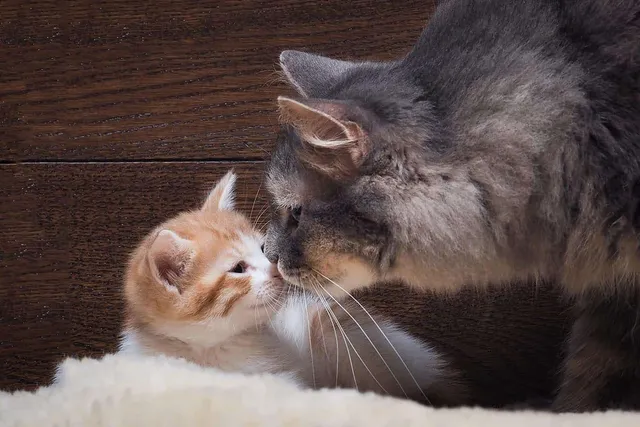
But domesticated males, particularly if they are neutered, are much more likely to be protective and affectionate towards kittens. Pet cats can be more relaxed and even playful with kittens, especially if they are well taken care of, as they wouldn’t feel compelled to compete with other cats for resources.
And then there are cases of male cats taking on a mothering role, like Henry, an 8-month-old ginger tabby. Henry took care of six kittens found abandoned in a box on the side of the road in Ketchikan, Alaska – Henry helped to save those kitten's lives!
How Do Most Male Pet Cats Respond to Kittens?
For the most part, the average male cat will ignore or just show general disinterest in kittens they’re familiar with. But as we discussed earlier, others will show their paternal side and spend time playing with and grooming the kittens. If they run into an unfamiliar kitten, their initial response is usually a closer inspection (often by sniffing the kitten). They may, at times, become startled if a kitten approaches them quietly and resort to lashing out or hissing. How males respond to any kittens depends on their temperament and whether they are neutered or not.
Neutering a cat can make a world of difference in how they respond not just to kittens but to any cat as well as their owner. The instinct to dominate and defend their territory is much higher for an intact male.
The hormone levels in a neutered cat are much lower, and they tend to be calmer around other cats.
That being said, there is still the possibility of a neutered male attacking a kitten. Being neutered doesn't completely take aggression out of the equation. However, reported incidences are exceptionally rare and usually anecdotal, and fatalities are even rarer.
How Can You Protect Kittens From Harm? 4 Effective Ways
As we've said a number of times already, it's not as likely for a domestic male cat to harm a kitten. But it's still vital to take steps, nonetheless.
1. Neuter Male Cats
If you have an intact male cat and plan to bring young kittens into your home, consider having your cat neutered. This should help to reduce any aggressive behaviors towards your kittens. Consider speaking to your vet for guidance and advice if you have any questions.
2. Slow Introductions
Kittens that are new to your house should be slowly and carefully introduced to your existing cat. This involves a quarantine period and adequate acclimation of each other’s scent before a visual and a physical introduction is attempted.
3. Create Barriers
In some cases, you might need to create barriers so your male cat can’t reach the kittens in any way. This is especially crucial if the male is unneutered. This might be necessary if you suddenly find yourself adopting a kitten (such as a rescue) without prior planning.
You could invest in a pet gate with the kittens in a safe room or place your kittens in a playpen (although it will need a cover of some kind since an adult cat could easily jump in).

4. Wait Until They Are Older
Again, depending on the male cat, it’s best to keep young kittens away from them. Typically it’s safer when the kittens are about 8 to 10 weeks old to be introduced to the male.
And just like any introduction between two animals, it might take several weeks for the adult cat to become accustomed to the kitten.
Conclusion
Remember that male cats, or cats in general, are not bad or evil. Everything they do depends on their instincts and their evolutionary behaviors. As much as we anthropomorphize our cats, they are still animals with natural instincts that kick in when triggered.
Many neutered male cats are quite loving and gentle and would be wonderful with kittens. But it’s always better to be safe than sorry. Be sure to keep them under constant supervision. Some cats might play a little roughly and accidentally injure a kitten.
Speak to your vet as well before any introductions. They can help you through the process, as the most important thing is to keep everyone safe.
Sources
Featured Image Credit: rihaij, Pixabay

Expert cat care, straight to your inbox
Vet-reviewed advice, behavior tips, and the best of Catster. Free, and you can unsubscribe anytime.
By signing up, you agree to our Terms & Conditions and Privacy & Cookies Policy.
Kathryn was a librarian in a previous lifetime and is currently a pet writer. When she was a child, she hoped to work in ZOOs or with wildlife in some way, thanks to her all-consuming love for animals. Sadly, she's not strong in the sciences, so she fills her days with researching and writing about all kinds of animals and spends time playing with her adorable but very naughty tabby cat, Bella. Kathryn is hoping to add to her family in the near future – maybe another cat and a dog.
Join the conversation
Ask a question, share your story, or send private feedback.