Get

In Your Inbox

Catster is reader-supported. When you buy via links on our site, we may earn an affiliate commission at no cost to you. Learn more.

Is Bird of Paradise Toxic to Cats? Vet-Reviewed Houseplants Examined


Share

Catster_Is Bird of Paradise Toxic to Cats

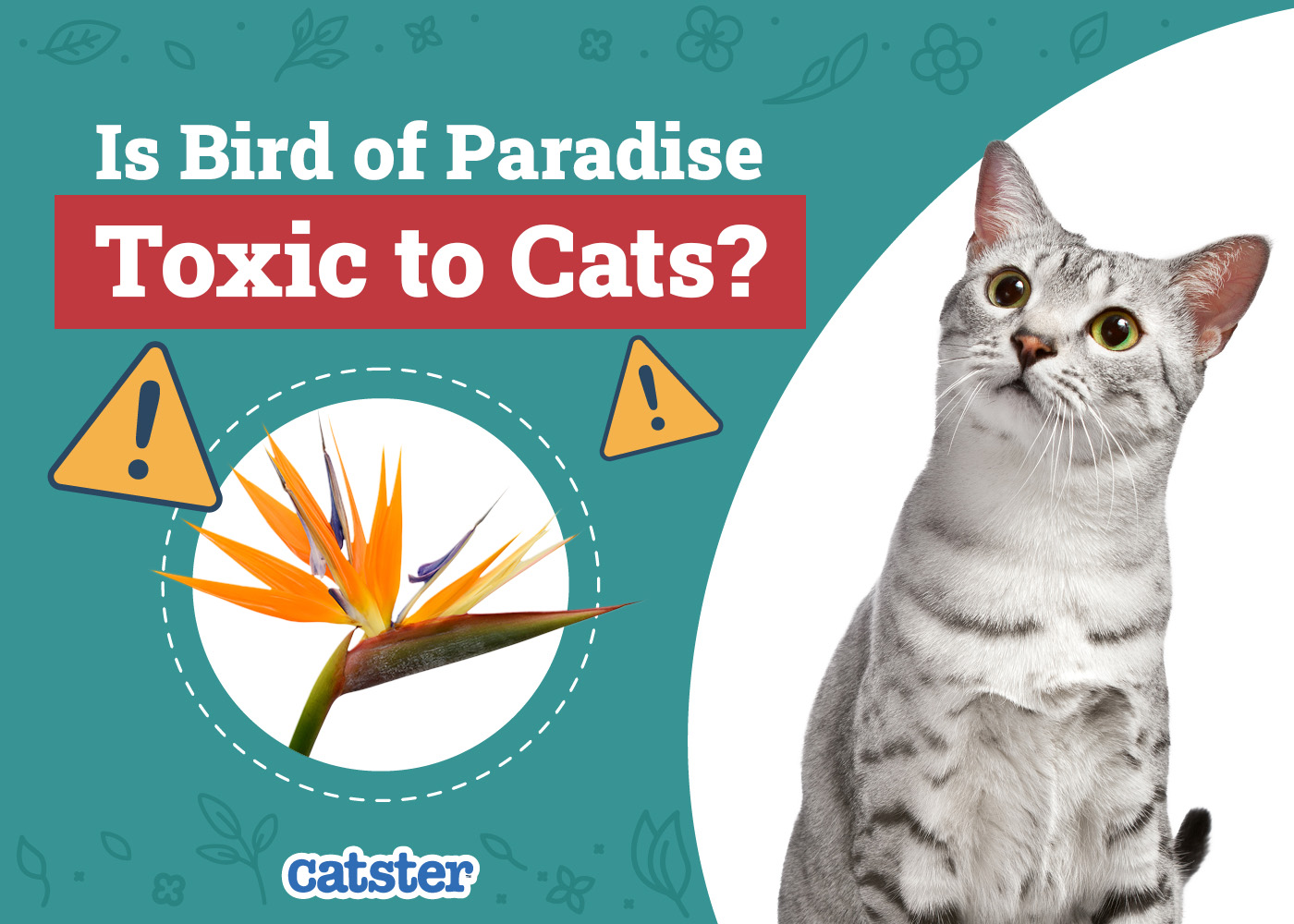
The Bird of Paradise is a large houseplant with beautiful foliage and unique flowers. But is Bird of Paradise toxic to cats? While it’s a common sight to see at plant stores, it’s not a good idea to bring one home if you live with cats. Birds of Paradise are toxic to cats, and cats will experience mild signs if they ingest them.1

Cats can be very curious, so it’s important to make the home environment as safe as possible. This includes bringing home the right plants. Because many common houseplants are toxic to cats, it’s important to do your research before buying one for your home.

divider 2 cats

Is the Bird of Paradise Plant Poisonous to Cats?

The Bird of Paradise, or Strelitzia reginae, is also commonly known as Crane Flower and Bird’s Tongue Flower. This houseplant contains gastrointestinal irritants that can cause stomach upset for cats and dogs. If your cat eats any part of the plant, you might see signs of an upset stomach. However, the fruit and seeds are the most toxic.

Birds of Paradise flowers start to make more appearances in summer flower arrangements. So, it’s best not to bring home a bouquet containing Birds of Paradise in case they’ve developed seeds.

The Bird of Paradise flower is not to be confused with the shrub Bird of Paradise. This plant is a different species, Poinciana gilliesii. It’s also known by the following names:

  • Barbados Pride
  • Peacock Flower
  • Poinciana
  • Pride of Barbados

It’s less common to see this plant, but it’s also toxic to cats. Therefore, it’s best to avoid both types of Birds of Paradise.

divider 1 paws

What to Do if Your Cat Eats Birds of Paradise

sick grey tabby cat
Image Credit: chie hidaka, Shutterstock

Fortunately, Birds of Paradise causes mild signs in cats.

If your cat ingests a part of one, you can expect to see the following signs:
  • Nausea
  • Vomiting
  • Diarrhea
  • Drowsiness

The best thing to do is contact a veterinarian as soon as you notice that your cat has eaten a part of a Bird of Paradise. The helpful information that you can give the veterinarian is the amount that your cat has ingested and how much time has passed. If the veterinarian wants you to bring in your cat, make sure to bring a piece of the plant with you.

If you need to speak with a vet but can't get to one, head over to PangoVet. It's an online service where you can talk to a vet online and get the advice you need for your pet — all at an affordable price!

PangoVet_Mention-in-Content for PangoVet2 save money

If your cat has an upset stomach, make sure to supply plenty of water and temporarily withhold food. Once your cat stops vomiting, you can feed it a bland diet and gradually help it transition back to its regular food.

divider 2 cats

Keeping Your Pet Safe from Houseplants

cat-surrounded-by-house-plants
Image Credit: Foto2rich, Shutterstock

Birds of Paradise have large leaves that often split into strands. These leaves can be extremely tempting for cats to play with, and there’s a good chance that they’ll bite down on a leaf to get a better grip on it. So, if you already happen to have a Bird of Paradise in your home, try to relocate it to a room that your cat can’t access.

You can also try deterring your cats from going near a Bird of Paradise by placing a sticky tape border around the plant or using a scent that they don’t like. Cats don’t like the smell of citrus, so adding a lemon or orange peel to the plant pot might discourage your cat from approaching the plant. Just make sure to dispose of the fruit regularly before it starts to mold.

The best way to keep your cat safe is to avoid bringing home toxic houseplants altogether. Do your research before purchasing a houseplant. Doing a quick search on the ASPCA’s Toxic and Non-Toxic Plants List can be lifesaving.

Common houseplants that are toxic to cats:
Common houseplants that are safe for cats:
  • African Violet
  • Baby Rubber Plant
  • Bird’s Nest Fern
  • Boston Fern
  • Christmas Cactus
  • Parlor Palm
  • Ponytail Palm
  • Rattlesnake Plant
  • Spider Plant
  • Watermelon Peperomia
divider 3 paws

Conclusion

Birds of Paradise are toxic to cats, but only mildly. So, if your cat ingests a part of the plant, you typically don’t have to worry too much. However, it’s still a good call to contact a veterinarian to see how you can help your cat alleviate or manage symptoms.

The best way to keep your cat safe is to be informed about toxic and non-toxic houseplants. Since you can find this information with a quick internet search, it’s pretty easy to ensure that your cat doesn’t encounter unsafe plants in the home.


Featured Image Credit: Rawpixel

Want content like this delivered to you?

Sign Up For Our Newsletter

News, insights, expert advice, and everything cat

* By submitting, you agree to our Terms & Conditions and Privacy & Cookies Policy.


How useful was this post?

Click on a star to rate (you can leave written feedback after clicking submit)

Help us improve Catster for pet parents!

Your feedback really matters.

What did you like about this post? Also how can we improve it?

Join the conversation

Leave a Reply

You’re very welcome to leave a comment or question. Please know that all comments must meet our community guidelines, and your email address will NOT be published. Let’s have a positive and constructive conversation.


Talk With A Vet Online

Peace of mind,
anywhere, anytime

Affordable vet advice

Why Chicken Bones Are More Dangerous for Cats Than Most Parents Realize

Chicken bones seem harmless enough, but for cats, they can cause serious damage quickly. Whether your cat swiped a piece off the counter...

Fantastic Pet Pantries and Where to Find Them

Let’s face it: times are really tough right now, and those of us in the 99% are struggling with the cost of just...

Ask Dr. Paola – Help! My Cat Refuses to Drink Water! (April 13, 2026)

Welcome to our “Ask Dr. Paola” series, where every Monday we bring expert advice straight from Dr. Paola Cuevas (MVZ) to help our...

Why Healthy Cats Still Vomit Sometimes (And How to Respond)

A cat that just vomited needs a specific kind of care, and the feeding decisions you make in the next few hours actually...

More related

6 Pet-Friendly Hotels Near New Orleans (2026 Guide)

Also called the Big Easy or Nola, New Orleans is a quintessential southern melting pot of vibrant nightlife, jazz music, Cajun food, rich...

Cat Emergency Kit: Preparedness Checklist for When Disaster Hits (Vet-Verified)

Having an emergency preparedness checklist for cats has never been more important. But disasters aren’t limited to any particular season, certain area or...

6 Best Cat Calming Treats in 2026 – Reviews & Top Picks

Sometimes our felines can be nervous Nellies, while others can be downright aggressive. Regardless of why you need calming supplements for your cats,...

Megacolon in Cats: Signs, Causes, Treatment & Prevention (Vet Answer)

You’re likely quite familiar with your cat’s litter box habits. After all, you need to regularly scoop and clean the box, so you...

Keep reading

The Real Reasons Kittens Suckle! Warning: High Level of Cuteness Follows

If you’ve welcomed a new kitten into your home, you already know they come with a whole toolbox of adorable quirks. But there’s one behavior many pet parents don’t expect: suckling. Whether it’s a blanket, a finger, or their own...

sphynx kitten, webbed feet, sucking a blanket

Why Do Cats Walk in Circles Before Lying Down? Vet-Verified Facts & FAQ

Cats are known for their weird yet fascinating behavior, which can sometimes leave owners shaking their heads. One of the most peculiar behaviors that many cat owners have observed is their tendency to walk in circles for a minute or...

russian blue lying down

Are Angel Plants Poisonous to Cats? Vet-Approved Facts and Toxicity Guide

Angel Plants, or Exotic Angel Plants, is a reputable brand of houseplants that sells over 400 different types of plants. Because the term “Angel Plants” isn’t referring to a specific plant species, it’s impossible to say if they’re poisonous to...

Catster_Are Angel Plants Poisonous to Cats

Why Do Cats Like Squeezing into Tight Spaces? 7 Vet-Reviewed Reasons

Cats have many strange behaviors that can include chattering, kneading, headbutting, and more, but one of the strangest has to be their desire to squeeze into tight spots that seem to be way too small for comfort. If your pet...

bengal-cat-hiding-in-a-drawer

How Long Should Kittens Stay With Their Mother? Vet-Reviewed Facts & Development

There is no doubting the attraction of young kittens. They’re tiny and stumble around, and our instinct to protect them takes over. However, taking a kitten away from their mother too soon can be detrimental to the little furball. Not...

cat smelling kitten

How Do Cats Choose Their Favorite Person? 5 Interesting Factors (Vet-Reviewed)

Anyone who’s ever lived with a cat and a few other people has probably witnessed the feline tendency to develop a particularly strong bond with one specific individual. It happens in families, and among friends—anywhere there are several humans and...

cat loving his owner

Can Cats Eat Spinach? Vet-Reviewed Nutritional Facts & FAQ

Cats can be picky about their meals, but some felines express interest in food usually enjoyed by humans and other omnivores. Some veggies and fruit are toxic to cats, but can cats eat spinach? Spinach has several nutritional benefits, and...

Can Cats Eat Spinach

Is Catnip Good for Cats’ Digestion? Vet-Reviewed Nutrition Facts & FAQ

Catnip is an herb related to mint that originated in Asia and Europe. It has green or gray-green leaves, light green stems, and tiny lavender flowers. It’s technically called Nepeta cataria and has long been used in cooking and for...

cat with green eyes in catnip

Love Cats? So Do We! Join the Catster Community

Stay informed with expert pet care insights delivered straight to your inbox! Discover professional guidance on animal behavior, feeding tips, trusted product picks, and much more.


Sign up for the Catster Email Newsletter

Stay informed with expert pet care insights delivered straight to your inbox! Discover professional guidance on animal behavior, feeding tips, trusted product picks, and much more.