How to Train a Maine Coon: 5 Vet-Reviewed Tips & Tricks

When you think of training your cat, how complicated does it sound on a scale from 1 to 10? You might have a sassy cat who barely listens when you call their name, let alone to your commands. Or you might have a rambunctious kitten that can't seem to sit still long enough to learn anything. Or you might have a lazy, lackadaisical cat who prefers napping to performing. But with patience and routine, you can also teach this wonderfully clever cat breed to do just about anything. Here are some tips and tricks to help you.

Cat Behaviors & Training
Believe it or not, there are cat behaviorists who make cats their everyday profession. They work hand in hand with felines to cater to their mentality, manipulating the situation to motivate cats to perform. To get the basics of feline training down, you don't need any special certification; you just have to know your cat.
As we mentioned in the introduction, cats can be difficult to train, depending on their personality type. But once you hone in on their personality, you can use their characteristics to determine the methods you want to train your cat.
Here we have five tips that can work for various personality types.

The 5 Tips & Tricks to Train a Maine Coon
1. Carve Out Time
If you're willing to train your cat, it's easy to miss a day or do it randomly. It can confuse your cat and make them even more unwilling to do what you request. If you want the most efficient results, we don't recommend having training sessions that are too long.
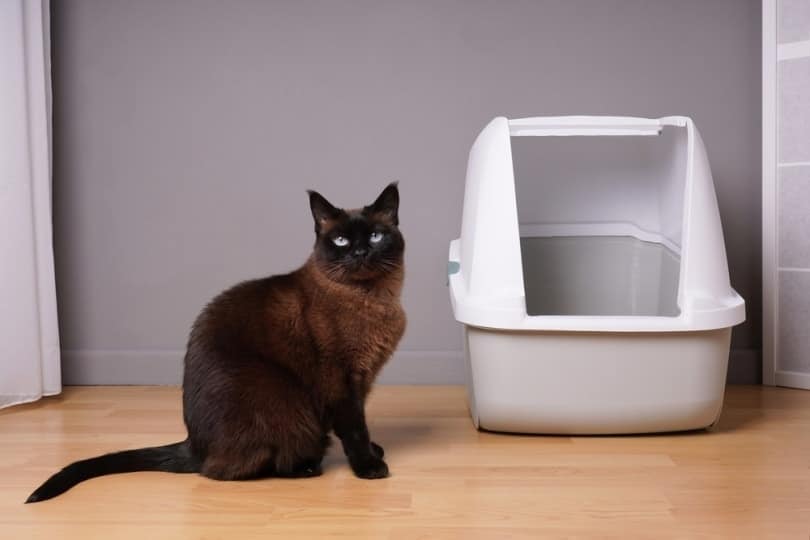
You should always have a training schedule and stick to it. Remember that you won't have to do this long, as most cats catch on rather quickly. In the same way that litter training is a means to an end, so is trick training. Eventually, these commands will be second nature to your cat, and the time-consuming training process will be behind you.

2. Acknowledge Poor Attention Spans
If your Maine Coon has a short attention span, training may be a bore. If you try to make your cat perform tricks, it might just lead to frustration on both ends. You shouldn't train in intervals any longer than 10 minutes. You can keep it even shorter, topping out at 5 minutes. If you want more than one training session, that's possible too. However, we recommend no more than two a day, especially starting out.
If your cat doesn’t seem interested in it, simply remove your attention and treats from the environment and wait until they are more receptive at your next scheduled training time. Just like we don't want to get up and go to work sometimes, your cats aren't going to want to perform all the time. This is to be expected. So, in a sense, you will have to work around your cat and all their many moods.
3. Have Treats—Always!
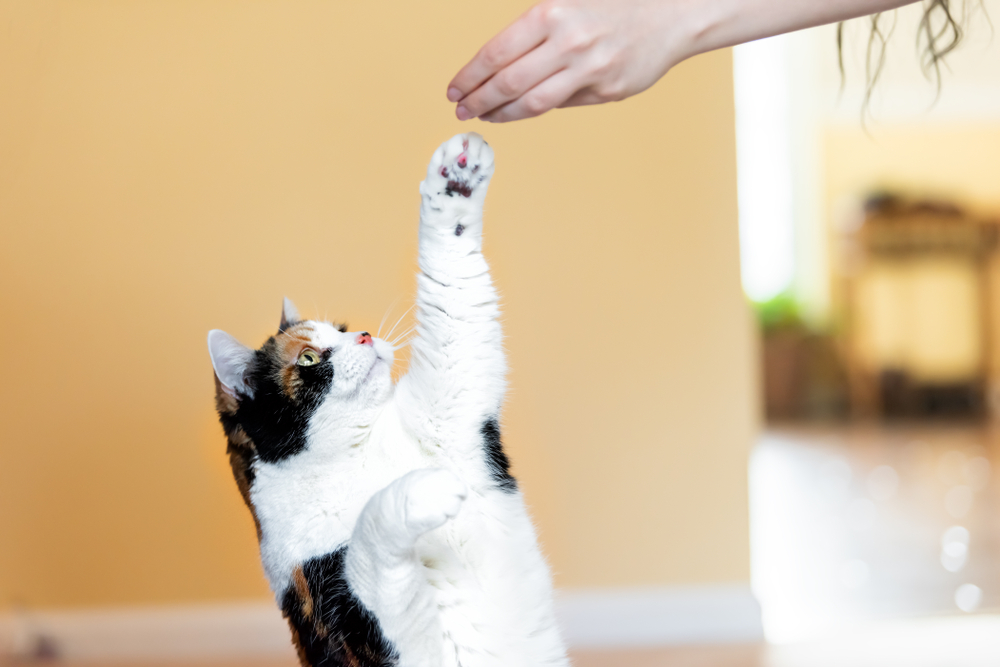
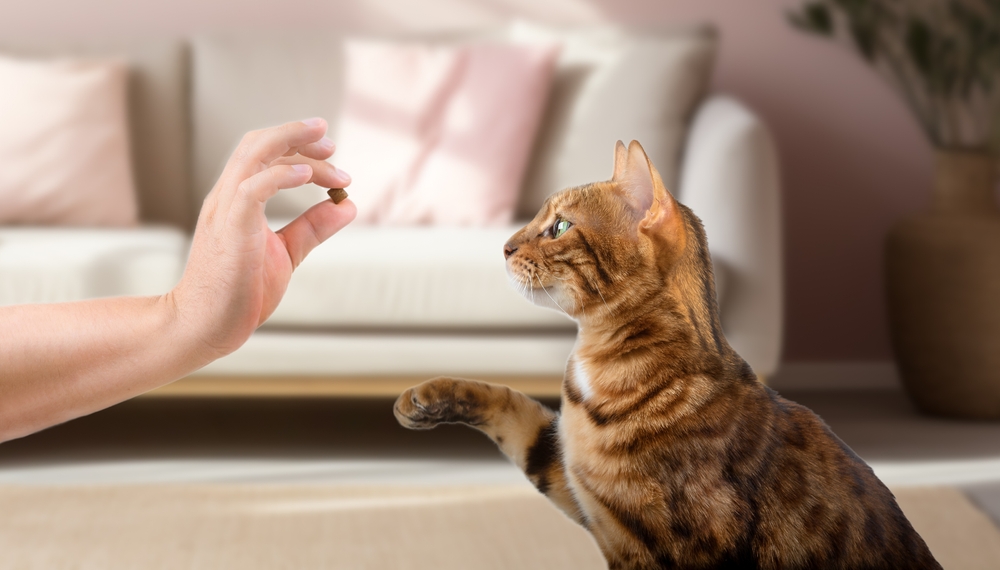
We don't know many cats who aren't food motivated in one form or another. If your cat makes the connection that certain behaviors get them rewards, they will probably perform for that reason alone. Simply have their favorite treat on hand when you're working with them. Just remember to use healthy protein-based treats that nurture your tiny carnivore. Also, use your treats wisely, and try to keep the treats around 10% of their caloric intake.

4. Show Patience & Consistency
One of the most important aspects to consider when training is your overall attitude about it. It doesn't matter what you're trying to teach your cat. Patience and consistency are key things your cat needs to be able to rely on you to keep a neutral temperament. It can seriously damage your training regimen if you get frustrated or aren't consistent.
5. Praise Your Cat for a Job Well Done
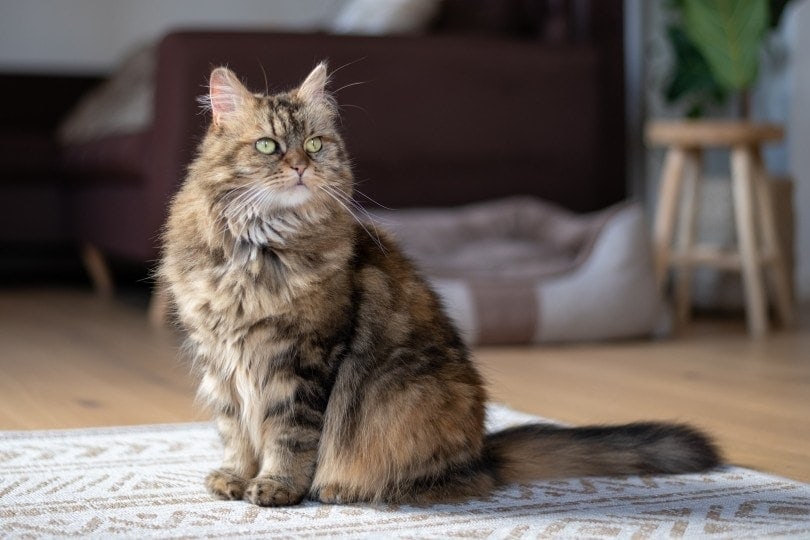
Maine Coons have quite intriguing personalities. They tend to have a strong presence and can generally be very relaxed and carefree about their daily lives. Because they are so social and generally calm, this breed makes an excellent candidate for training.
Up to this point, you have probably been overtaken by their exciting and curious personalities. These are the types of cats who can absolutely learn several behaviors if you show enough persistence. When it comes to simple concepts like learning to use the litter box, your Maine Coon probably had it down after the first try.
Are Some Cats Untrainable?
If you have a particularly headstrong cat, you might wonder how you will ever change their opinion about daily learning. It might seem that some cats are entirely untrainable, having terrible behaviors that make you extremely frustrated.
Say, for instance, that you have a particularly destructive cat who is constantly shredding curtains and fabrics. It will take patience and training to eliminate the behavior, but can it ever be completely eradicated?
If you feel like you're in over your head when it comes to your cat and you are noticing that you're having more bad days with them than good, it might be a good time to look into professional help. Many animal professionals are willing to help with situations just like these to improve your and your cats daily living experience.
We don't like to say that certain cats are untrainable. In fact, animal behaviorists would completely condemn the idea. So, what would be some reasons why training one cat over another may be more challenging?
Well, as we’ve already spoken about, personality plays a huge role. Some cats are naturally more headstrong, erratic, and testy than others.
Once cats understand the basic rules of training games, it tends to get easier for them to connect the dots. Inexperienced cats might find it a bit more difficult at the beginning. But once cats understand the basic rules of training games, it tends to get easier for them to connect the dots.

Hormonal Behavioral Problems
If you yourself have ever been a victim of your own hormones, you can understand just how drastically it can affect your personality. Cats are the same. When male cats reach sexual maturity around 6 months old, they start to exhibit less than favorable behaviors. If you have a cat that's particularly prone to bad behavior, it could truly be due to hormones.
Female cats are the same, but their behaviors differ slightly. Females will go into heat cycles, being incredibly overbearing, extra lovable, and might even constantly try to escape your home. If you do not spay or neuter your Maine Coon in time, it can cause unwanted behaviors on both ends.
Males, on the other hand, might start spraying to mark their territory and attract mates. They can also show more aggressive tendencies than they did before. That is why it's super imperative to get your Maine Coon fixed before they get to this point. A veterinarian will likely recommend a good time that works best for your kitten.
When spraying and marking territory, this behavior is possible with both males and females. Each of them does it for different reasons. Females will spray to release their pheromones, letting males know that they are completely ready for motherhood. Conversely, males like to ward off other males, claiming the territory as their own to decrease competition and increase the likelihood of finding a mate.
Spaying or Neutering
All of us here recommend spaying or neutering. If you tend to have an issue with cat care, there are definitely ways that you can mitigate a little of the cost associated with it.
Spaying or neutering your cat doesn't have to cost hundreds of dollars. You might go to a vet clinic that charges outrageously for the surgeries, but there are other much more affordable options for pet owners everywhere. Animal rescues, shelters, and mobile clinics will spay and neuter cats for extremely fair and reasonable prices.
Once you have spayed or neutered your cat, you might notice these behavioral changes that were challenging resolve themselves for the most part. Your cat might be much more focused and easier to train. You can check your local area to see the options available and the pricing.
What Kinds of Things Can You Teach Your Cat?
Training differs greatly depending on the desired outcome. Some people want to toilet train their cats. Other people want to teach their cats how to do all sorts of tricks. And others simply want to train their cat to have admirable mannerisms and good behavior.
If you're trying to train your cat, your system can differ significantly depending on what you're trying to achieve. However, when it comes to patience, consistency, and routine, these are parts of training in every category.
Behavioral Training
Cats can be a challenge sometimes. Suppose they are particularly destructive or tend to have bad habits, like climbing on tables and counters or knocking stuff over on your shelves. In that case, you might want to teach them that these behaviors are unwanted and unacceptable.
We want to add here that the problem is your cat jumping on top of stuff. We have another solution on top of regular behavioral training. There are tons of options these days for cats that serve as major activity outlets.
You can scour Pinterest and online websites to get ideas on pre-manufactured items or things you can make in your very own home. You can build anything from wall-hanging pieces that your cat can climb on to overhanging bridges across doorways.
If your cat has places just for them, they'll probably want to hang out on these things over your dinette. Cats are natural climbers with these instincts, and if we just cater to the cat's instincts, we can surely avoid certain unwanted behaviors.
Trick Training
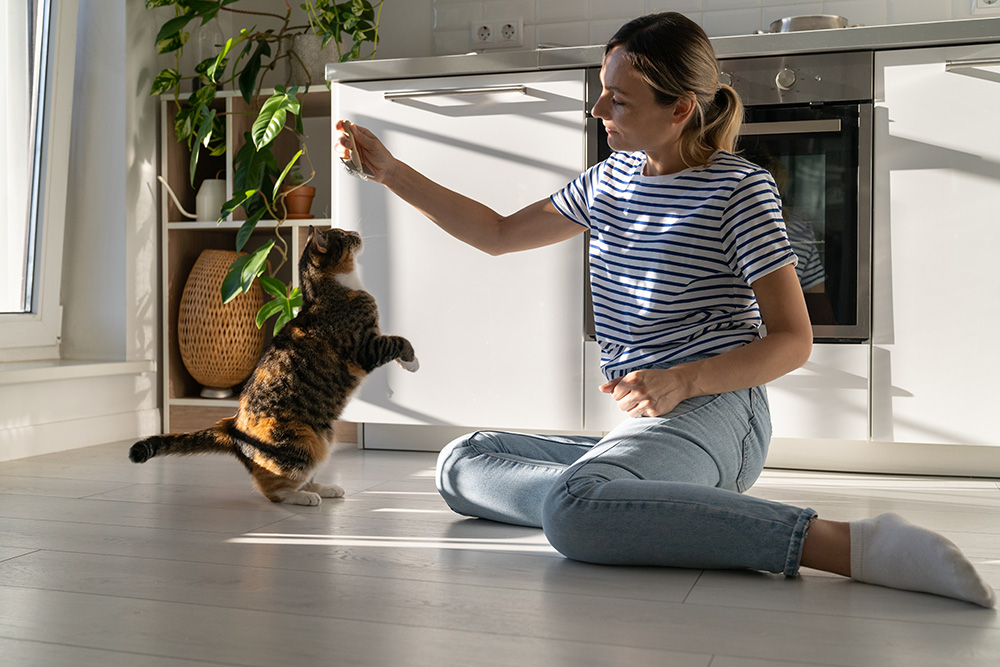
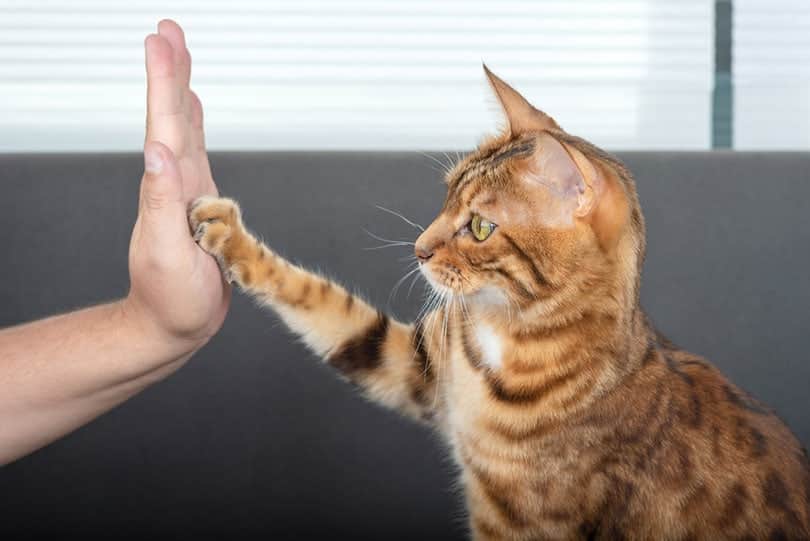
Like dogs, cats can be taught to do all sorts of tricks. It depends on how much you work with your cats and what specifics you want to teach them. As we mentioned above, positive reinforcement training as a great motivator when teaching your cats any kind of subject matter.
So, make sure to have the right resources on hand. If you can be patient, you can teach your cat to sit, lay, roll over - you name it.

Final Thoughts
You can teach your cat so many different things, and the possibilities are endless. Your Maine Coon will be a brilliant feline specimen, so you shouldn't have any problem, especially with basic skills. If you notice behavioral issues in your cat, you might want to target those issues specifically using positive reinforcement methods.
If you have any issues, don’t be afraid to consult a professional for guidance.
Sources
Featured Image Credit: Daniel Zopf, Unsplash

Expert cat care, straight to your inbox
Vet-reviewed advice, behavior tips, and the best of Catster. Free, and you can unsubscribe anytime.
By signing up, you agree to our Terms & Conditions and Privacy & Cookies Policy.
As a freelance dog writer and passionate pet enthusiast, Ashley Bates is pursuing studies in animal therapy. A mother to four human children and 23 animal companions, Ashley is dedicated to volunteering at shelters, advocating for animal rights, and rescuing animals in need. Her goal is to spread awareness, provide education, and offer entertainment about pets to reduce homelessness. Ashley's specialties include dogs and cats.
Join the conversation
Ask a question, share your story, or send private feedback.