How to Tell if a Dog Will Be Aggressive Towards Cats? 8 Vet-Reviewed Signs to Look For


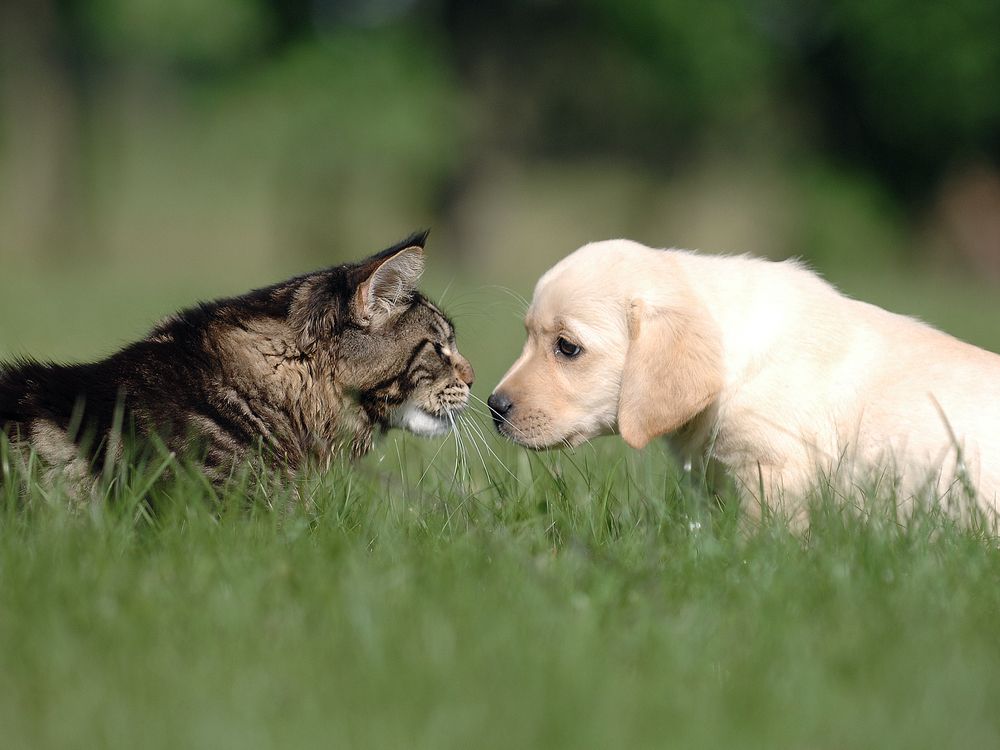
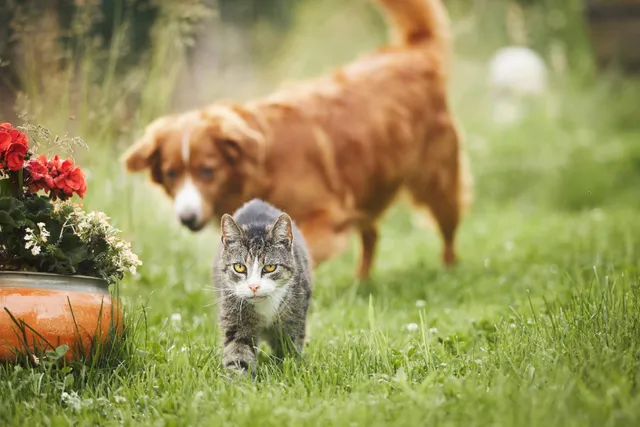
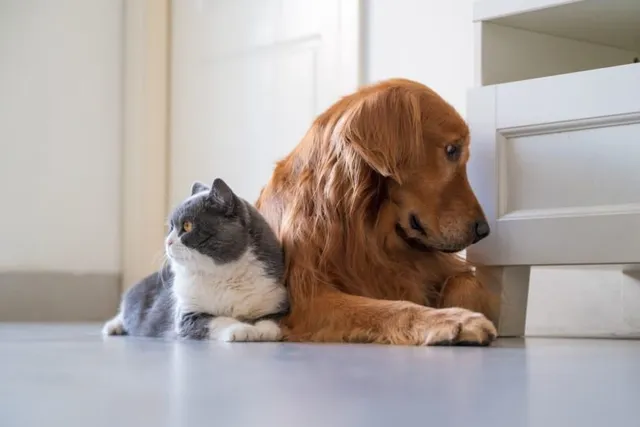
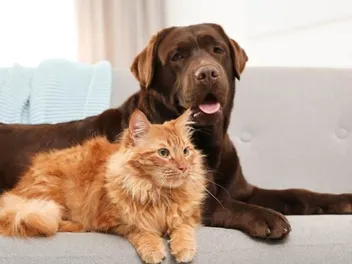
Cats and dogs are often portrayed as mortal enemies in pop culture, but in reality, they can be completely disinterested in one another or even become good friends. The outcome of an interaction between a cat and a dog depends on the situation as well as the personality of the two animals.
Also, if you’re not too familiar with dog behavior and body language, it can be tricky to determine if a dog is being happy and excited or aroused and aggressive. However, dogs consistently show the same kinds of behaviors when they’re aggressive. So, if you see a dog displaying several of the following behaviors, make sure to create a safe amount of distance between the dog and the cat.

The 8 Signs to Tell if a Dog Will Be Aggressive Towards Cats
1. Stiff & Still

Dogs can suddenly become silent and still, if they feel something threatening within their comfort zone. They’ll suddenly stop what they’re doing and try to pick up cues to determine if they’re in danger.
This is one of the first signs that a dog may become aggressive towards a cat. However, stillness can also indicate interest and focus, so it doesn’t necessarily lead to an aggressive charge.
2. Intense Stare

After a dog identifies the presence and location of the cat, it can stare it down intensely. If your dog is very still and doesn’t break eye contact with the cat, there’s a good chance that it’ll act aggressively.
It may also track the movements of the cat and ignore anything else in its vicinity, including you. Both intense staring and showing the whites of its eyes are often precursors to a bite.
3. Tail Up

Both dogs and cats also communicate with their tails, and the meaning of the same tail movements are different from each other.
For example, happy cats will have upright tails, and annoyed cats will wag their tails. Dogs, on the other hand, will wag their tails when they’re happy or excited. If they’re feeling aggressive, their tails will be high up and vertical. When a dog raises its tail, it can also be releasing more of its scent to mark its territory.
Keep in mind that a dog that’s feeling aggressive can also wag its tail really fast while it’s vertical.
4. Baring Teeth
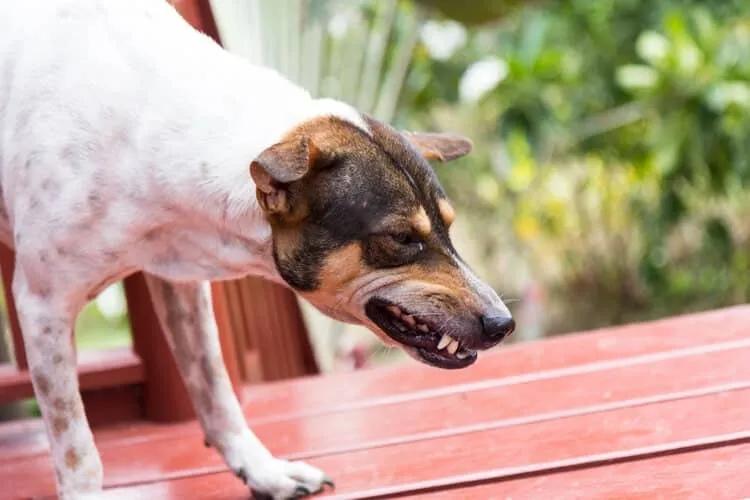
It can feel like a dog baring its teeth is sending mixed signals because it can be both a sign of friendliness and submissiveness as well as aggression and resource guarding. So, if a dog is baring its teeth at a cat, make sure to look for other signs of aggression to determine if this action is reflecting aggression.
5. Growling

Dogs can growl when they’re feeling playful and excited, and they can also growl when they’re angry. When a dog is growling due to a perceived threat, it’s sending a warning that it’s ready to act aggressively if the threat doesn’t back down.
It’s best to remove your dog from a situation if it’s growling because it’s indicating some sort of strong arousal. There’s only a slim chance that a cat will want to play with a large dog that’s growling out of excitement.
6. Ears Pinned Back

A dog will pin its ears back to its head when it’s feeling uncomfortable. Dogs that are frightened or stressed will usually pin their ears back. This energy can quickly revert to aggression if the dog doesn’t see the other animal backing down.
7. Attack Posture

Dogs assume a certain posture when they’re getting ready to lunge and attack. They will try to make themselves look bigger by elevating their head. They’ll also shift their weight forward and stiffen their legs to increase the size of their appearance. They may give one final warning snap before deciding to lunge.
8. Creating Distance

Dog aggression doesn’t always look like an aroused dog that’s ready to lunge. Some dogs may display fear aggression by trying to create more space between themselves and cats. It’ll try to run away, but if the cat continues to pursue it, it may resort to nipping or biting to keep the cat at bay.
Why Dogs Become Aggressive Towards Cats
There are several reasons why dogs can act aggressively towards cats.
Prey Drive
Some dog breeds have a strong prey drive, so they naturally want to catch any animals that aren’t dogs. Dogs in the Hound, Terrier, Sporting, and Herding groups tend to have some of the strongest prey drives.
Fear-Based Aggression
Some dogs may simply be afraid of cats because they aren’t sure of what they are and if they’re safe. If this is the case, you can try to introduce the two animals to each other from distances where they both feel safe. Then, you can slowly decrease the amount of space over time until the animals are comfortable being in close proximity to each other.
Territorial Behavior
Some dogs can be more territorial than others. This characteristic can be both positive and negative. For example, guard dogs need a sense of protectiveness in order to do their jobs well. However, highly territorial dogs can be dangerous to unfamiliar guests in the home and other dogs and animals.
Dogs with strong levels of territorial aggression must be trained in order to avoid any accidents. Obedience training is key, and it’s best to work with a professional dog trainer or behaviorist to establish a strong line of communication with your dog.
Conclusion
Understanding a dog’s body language can help you predict if it’ll act aggressively or playfully. You can watch for multiple signs to determine your dog’s intentions. However, it’s better to be safe than sorry.
So, if you notice your dog being extremely focused on a cat or getting really excited, make sure to create enough distance between the two animals to help your dog return to a calm state. This will prevent accidents and also prevent the two animals from creating any negative associations with one other.
Featured Image Credit: Okeanas, Shutterstock
Expert cat care, straight to your inbox
News, insights, and useful advice, delivered to you.

No spam — unsubscribe anytime.
By signing up, you agree to our Terms & Conditions and Privacy & Cookies Policy.
How useful was this post?
Click a star to rate. You can leave written feedback afterwards. (We read all feedback.)
Jessica is a freelance writer who spends most of her day researching and writing while her fluffy Cavapoo, Nora, naps beside her. She loves and appreciates pets and animals because there’s so much to learn from them, and they do so much for people. As a dog owner, she understands the special connection that pet owners form with their pets. She loves sharing helpful information that people can use to better understand their pets. When she’s not writing, you can find her walking dogs, tending to her plant babies, or drinking her nth cup of coffee.