How to Syringe Feed a Kitten: 5 Vet-Approved Steps & Safety Guide


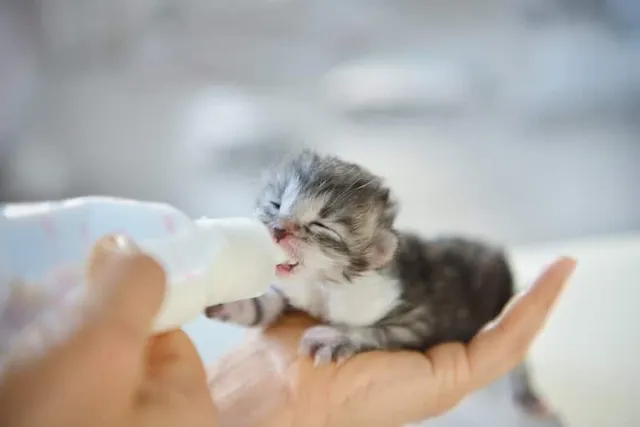
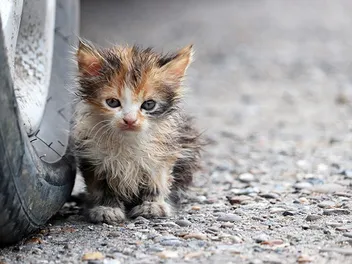
In some cases, syringe feeding a kitten may be necessary, and while this form of feeding isn’t the best, it is the only way to nourish some kittens. Syringe feeding is best done under the direction of a veterinarian, as there are several things that can potentially go wrong. You need to know exactly how much and how often to feed the kitten—and these will vary a lot from kitten to kitten.
You can syringe feed a kitten with either a feeding syringe or a regular syringe (without the needle). If you take your kitten to the vet and it’s decided that they need syringe feeding, the vet will often provide you with an appropriate syringe.
Once you have the syringe on hand, follow these steps to syringe feed your kitten:

The 5 Steps to Help You Syringe Feed Your Kitten
1. Mix Food and Water
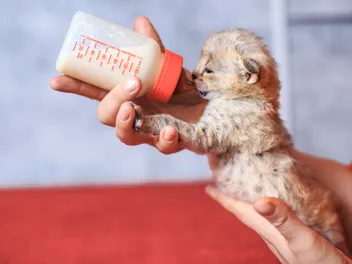
Depending on your kitten’s age, you’ll need to use either a kitten milk replacement formula or a moist form of your kitten’s regular food. Kittens that aren’t old enough to be weaned usually need a replacement formula, while other kittens can have moist food.
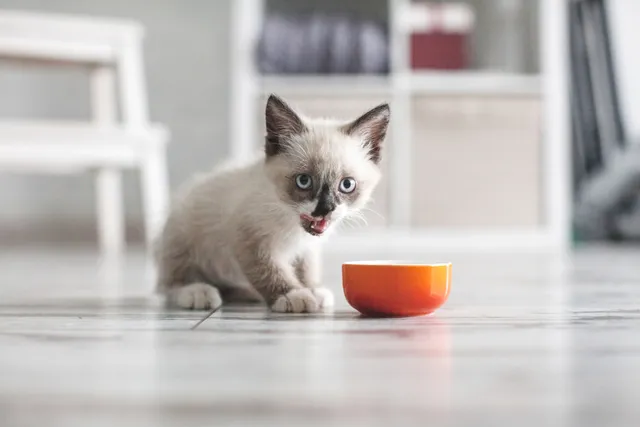
If you’re using regular kitten food, you can use pureed wet food (though these often need to be liquified a bit more by using water). Dry food can also be utilized, but you’ll need to soak it in water and then puree it.
Often, it’s easiest to make food a bit more liquid if you use warm water (or even microwave the moistened food). However, the food should be at room temperature when you feed it to the cat.

2. Fill the Syringe
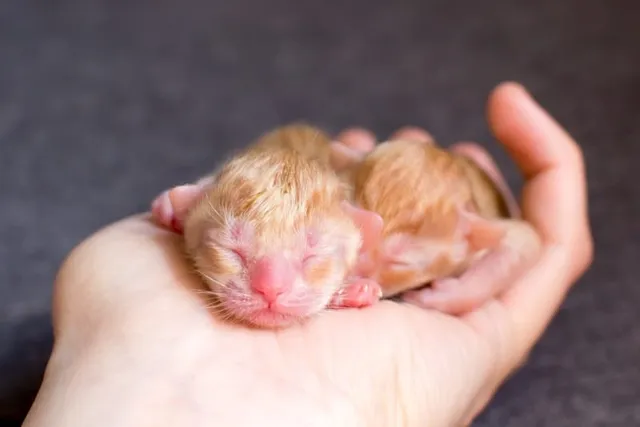
Now that you have the food ready, you need to fill the syringe. There are many different syringe sizes. The smallest 3cc syringe works well for a newborn kitten. You’ll want to upgrade to a 6cc syringe for a 2-week-old kitten and then a 12cc syringe for a 3-week-old kitten.
Of course, you can use smaller syringes for older cats and simply increase the number of syringes.
Filling up the syringe should be pretty straightforward. Just put the syringe into the food and pull the plunger so that the food gets sucked into the syringe. You will notice that if the food is too thick, you won’t be able to aspirate it, and you should mix it with a little bit more water until this is an easy task.
3. Insert the Syringe Into the Kitten’s Mouth
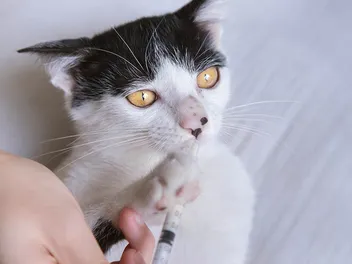
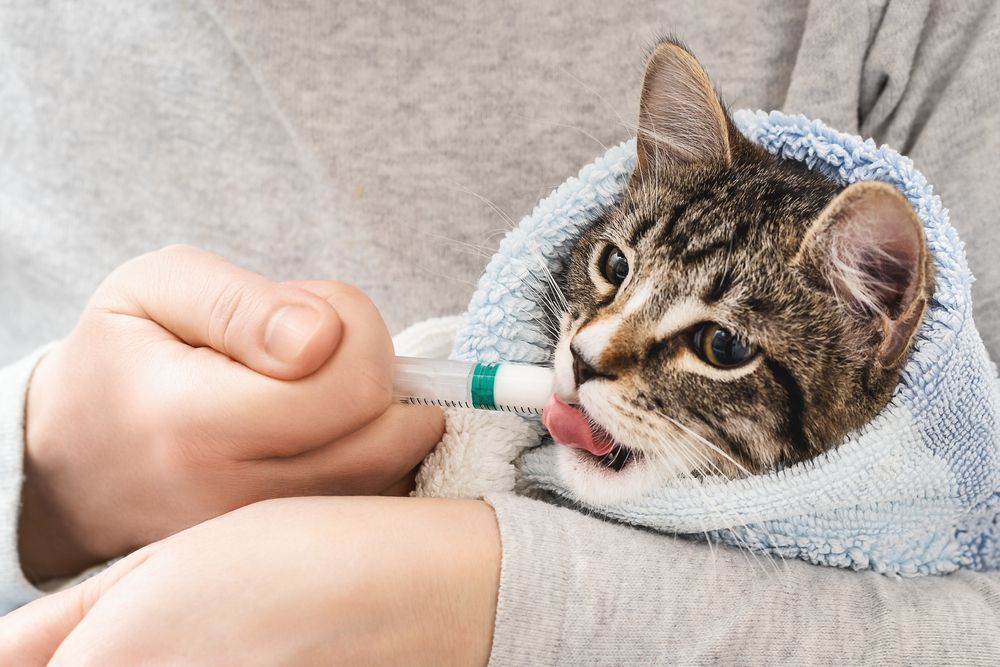
Now that the syringe is full of food, you should place it into your kitten’s mouth. However, this is often easier said than done. It works best to wrap the kitten in a towel, as this often makes them easier to hold and makes them feel secure. Make sure that the cat is in the correct position with their head up.
Insert the syringe gently into the kitten’s mouth, preferably from their side, and point it towards their cheek. You don’t want to shove it towards their throat, but you do want to get the food towards the back (and side) of their tongue. Otherwise, the kitten may just thrust the food out of their mouth.
Do not point it towards the back of their throat, as this can cause aspiration. You want to fill up their cheek with the food and then allow them to swallow it.

4. Squeeze the Syringe
Next, very gently and slowly squeeze the syringe until the kitten begins to swallow. Start with a drop of food or milk and follow with more once the kitten starts swallowing. Stop once this happens, as you don’t want to force more food than they can handle and cause aspiration pneumonia. You know they have a mouthful when they start swallowing.
Wait until the kitten stops swallowing, and then squeeze the syringe again. Go slow and give the kitten plenty of time between each squeeze.
Repeat this process until your kitten has had enough food. You’ll want to base this on a vet’s recommendation. However, you may need to weigh your kitten daily to ensure you’re increasing the food amount appropriately.
5. Clean the Syringe and Your Kitten
After each use, you’ll want to clean the syringe. Rinse the syringe with warm water and use soap to clean it thoroughly. Let it dry completely before each use. You’ll probably want to have multiple syringes on hand, as kittens need to be fed often, and this may not be enough time for the syringe to dry completely.
Clean your kitten’s face after each feeding. There will likely be food residue, as kittens are messy eaters. While food residue isn’t dangerous, it is harder to clean off after it dries, so you’ll want to get it off as soon as possible.

How Often Should I Syringe Feed My Kitten?
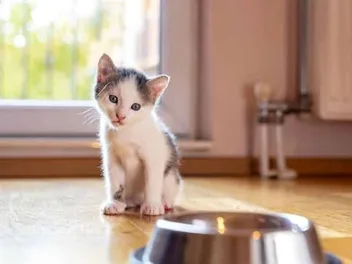
How often you need to feed your kitten depends a lot on the kitten. As a rule, younger kittens need to be fed more often. Typically, kittens need to be fed 3–4 times a day. However, younger kittens may need to be fed even more.
Because kittens are so little, they often have a hard time regulating their blood sugar. Therefore, they need to be fed regularly to prevent hypoglycemia.
Here are the general guidelines for feeding kittens by age:
Your kitten will need regular weight checks to monitor their growth and health. You may need to increase or decrease the number of feedings to ensure your kitten is gaining weight steadily. Some kittens simply need more food than others.
If your kitten is losing weight or seems lethargic, it may be that they require more food or medical attention. Always speak to a vet about when and how much to feed your kitten.
How to Prevent Aspiration and Choking
Syringe feeding allows you to provide food to a kitten that won’t eat otherwise. However, there is a risk of aspiration if done incorrectly or too quickly. Therefore, you’ll need to ensure that you don’t accidentally choke your kitten when feeding. Luckily, there are a lot of ways you can prevent this. Always use a syringe that is small enough for your kitten. Don’t use a syringe too big, as this can cause too much food to enter their mouth at a time. Be sure that the food has a smooth consistency so that it can pass through the syringe easily. Otherwise, the kitten can choke on chunks. Hold your kitten in your lap and wrap them in a towel to prevent too much movement. Always point the syringe towards their cheek—don’t point it towards the back of their throat, as this will cause aspiration. Very slowly, squeeze the syringe. If you squeeze it too quickly, it can cause aspiration and cause severe issues. Stop feeding your kitten if you notice any signs of distress. Coughing, gagging, drooling, and pawing are all signs of choking.
Conclusion
Kittens may need syringe feeding on certain occasions. Sometimes, mother cats reject their kittens for one reason or another, causing the kittens to need syringe-fed until they wean. Sometimes, kittens become sick and need to be syringe-fed while they recover.
Either way, syringe feeding is easier than many people believe. You need to work with a vet to ensure you are using the right technique, your kitten is getting the appropriate amount of food, and they are being fed regularly enough. Smaller kittens often need to be fed more often than older kittens, as they have a harder time controlling their blood sugar.
The main problem you want to watch for is coughing since this can be a sign that your kitten is not swallowing properly. Furthermore, you want to watch out for lethargy even after feeding, as this is a sign the kitten isn’t getting enough food.
See also:
Sources
Featured Image Credit: galsand, Shutterstock
Expert cat care, straight to your inbox
News, insights, and useful advice, delivered to you.

No spam — unsubscribe anytime.
By signing up, you agree to our Terms & Conditions and Privacy & Cookies Policy.
How useful was this post?
Click a star to rate. You can leave written feedback afterwards. (We read all feedback.)
Kristin is passionate about helping pet parents create a fulfilling life with their pets by informing them on the latest scientific research and helping them choose the best products for their pets. She currently resides in Tennessee with four dogs, three cats, two fish, and a lizard, though she has dreams of owning chickens one-day!