Are Cats Faster Than Dogs? Vet-Verified Facts & Explanation


In this article
The eternal debate of cats versus dogs has fueled countless discussions. One question in particular often arises: Are cats faster than dogs? While anecdotal evidence and personal opinions may differ, let's turn to science to shed light on this intriguing topic!
As in many occasions when comparing certain abilities between dogs and cats, the answer is not always straightforward. In this case, the breed of dog (and cat) we are comparing plays an important role in defining the top speed that each one may reach. Also, there is a great physical difference when it comes to domestic cats vs. big cats, which should be considered when comparing them to dogs.
In this article, we delve into the physical attributes of felines and canines, explore the fastest animals within each category, and ultimately determine who holds the crown for speed!

The Cat’s Body Explained
To understand a cat's potential for speed, it is crucial to examine their physical characteristics. Cats are built for agility and stealth. With flexible spines and powerful hind legs, they possess exceptional jumping and climbing abilities. Their lightweight frames and retractable claws enable them to swiftly maneuver through various terrains, making them proficient hunters and quick movers.

The Dog’s Body Explained
Dogs have different anatomical features. While there is significant diversity in dog breeds, they generally have a strong, muscular build. Their leg structure varies, with some breeds possessing longer legs designed for sustained running, while others excel in short bursts of speed. Additionally, a dog’s tail plays a role in balance, communication, and even swimming efficiency.

The Average Cat vs. the Average Dog: Who Is Faster?
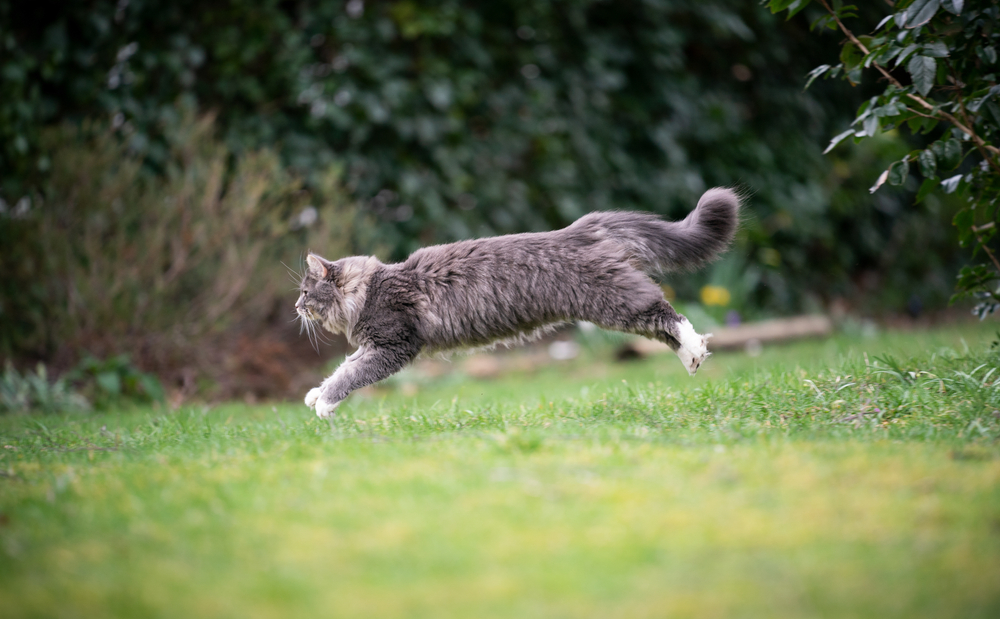
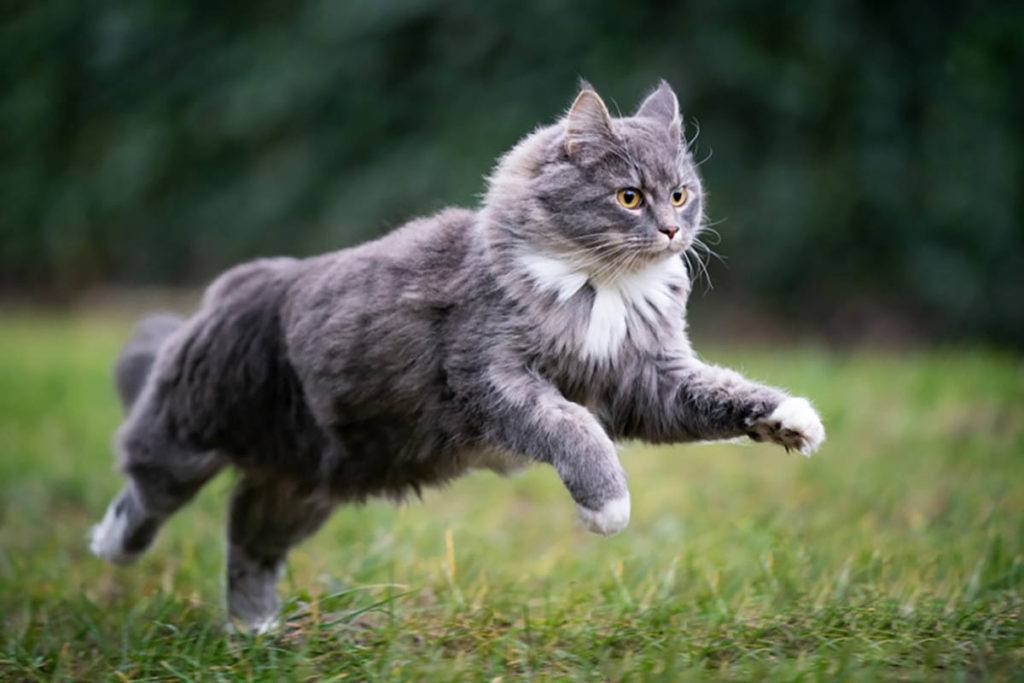
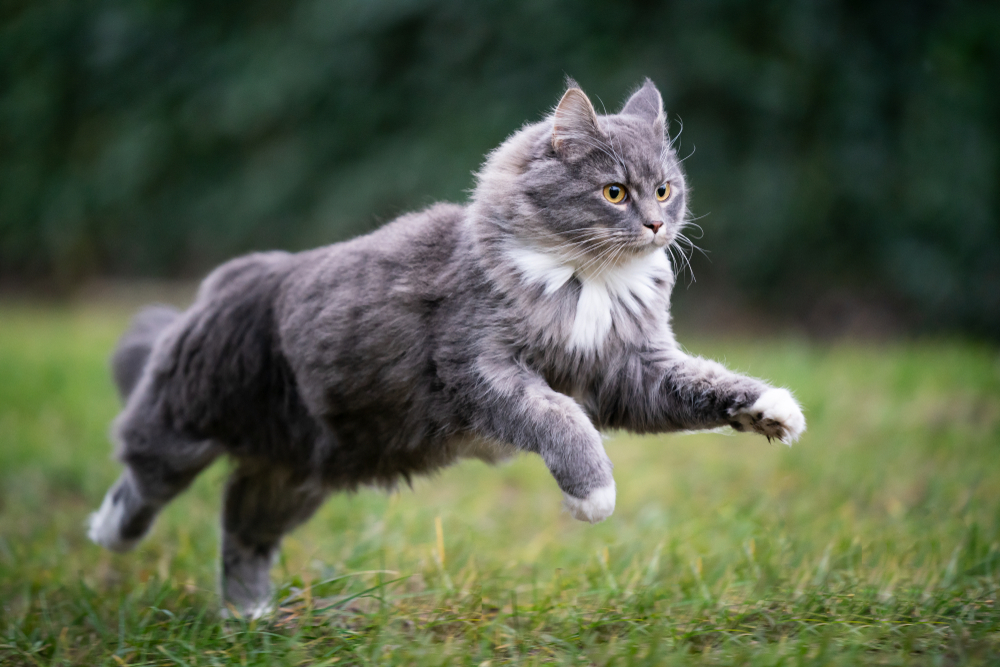
Due to their inherent agility and lightweight bodies, cats can achieve impressive bursts of speed. Most online resources claim that, on average, a cat can run at speeds of around 30 miles per hour (48 kilometers per hour), showcasing their natural quickness and agility. The combination of flexible spines, powerful leg muscles, and retractable claws enables felines to swiftly navigate their environment with remarkable dexterity.
In contrast, the average dog tends to be slightly slower than the average cat in terms of speed. Dogs typically run at speeds ranging from 12.5 to 19 miles per hour (20 to 30 kilometers per hour). While dogs may not match the top speeds of cats, they compensate with their diverse range of skills, such as endurance, tracking abilities, and specialized talents in various tasks.
When comparing these animals, however, it’s important to consider that individual variations within each species, including breed, size, and fitness level, can impact the speed of both cats and dogs!

What Is the Fastest Cat?
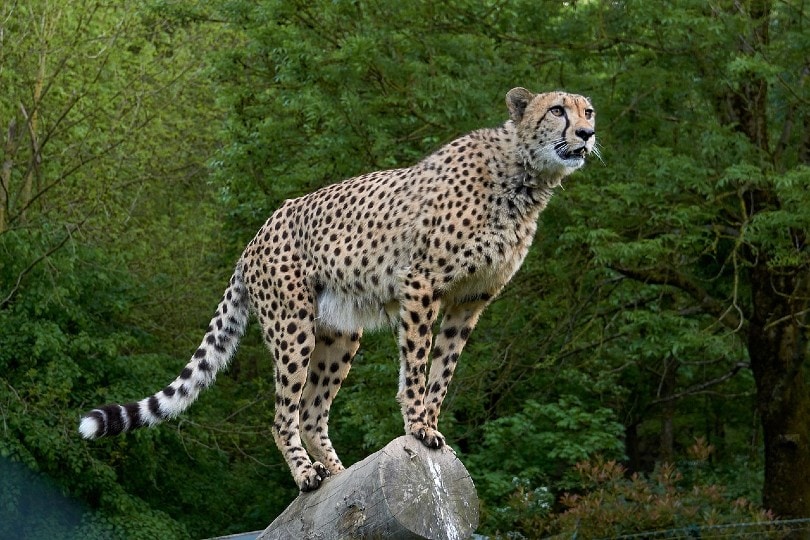
When it comes to sheer speed, one feline stands out above the rest: the cheetah. Renowned for their astonishing velocity, the cheetah can reach incredible speeds of up to 60 miles per hour (96 kilometers per hour).
Their slender body, long limbs, and specialized spine allow for remarkable acceleration and agility, enabling them to sprint across the savannah in pursuit of prey.

What Is the Fastest Dog?
Among dogs, the Greyhound claims the title of the fastest breed. Bred for coursing and racing, Greyhounds possess a streamlined body and powerful leg muscles, ideal for achieving impressive speeds.
These dogs can reach velocities of up to 40 to 45 miles per hour (64 to 72 kilometers per hour) within a matter of seconds. Their deep chests and large lung capacity aid in efficient oxygen intake, contributing to their endurance on the racetrack.

Cheetah vs. Greyhound: Which Is Faster?
When pitting the cheetah against the Greyhound in a head-to-head race, it becomes evident that the cheetah's unrivaled speed surpasses that of the Greyhound. While Greyhounds are incredibly swift, they cannot match the acceleration and top speed of a cheetah.

Domestic Cats vs. Domestic Dogs: Which Is Faster?
While the cheetah holds the title for the fastest land animal and the Greyhound reigns supreme among dog breeds, how do domestic cats and dogs compare in terms of speed? When comparing the fastest domestic cats vs. the fastest domestic dogs, canines as a whole have a significant advantage due to their size and build, which enables them to generate speeds much faster than their feline counterparts.
Domestic cats, though not as fast as their wild counterparts, still possess remarkable agility and swiftness. They can quickly dart across a room or climb vertical surfaces with ease. Domestic dogs, depending on the breed, can exhibit bursts of speed or sustain faster paces over longer distances.
The Fastest Domestic Dog Breeds
Within the realm of domestic dogs, certain breeds showcase impressive speed. The Greyhound, Saluki, and Afghan Hound are renowned for their racing abilities, boasting speeds ranging from 40 to 45 miles per hour (64 to 72 kilometers per hour). Other breeds like the Dalmatian, Vizsla, and Whippet also possess notable agility and quickness.
The Fastest Domestic Cat Breeds
When it comes to domestic cat breeds, while they may not reach the speeds of their wild counterparts, some breeds demonstrate remarkable swiftness. The Egyptian Mau, known for their distinctive spotted coat, is recognized for their agility and can reach speeds of up to 30 miles per hour (48 kilometers per hour). The Abyssinian and Bengal breeds are also known for their athleticism and can swiftly navigate their surroundings.

Final Verdict
While we would like to have a clear answer to the question of if cats are faster than dogs, the reality is that it depends on the breed we are comparing. While Greyhounds hold the title of being the fastest dogs and would beat any cat in a race, some smaller short-legged counterparts are much slower than the average cat. The cheetah, on the other hand, claims the title of the fastest land animal.
While domestic cats may not reach the top speeds of their wild counterparts or the Greyhound breed, certain cat breeds, such as the Egyptian Mau, showcase impressive speed among domestic felines. With their inherent agility, lightweight bodies, and powerful leg muscles, cats can achieve bursts of speed.
Although the debate of which species is faster is entertaining for cat and dog enthusiasts alike, it is essential to appreciate and celebrate the distinct qualities and abilities that both species bring into our lives. Whether it's the agility of a cat or the diverse talents of a dog, both animals enrich our experiences and remind us of the beauty of the animal kingdom!
You might also like: Are Cats Cleaner Than Dogs? The Surprising Details
Sources
https://www.sciencedirect.com/science/article/abs/pii/S0022519321001363
https://www.wired.com/story/why-even-the-fastest-human-cant-outrun-your-house-cat/
https://www.aspcapetinsurance.com/resources/brachycephalic-cats/
https://www.petmd.com/dog/conditions/respiratory/brachycephalic-airway-syndrome-dogs
https://www.nationalgeographic.com/animals/mammals/facts/thomsons-gazelle
https://nationalzoo.si.edu/animals/news/how-fast-ostrich-and-more-fun-facts
Featured Image Credit: Nils Jacobi, Shutterstock

Expert cat care, straight to your inbox
Vet-reviewed advice, behavior tips, and the best of Catster. Free, and you can unsubscribe anytime.
By signing up, you agree to our Terms & Conditions and Privacy & Cookies Policy.
Christian started writing for a local newspaper as a teenager, and he's been involved in the publishing industry for most of his adult life. Combining his love of writing with a passion for animals, he is currently the Director of Editorial at Pangolia and the Editor-in-Chief at Catster.
Christian lives in the Philippines with his wife, son, and four rescue cats: Trixie, Chloe, Sparky, and Chopper.
Join the conversation
Ask a question, share your story, or send private feedback.