How to Store Homemade Cat Food: Our Vet Answers!

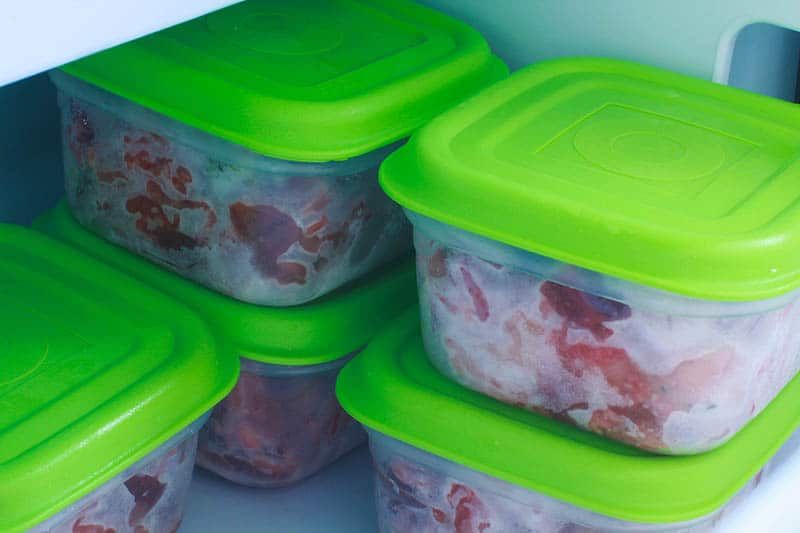
If you’re looking into homemade cat food or have already made some, you’ll need a safe way to store the food that works for you.
There are only a couple of ways to store your homemade cat food, so we’ve compiled this list to ensure you are informed when it comes to storing the homemade food for your cat.

The 4 Best Ways to Store Homemade Cat Food
1. Freezing

Freezing your homemade cat food is the best way to go about long-term storage by a long shot. It can keep for a very long time, and most foods will freeze well. It can be stored easily and safely without much effort. Freezing also allows you to order or prepare homemade meals in bulk, making long-term buying and meal planning much easier.
Many commercial diets are packaged to be freezer-compatible and come with easy-to-follow instructions on how to defrost or thaw them before feeding them to your cat. This makes the overall process very convenient.
However, freezing foods is not without its drawbacks. One downside is the fact that it takes time to thaw/defrost it, meaning you need to plan when you take a portion out of the freezer. Additionally, freezing and then defrosting meat often results in the loss of some of the moisture content, meaning that the diet, when served to your cat, will likely offer less hydration than a fresh diet.
Meat flavor may also be compromised throughout the freezing and thawing process, meaning that some picky cats might not enjoy food when it’s stored this way. Furthermore, food that isn’t packaged and sealed properly can suffer from freezer burns when it’s placed in a freezer. Such food isn’t necessarily nutritionally compromised but might have its taste altered, which may also deter a picky eater.
Traveling with frozen food can be a hassle, as it can begin to thaw and defrost before you reach your intended destination. An ice box is recommended when you transport frozen foods.
Finally, though often rare, an unexpected power outage in a freezer full of large quantities of food can result in a large loss of money, as all the food might perish. A backup and/or emergency power supply is recommended for freezers that are used to hold large amounts of food. Though a power outage is an inherent risk with any appliance, foods stored in refrigerators or chillers often aren’t bought in as large quantities as those purchased for preservation in a freezer.
2. Refrigeration

The concept of refrigeration is quite straightforward. It preserves food by lowering the temperature where food is stored. Though the preservation is not as long-term as a freezer, it is beneficial in the sense that food doesn’t have to be thawed or defrosted before being offered to your cat.
In addition, the moisture content of the food remains better when it is refrigerated versus when it is frozen in a freezer.
3. Chilling
An intermediate between refrigerated and frozen food is chilled foods. This requires the use of a chiller. A chiller is ideal for liquids and keeps products cooler than a refrigerator but not as cold as a freezer does. Therefore, a chiller cannot freeze food, meaning that foods prepared in a broth or gravy are best preserved in a chiller for short periods of time.
The mechanism of a chiller makes it better than a refrigerator when it comes to such foods. A refrigerator simply lowers the temperature of food but a chiller removes heat from liquids usually via vapor-compression.
Some refrigerators have a built-in chiller compartment, while others do not. For larger quantities of food, purchasing a chiller might be required. However, for some people, it is difficult to justify the purchase of a chiller for just this purpose.
4. Vacuum Sealing
Another way of preserving food that doesn’t rely on altering its temperature is by vacuum sealing foods. The main appeal of this method is that it preserves the moisture, juices, and flavor of foods—a major draw for owners who have picky cats.
It also offers more long-term storage than air-tight containers do in a refrigerator. Vacuum-sealed foods can be refrigerated for 1–2 weeks, whereas food placed in an airtight container only lasts about 3–5 days (at most) in a refrigerator. Even when left in the pantry, vacuum-sealed food lasts three to five times longer than food in a conventional bag or container.
Another draw of vacuum sealing is that many bags that can be vacuum sealed are re-sealable, providing you the option to portion your cat’s meals easily throughout the day with the same bag and allowing re-use of bags if needed. This often makes it more of a space saver than individually packed meals that are frozen or refrigerated.
Vacuum sealing can also be combined with the methods above to further prolong the preservation of homemade meals. Its only drawback is the purchase of the equipment required for the process; however, in the long run, it is usually worth the investment.

Frequently Asked Questions
What is Safe to Freeze?
Generally, almost all cat foods that don’t contain large amounts of liquids are safe to freeze. The only things that aren’t recommended are items that have liquids inside a closed container, like whole eggs or kitten formula. This is because when liquid freezes, it expands. This can cause these closed containers to crack or break in the freezer.
Now, of course, some things just don’t freeze as well as others. This depends on the temperature of your freezer and what type of food or liquid it is. You will have to experiment and figure out exactly what will work well for you and your cat. That being said, though most food can be safely frozen, it may not retain the same nutrition (moisture loss is usually the main concern with frozen foods).
How Long Can It Be Stored?
It is recommended that homemade cat food is only left frozen for around 4 months, as nutrients can begin breaking down at around that time. However, as it’s frozen, it won’t become toxic to your cat if kept for longer.
That being said, the quality of the food will get worse with time. Overall, try not to make more than 4 months worth at one time. Vacuum-sealed foods can be kept in a freezer for up to 6 months without worrying about their nutritional value. Certain food formulations can be kept much longer when vacuum sealed; however, this depends on the food recipe.
How Do I Safely Thaw Frozen Cat Food?
Thawing or defrosting frozen cat food is very specific and can be confusing. The single best way to thaw homemade cat food is to put it in the refrigerator overnight or for up to 2 days, depending on how much you plan on thawing at one time and the temperature settings of your refrigerator.
You can also thaw food in cold water, allowing it to slowly get to room temperature. This method is also good because it can bring it to room temperature instead of keeping it cool. It can also generally work faster than putting it in the fridge, though thawing it in the refrigerator can be safer.
The final method is putting it in the microwave. This requires following manufacturer recommendations for your microwave, as different products have different settings and recommendations for defrosting food. This ensures that the homemade cat food defrosts quickly but not too quickly to be dangerous.

What Containers Should I Use?
There are many different containers you can use when it comes to freezing cat food. They are all different and require different amounts of food, so the best choice for you will depend on how much you need at one time. Baking trays or sheets are a fan favorite because you can choose how much homemade cat food you’d like to put in one spot. The best method is to put it in a patty shape and make sure the amount you’re putting in is the correct amount for a meal. Once it is frozen, you can take the food off of the sheets and transfer it into a freezer-safe container such as a bag that can seal or a plastic container. Ice cube trays, silicon trays, and muffin tins are also useful for many of the same reasons. They can less easily be portioned out like baking trays or sheets, but they are much easier to use. It’s best to freeze them in batches, then, much like the baking trays, put them into other containers to store them to help them take up less space.
What Container Do I Keep Homemade Cat Food In?
You can keep the food in practically any refrigerator-safe container with a cover. The reason it needs a cover is to keep it from going bad sooner. You can use plastic wrap over a bowl or plate, or you can use a plastic container with a lid. Airtight containers are generally recommended for their ease of use, size options, and relative durability (most brands are microwave and dishwasher-safe).
How Long Does Homemade Cat Food Stay Fresh?
The true downside of refrigeration is the fact that it doesn’t stay fresh for very long. It’s recommended that you feed your cat the refrigerated food within 2–3 days. The sooner you use it, the better when it comes to refrigerating homemade cat food.
Conclusion
Storing homemade cat food is not as hard as you think. Overall, a combination of vacuum sealing and a cooling method (refrigeration, chilling, or freezing) are your best options, depending on the type of food you’ve prepared. With regards to preservation longevity, freezing is best for long-term storage for large batches. Refrigeration is best for short-term storage and much smaller batches. See also:
Sources
https://rawznaturalpetfood.com/make-homemade-cat-food/
Featured Image Credit: Swingout, Shutterstock
Expert cat care, straight to your inbox
News, insights, and useful advice, delivered to you.

No spam — unsubscribe anytime.
By signing up, you agree to our Terms & Conditions and Privacy & Cookies Policy.
How useful was this post?
Click a star to rate. You can leave written feedback afterwards. (We read all feedback.)
Dr. Luqman Javed DVM (Veterinarian)
Dr. Luqman (also known as Dr. Lucky) grew up with an immense passion for animals of all kinds. By becoming a veterinarian, he turned his childhood dream into reality. Now, his goals are focused on providing help to cats all around the world by helping to cat owners understand their feline friends better to ensure the best quality of life for them. His passions are wildlife, exotic pets, pet owner education, and animal welfare. He graduated with his DVM from the Universiti Putra Malaysia in 2020. He has worked with a variety of animal species and has decades of personal experience with keeping many different types of exotic pets, such as turtles, hamsters, freshwater fish, chickens, songbirds, and parrots (and he has extensive skills in training parrots, too).