In this article
View 4 More +Knowing how to read cat food labels is the difference between making sure your feline has a healthy, balanced diet or accidentally feeding them something that they’re allergic to. With the number of cat food brands available and the claims that each brand makes, it can be easy to get lost somewhere between hairball prevention kibble and salmon-flavored snacks.
Reading the nutrition information and ingredients lists can be confusing. The mixture of long words makes knowing exactly what we’re purchasing almost impossible. But it doesn’t have to be so daunting.
To help you make sure your cat is getting the nutrition that they need, we put together this list of things to remember when reading cat food labels.
Attention! There's currently a 40% discount on the cat food that ranked number #1 in our reviews. CLICK HERE & use code Catster24 to SAVE 40% on SMALLS human-grade premium cat food!

What Is the AAFCO?
The Association of American Feed Control Officials, or AAFCO, makes sure the food labels on pet food match the contents, whether in a bag or cans. It’s a private membership organization and doesn’t approve, certify, or endorse cat food — it only regulates the labels.
The AAFCO also ensures that cat food advertised to contain a single ingredient is at least 95% of that particular food, not including water. These rules might be misleading, however. A food says that it’s “chicken cat dry food,” as per AAFCO rules, has chicken as 95% of the recipe. However, if a food says that it’s made “with chicken,” it only needs to have 3% of chicken as a minimum.
What Is the FDA?
The Food and Drug Administration, or FDA, handles human food, particularly in the U.S. In the case of cat food, the FDA works with AAFCO to make sure packaging labels are accurate.
Neither the FDA nor the AAFCO regulates the food quality itself. They just tell you if the contents are exactly as stated on the label — it’s a stamp of approval.
The AAFCO determines what information should be included on a pet’s food label and how the pet food’s name must adhere to the percentages of certain ingredients in accordance with their “name rules.”
The “complete and balanced” statement on a cat food’s label indicates that the food contains the minimum nutritional requirements for a cat in a specific life stage as stated by the AAFCO guidelines.

Label Language
First, let’s look at the information that typical cat food labels have. It should tell you everything that you need to know, from the brand name, main ingredients, purpose, and even feeding directions.
Brand Logo
This is one of the most obvious parts of a label. The brand name or logo helps build familiarity with a particular brand of cat food. It’s how you recognize your preferred food and what makes it stand out on the shelf.
Sometimes, you’ll see two brands on a label, particularly on less well-known cat food. One’s usually smaller than the other. That one is the “parent” company. If you’ve ever noticed the small “Purina” logo on “Kit & Kaboodle” cat treats, this is why.
Product Name
Whether you choose to feed your cat wet or dry food, the product name will tell you what it is. Sometimes it also includes the main ingredient. By using a specific mixture of words and phrases, manufacturers can convince you to buy their products and abide by AAFCO laws.
Here are a few to remember.
- “[Meat] Cat Food”: AAFCO has a 95% law when it comes to the requirements on meat content. This 95% ruling applies to any cat food with any sort of meat at the front of the name. Chicken Cat Food, for example, must be 95–100% chicken. For wet food, this rule states that the minimum content of the meat ingredient should be 70%.
- “Dinner,” “Platter,” “Entrée,” etc.: The addition of any descriptive word to cat food, even ones with otherwise simple names, means the manufacturer only has to use 25–94.9% of the named ingredient. “Classic Tuna Dinner” is an example.
- “With”: This is a particularly clever way of catching your attention while avoiding the need to use large amounts of meat. If your cat food says, “with salmon,” for example, the salmon content is only 3–24.9% of the recipe.
- “Flavor”: To add flavor, only a tiny amount of a certain ingredient has to be added. Your cat food might be “Beef Flavor,” but the actual beef content is only 0–2.9%.
- Combination Recipes: These rules apply to recipes with more than one main ingredient, in which case, the ingredients are mentioned together in whichever format that the content percentage requires. For example, Tuna and Salmon Cat Food will contain 95% tuna and salmon. This one is particularly sneaky, especially considering the 3% “with” rule. You may find that your cat food has far less meat content than you think it does.
Net Weight
Pet food comes in various sizes. You can buy small or large bags or multi-packs. The net weight tells you how much food is in the particular container that you’ve purchased. Variety packs multiply the weight of each can or packet by the number in the multi-pack to find the overall net weight.
The exact amount of calories an individual animal needs to maintain a healthy weight is variable and influenced by many factors including genetics, age, breed, and activity level. This tool is meant to be used only as a guideline for healthy individuals and does not substitute veterinary advice
Statement of Purpose/Intent
Animals all have different nutritional needs, and their pet food is tailored specifically for their species. Cat food is no different. The Statement of Purpose or Intent tells you whether the food you’ve chosen is formulated for cats or not.
This is an important piece of information. Cats have certain requirements in their dietary needs to make sure they stay healthy. Feeding them dog food might do in a pinch but can cause serious health issues over long periods.

Ingredient List
The long list of food on the back of your cat food is the ingredient list. Like with human food, ingredients are listed by weight. The heavier the particular ingredient is, the higher it is on the list. This list will tell you everything that’s in the can or bag, including possible allergens, fillers, and artificial additives.
Remember, moisture content makes the ingredients heavier. Meat in particular, such as chicken or lamb, can be higher in the list due to the moisture content. The end product might not have much meat left due to the cooking process, though.
If you’re comparing cat food, particularly wet versus dry, it’s important to consider the dry matter over the moisture content.
Guaranteed Analysis
Not to be confused with the ingredient list, the guaranteed analysis lists the nutrients inside the food. It’ll list the percentages of protein, fat, fiber, and any other nutrients. This will help you if your cat is on a particular diet and you need to make sure their nutrient requirements are met.
Feeding Directions
If you’re a new cat owner, the feeding directions will tell you how best to feed your cat the particular food. It’ll also include information on how to go about changing from one brand to another.
Remember that these are guidelines rather than actual rules. You should adjust your cat’s meals depending on their activity levels and whether you mix kibble with wet food. If you’re still unsure, especially if your cat has a new diet plan, double-check with a vet.
Need veterinary advice but can't get to the clinic? Catster recommends PangoVet, our online veterinary service. Talk to a vet online and get the answers and advice you need for your cat without having to leave your living room — all at an affordable price!

Nutritional Adequacy Statement
This one is similar to the Statement of Purpose. The Nutritional Adequacy Statement tells you what lifestyle and age the food is targeted at.
Indoor and outdoor cats have different requirements. The same goes for kittens versus older cats. Older cats don’t require the same nutrients and minerals that kittens need to grow up healthy and strong. Likewise, kittens won’t get the right nutrients from food designed for their adult counterparts.
Statement of Responsibility
All cat food, no matter the brand or type, comes from a manufacturer. The Statement of Responsibility tells you which company is responsible for that particular variety of food and how to contact it.
Things to Know
There are a variety of other things to keep in mind when you’re looking for cat food. Here are a few things to remember the next time that you’re browsing the cat food aisle.
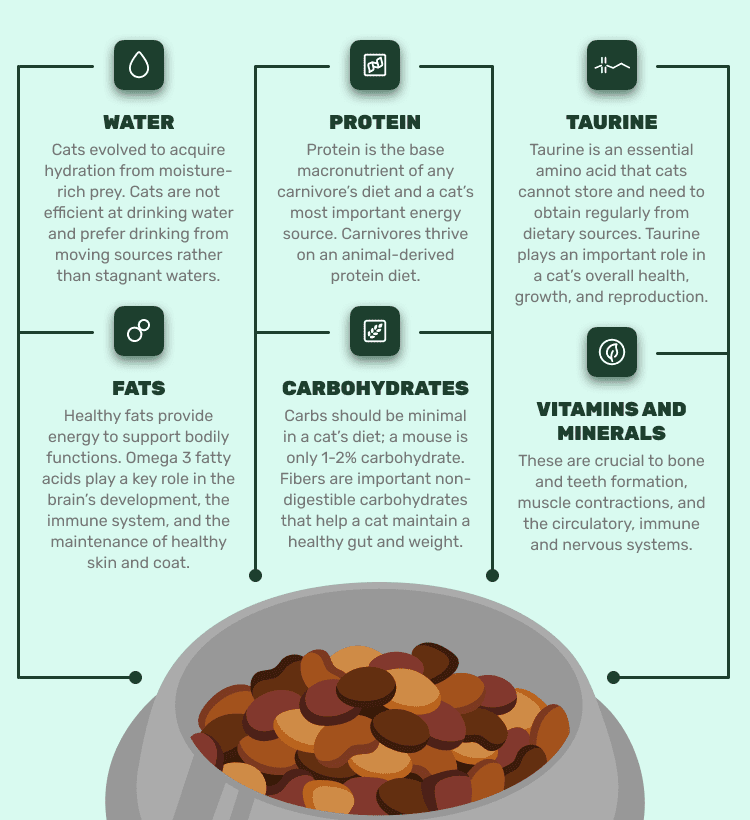
Meat Content
Cats are carnivores. They need meat to survive and aren’t built to live off vegetarian diets, or even plain cooked meat. Commercial cat food manufacturers have many different ways of explaining what types of meat they use in their recipes.
- Meat: This refers to the flesh content, rather than skin. Basically, it’s any land animal that’s been slaughtered for animal feed, whether it’s chicken, lamb, beef, or another animal. Sometimes it’ll include muscles, nerves, fat, blood vessels, and certain internal organs.
- Meat by-product: By-products are non-flesh animal parts. Skin, blood, bones, and offal make up the meat by-product part of the ingredient list. It doesn’t include anything indigestible, like hooves or horns, teeth, hair, or feathers.
- Tallow: Tallow is fat made from a specific meat product. Beef tallow, as the name suggests, is fat made from beef.
- Meal: If a label states that a cat food has meal ingredients, it’s referring to heat-processed, dehydrated, and ground tissue. It can also refer to “bone meal” — ground animal bones — or “fish meal” — heat-processed, dehydrated, and ground tissue fish that may contain fish oil.
Premium vs. Pricey
No matter what the manufacturer claims, its priority is making money. Cutting down on expensive ingredients or quality is the easiest way to turn a profit. Remember that nobody regulates the quality of cat food, only the content of the labels and its sanitary standards. While choosing a cat food with “Premium” plastered on the label is tempting, especially when your feline is sure to love it, it doesn’t mean the ingredients used are the best that they can be.
Sometimes, “premium” just means expensive.

Grain-Free
One of the most common label additions is “grain-free.” Unlike dogs, which are mostly scavengers and eat anything, cats are obligate carnivores. Although you might not realize it without reading the ingredients list, most cat food contains grain or corn to make the recipe go further with fewer meat products.
Grain allergies are less common than meat allergies, but some cats can become allergic to grains like wheat, corn, or barley. One example of a non-serious allergic reaction is your feline developing bald patches as the content of their meals affects their health. Grain-free food means no grains are used at all, making the formula suitable for cats with grain allergies.
Grains can be beneficial in particular cases, though. For example, rice is typically added to specialized diets for cats with kidney disease.

Final Thoughts
The health and safety of our feline friends are our responsibilities. They trust us to look after them, and part of that includes making sure their diets are nutritional and balanced.
Learning how to read cat food labels is a daunting task, especially with all the tricks that manufacturers use. Sparing the time to compare the best foods will pay off in the long run, both for your favorite feline’s health and your wallet.
Featured Image Credit: Caftor, Shutterstock