How to Keep Cats Away From Bird Feeders: 6 Vet-Verified Proven Methods

In this article
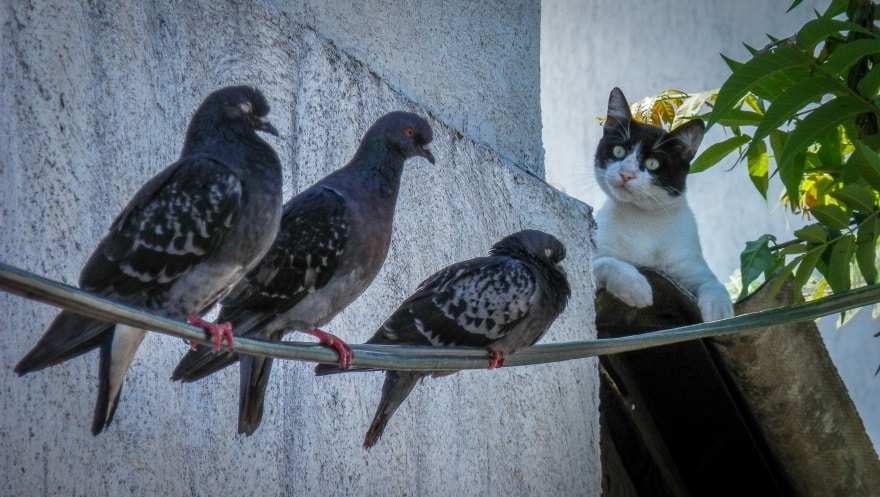
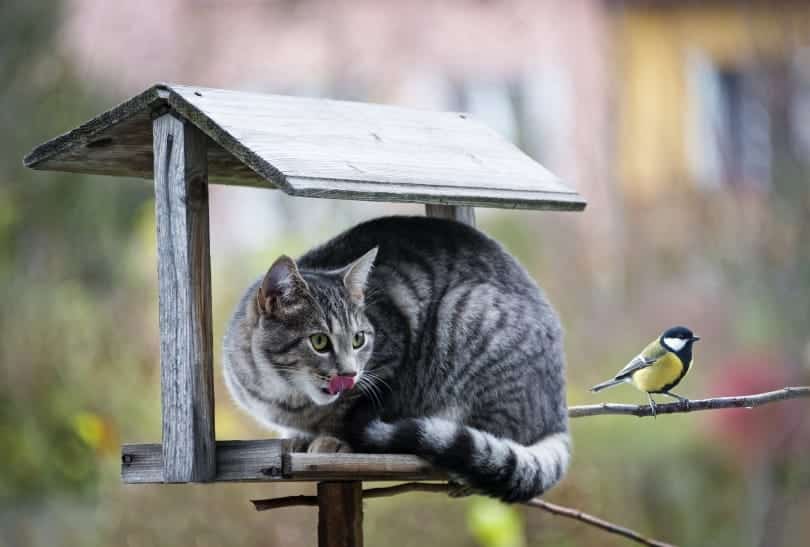
Bird feeders can add color and life to your yard or garden, but they can be a death trap if you have skilled feral or house cats on your property. The cats quickly learn that birds flock to the feeders, making them the perfect destination for your cat to hide out so they can pounce on the unsuspecting birds.
If you want to use bird feeders while still keeping the birds safe from your feline friends, there are some things you can do to change the environment and deter cats from going to the bird feeders in the first place. In this article, we will look at the top six proven methods for keeping cats away from bird feeders and what not to do.

What NOT to Do
Before we look at the six proven methods, let’s talk about what not to do. Knowing what not to do is just as important as knowing what to do, especially when commonly advisable practices are unsafe for the cat or the bird.
Mothballs

Many websites recommend placing mothballs around the bird feeders. Cats and most mammals do not like the smell of mothballs. As a result, the mothballs will deter most cats from approaching the bird feeder.
The issue with this method is that mothballs are toxic to cats and dangerous for your yard and other creatures. If your cat were to ingest the mothballs or be exposed to them long-term, they could develop serious illnesses. The same is true for other animals. Do not place mothballs in an area where cats and other animals can ingest or be exposed to them.
Petroleum Jelly
Petroleum jelly is another substance used to deter cats, but it can be dangerous. The idea behind the petroleum jelly method is that it prevents cats from climbing up the feeder pole. Looking solely at the cats, this is a safe and effective method.
The issue with adding petroleum jelly to bird feeders is that it can get on the bird’s feathers. It can hinder the bird’s ability to fly, eat, and escape from other predators. Don’t add petroleum jelly to bird feeders to protect the birds.
Bell Collars

Bell collars are another commonly recommended method for protecting birds from prying cats but are largely ineffective. The idea behind bell collars is that they alert birds of the cats. Unfortunately, most birds don’t notice the sound, and you'll waste money on the bell collar. Although this method isn’t unsafe for the cats or birds, you don’t want to waste your money.
Fences
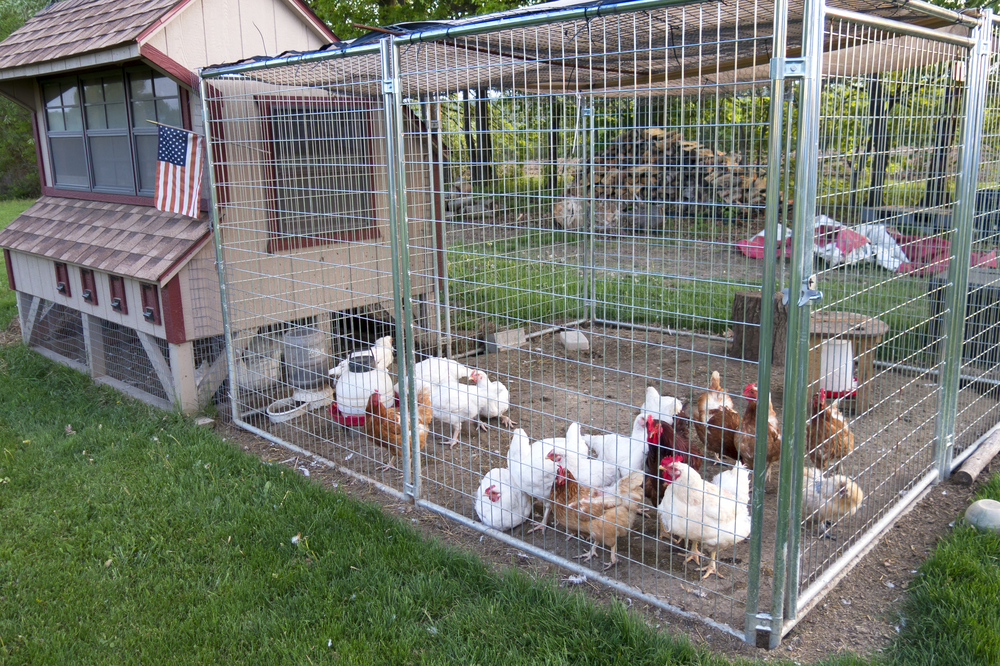
Fences are another safe but ineffective option for keeping cats away from bird feeders. As you probably know, cats are great at climbing and jumping fences. In most scenarios, a fence isn’t going to keep a cat out. There are other reasons why you might want to add a fence to your yard, but you shouldn’t waste your money on a fence if you exclusively want it to prevent cats from getting your bird feeders.
The 6 Tips for Keeping Cats Away from Bird Feeders
Let’s take a look at the six tips for keeping cats away from bird feeders now that we have learned what not to do.
1. Keep Your Cat Indoors
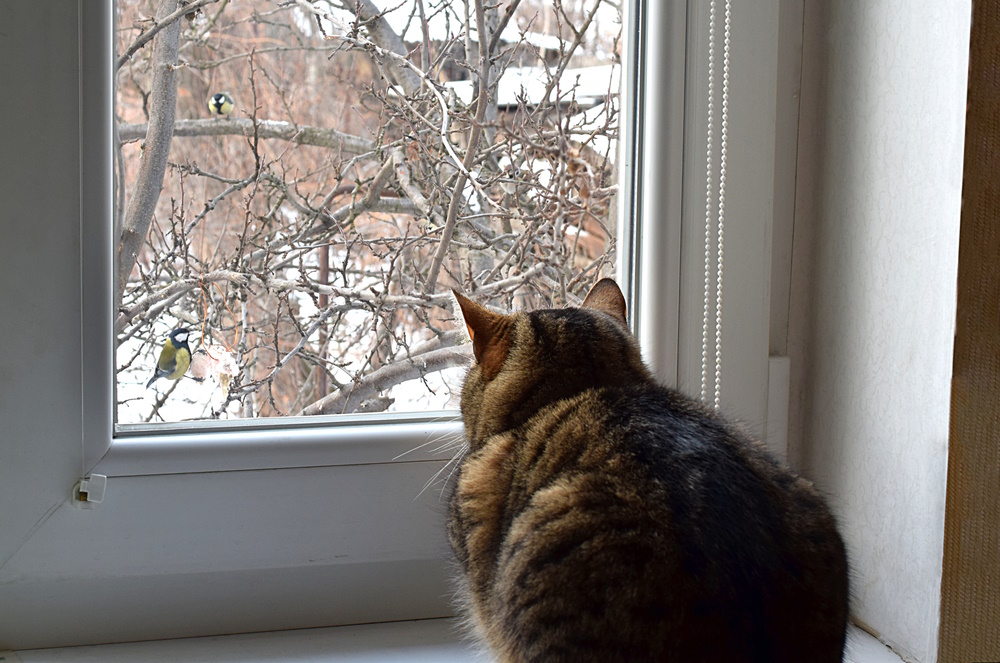
If you’re worried about your house cat getting birds while they're outside, the easiest solution is to keep your cat indoors. When your cat is indoors, they can't reach the bird feeders and the snacking birds.
If you want to let your cat outdoors, only do so under your supervision. You might want to leash-train your cat so that you can watch them to prevent them from scaling the bird feeders. For the best results, keep your cat indoors.
2. Make the Bird Feeders Tough to Reach
Whether you want to let your indoor cat outdoors or the real issue is feral cats, you need to modify the environment to prevent cats from reaching the bird feeder. The most effective way to do this is to make the bird feeders challenging to reach for your cat.
You can hang bird feeders from a tall pole in the middle of your yard. You don’t want the cat to be able to scale a deck or tree to access the bird feeder easily. Also, you can add a baffle to the pole to prevent your cat from scaling it.

3. Place Bird Feeders in Open Spaces
We mentioned this in the last tip, but it is so important that we wanted to showcase it alone. Make sure to place bird feeders in open spaces. Many people make the mistake of placing bird feeders on the back of a deck or hanging them off a tree.
When you place a bird feeder in these locations, the cat can easily hide out and climb to get access to the birds. Placing bird feeders in open spaces makes it much more difficult for the cats to sneak up on the birds or climb the bird feeder.
4. Add Scent Deterrent to the Feeder
Even though mothballs are not a safe scent deterrent to add to a bird feeder, you can use other scent deterrents. Odors are a great way to deter cats from going near a bird feeder without hurting them.
If you’re on a budget, you can easily add a homemade scent to deter cats from your bird feeder. Sprinkling pepper or vinegar around the birdfeeder is often a very economical and effective way to deter cats from hanging out. You can also purchase a premade deterrent if you don’t want to make it yourself. It’s vital to note that essential oils are highly toxic to cats and should never be used around cats.
Whether you use an at-home recipe or buy a premade concentrate, it’s essential to understand that you should not place the scent directly on the feeder. You don’t want the birds to ingest it accidentally. Instead, place the scent around the bird feeder to deter cats without posing a risk to the birds.

5. Add Spikes Around the Feeder
Most cats like to stalk their prey by slowly creeping up on the target in a crouching position. You can add spikes around the feeder to prevent the cat from crouching down and creeping. For example, prickly landscaping can naturally deters cats, but it's safer to use plastic spikes with blunt tips.
If you don’t want to add additional landscaping to your yard, you can place scat mats around the bird feeders. They are plastic mats that have pointy spikes popping up. This will make it difficult for the cat to walk towards the birdfeeder.
6. Motion Sensor
Finally, the last tip for keeping cats away from a bird feeder is to add a motion-activated sensor. A motion-activated sprinkler or a motion-activated light system will surprise the cat when they crouch nearby and cause them to run away.
At the same time, it doesn’t harm the cat, making it an ethical yet effective way to keep your cat away from the bird feeder. This option is especially good for feral cats.

Final Thoughts
If you have a problem with cats trying to attack your birds while hanging out by the bird feeders, there are several ways to keep the birds and cats safe. No matter which option you select, ensure it is humane and effective. For example, don’t use mothballs, petroleum jelly, or essential oils since they are unethical and harm wildlife.
See Also: How To Keep Flies Away From Cat Food
Featured Image Credit: Alexas_Fotos, Pixabay

Expert cat care, straight to your inbox
Vet-reviewed advice, behavior tips, and the best of Catster. Free, and you can unsubscribe anytime.
By signing up, you agree to our Terms & Conditions and Privacy & Cookies Policy.
Christian started writing for a local newspaper as a teenager, and he's been involved in the publishing industry for most of his adult life. Combining his love of writing with a passion for animals, he is currently the Director of Editorial at Pangolia and the Editor-in-Chief at Catster.
Christian lives in the Philippines with his wife, son, and four rescue cats: Trixie, Chloe, Sparky, and Chopper.
Join the conversation
Ask a question, share your story, or send private feedback.