How to Cat-Proof a Fence: 7 Vet-Verified Ways


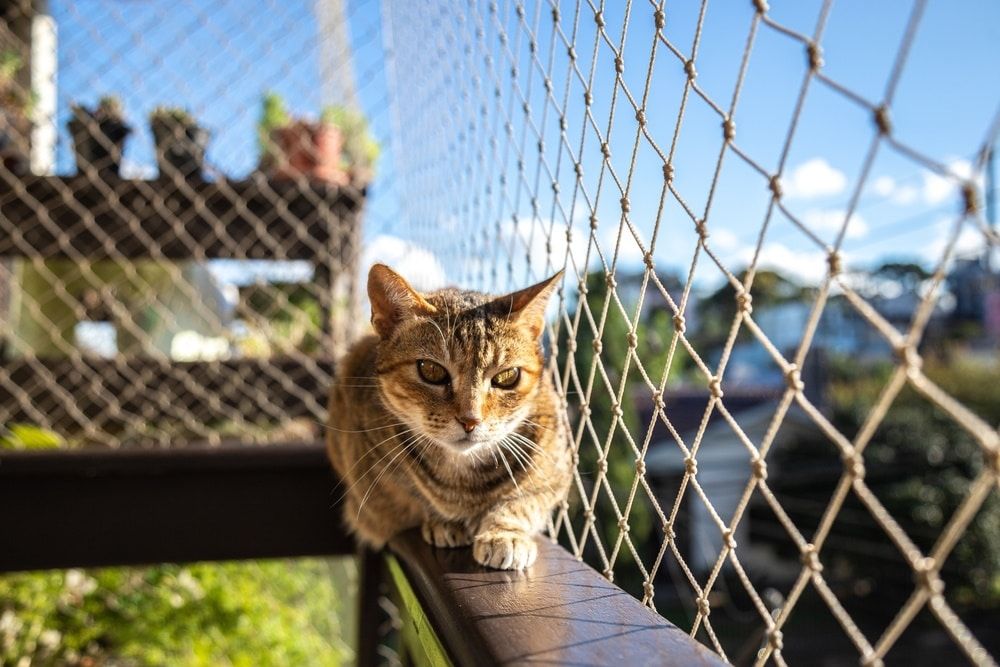
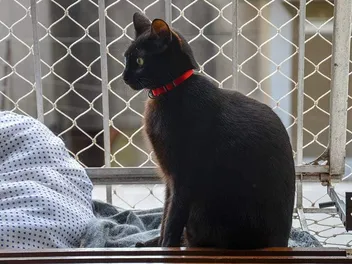
Cats are instinctual climbers, as they're fast, agile, and fearless creatures—for the most part. If you are looking to let your kitty outside yet keep them secure and safe in your yard, or maybe you're trying to prevent neighborhood felines from getting into your property, cat-proofing your garden, balcony, terrace, or property with a proper fence is the ideal solution.
There are more options than one might think for cat-proofing a fence, and the choice of whether to do this task yourself or hire a company or professional also has to be made. Let’s start by looking at simple ways for you to cat-proof your fence on your own. You can pick a style or process that resonates with you the most and move forward with your decision.

The 7 Simple Ways How to Cat-Proof a Fence
1. Use Chicken Wiring/Wire Mesh

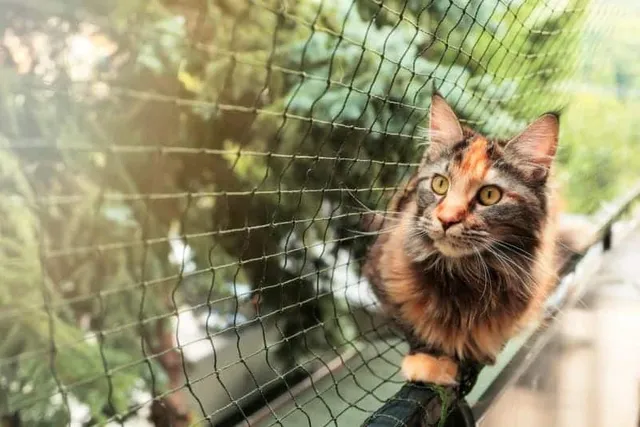
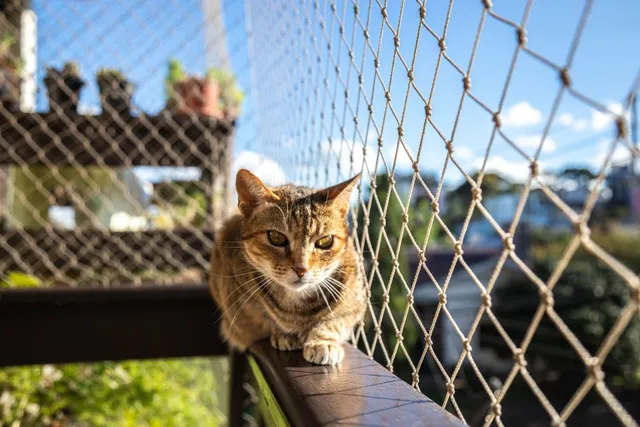
Mesh-type wire fencing creates a bendable barricade that you can place on top of your fence. The wire mesh can be bent inward toward your garden or the area in question, where it becomes a deterrent for your cat, thus helping to prevent them from escaping. When used correctly, the wire mesh will bend inward as your cat climbs and grips it, creating a dynamic “ceiling” that they can’t get over the top of.
Chicken wire and wire mesh are similar products and can be placed on top of fencing either straight or bent over like a canopy.
2. Fill in Any Gaps

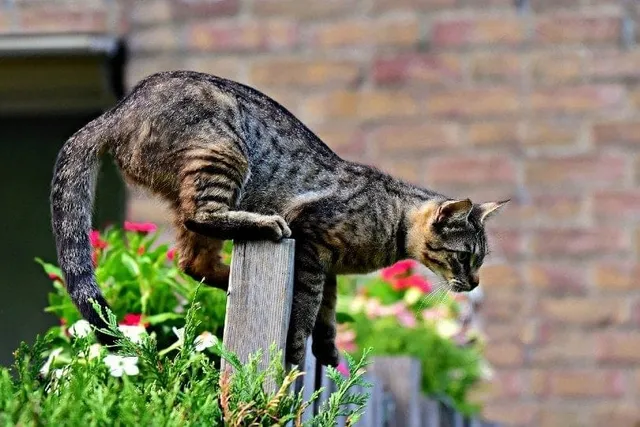
Check the entire fence perimeter for gaps and spaces that your cat could potentially sneak or wiggle through, especially at the ends of the fence and at the bottom or underneath it. Cats may not dig holes like dogs do to create escape routes, but they can surely find them if they’re there!
Like rodents, cats can squeeze themselves through small spaces—smaller than you may think possible—and they can judge the width and feasibility of the said gap using their whiskers. Block or fill any holes, sunken or dug-out ground parts, and any breaks in the fencing itself.
Various materials can be used to repair the gaps, such as stone, gravel, impenetrable landscaping, rocks, chicken wire, or extra fencing. Attend to any broken areas or pieces of fencing by replacing the section or securely patching it up.
3. Use Vinyl

Using a material to build your new cat proof fence (or replace an old one) that a cat dislikes is a smart idea. Substances like vinyl are ideal for this, as cats cannot grip it with their claws, therefore making it very difficult for them to climb. The surface of vinyl is just too smooth and slippery for felines to sink their nails into.
When using vinyl fencing, try to aim for a height of 6 feet or more, if possible.
4. Add Height or an Extension
Creating as much height as possible, either by adding wire mesh or extra panels, helps to prevent some cats from leaping over it; however, this does not work for all of them!
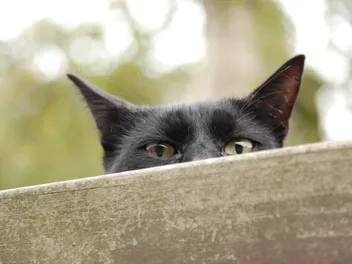
Even if you have a fence of at least 6 feet or higher, a determined cat may be able to scale it, easily clambering up and over it by using their claws. They are athletic, agile, and very capable animals, but there is a loophole you can take advantage of.
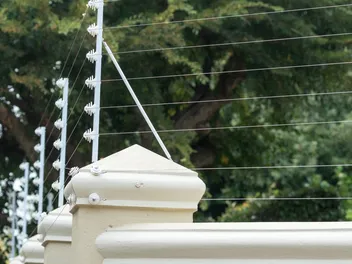
Make the extension bend inward so your cat can’t vertically climb over it. However, make sure no permission is required if you hope to do this. Tall fencing may carry restrictions and regulations depending on the country and/or state where you live.
5. Use a Commercial Extender Kit
These ready-made and ready-to-buy products are widely available and may work wonders. They provide an angled extension for the top of your fence with the added genius of a drop-motion sensation, meaning that when your cat grips the extension, it will drop down, providing (a false) feeling of falling. Most cats will usually let go or at least stop climbing.
6. Use Curved Fencing

These different styles of fencing panels are an option to use either alone or in conjunction with other ideas. While traditional panels tend to be rectangular in shape with a flat top, these are curved or scalloped on the top of the fence. The shape adds to the difficulty of getting over the fence. This is often enough to discourage cats from trying to climb or cross it.
7. Add Fence Rollers
Fence rollers can be bought ready-made, but others can be created by yourself relatively easily by using steel wire and pipes. Pipes made out of either metal or PVC materials are fine, though some say that metal pipes look better visually.
The pipes are strung over the steel wire (which can be held up with brackets), and when the cat touches or attempts to climb over the fence, the pipe spins around, making it fairly impossible for them to grip the unstable surface and escape.
Conclusion
These are popular cat-proof fencing ideas that are available for you to try, but they are not the only ones. These ideas are popular because they commonly work, but there are many other possibilities. You may come up with your own tailored way of cat-proofing a fence in your yard, or you may decide to take further advice from your local veterinary practice or even garden/fencing centers, as these places often have golden nuggets of information and ideas on this topic. Regardless, find the way that works for you and your cat so they can safely enjoy their time outside.
See Also:
Featured Image Credit: cabuscaa, Shutterstock
Expert cat care, straight to your inbox
News, insights, and useful advice, delivered to you.

No spam — unsubscribe anytime.
By signing up, you agree to our Terms & Conditions and Privacy & Cookies Policy.
How useful was this post?
Click a star to rate. You can leave written feedback afterwards. (We read all feedback.)
Annaliese qualified as a veterinary nurse from Edinburgh and went on to attain a diploma in advanced veterinary nursing in surgery from London. Throughout this time, she worked in both small and mixed veterinary practices and gained head nurse status.
Having cared for thousands of patients and owners, and after more than two decades in the veterinary and pet care industries, both as a vet and a writer, she has now officially retired her scrub suit and now works as a full-time writer.