Get

In Your Inbox

Catster is reader-supported. When you buy via links on our site, we may earn an affiliate commission at no cost to you. Learn more.

How Often Should You Wash a Cat’s Bed: Vet-Reviewed Tips & Tricks

Share

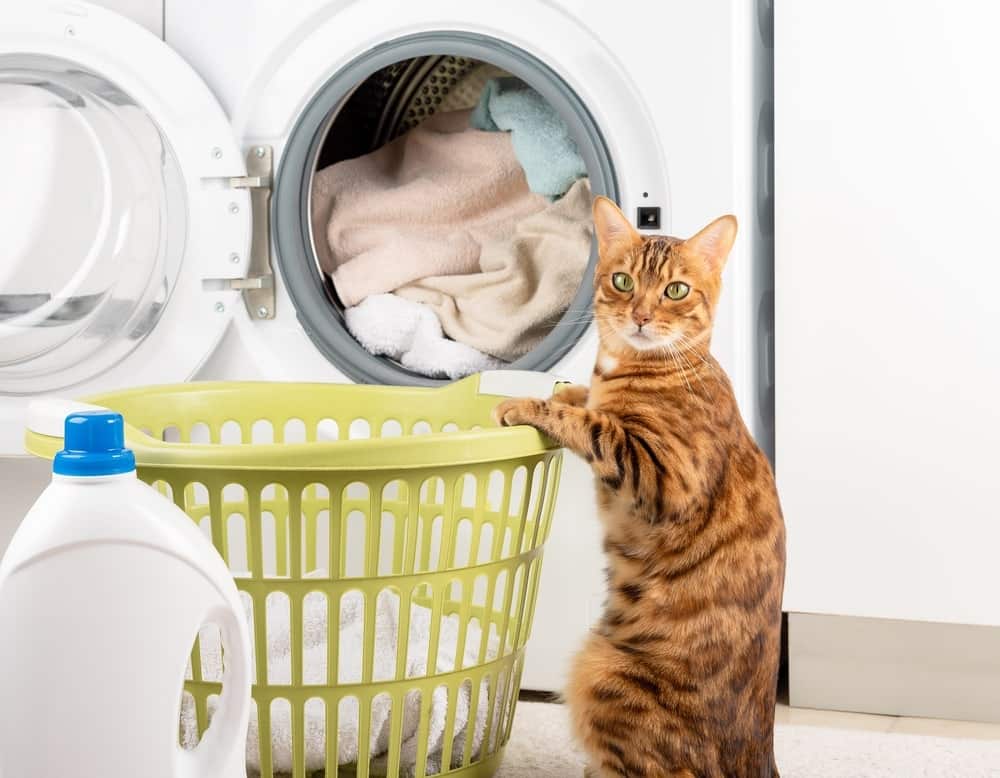
Cat near a Washing Machine

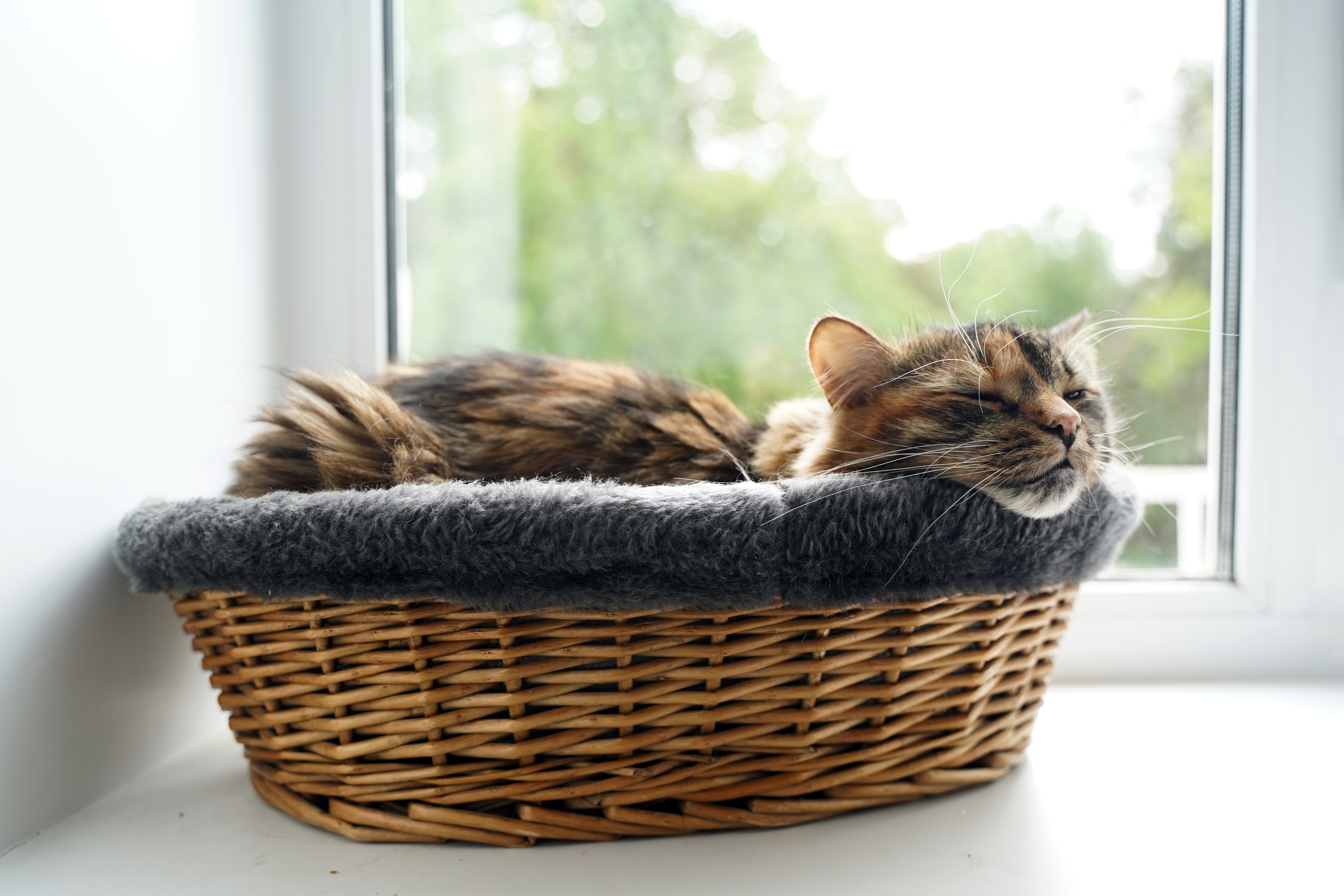
Just like you should wash your bedding every week or two, the same is true for your cat’s bedding. Ideally, you’ll want to wash it once a week, but if they don’t spend all that much time using it, you might be fine with washing it once every 2 weeks.

Taking the time to wash their bedding will keep it smelling nice and fresh, and it can help keep your cat healthy. Just like you enjoy climbing into a bed with fresh, clean sheets, your cat likely will too!

divider 2 cats

Product Recommendation

When cleaning your pet’s bedding, it’s essential to use the right cleaning products that are both pet-friendly and effective at removing stains, odors, and bacteria. An enzyme-based cleaner is a particularly good option for spot-cleaning, especially for urine stains and odors.

Did you know there's an enzyme cleaner that does it all? The Hepper Advanced Bio-Enzyme Pet Stain & Odor Eliminator Spray permanently removes the very worst smells and stains (truly, everything you can imagine!), and they offer a 100% satisfaction guarantee! Click here to get yourself a bottle.

No products found.

At Catster, we’ve admired Hepper for many years, and decided to take a controlling ownership interest so that we could benefit from the outstanding products of this cool cat company!

divider 2 cats

Why You Should Wash Your Cat’s Bed

Just like you need to wash your bedding to keep it clean and smelling fresh, the same is true for your cat’s bedding. But the truth is that there are multiple reasons you need to frequently and consistently wash your cat’s bedding.

These reasons include:
  • Unpleasant odors. It’s not pleasant to have these emanating from your cat’s bed (they could also hint at underlying health issues for your cat)
  • Allergies. If you are allergic to cat dander, you would want to frequently wash their bed, as places where your cat sleeps often harbor a high amount of pet dander.
  • Decontamination. If a harmful aerosol is used near your cat’s bed, it may linger on the bed and harm your cat. For example, essential oil droplets that spread around a room by a diffuser may collect on your cat’s bed. This warrants washing the bed.
  • Parasite eradication. Many parasite control protocols involve treating your pet and thoroughly cleaning their environment too. Fleas and mites may inhabit your cat’s bed, as it offers plenty of dark, cool crevices to hide in and is an area their host (your cat) frequently visits.
  • Urination or defecation. If your cat had an accident in their bed, it would definitely need to be washed. Please note that missing the litter box isn’t normal, and your cat will definitely need veterinary care if you observe them using their bed to relieve themselves.
  • Soiled bed. If the bed is soiled for any other reason (spillage, etc.) you would want to wash it before allowing your pet to reuse it.
  • Skin ailment. Certain skin ailments of cats (such as ringworm) are transmittable to humans. To minimize the risk of zoonosis, thoroughly cleaning their bed is recommended.

It doesn’t take all that much work to clean your cat’s bed, so add it to your list of biweekly chores, and stick with it.

Cat Allergy
Image Credit by: Cat Box, Shutterstock

divider 3 paws

How to Wash Your Cat’s Bed

Now that you know all about how often and why you need to wash your cat’s bed, all that’s left is for you to figure out how to do it. The good news is that it’s a pretty straightforward process, and we’ll walk you through everything you need to know here.

1. Remove the Cover

If your cat bed has a cover, start by removing that. You don’t need to wash the entire bed; you just need to wash the cover your cat is actively using. Of course, once you remove the cover, you need to move the cat bed to a place your cat can’t use until you finish.

If your cat bed doesn’t have a cover, you can skip this step, but you’ll need to be more careful when spot-treating, washing, and drying it.

Remove cat urine and dirty stains
Image Credit by: KanphotoSS, Shutterstock

2. Spot Treat

If the cat bed has noticeable spots with stains, dirt, or grime, it’s best to spot-treat it before moving on to the next step. Follow the directions for the spot cleaner you’re using, and ensure that it’s not going to react adversely with the cat bed. You can always go over it with the vacuum hose a few times!


3. Wash and Dry

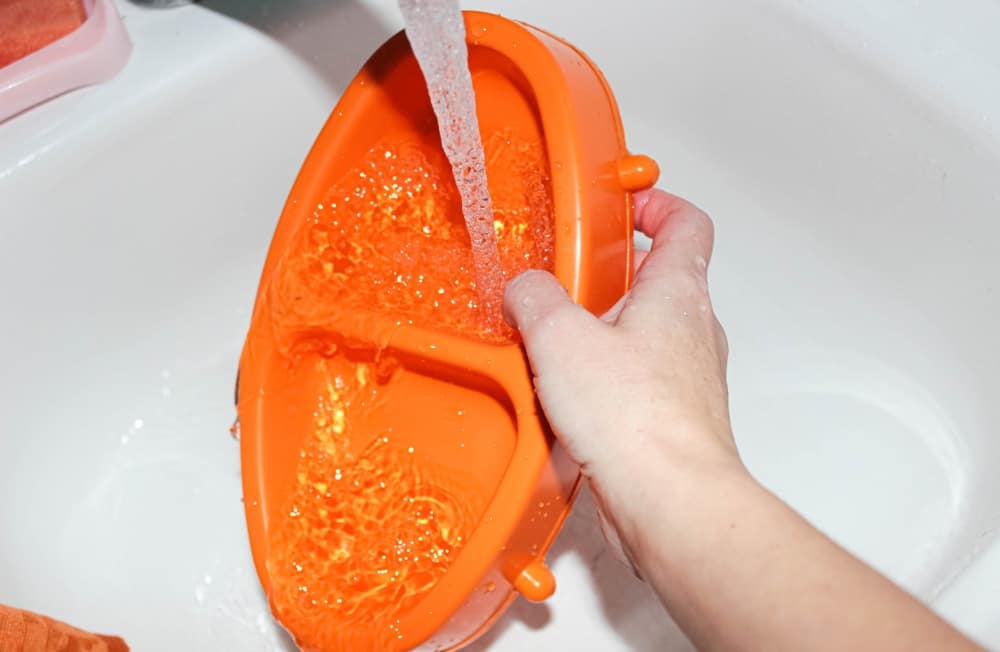
Before washing the cat bed, take the time to read the label and follow all the directions. If the label doesn’t have directions or if you can’t find them for any reason, stick with an unscented detergent specifically for pets.

Either wash the bed by hand or on a cold cycle on the lowest available setting. From there, only use a dryer on the lowest possible setting if you’re sure it won’t damage the bed. Otherwise, you’ll need to air-dry the cat bed.

If you are using a dryer, we recommend using an unscented dryer sheet to help remove static and pick up any leftover pet hairs. Of course, always clean out the lint trap in the dryer after each use.

laundry room
Image Credit: Evgeny Atamanenko, Shutterstock

divider 2 cats

Final Thoughts

It’s something many pet owners overlook and neglect, but taking the time to wash your cat’s bedding every week or two goes a long way in keeping them happy, healthy, and smelling great. Even better, it really doesn’t take all that long, so once you get into the routine, it’s not that hard to keep up with!


Featured Image Credit: Svetlana Rey, Shutterstock

Want content like this delivered to you?

Sign Up For Our Newsletter

News, insights, expert advice, and everything cat

* By submitting, you agree to our Terms & Conditions and Privacy & Cookies Policy.


How useful was this post?

Click on a star to rate (you can leave written feedback after clicking submit)

Help us improve Catster for pet parents!

Your feedback really matters.

What did you like about this post? Also how can we improve it?

Join the conversation

Leave a Reply

You’re very welcome to leave a comment or question. Please know that all comments must meet our community guidelines, and your email address will NOT be published. Let’s have a positive and constructive conversation.


Catster's Digital Magazine is Back!

Vet-approved health & behavior advice

Real cat stories & community features

Your Cat Isn’t Picky – Their Nose Is Just Bored

If you’ve ever sighed while scraping uneaten cat food into the trash, you’re certainly not alone. Many cat owners know the routine: their...

Ask Dr. Paola – Help! My Kitten Won’t Use the Litter Box! (July 27, 2026)

Welcome to our “Ask Dr. Paola” series, where every Monday we bring expert advice straight from Dr. Paola Cuevas (MVZ) to help our...

Chatting with Petra Luna About CatCrazy, Cat Food Ingredients & The Secret of E-Beams | Chatty Cattys, Episode 28

In this episode of Catster’s Chatty Cattys podcast, Nicole and Dr. Karyn welcome back Petra Luna from CatCrazy to catch up on her...

According to Vets, Most Owners Miss These Signs That a Cat is Sick

Cats are famously good at hiding discomfort. It is not stubbornness or indifference; it’s a deeply ingrained survival instinct. In the wild, showing...

More related

8 Best Kitty Cat Condo Cat Trees in 2026 – Reviews & Top Picks

Cats love to jump, climb, and lounge in high areas, just like their wild counterparts. Cat condos offer multiple ways for cats to...

How to Stop Your Cat From Meowing at the Door in the Morning: 5 Vet-Verified Ways

Cats can be endearing companions that make us feel good and safe at the end of a long, stressful day. However, most have...

7 Best Cat Beds in the UK in 2026 – Reviews & Top Picks

Cats love to sleep and can spend hours on end partaking in their favourite pastime. Whether they’re sleeping on your favourite spot on...

Can Cats Eat Wheatgrass? Vet-Reviewed Benefits & Facts

If you have a dog, chances are you’re used to asking them what they have in their mouths. On the other hand, cats...

Keep reading

Why Do Cats Move Their Kittens? 3 Vet-Verified Reasons for This Behavior

Despite being some of the earliest domesticated animals, cats retain most of their wild instincts. It’s why they hide their food, bury their waste, and spray urine to mark their territory. However, one of the most confusing behaviors cats display...

mother cat transferring kitten

Why Do Cats Suck on Blankets? 5 Vet-Verified Reasons & Solutions

If you have had multiple cats throughout your life, you know that they are capable of strange behaviors, such as running around the house for no reason, meowing at birds and squirrels outside the window, and kneading on blankets. One...

grey and white cat under the blanket

Are Cat Cafés Good or Bad for Cats? Vet Reviewed Guidelines

Any cat lover would be attracted to the idea of visiting a cat café, where they can make new furry friends while sipping their favorite coffee. While it sounds like a fantastic idea, and the popularity of cat cafés is...

cat cafe in thailand

Ragdoll Cat Grooming: 10 Vet-Approved Tips & Tricks

Ragdoll cats were developed in the early 1960s in California and are among the most affectionate and friendly cat breeds around today. Their semi-longhaired coats are thick and don’t often tangle, but these cats can still benefit from regular grooming...

flame point ragdoll cat

10 Best Chew Toys For Cats in 2026 – Reviews & Top Picks

Dog owners are painfully aware of their pet’s need for safe chew toys, frequently at the expense of their shoes. However, cat owners might not know that their kitties also benefit from chewing on toys. Teething kittens need relief just...

Hepper Catnip Stick Toy - White Cornish Rex on Bed

How to Brush Out Matted Cat Fur: 6 Vet-Reviewed Steps

Matting can be stressful for the cat and the owner. Your cat will be unhappy and painful, and working through the tangles in your cat’s fur can be difficult, especially if the matting is severe. Matting can occur around a...

brushing ragdoll cat's hair

How to Calm an Anxious Cat: 5 Vet-Approved & Effective Methods

While cats are often seen as independent and enigmatic creatures, they can also experience anxiety, and it can have a profound impact on their well-being. If your once playful and confident feline companion starts to show signs of being unwell—such...

Domestic cat lying on owner's lap

Can Cats Eat Ketchup? Vet-Reviewed Diet Facts & FAQ

When considering what kind of human foods are okay to give to our cats, we’re usually thinking in terms of actual food and not condiments, such as mayonnaise or ketchup. However, there’s always a chance our feline friends could manage...

Can Cats Eat Ketchup

Love Cats? So Do We! Join the Catster Community

Stay informed with expert pet care insights delivered straight to your inbox! Discover professional guidance on animal behavior, feeding tips, trusted product picks, and much more.


Sign up for the Catster Email Newsletter

Stay informed with expert pet care insights delivered straight to your inbox! Discover professional guidance on animal behavior, feeding tips, trusted product picks, and much more.