How Can Cats Survive High Falls? Vet-Approved Science & Info


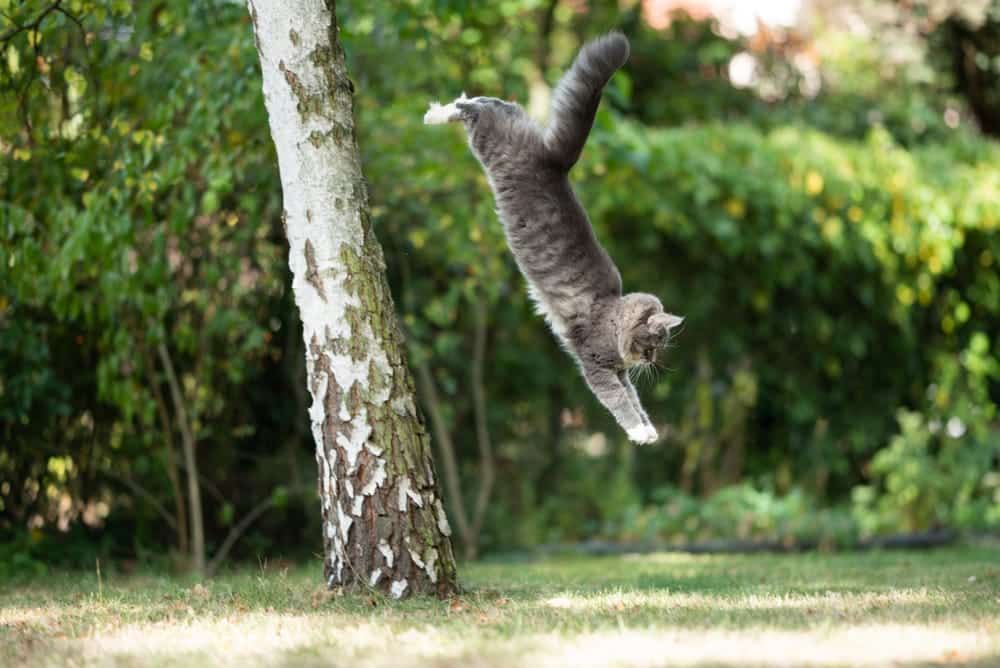
Cats have been wowing humans with their ability to handle high falls with relative ease. Cats have survived falls from great heights, although they don’t always come out unscathed from such incidents. However, the fact that they’ve survived is considered very impressive.
Humans certainly couldn't survive falls from that height, so how do cats do it? For one, cats have an innate"righting reflex" which allows them to orient themselves while falling so they can land on their feet. This, combined with other factors, such as their low terminal velocity, allows them to minimize the risk of injury from great heights.
Come along with us as we further explore a cat's natural ability to endure high falls.

How Can Cats Survive High Falls?
Cats in the wild are great at climbing, often spending a lot of time in trees. It's to be expected that any animal spending that much time in the trees will occasionally take a tumble from a branch. Thankfully, nature has gifted them with the incredible ability to survive such potentially devastating falls.
When cats fall from a high place, they twist their bodies to right themselves during the fall. This righting reflex is an innate ability in cats to orient themselves while falling so they can land on their feet. The reflex starts to develop in kittens when they are around 3-4 weeks old but isn’t perfected until they are about 8-10 weeks old. Additionally, given an ideal “starting posture”, cats need a fall height of at least 3 feet to complete the reflex successfully.
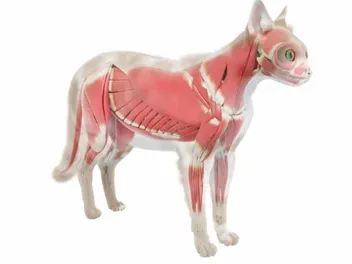
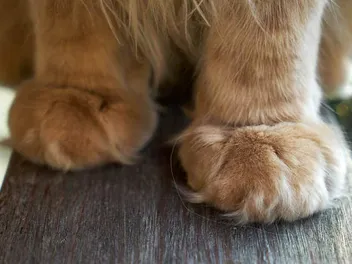
Pair this reflex with cats' clavicles not attaching to any other bone, flexible backbones, and shock-absorbing paw pads, and you have a perfect recipe for minimizing the impact of a high fall.
In addition, cats have another factor that helps them further minimize the risk of injury during a fall.
Terminal Velocity
Terminal velocity refers to the speed at which a free-falling object encounters the same amount of wind resistance as gravitational pull. This is the speed at which acceleration stops. Cats will reach this speed at around 60 miles per hour or at around five stories of free falling. On the other hand, humans won't reach terminal velocity until about 120 miles per hour.1
A lower terminal velocity means that cats can have more time during a fall to ensure a safer landing. However, interestingly, once cats reach terminal velocity during a fall, they begin to spread their legs out horizontally so that the impact of the fall is more evenly distributed throughout their body upon impact. Before reaching terminal velocity, cats hold their legs extended out and anticipate landing on their paws.

What Is High-Rise Syndrome?
High-rise syndrome is a term used by veterinarians that refers to the injuries cats receive after falling from a building. It typically occurs after falls higher than two stories.
Such Injuries Include:
A study from 1987 looked at 132 cats diagnosed with high-rise syndrome. Ninety percent of the cats studied had some kind of thoracic trauma, with 57% having facial trauma, 39% having limb fractures, and 24% going into shock.2 Of the 132 cats studied, 90% survived their falls, and 30% didn't need treatment at all.
This study doesn’t mean that cats have a survival rate of 90% during a fall. Rather, it means that 90% of the cats that fell from a high place and were seen by a veterinarian survived the ordeal after being offered treatment. A cat that dies from the fall itself (which is possible) would not be brought into the vet for treatment, and therefore, would be excluded from the study.
Another study in 2004 found that the higher the jump, the more likely the risk of injury is for the cat. This could be in part due to the fact that once cats reach terminal velocity, they no longer aim to land on their feet and instead land on their chest, increasing the risk of injuries and trauma to their lungs.

Preventing High-Rise Syndrome
If you live in a high-rise, you must do what you can to prevent your pet from falling.
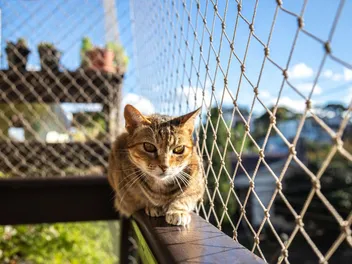
The easiest way to keep your pet safe is to keep them indoors or consider investing in a full-screened enclosure for your deck or terrace.
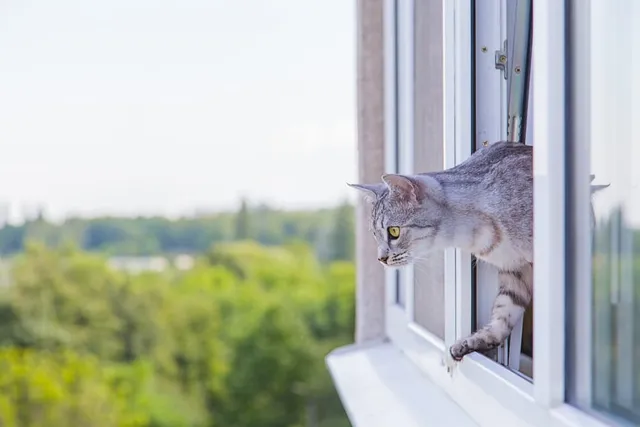
Keep your windows closed at all times. If you want fresh air flowing through your space, install a sturdy and snugly fitting screen. If you have adjustable screens, ensure they're tightly attached to your window to prevent your determined and curious cat from knocking them over.
Final Thoughts
Cats may be graceful pets when it comes to a fall, but it doesn’t mean they are totally immune from injuries. While they can survive staggeringly high falls, this does not mean every fall will have a happy outcome. So it's in your best interest, especially if you live in an apartment or condo building, to keep your kitty inside to prevent it from testing out their righting reflex.
Featured Image Credit: Nils Jacobi, Shutterstock
Expert cat care, straight to your inbox
News, insights, and useful advice, delivered to you.

No spam — unsubscribe anytime.
By signing up, you agree to our Terms & Conditions and Privacy & Cookies Policy.
How useful was this post?
Click a star to rate. You can leave written feedback afterwards. (We read all feedback.)
For Chantelle, writing and animals are the two driving forces in her life. Growing up on the Canadian prairies surrounded by pets, she now shares her home with five cats, two guinea pigs, and a bearded dragon. Chantelle, her husband, and their child pride themselves on being dedicated pet parent, even spending a fortune on wall-mounted cat shelves to provide their cats with an indoor jungle gym. When she's not snuggling with her cats or photographing their humorous moments, Chantelle is exploring the Rocky Mountains, rewatching her favorite Netflix series, and reading up on various random subjects.