Get

In Your Inbox

Catster is reader-supported. When you buy via links on our site, we may earn an affiliate commission at no cost to you. Learn more.

How Aggressive Are Tuxedo Cats? Vet-Verified Facts & Info


Share

Tuxedo cat lying on kitchen counter

Do you have a cat with an attitude? Or as many call it, cattitude? If you do, you’re not alone. While some cat owners have kitties in their lives that are sweet, docile, and loving, others have the pleasure of having cats in the family that can flip the script and go from darling to devilish in a matter of seconds.

But what about tuxedo cats? Are they known for being aggressive? Does the coat color and pattern even matter? There’s no solid scientific proof that tuxedo cats are naturally more aggressive. A few studies have hinted that cat parents sometimes report black-and-white cats (which includes tuxedos), calicos, or torties as being a little feistier in certain situations. But it’s important to know these studies are based on owner opinions, not on scientists actually testing the cats’ behavior.

divider 3 paws

A Bit About Tuxedo Cats

With the way they are talked about, many people think tuxedo cats are a breed of their own. This isn’t the case. Tuxedo refers to the coat color and pattern of a particular cat. Tuxedo cats can be multiple breeds genetically, but will show that popular, formal coloration that so many people have come to adore.

While the appearance of a tuxedo cat is what attracts so many people to these cats, there’s more to them than meets the eye. We mentioned cattitude already. Have you heard of tuxietude? Yes, it’s a thing. Or at least it’s a phrase tuxedo cat owners use when referring to their crazy kitties. In reality, tuxedo cats are individuals like any other. Some may be bold or sassy, while others are quiet and affectionate. Coat color alone does not reliably predict friendliness or aggression.

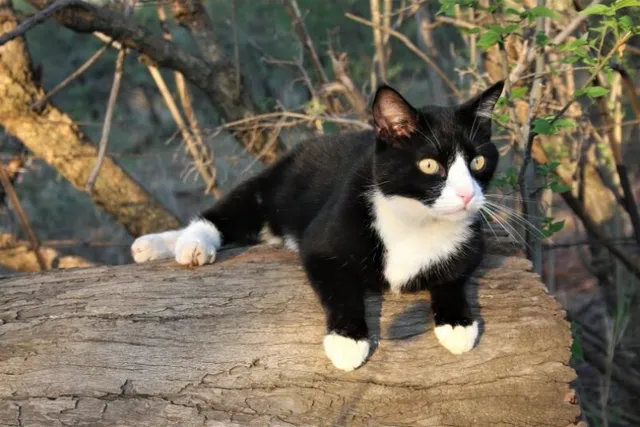
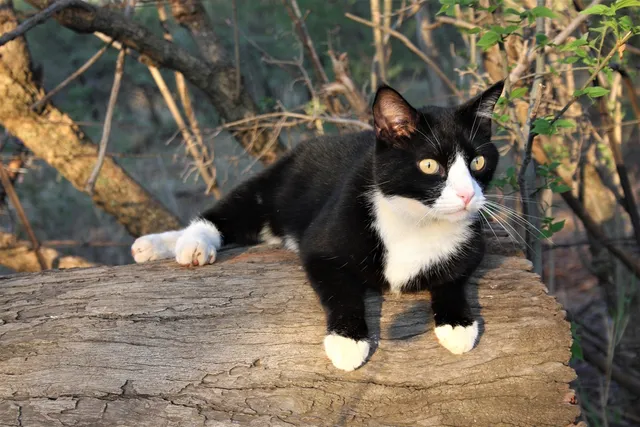
tuxedo cat with yellow eyes
Image Credit: Rosalia Ricotta, Pixabay

Can Color and Pattern Affect Cattitude?

Normally, when thinking about the aggression or sassiness of a cat, the breed is what we usually attribute it to. At least, that was until a study conducted in the UK was published in the Journal of Applied Animal Welfare Science. This study began with a hypothesis: Owner perceptions of aggression may vary depending on coat color.

More than 1200 cat owners were approached. These owners answered a list of detailed questions to help the researchers better understand a cat’s reaction to certain situations. These situations were common occurrences like petting, cuddling, going to the vet, or playing. All the information on these questionnaires was used to create an aggression scale for the study. Once that scale was created, the cats were placed on it.

The Study Results

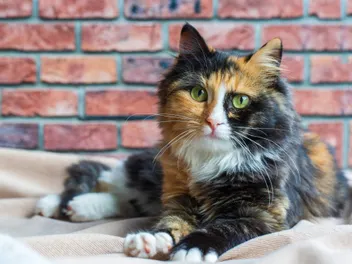
The study found that cats with certain coat patterns, including black-and-white (tuxedo), gray-and-white, calico, and tortoiseshell, were more often reported by owners to show aggression in specific situations compared with solid-colored cats. The differences weren’t huge, and the researchers pointed out that these results came from what cat parents said in surveys, not from scientists directly observing the cats themselves. They also noted that cats described as more aggressive typically preferred interactions on their own terms, which is a common feline trait and not unique to tuxedo-patterned cats.

Also in the study, it was determined that calico and gray tuxedo cats were the next two in line when it came to aggression. Researchers determined that calico cats didn’t seem as needy as some cats when it comes to affection. In fact, they were labeled as less affectionate than other colors. Gray and white tuxedo cats also were labeled as the color most likely to show aggression when going on a veterinarian visit.

If your cat is stressed when visiting the vet, telehealth services might be a good option for your family.

If you need to speak with a vet but can't get to one, head over to PangoVet. It's an online service where you can talk to a vet online and get the advice you need for your pet — all at an affordable price!

PangoVet_Mention-in-Content for PangoVet2 save money

Does This Mean All Tuxedo Cats Are Aggressive?

Nope! Just because some studies suggest coat color might influence how people perceive their cat’s behavior, it doesn’t mean tuxedo cats are naturally aggressive. Like people, every cat is an individual with their own quirks.

Like people, every cat is different. They have a personality. Your tuxie could be the sweetest cat out there, leaving you scratching your head while reading this article. Then again, you could be the owner of a tuxie that is completely wild, climbs the walls, and keeps you in check.

Any color or breed of cat can act aggressively or sweet as pie on any given day. Simply because tuxies are known for having a bit of cattitude doesn’t mean you should avoid bringing one of these gorgeous cats into your home if given the chance.

divider cat paws 2 oct 2024

Final Thoughts

Whether you want a cat that will rule the house like royalty or one that will simply shower you with love, no one can deny the beauty of a tuxedo kitty. Some studies have linked black-and-white cats to being reported as a little more feisty, but that doesn’t mean tuxedo cats are automatically aggressive. A cat’s true personality depends on so many things, like their genetics, how they were socialized as kittens, their environment, and of course, their one-of-a-kind individuality. If you’re a cat lover, the attitude isn’t a breaking point. Instead, most of us greet cattitude with open arms. Perhaps cat lovers are simply gluttons for punishment. Then again, it could be that we simply can’t deny those cute, black-and-white faces and couldn’t care less if they rule the roost from time to time.


Featured Image Credit: Sarah McGraw, Shutterstock

Want content like this delivered to you?

Sign Up For Our Newsletter

News, insights, expert advice, and everything cat

* By submitting, you agree to our Terms & Conditions and Privacy & Cookies Policy.


How useful was this post?

Click on a star to rate (you can leave written feedback after clicking submit)

Help us improve Catster for pet parents!

Your feedback really matters.

What did you like about this post? Also how can we improve it?

Join the conversation

4 Responses

  1. i have a black white tuxcedo cat he is four years old he was rescuted from seaway mall. he can be misable when he wants to but he is starting to calm down. he can be a scaredy cat. he dont like loud noises. when you bring new items in the house he has to check it out. his markings on his fur he looks like he has a tuxcedo on. we called him tux. but hge is good now he went through alot in his life until we rescued him he was beating alot. a bd scarey life now he is our baby we love him.

    1. Hi Nancy, thanks for sharing your Tuxedo's story, he sounds gorgeous. If possible, please send a good quality pic of your cat for our Cat of the Week contest: https://www.catster.com/submit-your-cat/ 🙂

  2. I have a tuxedo cat. I was checking on the traits they have. She is a wonderful cat! It does drive me crazy when she won’t come when I call her! I don’t want to leave her outside at night . She will come up to me and go right past. She will come in when she wants to.Any suggestions anyone? She does sleep at my feet!

    1. Hi Gail, thanks for sharing your story. We all know cats like things on their time and terms. That said, we think you might find this post very helpful: https://www.catster.com/lifestyle/how-to-get-cat-to-come-when-called/

Leave a Reply

You’re very welcome to leave a comment or question. Please know that all comments must meet our community guidelines, and your email address will NOT be published. Let’s have a positive and constructive conversation.


Talk With A Vet Online

Peace of mind,
anywhere, anytime

Affordable vet advice

The 10 Common Causes of Sudden Death in Cats (And Which Ones Are Preventable)

Most cat owners don’t think much about heart disease, internal hemorrhage, or viral infections until they’re staring at an empty bed. Sudden death...

Ask Dr. Paola – Help! My Cat Suddenly Has Dandruff! (March 30, 2026)

Welcome to our “Ask Dr. Paola” series, where every Monday we bring expert advice straight from Dr. Paola Cuevas (MVZ) to help our...

Your Cat Keeps Vomiting After Eating: Here’s What’s Going On

Cats vomit. It’s one of the less glamorous facts of life with a feline, and most cat owners have cleaned up more than...

Ask Dr. Paola – Help! My Cat Gets Diarrhea from Wet Food! (March 23, 2026)

Welcome to our “Ask Dr. Paola” series, where every Monday we bring expert advice straight from Dr. Paola Cuevas (MVZ) to help our...

More related

Ask Dr. Paola – Tail biting, Feeding & Dirty Ears (April 22, 2025)

Welcome to our “Ask Dr. Paola” series, where every Monday we bring expert advice straight from Dr. Paola Cuevas (MVZ) to help our...

7 Cat Adoption Myths & the Vet-Reviewed Truths

If you’re considering welcoming a cat into your family from a shelter, you may have a few concerns. You may have heard that...

12 Cat-Themed T-Shirts for Men: Best Choices for a Feline Lover

Buying cat-related merchandise is a great way to tell the people around you just how much you love your pets. Whether you’re sipping...

Dental Procedures for Cats: How Olga Recovered From Surgery

Hi, I’m Christopher! Read my introduction to learn more about me and my silly Russian Blue cat, Olga. Dental issues are common in...

Keep reading

Can a Cat Overheat? Vet Approved Signs & How to Help Them

Due to their desert-dwelling ancestors, cats are often believed to not be affected by hot weather. While their normal body temperature is higher than our own—101.0°F to 102.5°F—cats are no better at handling overly hot weather than humans are. Cats...

cat stretching a rocky beach and a beautiful sunset over the ocean

Are Spider Plants Toxic to Cats? Vet Reviewed Facts & FAQ

Spider plants are a common indoor houseplant. These fern-like plants are easy to take care of and look lovely in a variety of rooms. If you have pets, however, you need to look beyond whether this plant looks nice and...

Catster_Are Spider Plants Toxic to Cats

What’s the Price of Cat & Kitten Vaccinations in Australia? (Costs in 2026)

Whether you have an indoor or outdoor feline, you must keep up with their vaccinations. Vaccinations and booster shots keep numerous preventable health concerns at bay. But how much do cat and kitten vaccinations cost in Australia? We gathered the...

Kitten_Vaccine

How Much Attention Does a Cat Need? Vet-Reviewed Facts

While cats are often perceived as independent pets, they still require daily attention from their owners. Most cats need at least 20-30 minutes of undivided attention a day. However, the amount of attention can vary and depends on several different...

cat sleeping in owner's arms

Cat Twitching: Vet-Verified Signs, Causes & When to See a Vet

Cats have many strange behaviors, like the peculiar chattering sound they make when seeing a bird or a laser pen. But when we see our cat twitching while awake, it’s natural to be concerned and look for the underlying reasons...

Cat scratching his ear while laying on a bed

What to Do with a Stray Cat That Won’t Leave? Vet-Approved Tips & Tricks

If you have a stray cat outside your home, you should first assess the animal’s condition. What you should do with a healthy cat is much different from what you should do with one that needs medical attention. Provide food...

Stray cats eating on the street

Can Cats Eat Kale? Vet-Reviewed Nutrition Facts & FAQ

If you found this article because your kitten snatched a very small piece of kale while you were chopping up your lunch salad, don’t panic! Kale is not toxic to cats, and in fact, small amounts of it are included...

Can Cats Eat Kale

Do Cats Eat Less in Summer? Vet-Approved Seasonal Feeding Guide

Have you ever noticed that when winter comes, you start to eat more and crave heartier foods, while when summer rolls around, you move more and eat less? Believe it or not, cats may also eat less food in the...

Bengal cat beside food

Love Cats? So Do We! Join the Catster Community

Stay informed with expert pet care insights delivered straight to your inbox! Discover professional guidance on animal behavior, feeding tips, trusted product picks, and much more.


Sign up for the Catster Email Newsletter

Stay informed with expert pet care insights delivered straight to your inbox! Discover professional guidance on animal behavior, feeding tips, trusted product picks, and much more.