Congestive Heart Failure in Cats: Vet-Reviewed Facts & When to Euthanize


In this article
Being a cat parent comes with many ups and a few unfortunate downs. We do our best to take care of our cats so they can live long and healthy lives, but health conditions can creep up when we least expect them.
Congestive heart failure affects senior cats more often than younger cats. However, young cats are also susceptible to specific heart problems. The decision to euthanize depends on your cat’s current quality of life and whether they're in pain.
In this article, we'll provide you with more information about congestive heart failure, including the warning signs to look out for. We'll also explain when it might be time to euthanize your pet.

How a Cat’s Heart Works
A cat’s heart has four chambers: The two upper chambers are the atria (plural of atrium), and the lower ones are the ventricles. The heart also has a left side and a right side, each of which has one atrium and one ventricle.
The right side of the cat's heart pumps blood into the lungs, where oxygen is added to the blood, and the left side pumps the blood to the entire body. The blood carries oxygen and nutrients to body tissues, and waste products, particularly carbon dioxide, are removed.
This exhausted blood is returned to the heart's right atrium, and the process starts again.

What Is Congestive Heart Failure?
Congestive heart failure (CHF) occurs when a cat’s heart is no longer able to pump enough blood to other parts of their body. The body may be able to compensate, but as the heart disease progresses, the compensatory mechanisms become overwhelmed. Fluid starts to back up into the lungs, causing congestion, which is when CHF begins.
What Causes Congestive Heart Failure?
There are several causes of CHF, but the most common is hypertrophic cardiomyopathy. It is when the heart muscle becomes thickened to the point that it can’t function normally, and the heart chambers cannot fill with blood properly.
Some breeds have a genetic predisposition to hypertrophic cardiomyopathy, especially Persians, Maine Coons, Ragdolls, and some American Shorthairs. However, it can occur in almost any breed, age, and sex, though it is most commonly found in middle-aged and senior cats.
Other conditions that can lead to CHF are:
- Anemia (low red blood cell count)
- Blood clots in the heart
- Defects of the heart walls
- Fluid in the sac surrounding the heart
- Heart rhythm abnormalities
- Heart valve blockages or deficiencies
- Heartworm disease
- High blood pressure
- Hyperthyroidism
- Tumors
What Are the Signs of Congestive Heart Failure?
Unfortunately, the early signs of CHF are not always easy to detect since cats are skilled at hiding when they are sick or in pain. CHF can sometimes be in the late stages before you’re aware that anything is wrong.
A common sign is your cat having trouble breathing due to fluid accumulation in or around their lungs. Cats with heart disease are also sadly at increased risk of developing clots. The clots can block the blood supply to the back legs, causing sudden pain and difficulty walking on one or both back legs. This is a very serious condition.
Other signs can include include the following:
Since some cats don’t show signs of heart disease until it is very serious, if you have any concerns or notice any of the signs, contact your vet immediately.
Diagnosing Congestive Heart Failure
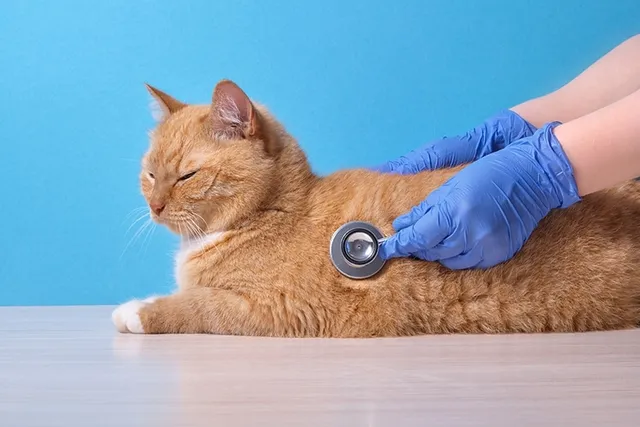
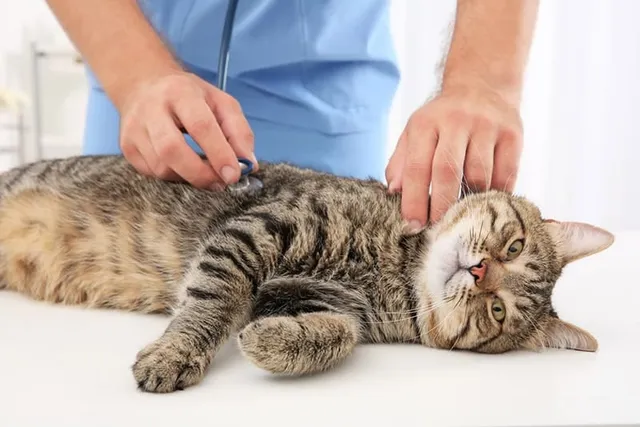
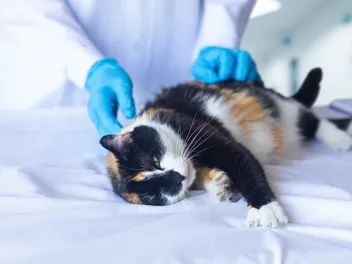
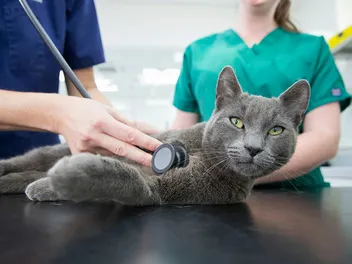
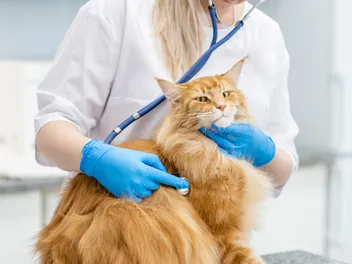
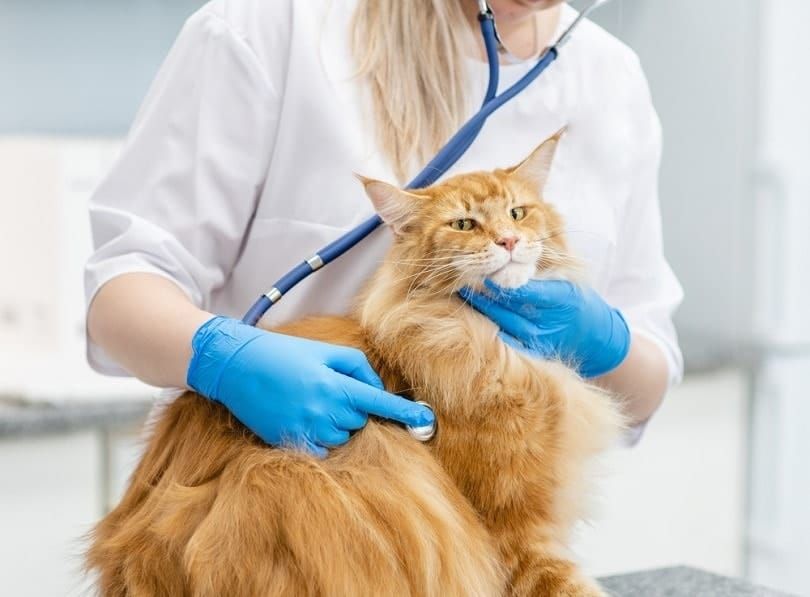
The veterinarian will start with a physical exam, which involves listening to your cat’s heart and chest with a stethoscope. Following this, the vet will run several tests, which might include the following:
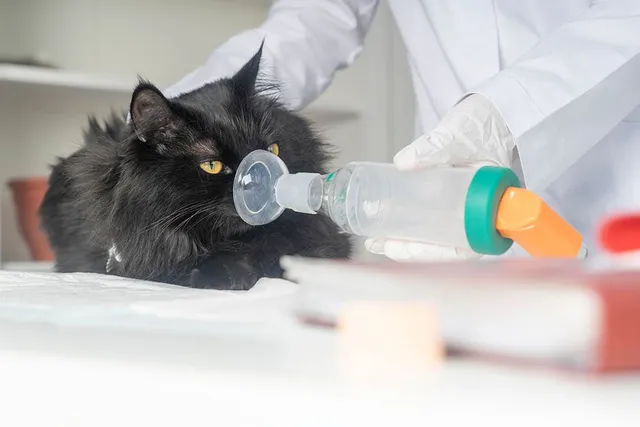
If your cat is in distress during the appointment (struggling to breathe), your vet will usually try to stabilize them before performing further tests. This is usually done by providing them with oxygen and treatment with a diuretic to remove the excess fluids.
Treatment for Congestive Heart Failure
If the CHF is caused by a health condition, such as hyperthyroidism, the vet will treat the underlying condition, which might help the heart problem. If the CHF is congenital (the cat is born with a heart defect), it can be repaired through surgery.
Hypertrophic cardiomyopathy and CHF are progressive and not curable. Still, there are treatment options that can make your cat more comfortable and extend their lifespan. Your vet will prescribe medications to stabilize the heart and reduce the fluid buildup.
You may need to change your cat’s diet, and they will need regular monitoring by your vet. The treatment plan may change over time as the condition progresses. It’s also essential to keep your cat calm, and they should avoid overexertion and stress as much as possible throughout the duration of the disease.

The Future Prognosis of a Cat With Congestive Heart Failure
CHF can’t be cured, but its progress can be reduced to a certain degree with lifelong medication. The life expectancy varies considerably, but the sad truth is that once a cat is diagnosed with CHF, the average time they have left is six to 18 months.
How long a cat lives depends on the severity of the disease and how well the condition is managed. Working with your vet to curate the right blend of medications is essential to keep your cat feeling more comfortable and to help them stay with you longer.
When It’s Time to Say Goodbye
Deciding to euthanize your cat is a heartbreaking step that involves considering your cat’s current quality of life and whether they are in pain. A sudden deterioration in your cat’s condition can sometimes occur due to blood clots or rhythm abnormalities.
If you and your vet are monitoring your cat and giving them the appropriate medication, but they still seem to be struggling, it might be time to say goodbye. When CHF has advanced enough, most cats will be living in distress, have difficulty breathing, and cannot enjoy life.
That’s the last thing that you want your cat to be experiencing. Once your cat is having more bad days than good, cannot enjoy what they used to, and is having trouble breathing, talk to your vet about your options.

Conclusion
While CHF can’t always be prevented, the earlier that heart conditions such as hypertrophic cardiomyopathy are diagnosed, the better the prognosis; it can add extra years to your cat’s life. No one knows your cat better than you, and the importance of talking to your vet the moment that you see your cat acting differently can't be stressed enough.
Euthanasia is painless, and even though you’ll miss your cat so much, sometimes it’s the kindest and most loving decision that you can make.
See also:
Featured Image Credit: Ermolaev Alexander, Shutterstock
Expert cat care, straight to your inbox
News, insights, and useful advice, delivered to you.

No spam — unsubscribe anytime.
By signing up, you agree to our Terms & Conditions and Privacy & Cookies Policy.
How useful was this post?
Click a star to rate. You can leave written feedback afterwards. (We read all feedback.)
Kathryn was a librarian in a previous lifetime and is currently a pet writer. When she was a child, she hoped to work in ZOOs or with wildlife in some way, thanks to her all-consuming love for animals. Sadly, she's not strong in the sciences, so she fills her days with researching and writing about all kinds of animals and spends time playing with her adorable but very naughty tabby cat, Bella. Kathryn is hoping to add to her family in the near future – maybe another cat and a dog.