Clumping Litter vs Crystals: Which One Is Better? Our 2026 Comparison

In this article
Litter boxes and their accoutrements may not be the most interesting things to think about, but making the right choices regarding your cat’s toilet is essential to your feline buddy's health and happiness. While everyone knows the importance of keeping your cat's litter clean and providing an individual litter box for every cat in multi-cat households, there are other important factors to consider that can impact your cat's comfort, such as the type of kitty litter you select.
There are several types of litter on the market today, but clumping and crystal litter are two of the most popular options. Below we'll review the ins and outs of clumping litter and crystal-based options. Read on to learn how the two products stack up against each other.

Overview of Clumping Litter
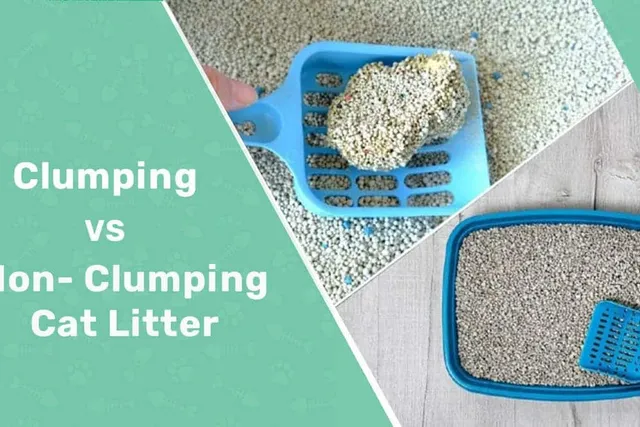
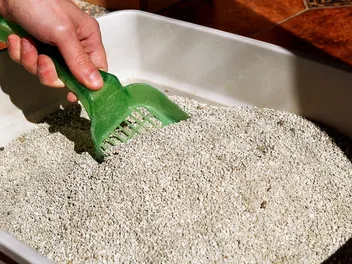
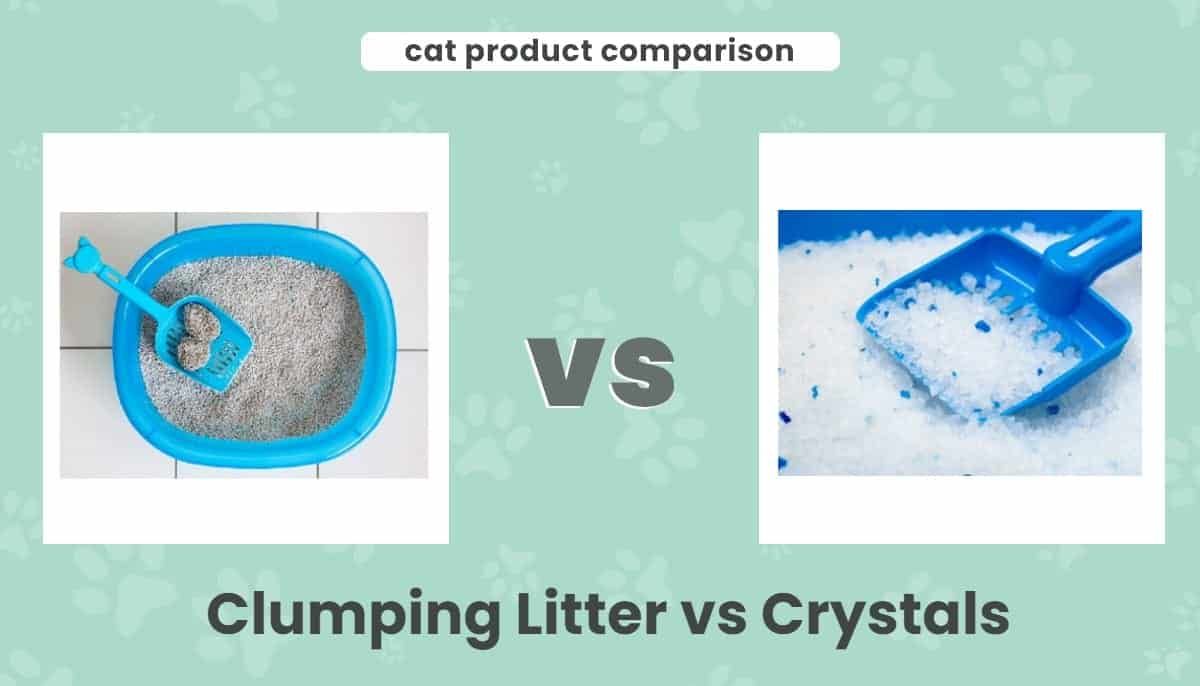
Clumping cat litter is essentially dried-out clay that clings together when wet. It usually features two specific types of clay: bentonite and smectite. Clay is remarkably efficient in locking away liquids as it can absorb almost 100% of its dry weight.
As an inorganic substance, clay is a fantastic litter choice. There's nothing for bacteria to feed on, which helps keep odors to a minimum, provided you clean the litter daily and remove the clumped urine regularly.
The clay used in clumping litter also has other smell-reducing benefits related to the way it interacts with ammonia. As any cat companion can tell you, cat urine has an extremely pungent odor. It's sharp, acrid, and difficult to get out of walls, couches, and floors.
The highly concentrated nature of cat urine causes that intense, immediately recognizable odor. Domestic cats evolved in dry, hot environments, leading them to develop the ability to stay hydrated by decreasing the amount of water lost through urination. The result is strong, concentrated, ammonia-filled urine.
Clay features hydrogen atoms that attract the ammonia in cat urine to form ammonium. Ammonium doesn't evaporate as quickly and easily as ammonia, preventing the ammonia smell from wafting all over your house.
Clumping litter comes in several different formulations, including scented and unscented varieties and options designed for multi-cat households.

What Is Clumping Litter Good For?
Clumping litter has two specific benefits; it’s easier to clean and reduces smells. These products concentrate urine into easy-to-scoop-out clumps making it convenient for you to remove urine and feces from your cat's litter box. It can also reduce the number of times you need to empty your cat's litter as you won't have urine simply collecting in the bottom of the box.
Not only does the clay help keep the ammonia urine scent from becoming overwhelming, but it's also easy to scoop out the urine-saturated clumps, further reducing the amount of cat urine that can stink up your house.
What Are Some of the Drawbacks of Using Clumping Litter?
Since clumping litter is made of clay and absorbs liquid, it can become quite heavy, which can make it more difficult when it's time to change your cat’s litter completely.
It also has a tendency to be dusty. If you opt for clumping litter, you'll most likely see litter box-related paw prints around your house and find individual bits of litter just about everywhere your cat goes, including in bed and on the couch. You'll need a sturdy vacuum and a good old-fashioned broom to keep the dust and debris from clumping litter under control.
Pros
- Great for smell reduction
- Easy to clean
- Requires less frequent changing
Cons
- Often introduces dust
- Increased tracking throughout the house
- Can be expensive

Overview of Crystal Cat Litter
Crystal litter is just one of the many non-clumping options available. Although each non-clumping option has its own specific pluses and minuses, all have one major feature in common—they don't create nice clumps that make it easy for you to scoop out urine.
With non-clumping options, you scoop out your cat's poop daily but leave the rest of the litter as is until the smell lets you know it's time to change the litter in its entirety.
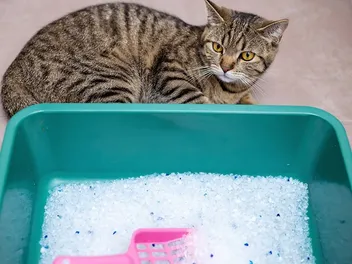
Silica gel is the primary ingredient in crystal litter products, and while it will trap odors and absorb liquid, it doesn't clump together. It does, however, help dry things out, which goes a long way regarding odor reduction.
Silica gel absorbs your cat’s urine and then allows the moisture to escape while keeping the smell locked in. Unfortunately, the crystals need to be dry for this process to work, so if your cat pees on already saturated crystals, the urine won't be absorbed, creating a stinky mess. And because the product doesn't clump, it's virtually impossible to tell which crystals are already saturated and which are still capable of absorbing urine.
Regularly stirring the crystals provides a solution, but eventually, you'll need to throw out all the litter and start with a fresh supply. Unfortunately, the smell test provides the only real way to know when it's time to change your cat's litter. Most products can last for anywhere from 1 week to 1 month, and some contain colored crystals that become white when saturated, letting you know it's time for a litter change.

What Is Crystal Litter Good for?
Crystal litter weighs substantially less than clumping litter, and because it doesn't clump, it's easier to get your cat's litter box squeaky clean.
It does a good job of absorbing smells from both poop and urine, and many products release a fragrance when exposed to moisture, masking whatever smells are leftover after the silica does its job.
Crystal litter also tends to be much cleaner, as there's much less dirt and little tracking, so you don't have to worry about your cat distributing bits of used cat litter around the house. You'll also spend less time vacuuming and sweeping around the litter box as the particles essentially stay put.
Some owners find that crystal litter requires less maintenance since you only need to scoop out your cat's poop on a daily basis instead of poop and clumps of urine.
What Are Some of the Drawbacks of Using Crystals?
The potential for smells to get loose is the biggest drawback of using crystals. While silica particles absorb moisture and odors, you still must be diligent about stirring the litter, or your cat's urine won't be soaked up.
Pros
- Super hygienic option
- Relatively inexpensive
- Great odor control
Cons
- Can't remove clumps of urine
- Must replace litter entirely for odor control
Other Factors to Consider
While we've covered the fundamental differences between clumping and crystal litter, there are several other factors to keep in mind when determining which type of product to choose.
Your Cat's Preference
Some, but not all, cats can be extremely picky regarding their litter. If you have a kitty that's very particular about its paws, you might be better off with a crystal litter as long as you use enough to keep urine from accumulating at the bottom of the box and remember to stir the litter every day.
Some cats don't like the sensation of clumping litter and refuse to put their paws into a litter box with damp sections. Cats that like to dig around in their litter often prefer crystal or other non-clumping options.
Keep in mind that once a cat becomes accustomed to a particular type of litter, they may be pretty unhappy if you decide to switch things up suddenly. If you choose to transition your cat from clumping litter to crystals or vice versa, do so over 3 to 5 days, gradually increasing the amount of the new litter while simultaneously decreasing the old litter you put in your cat's litter box.

Cost
Clumping litter tends to be the more expensive option; not only does it cost more per box, but you also need to replace it more often: at least once a week. Crystal litter is generally cheaper, meaning you'll spend less per box, and you typically don't need to replace it as often, making it a more affordable choice. Crystal litters with super odor control extras usually cost a bit more than basic options.
Health
The dust associated with clumping litter can trigger breathing problems and allergies in some cats. If your cat has allergies of any sort, it's probably best to avoid clumping litter due to its potential for bringing on allergic reactions. The same is true if you or anyone in your household suffers from allergies or asthma. Crystal litter will probably be the better option since it produces less dust.

Other Ways to Reduce Smells and Messes
No matter which option you choose, no cat litter is perfect for limiting odors or tracking. To keep litter-associated smells under control, add a bit of the deodorizer to give the litter a boost to lock down odors. If you or your cat are particular about smells, consider using an enzymatic spray to keep the box from smelling like urine. Covered and top-entry litter boxes are great for limiting tracking if you have clumping litter.
Combating tough cat litter smells is an ongoing battle for pet parents but luckily, there are products out there designed to help! Two products that significantly reduce odors are the Hepper Litter Additive and the Hepper Enzyme Spray.
| Image | Product | Details | |
|---|---|---|---|

|
Hepper Advanced Bio-Enzyme Pet Stain & Odor Eliminator Spray |
|
Check Price |

|
Advanced Bio-Enzyme Cat Litter Deodorizer |
|
Check Price |
At Catster, we’ve admired Hepper for many years and decided to take a controlling ownership interest so that we could benefit from the outstanding designs of this cool cat company!

Conclusion
There's no one type of cat litter that works best for all kitties and their human companions, and there are pluses and minuses to both clumping and crystal options. The most significant difference between the two is the most obvious; clumping products solidify and allow you to scoop out urine easily.
Crystal litter absorbs urine and the associated smell, but you'll still have a litter box full of kitty waste. The most important factor is your cat’s preference since cats can be particular regarding their litter. Also, remember to transition slowly if you decide to switch to a different type of litter.
Sources
Featured Image Credit: Karnstocks, Shutterstock (L), Valentina Zavrazhina, Shutterstock (R)
Expert cat care, straight to your inbox
News, insights, and useful advice, delivered to you.

No spam — unsubscribe anytime.
By signing up, you agree to our Terms & Conditions and Privacy & Cookies Policy.
How useful was this post?
Click a star to rate. You can leave written feedback afterwards. (We read all feedback.)
Lorre Luther is a writer who is firmly convinced that cats are smarter than humans. She left her law career in the United States and moved to the Netherlands to follow her dream of becoming a writer. Lorre currently lives in Rotterdam, she enjoys traveling and greatly appreciates the beauty of nature. Lorre has a spot for animals and admires the intelligence of cats.