What Do the PrettyLitter Colors Mean? Explanation with Color Chart

In this article
Staying on top of your cat's health can be difficult, even if you religiously take your pet to the veterinarian for regular checkups and dental care. Urinary tract infections (UTIs) and conditions like kidney tubular acidosis or the presence of crystals often create health problems that can't be anticipated.
The clinical signs are often missed until the cat begins exhibiting troubling behavior, such as difficulty urinating, often resulting in a veterinary emergency. PrettyLitter provides you with a convenient way to keep an eye on your pet's health. The innovative silica crystal litter is pH sensitive, turning one of four colors depending on the acidity or alkalinity of your cat's urine. While not diagnostic, it provides another piece of information that you can use to monitor your cat’s health. Below you'll find a deeper explanation as well as our PrettyLitter color chart!

What Is PrettyLitter?
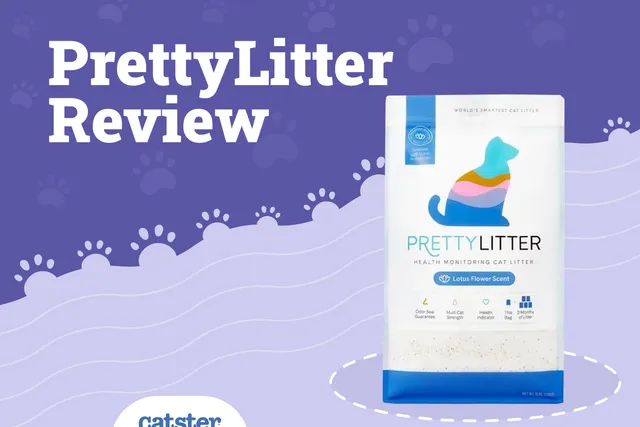
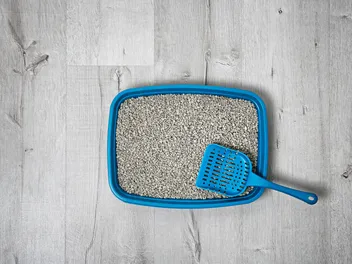
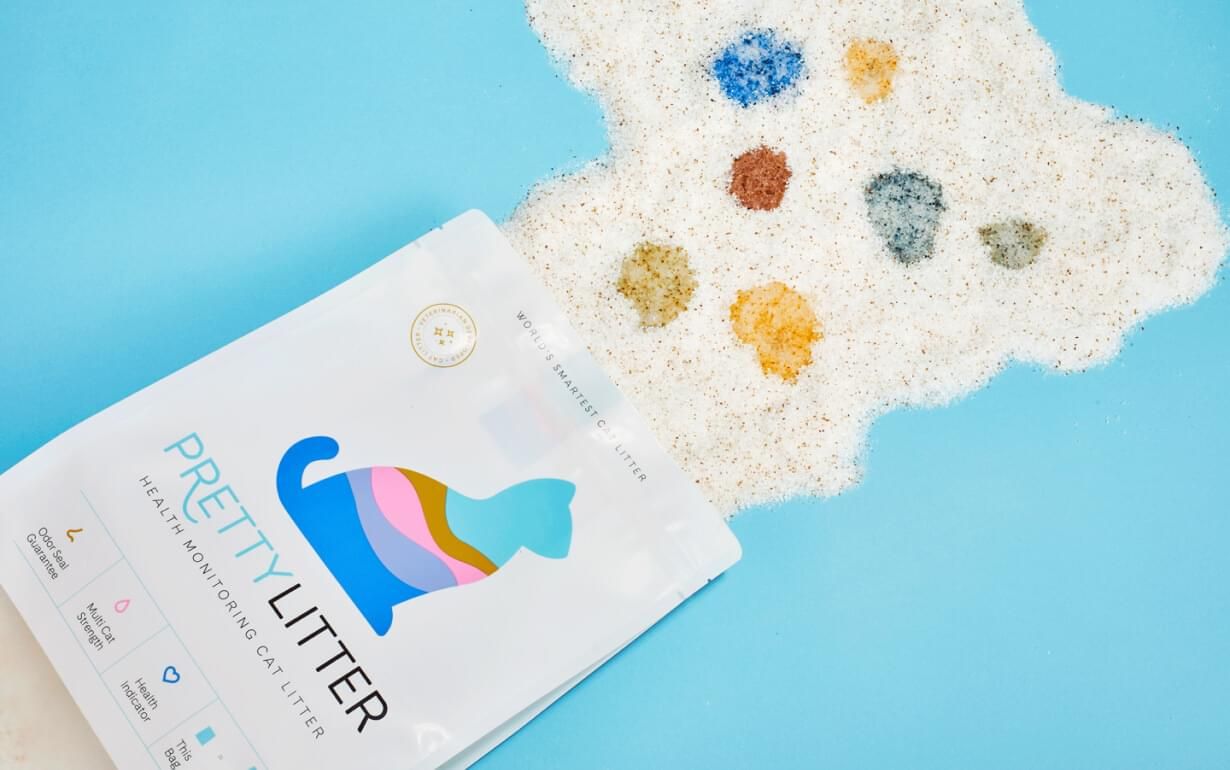
PrettyLitter is a crystal litter that changes color in response to changes in your cat's urine pH. It turns yellow or green if everything is within a normal pH range. High pH readings are indicated by the crystals turning blue. According to the PrettyLitter website, abnormal, alkaline urine often indicates a bacterial UTI.1
When exposed to low-pH or acidic urine, the crystals turn dark orange, which often accompanies metabolic acidosis or kidney tubular acidosis, these conditions can be present when cats have bladder stones or kidney issues. Red crystals indicate the presence of blood in the urine, which suggests the presence of crystals or bladder stones, inflammation, bladder cancer
or a UTI.
It's a silica crystal-based product, meaning you won't be able to remove urine clumps during daily cleanings. Litter color changes and smell are the only ways to be sure all the crystals are saturated.
There are two ways to get your hands on PrettyLitter. Head to the website, answer a few questions to find out how much of the product you'll need every month, and sign up for the subscription service to have cat litter delivered to your door every 3 or 4 weeks.
Alternatively, you can find the product at Target and Walmart stores, making it easy to give the litter a try without worrying about canceling anything if you're not satisfied.

PrettyLitter Color Chart
Here is an infographic of the PrettyLitter color meanings.
| Color | Olive Green | Blue | Orange | Red |
| pH | Normal pH | High pH | Low pH | Blood in urine |
| Possible Conditions | No associated conditions | Struvites Bacterial UTI | Calcium oxalate crystals Kidney disease Kidney tubular acidosis Metabolic acidosis UTI | Bladder cancer Bladder inflammation Bladder stones Kidney disease UTI |
Source
Is PrettyLitter a Scientifically Proven Diagnostic Product?
Absolutely not. The company doesn't claim its products will catch all infections or inflammatory conditions. Nor does the manufacturer claim that the litter's pH readings provide any definitive information about the overall state of a cat’s health.
At no point does PrettyLitter claim that green crystals mean that there's nothing wrong with your cat and that red ones indicate an emergency veterinary visit is overdue. The litter reflects your cat's health, as noted in the acidity of your pet's urine, which is only one of several signs or biomarkers to consider.
Some owners have had positive experiences with the product, as it accurately indicated a feline health issue that needed addressing. Others have expressed disappointment with the product due to its failure to warn about conditions like UTIs that were later clinically diagnosed.
It's essentially up to each owner to decide how to best use PrettyLitter’s pH information. But the answer to the initial question is no, PrettyLitter isn’t a scientifically proven diagnostic tool.
Clay, Crystal, or Biodegradable Litter?
There are roughly three types of cat litter currently on the market.
Clay Litter

Clay litter is usually bentonite clay, which clumps and traps moisture. Clumping products make it easy to scoop out urine and feces from litter boxes, and clay is pretty effective at limiting smells.
Crystal Litter

Crystal products are a great choice if you're interested in reducing dust and tracking. Clay products produce a good bit of dust and are easy for cats to track throughout the house. A great deal of vacuuming is often required to keep clay-based-litter-associated dust under control. Crystal-based cat litters usually produce far less dust, making them ideal for people or cats with allergies or conditions such as asthma. PrettyLitter is, according to its manufacturer, 99% dust free!
Crystal litters also tend to last longer and are often easier on the pocketbook than clay litters that require weekly replacement. PrettyLitter usually only needs to be changed once a month.
Biodegradable Litter

Biodegradable products are the third option. These choices break down after use instead of contributing to landfill growth. Although some of these products are marketed as flushable, putting cat waste down the toilet is problematic for public health reasons. The practice can lead to unhygienic sewer backups and the infection of wild animals with Toxoplasma gondii.
However, biodegradable options have many benefits, even if they aren't technically flushable. Many are made with sustainable materials such as recycled newspapers or dried tofu. Most feature recycled or recyclable packaging, giving these products reasonably good sustainability profiles.
They're available in clumping and non-clumping options, and you can also find scented and unscented choices. Many unscented products include natural odor neutralizers such as baking soda. You can find several options if environmental sustainability is essential to you.
Disposing of Biodegradable Litter
There are two ways to dispose of used biodegradable kitty litter responsibly: Throw it in the trash or compost it. It's fine to throw these products away, but using a recycled, biodegradable trash bag can reduce your cat's overall carbon footprint.
Instead of tossing it in the trash, you can take biodegradable litter to the compost bin. You'll need to throw away the bits your cat pees or poops on, but the other parts can be composted and used on non-edible plants.
Conclusion
PrettyLitter is a crystal, non-clumping product that offers information about your cat's urinary tract health. It changes colors to reflect the pH of your pet's urine, which may provide an early indication of some types of illness. PrettyLitter isn't a medical product, though, nor does it claim to be one. It's a litter that can provide a bit of feedback on the acidity of your cat's urine. Ultimately, it's up to you to determine if PrettyLitter is necessary for your pet’s litter box.
Sources
Featured Image Credit: PrettyLitter
Expert cat care, straight to your inbox
News, insights, and useful advice, delivered to you.

No spam — unsubscribe anytime.
By signing up, you agree to our Terms & Conditions and Privacy & Cookies Policy.
How useful was this post?
Click a star to rate. You can leave written feedback afterwards. (We read all feedback.)
Lorre Luther is a writer who is firmly convinced that cats are smarter than humans. She left her law career in the United States and moved to the Netherlands to follow her dream of becoming a writer. Lorre currently lives in Rotterdam, she enjoys traveling and greatly appreciates the beauty of nature. Lorre has a spot for animals and admires the intelligence of cats.