Chronic Diarrhea in Cats: Our Vet Discusses Signs, Causes & Treatment

In this article
Nobody likes it when their cat has diarrhea, the kitty included. Not only is it potentially messy, but it can also be frustrating if it’s been going on seemingly without end or if it keeps popping back up when you least expect it.
Chronic diarrhea in cats is often equally frustrating for a veterinarian, as it can be difficult to diagnose the cause. You should always see a veterinarian if your cat has had diarrhea for a while, but read on to learn about a few possible causes and what is usually done to treat it.

What Is Chronic Diarrhea in Cats?
Diarrhea is when bowel movements are consistently softer than usual. They may also be more frequent and sometimes more voluminous. An occasional loose bowel movement here and there is normal for a cat, but you should consider it actual diarrhea if you start to see it more often than not. It’s considered chronic when it happens for a couple of weeks or more.
Keep in mind that sometimes, chronic diarrhea will present as loose or watery feces and nothing else for weeks on end, while other times, it will be a few loose bowel movements grouped together, followed by normalcy and then more loose bowel movements. The affected cat can shift between diarrhea and normal feces for weeks or months.
However chronic diarrhea presents itself, there are other signs to watch out for that may aid in identifying a cause.

What Are the Signs of Chronic Diarrhea in Cats?
These are the signs of diarrhea specifically:
You may also see other signs of illness, including:
A cat only showing signs of chronic diarrhea should see a vet, but if they have chronic diarrhea and any of the additional signs, they should see a vet sooner rather than later, as a few of the side effects, especially dehydration, can cause significant issues if untreated.
If you are concerned or have questions about your cat's health, you can also speak to a vet from the comfort of your own home to help make a plan. They can determine when an in-clinic vet visit should be made.
What Causes Chronic Diarrhea in Cats?
Diarrhea is typically a major sign of a digestive issue in a cat, but sometimes, it can be related to other systems. Here, we look at various issues that can affect the digestive system and other areas of the body and that can lead to chronic diarrhea.

Digestive Issues Leading to Chronic Diarrhea
- Food intolerances or sensitivities: Certain ingredients in a cat’s food don’t always agree with their digestion. Feeding them these ingredients can lead to chronic diarrhea because the intestines simply can’t handle them. Dairy products or a specific protein source are the most common culprits.
- Parasites: Even indoor kitties can get internal parasites. These nasties take up residence in the digestive tract, creating inflammation that interrupts digestion and leads to diarrhea. Weight loss and a poor hair coat may also be seen.
- Infection: Bacterial or viral infections can create inflammation in the digestive tract that leads to diarrhea in the long term. These pathogens may be transmitted by interactions with other sick cats or by eating contaminated food. You may also see vomiting, stomach pain, or a fever.
- Obstruction: Although it may seem counterintuitive, partial obstructions in the intestine can lead to diarrhea because the blockage prevents solid feces from moving through but typically allows more fluid parts around it. What comes out the end is just the liquid portion, or diarrhea.
- Inflammatory bowel disease (IBD): A complex disease process, IBD can lead to chronic diarrhea in cats because the inflammation of the intestines interrupts normal nutrient absorption.
- Cancer: Certain kinds of cancer can wreak havoc on the digestive system, leading to chronic diarrhea.
Non-digestive Issues Causing Chronic Diarrhea
- Pancreas: Technically, the pancreas is a member of the digestive system—at least part of it—because it produces digestive enzymes. Still, it tends to be affected by different problems. Pancreatitis and pancreatic insufficiency are two issues that can affect the production of the digestive enzymes, potentially causing diarrhea.
- Kidney disease: As the kidneys lose their ability to filter the blood, toxins may build up that can lead to diarrhea, among other signs, such as vomiting, not eating, weight loss, and many more.
- Hyperthyroidism: When a cat has hyperthyroidism, it seems like everything is on overdrive. Their metabolism gets a boost, which increases hunger, water consumption, and urination. Hyperthyroidism can also increase digestive motility, which can lead to diarrhea.
How Do I Care for a Cat With Chronic Diarrhea?
A cat that has bowel movement changes that last longer than a couple of days should be seen by a veterinarian, especially if they’re accompanied by any other signs. Frequent cases of diarrhea that seem to resolve themselves should also be checked out, as this still indicates that something isn’t quite right.
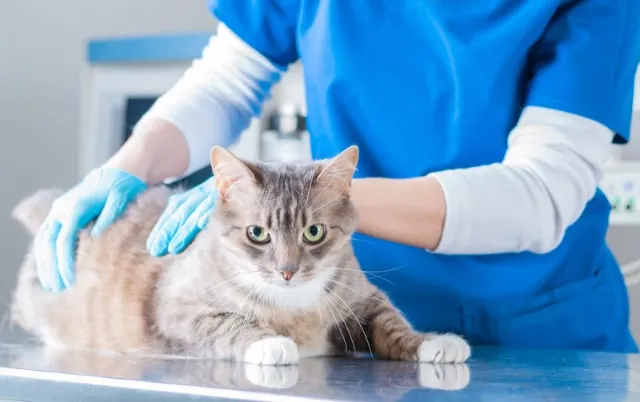
If possible, bring the vet a fresh fecal sample, and be ready to answer questions about how long this has been going on, other signs that you’re seeing, any changes that you’ve made to your cat’s diet, etc. The vet will take it from there by starting with a thorough exam, including palpating the abdomen for any lumps, tender spots, or thickening and feeling the throat to check the size of the thyroid gland.
Blood work and fecal testing may also be involved to look for parasites, infections, and organ function. Ultrasound and/or X-rays will be used to check out the digestive tract and surrounding features to look for masses, thickening of the intestines, and foreign objects. Sometimes, more in-depth diagnostics may be needed, like endoscopy to get a tissue sample.
When the diarrhea-causing culprit is identified, treatment can begin. For some cats, that may be medications to treat infections or parasites; a dietary change to help with IBD, hyperthyroidism, or food intolerances; surgery to remove an obstruction or tumor; or enzyme supplements to help with pancreatic insufficiency. Supportive care may also be needed if a kitty is dehydrated, vomiting, or not eating.
Keep in mind that a few of these conditions, such as IBD or kidney disease, will require lifelong treatment and support.


Frequently Asked Questions (FAQ)
How Do You Stop Chronic Diarrhea in Cats?
If your cat has been experiencing diarrhea for longer than a couple of days, it’s time to see a veterinarian, since chances are that there is something more serious going on than what you can treat at home. That said, during those initial days, you can give cat-specific probiotics to your pet or feed them a bland diet to see if the diarrhea clears up.
What Do You Feed a Cat With Chronic Diarrhea?
A cat’s diet will highly depend on the cause of their chronic diarrhea. For example, cats with food intolerances or IBD may do well with a limited-ingredient or novel protein diet, while felines with hyperthyroidism may need a low-iodine diet, and other cats may need a boost in fiber or a decrease in fat content. A veterinarian will be able to recommend the best diet that’s appropriate for your pet’s condition.

Conclusion
Chronic diarrhea in cats can be as frustrating to deal with as it can be messy to clean up. The most important step that you can take is to see a veterinarian to get a diagnosis of the cause so treatment can begin. Certain causes of chronic diarrhea can be lifelong issues that will require continuous treatment or management.
Sources
Featured Image Credit: Nils Jacobi, Shutterstock
Expert cat care, straight to your inbox
News, insights, and useful advice, delivered to you.

No spam — unsubscribe anytime.
By signing up, you agree to our Terms & Conditions and Privacy & Cookies Policy.
How useful was this post?
Click a star to rate. You can leave written feedback afterwards. (We read all feedback.)
Dr. Chyrle Bonk DVM (Veterinarian)
On top of healing animals and writing for veterinary publications, Dr. Chyrle Bonk owns a small cattle herd! When she’s not busy with those things, she can be found somewhere in the Idaho outdoors with her husband and two kids.
Chyrle has practiced in a mixed animal clinic for over 10 years. She also writes for various veterinary websites and magazines, like Catster!
Dr. Chyrle Bonk received her Doctor of Veterinary Medicine (DVM) from Oregon State University in 2010.