Cat Pancreas: Feline Anatomy Explained (Vet-Reviewed)


The inner workings of the feline body are similar to our own in many ways, but as you can imagine, there are also some significant differences. One of the similarities the human and feline bodies share is that they both have a pancreas. Does a cat’s pancreas also work similarly to our own, though?
It does! Like the human pancreas, a cat’s pancreas aids in balancing blood sugar levels and produces digestive enzymes. Want to learn more about your cat’s pancreas? Here’s a look at what a cat’s pancreas looks like, where it’s located, and what it does!

What Does a Cat’s Pancreas Look Like?

The cat pancreas is pale pink (at least when there’s nothing wrong with it) and is made up of two lobes. It’s thin and long; in fact, it looks similar to a boomerang because it makes a wide “V” shape. The right lobe of a cat’s pancreas also often has a hook shape on the end. The pancreas of a cat has two ducts, called the interlobar and interlobular ducts, that come together to create the main bile duct of the pancreas. Altogether, a cat’s pancreas only weighs between 6 and 8 ounces!
Where Is a Cat’s Pancreas Located?
A cat’s pancreas can be found on the right side of the abdomen. If you’re looking at a picture of the pancreas, it appears tucked in and curved beneath the stomach and along the duodenum (the first part of the small intestine). The left lobe of the pancreas runs along the portion of the small intestine located in the central region of the abdominal cavity, while the right lobe can be found in what is known as the mesoduodenum. You’ll also find the colon, gallbladder, and esophagus near the pancreas in a feline.

What Does a Cat’s Pancreas Do?
A cat’s pancreas works like our own in that it both helps regulate the level of blood sugar and aids in digestion. This makes the organ both endocrine and exocrine, meaning it has two parts that do two different functions.
The endocrine pancreas is responsible for producing a variety of essential hormones, the most important of which are insulin and glucagon. These hormones aid in keeping blood sugar levels steady. When the endocrine pancreas produces these, they get released directly into the bloodstream, and facilitate the transport of glucose from the bloodstream into the cells.
The exocrine pancreas is responsible for producing enzymes that are needed for digestion. When produced, these enzymes move from the pancreas to the intestinal tract and help break food down into their basic components for digestion. Rather than getting released into the bloodstream like the hormones produced by the endocrine pancreas, the enzymes produced by the exocrine pancreas move directly into the intestine via ducts.
Diseases of the Pancreas
Several diseases involve the pancreas; four particularly affect felines. These are diabetes mellitus, pancreatitis, insulinoma, and exocrine pancreatic insufficiency (EPI).
Diabetes Mellitus
As with humans, there are actually two forms of diabetes.
- Diabetes Insipidus - this is a disease of the kidneys, and does not involve blood glucose, insulin, or the pancreas.
- Diabetes Mellitus - this is the form of diabetes we are more familiar with, which involves the endocrine pancreas.
There are two types of diabetes mellitus:

Pancreatitis
Pancreatitis occurs when the exocrine pancreas becomes inflamed and is often associated with other health problems, such as diabetes, gallbladder disease, and liver disease, but can also occur in response to inappropriate diet or foods. The reason for this inflammation is usually the pancreatic digestive enzymes being activated in the pancreas instead of the intestinal tract. If pancreatitis isn’t treated in a timely manner, it can be life-threatening. A cat with pancreatitis will display signs such as a lack of appetite, diarrhea, vomiting, tiredness, and stomach pain. Treatment for pancreatitis involves hospitalization, fluids, and medications, like antibiotics and anti-inflammatories.
Cats can often suffer from chronic, intermittent pancreatitis, which presents as occasional, self-resolving vomiting, diarrhea, and inappetence. This condition often goes undiagnosed due to its intermittent nature, so if your cat shows these signs, you should make an appointment with your vet the next time they are experiencing them to make a diagnosis, and find out how best to manage this illness.
Insulinoma
Insulinoma is a malignant cancer of the endocrine pancreas and is more commonly seen in dogs than cats. It originates in the beta cells, which are responsible for insulin production, causing a dangerous overproduction of insulin. Too much insulin in the body can cause severe low blood sugar or hypoglycemia, which can lead to seizures, coma, and death. A severely hypoglycemic feline may also walk as if they are drunk, become listless, and tremble.
The most common treatment for insulinoma is surgery to remove the tumor, but quite often, the cancer is quite advanced by the time an insulinoma is diagnosed. There are chemotherapy treatments available to treat insulinoma, but overall, the prognosis tends to be guarded to poor.
Exocrine Pancreatic Insufficiency (EPI)
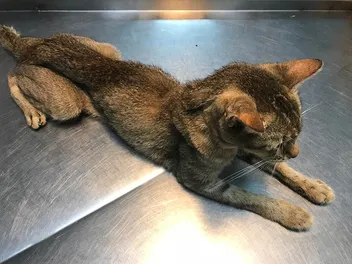
Exocrine pancreatic insufficiency occurs when the pancreas isn’t producing enough digestive enzymes. Chronic pancreatitis, a duct obstruction, or masses in the pancreas can cause a lack of these enzymes. A feline suffering from EPI will experience weight loss (despite eating more), watery diarrhea, lethargy, and vomiting. Treatment for EPI involves replacing the missing digestive enzymes with the use of supplements.
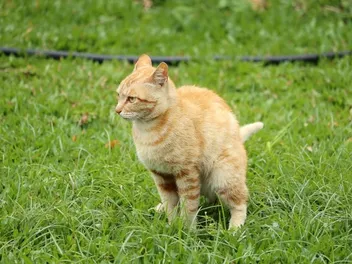
One other important note about EPI—this can occasionally (though rarely) be the result of cats ingesting a pancreatic fluke, Eurytrema procyonis, carried by grasshoppers. So if your pet spends time outdoors, keep an eye on them, and don’t forget to mention it to your vet!
Conclusion
A cat’s pancreas is like our own; it helps blood sugar levels stay stable and produces enzymes that aid digestion. Because of the vital roles played by this unassuming little organ, any damage or dysfunction can be catastrophic. Diabetes and Insulinoma are two major disorders affecting the endocrine pancreas, with EPI and pancreatitis significant diseases associated with the exocrine pancreas. If your cat shows signs such as vomiting, weight loss, lethargy, or increased urination and thirst, these are all signs that their pancreas could be in trouble, and a visit to the vet is needed.
Featured Image Credit: mojo cp, Shutterstock
Expert cat care, straight to your inbox
News, insights, and useful advice, delivered to you.

No spam — unsubscribe anytime.
By signing up, you agree to our Terms & Conditions and Privacy & Cookies Policy.
How useful was this post?
Click a star to rate. You can leave written feedback afterwards. (We read all feedback.)
Misty Layne lives out in the woods in small-town Alabama with her two Siamese cats —Serafina and Jasper. She also has an array of stray cats, raccoons, and opossums who like to call her front porch home. When she’s not writing about animals, you’ll find her writing poetry, stories, and film reviews (cats, by far, her favorite writing topic, though!). In her free time, Misty enjoys chilling with her cats, playing piano, watching indie and foreign films, photographing abandoned places, and catching up on her never-ending TBR list.