Cat Nail Caps: Our Vet Explains the Ethics, Pros & Cons

In this article
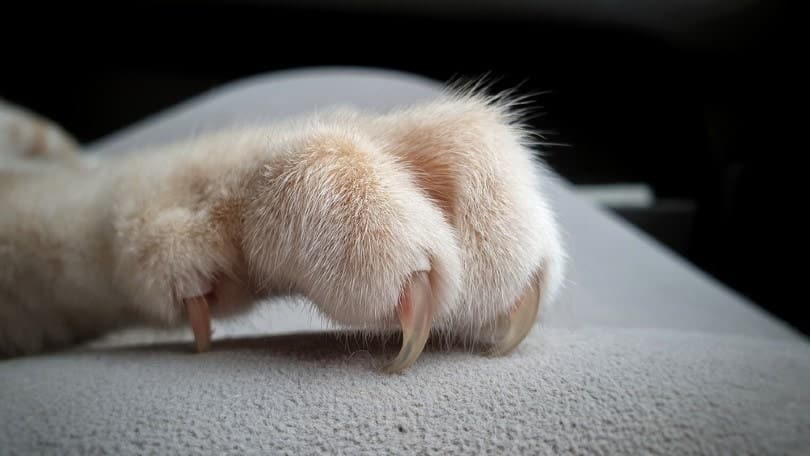
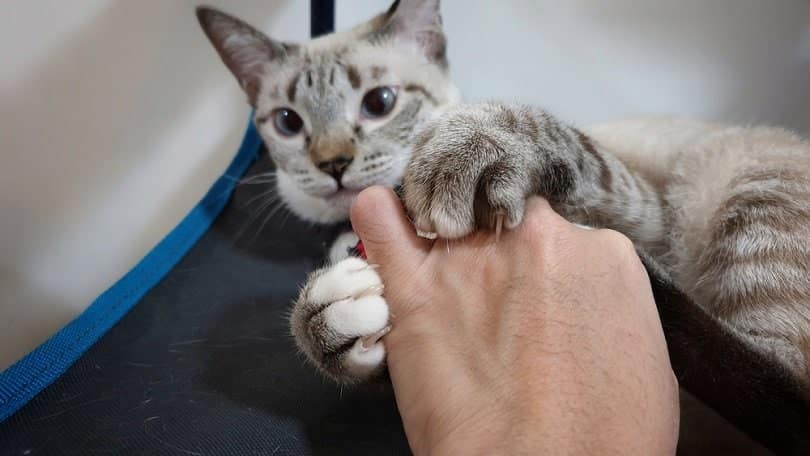
If your cat loves sharpening their claws on your favorite rug or chair, you’d be forgiven for getting frustrated. Remember that your cat is not scratching to annoy you; they're just being a cat. Scratching is part of a cat’s instinctive behavior and is not something they can stop doing. However, drastic changes might be warranted at times.
In many parts of the world, declawing has been declared illegal and is only allowed in instances when a cat’s claws have been subjected to severe and untreatable injury. The decline in declawing has led to a rise in the use of nail caps. However, these aren’t without their controversies either, so they should be carefully considered before being used on your cat. In this article, we discuss the ethics, pros, and cons of using nail caps.

What Are Cat Nail Caps?
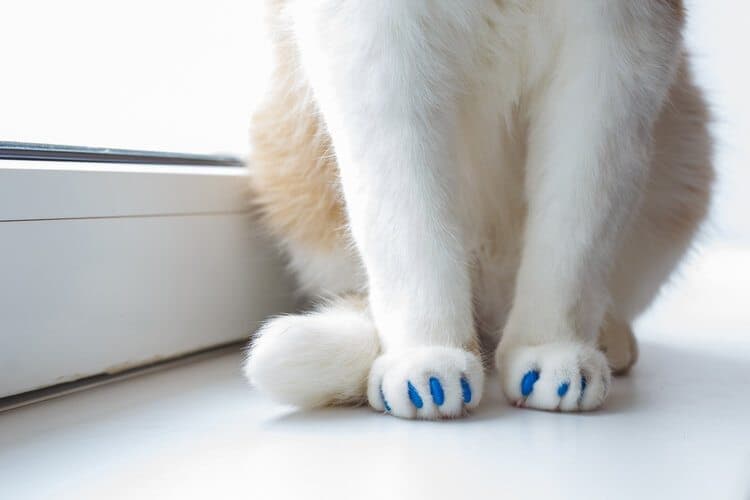
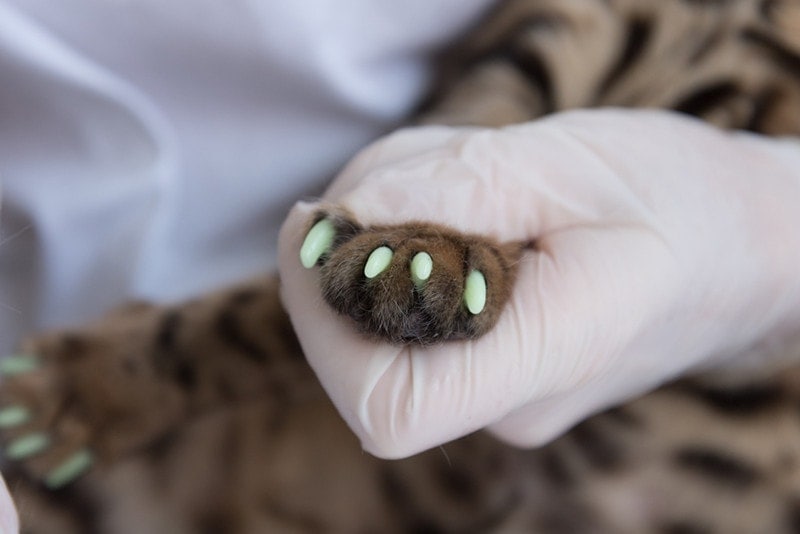
Cat nail caps are small pieces of flexible plastic that fit over your cat’s nails. They can be made of various materials, including vinyl resin, rubber, or PVC. They’re often applied to a cat’s claws after a nail trimming, usually by a veterinarian or a groomer. Nail caps require glue to stick firmly to your cat’s claws, and they’ll last as long as it takes for the nails to grow. A set of nail caps should last around 4 to 6 weeks if applied correctly. They will eventually fall off as a cat’s claws grow once again.
The Ethics of Nail Caps
Nail caps are not without their fair share of ethical dilemmas.
Why Some People Are Opposed to Nail Caps
The primary reason some people are opposed to nail caps is that they prohibit a cat from doing something that’s entirely natural for them: scratching. A long-established list of five fundamental freedoms for animals states that part of animal welfare is ensuring that they can demonstrate their natural behaviors.1 A nail cap denies cats the opportunity to do just that.
Furthermore, a cat’s claws aren’t just for hunting; they play a vital role in other aspects of their day-to-day life. Cats use their claws to jump and climb, and the scent glands between their claws enable them to mark their territory. Covering their nails greatly diminishes their ability to perform these natural tasks.
The ability to use their claws may provide a cat with a chance at survival when facing a predator or any other animal that attacks them. Nail caps would handicap a cat in such a situation and place them at a disadvantage.
Stress is an interesting construct in the context of a cat’s life. Although different cats respond differently to changes in their environment, certain cats are especially sensitive to changes. A cat that’s used to scratching but can no longer get the satisfaction of doing so may also become stressed. This is concerning because stress can perpetuate or exacerbate health issues in cats, including medical emergencies. It can also lead to more disruptive behavior (which is what nail caps are intended to curb).
Overall, people who are against nail caps are primarily concerned with the welfare of their pets, and their main concern is that nail caps do not allow cats to be cats. Their stance leans toward offering felines more suitable avenues of scratching instead of limiting their ability to scratch.
Why Some People Advocate for Nail Caps
Some people argue that nail caps can be useful in the right circumstances. For example, if a cat has severe behavioral problems and is constantly posing a threat to humans in their house (such as infants and children) or other pets, nail caps could be a saving grace that helps the cat avoid the possibility of being declawed, rehabilitated in a new home, or even euthanized in extreme cases.
In certain instances, a cat’s claws can be detrimental to their recovery after an injury. A cat that’s particularly itchy may constantly scratch themselves in an effort to relieve the itch, only to make matters worse and complicate their road to recovery. Although an Elizabethan collar (a.k.a. an “E-collar,” “doughnut,” or “cone of shame”) can stop a cat from scratching their face and neck in some instances, it might not be practical or feasible in others. A cat may also be able to scratch areas of their body that a protective collar just cannot cover. In such situations, nail caps would be useful, as they would temporarily prevent the cat from scratching themselves. People also claim that a poorly applied collar can be removed by a determined cat, so nail caps may provide an additional layer of protection.
Overall, the people who support the concept of nail caps do so because they feel like it might be valuable in unique situations. However, most pet welfare advocates feel like these justifications are either exaggerated or valid only in extremely rare circumstances.

The Pros & Cons of Nail Caps
Now that we know more about cat nail caps and when it would be a good idea to use them, let’s consider the good and not-so-good things about them.
Pros
- Can spare a cat from declawing, rehabilitation, or euthanasia
- Don’t affect your cat’s normal nail growth
- Nails can still be retracted
- May be temporarily useful to prevent a cat from scratching
- Made from soft and flexible materials
- Can be easily applied by a veterinarian or groomer
Cons
- Considered counterproductive to animal welfare by many
- May lead to stress in some cats
- May lead to health issues due to stress
- Need replacing every 4–6 weeks
- Prohibits a cat from many normal activities

- Complete Set - These cat nail clippers include both a large and small pair, meaning it works well as a kitten claw trimmer when they're a small kitty, and then before you know it, as a cat nail cutter
- Razor Sharp Stainless Steel - The most comfortable cat nail clippers for indoor cats provide a fast and clean cut. And for rough residuals remaining, the free cat nail file included can smooth it all.
- Safety First - With a safety nail guard and locking spring, you can make sure every grooming cut is stress free for you, and pain free for your purry pal
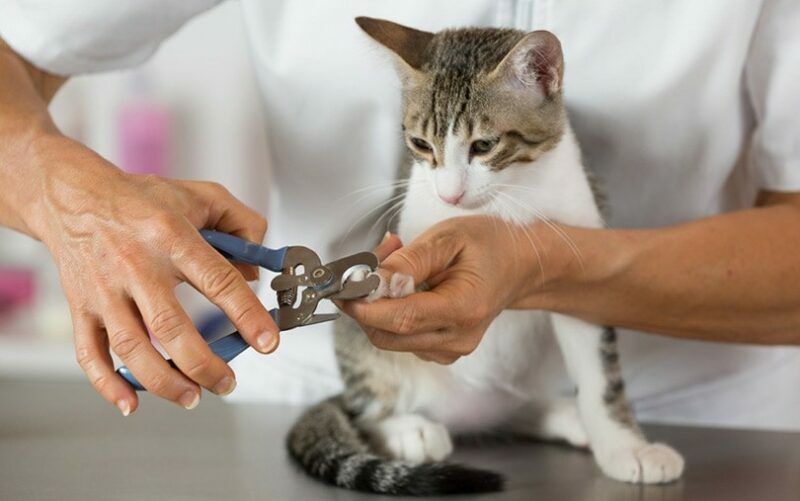
Stopping your cat from scratching can be tricky, but keeping their nails trimmed can help. Hepper's Cat Nail Clipper Set can make it easier, with sharp stainless steel blades for precision clipping and ergonomic, non-slip handles. The built-in safety guard and locking switch will keep you and your cat safe, and the two different sizes of clippers will allow you to handle any size or angle of nails.
At Catster, we’ve admired Hepper for many years and decided to take a controlling ownership interest so that we could benefit from the outstanding designs of this cool cat company!
Cat Nail Caps Pros
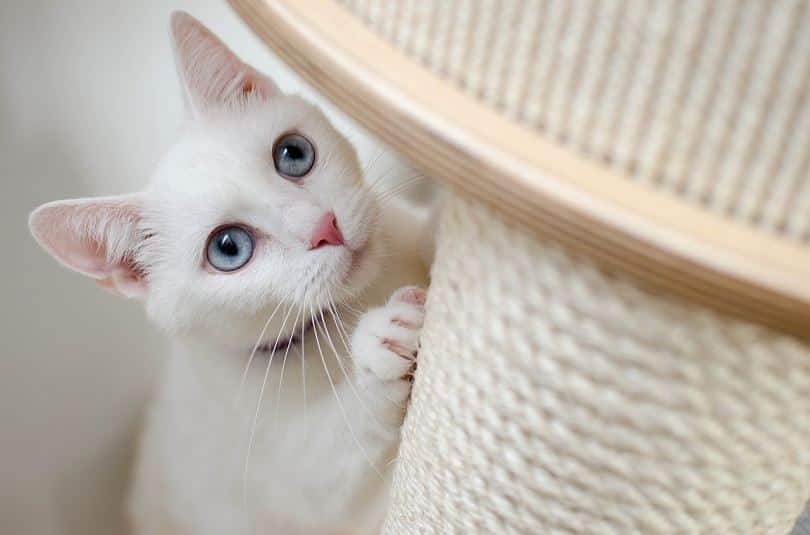
The primary benefit of using nail caps for a cat is that they can spare them from a controversial medical procedure (declawing), rehabilitation, or worse, euthanasia. When used as a lifeline of sorts in this way, nail caps can indeed be beneficial.
However, nail caps should not be used for convenience to spare your furniture, nor are they a substitute for properly training your cat and offering them acceptable surfaces to scratch.
In rare circumstances, they may be prescribed by a veterinarian to prevent your cat from scratching themselves as they recover from a condition or injury.
If you’re unsure whether your cat should use nail caps or not, please contact a vet or a reputable groomer for a recommendation.

Cat Nail Caps Cons
Now, let’s look at some of the bad things about nail caps. Some of these might not worry you at all, and others might be deal-breakers. By having all the information at hand, you can make the best decision for you and your cat.
Proper Application Is Important
As long as they’re applied properly, nail caps won’t stop your cat from retracting their claws. However, you should ensure that the task is done by someone trained—ideally, a veterinarian. A groomer recommended by a veterinarian is a suitable alternative option. Proper application is crucial to ensure that the amount of stress that your cat experiences from the application of the nail caps remains as low as possible.
A Period of Adjustment
No matter how easy-going your cat is, they will have a period of adjustment where they have to get used to their nail caps. Keep in mind that your cat is more prone to stress during this period and may even have accidents outside their litter box if they feel like that digging just feels too strange for them.
Some Cats Never Get Used to Them
Your cat will have to adjust to the feeling of wearing nail caps, so be prepared to see them walking slightly strangely for a while. Many cats will soon be back to normal, but some might not. The adjustment to nail caps isn’t like switching your cat to a new diet, as this is something that interferes with multiple aspects of their daily lives, including simple acts like jumping.
Replacing the Caps
You must replace the nail caps as your cat’s claws grow longer. While this isn’t a bad thing, it means you will need to be prepared and have more in stock. Most cat nail caps are sold in multipacks, which should last for two to four applications, depending on whether you’re applying them to all four paws or just the front feet.
Restrictions
Cats should be kept inside if they’re wearing nail caps, as they won’t be able to climb trees or defend themselves properly if attacked. They will also have their mobility restricted, which poses a significant ethical conundrum and may lead to more unwanted behaviors and health issues.

Conclusion
Hopefully, you now have a better idea of whether nail caps will be a good solution for you and your cat. While useful in certain situations, they’re generally not considered conducive to animal welfare and remain a controversial product in the pet market. It is generally best to seek further advice from a veterinarian prior to using these products on your cat.
Featured Image Credit: Dina da, Shutterstock

Expert cat care, straight to your inbox
Vet-reviewed advice, behavior tips, and the best of Catster. Free, and you can unsubscribe anytime.
By signing up, you agree to our Terms & Conditions and Privacy & Cookies Policy.
Dr. Luqman Javed DVM (Veterinarian)
Dr. Luqman (also known as Dr. Lucky) grew up with an immense passion for animals of all kinds. By becoming a veterinarian, he turned his childhood dream into reality. Now, his goals are focused on providing help to cats all around the world by helping to cat owners understand their feline friends better to ensure the best quality of life for them. His passions are wildlife, exotic pets, pet owner education, and animal welfare. He graduated with his DVM from the Universiti Putra Malaysia in 2020. He has worked with a variety of animal species and has decades of personal experience with keeping many different types of exotic pets, such as turtles, hamsters, freshwater fish, chickens, songbirds, and parrots (and he has extensive skills in training parrots, too).
Join the conversation
Ask a question, share your story, or send private feedback.