Can Cats Have Down Syndrome? Vet-Reviewed Science & Info


In this article
There are many diseases and conditions that can affect both cats and people: Cancer, influenza, and even the plague have all been found in both humans and their pets. With that in mind, it’s worth asking: Can cats have Down syndrome?
As it turns out, the answer is no, cats have not been clinically demonstrated to have Down syndrome, nor have any cats been diagnosed with Down syndrome. But if you’re worried about your cat’s development, other conditions need to be ruled out instead.

What Is Down Syndrome, Anyway?
Down syndrome is a congenital disorder in which a child is born with an extra chromosome — specifically, the 21st chromosome. This extra chromosome can have far-reaching implications on how both the body and brain develop as the child matures. It’s the most commonly diagnosed chromosomal condition in the United States, and roughly 1 in 700 children are born with it.
No one knows for sure what causes the extra chromosome to form, but there is evidence that the birthing parent’s age may play a role, as those who are over the age of 35 when they become pregnant are more likely to have a child with Down syndrome. There are thousands of people who give birth to children with the condition even though they became pregnant at a younger age, however.
Typically, a person with Down syndrome will exhibit some or all the following features:
- Flattened face, especially around the nose
- Smaller ears
- Thick, short neck
- Almond-shaped eyes with an upward slant
- Small hands and feet
- A tongue that sticks out
- Shorter stature
Those affected with Down syndrome can also be at higher risk of other health problems, such as ear infections, eye diseases, congenital heart defects, and sleep apnea.
There is currently no cure for Down syndrome, and treatment options are mainly focused on helping children with Down syndrome develop as much as possible. The impact of the condition will vary from person to person, and while some can lead relatively independent lives (such as in an assisted-living facility), many will need permanent full-time care.

Why Can’t Cats Have Down Syndrome?
Down syndrome is caused when a human has an extra 21st chromosome. Cats can’t experience this for one simple reason: They only have 19 pairs of chromosomes. The genes found on human chromosome 21 are represented elsewhere in a cat's genome.
Even so, there appears to be something about humans that makes Down syndrome possible, because dogs have more than 21 chromosomes and some have an extra 21st chromosome, yet they don’t seem to exhibit signs of the condition either.
That’s not to say that cats can’t have genetic mutations that affect their development, however. There are several conditions found in cats that can mimic some of the issues caused by Down syndrome.
Conditions That May Resemble Down Syndrome in Cats

While cats with Down syndrome may be impossible, some various conditions and abnormalities can cause issues similar to those caused by that mutation. These can be caused by everything from diseases, infections, and congenital abnormalities to physical trauma.
One of the most common examples of such an ailment is known as the feline panleukopenia virus. This is a viral disease that’s caused by the feline parvovirus (and while it’s similar to the one that affects so many dogs, feline parvovirus is caused by an entirely different virus). Many healthy adult cats that suffer from the panleukopenia virus will only develop mild symptoms, but kittens can suffer extreme (and potentially life-threatening) complications from an infection.
Mothers can pass the virus down to their kittens, and kittens typically fare the worst from the disease. They can be born with something called feline cerebellar ataxia, which causes issues with balance, coordination, and shaking.
Some genetic conditions found in humans that have also been documented in cats are Turner’s syndrome, Klinefelter’s syndrome, and chimerism.
What to Do If You Think That Your Cat Has a Condition
If your pet is suffering from issues that make you suspect you have a cat with Down syndrome, you can rest assured that something else is the cause. However, that other issue could potentially be quite serious, so you shouldn’t ignore it.
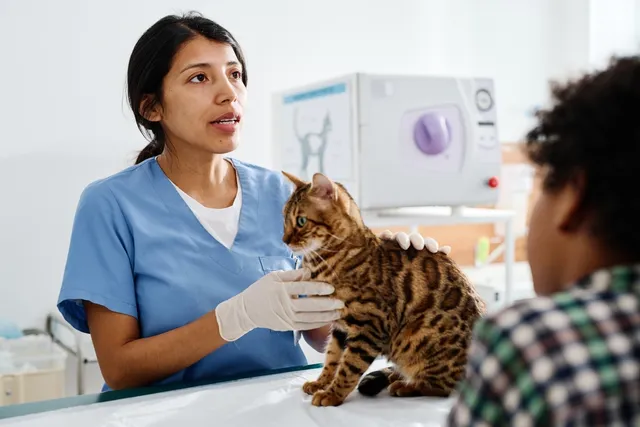
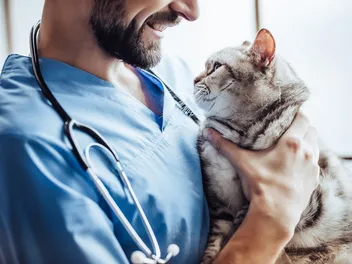
The most important thing to do is take them to the vet as soon as possible and explain the signs that you’ve noticed. The vet may want to run tests to rule out certain diseases and other conditions, but even if nothing is wrong with your cat, having that confirmed by a doctor will give you valuable peace of mind.

Conclusion
While there are no cats with Down syndrome, if you’ve noticed them exhibiting strange or troubling behaviors, you should get them checked out immediately. There are plenty of other things that could be causing issues for your cat. Your vet can examine your kitty and help formulate a treatment plan for any ailments that are causing worrisome signs in your cat.
Related Reads:
Featured Image Credit: Healthy Definition, Shutterstock
Expert cat care, straight to your inbox
News, insights, and useful advice, delivered to you.

No spam — unsubscribe anytime.
By signing up, you agree to our Terms & Conditions and Privacy & Cookies Policy.
How useful was this post?
Click a star to rate. You can leave written feedback afterwards. (We read all feedback.)
Quincy never intended to be a cat person. He grew up around dogs, and when his wife brought home a kitten one day, he told her she had one week to find it a new home. That week turned into 10 years (his wife moves very slowly), and that kitten turned into three (they got two more, the kitten didn't self-replicate). After a decade of sharing his home with three cats, one horrifying realization finally set in: oh God, he's a cat person now, isn't he???