Can Cats Eat Poppy Seeds? Vet-Reviewed Risks & Precautions


In this article
While cats can be finicky eaters, sometimes they surprise us and gobble up things that aren’t a typical part of their diet. For instance, they might snack on a piece of banana that’s been left behind on the counter. They may scarf up peas from dinner. They might even take an interest in your poppy seed muffin or everything bagel when you are not looking.
So, it makes sense to wonder whether cats can and should eat poppy seeds. Are poppy seeds healthy for cats? The short answer is that cats should not eat poppy seeds. The long answer explains why and includes ways to keep your cat away from the poppy plant. Let’s explore these topics together.

Poppy Seeds Are Toxic to Cats
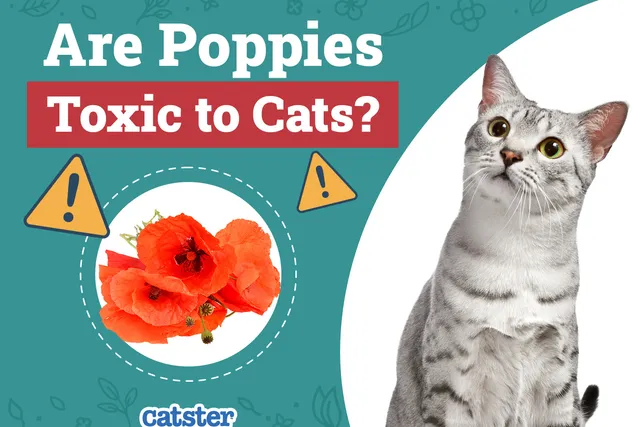
Papaver somniferum is the type of poppy used for edible poppy seeds and is also known as the Opium poppy. Unfortunately, the entire poppy plant is potentially dangerous to your cat and can cause toxic symptoms, such as vomiting, drooling, reduced responsiveness, incoordination, and dilated pupils. Levels of the alkaloids or opiates (e.g. morphine) are highest in the sap and unripe seeds. The good news is that it would take a large number of poppy seeds to cause serious side effects. Most poisonings are self-limiting as they cause vomiting which purges the seeds from the stomach.
The toxicity of this poppy plant can vary greatly with the climate and location the poppy is grown. Different poppies can contain different amounts of alkaloids, so one plant may result in mild side effects and another could result in serious side effects that land your kitty in the hospital. Ripe poppy seeds do not contain opiates themselves but can be contaminated with the sap in the harvesting and storage process. Heat-treated poppy seeds have reduced levels of alkaloids to untreated seeds.
There are more than 120 species of poppy plants and all are toxic to cats but to varying degrees. It’s best to keep your cat away from poppy plants and seeds altogether to completely avoid the risk of toxicity and illness. If you are a poppy plant lover who enjoys growing them, this could be easier said than done. The most care should be taken with the sap and unripe pods and seeds. Once they have been used in baking the thermal processing and relatively small number present in a baked good make it less likely your cat will suffer illness after eating a few.

Keeping Poppy Plants and Seeds Away From Cats
It can be tempting to grow poppy plants, but if you have cats, you should consider avoiding these plants when planning your gardens. Poppy plants are beautiful, but there are many other types of flowers and plants that are just as dazzling and will not be a danger to your cat, including asters, orchids, and snapdragons.
If you want to grow poppy plants on your property, it is important to do so outside, where your cat cannot get to them. If your kitty does go outside, you should keep your poppy plants under nets or in greenhouses where they cannot be easily accessed. If you want to grow poppy plants inside, you should hang them in pots from the ceiling and away from the corners of your rooms, so your cat cannot get to them.
Don’t leave poppy flowers in a vase on the table where your cat can find them. If you do put poppy flowers in a vase, keep them in a room with the door closed so your cat cannot get in there. Hanging paintings or pictures of poppy flowers on your walls is the best way to enjoy said flowers without endangering your kitty cat!

Other Types of Seeds That Cats Can Eat
Cats do not have a natural need for seeds in their diet however, they on occasion eat them or have them added to food for health benefits. There are some types of seeds that your cat can more safely munch on due to their lack of toxins and high nutritional value. For example, pumpkin seeds are an option for cats because they are high in nutrients that cats require, such as iron, zinc, and manganese.
They also happen to contain large amounts of antioxidants, which can help reduce ailments as your cat ages. Other types of seeds that cats can safely consume include:
- Sunflower seeds
- Chia seeds
- Flaxseeds
- Hemp seeds
Like with any food other than quality balanced and complete cat food, you should limit your cat’s seed intake. You can use seeds as occasional treats, during training, or to add them to your cat’s meals once a week or so in small amounts. Consult a veterinarian about how to add seeds to your cat's diet safely.
Conclusion
Cats should not be exposed to poppy plants or poppy seeds. However, if they happen to eat a bit of your bagel or get a hold of a small number of poppy seeds in a muffin, there is no reason for alarm unless they start exhibiting side effects, in which case, you should contact your veterinarian immediately. If your cat likes eating seeds, there are plenty of safe options to choose from.
Expert cat care, straight to your inbox
News, insights, and useful advice, delivered to you.

No spam — unsubscribe anytime.
By signing up, you agree to our Terms & Conditions and Privacy & Cookies Policy.
How useful was this post?
Click a star to rate. You can leave written feedback afterwards. (We read all feedback.)
Rachael has been a freelance writer since 2000, in which time she has had an opportunity to research and write about many different topics while working to master the art of fusing high-quality content with effective content marketing strategies. She is an artist at heart and loves to read, paint, and make jewelry in her spare time. As a vegan, Rachael is obsessed with helping animals in need both in her community and anywhere in the world where she feels she can make a difference. Animals also happen to be her favorite topic to write about! She lives off the grid in Hawaii with her husband, her garden, and her rescue animals including 5 dogs, a cat, a goat, and dozens of chickens.