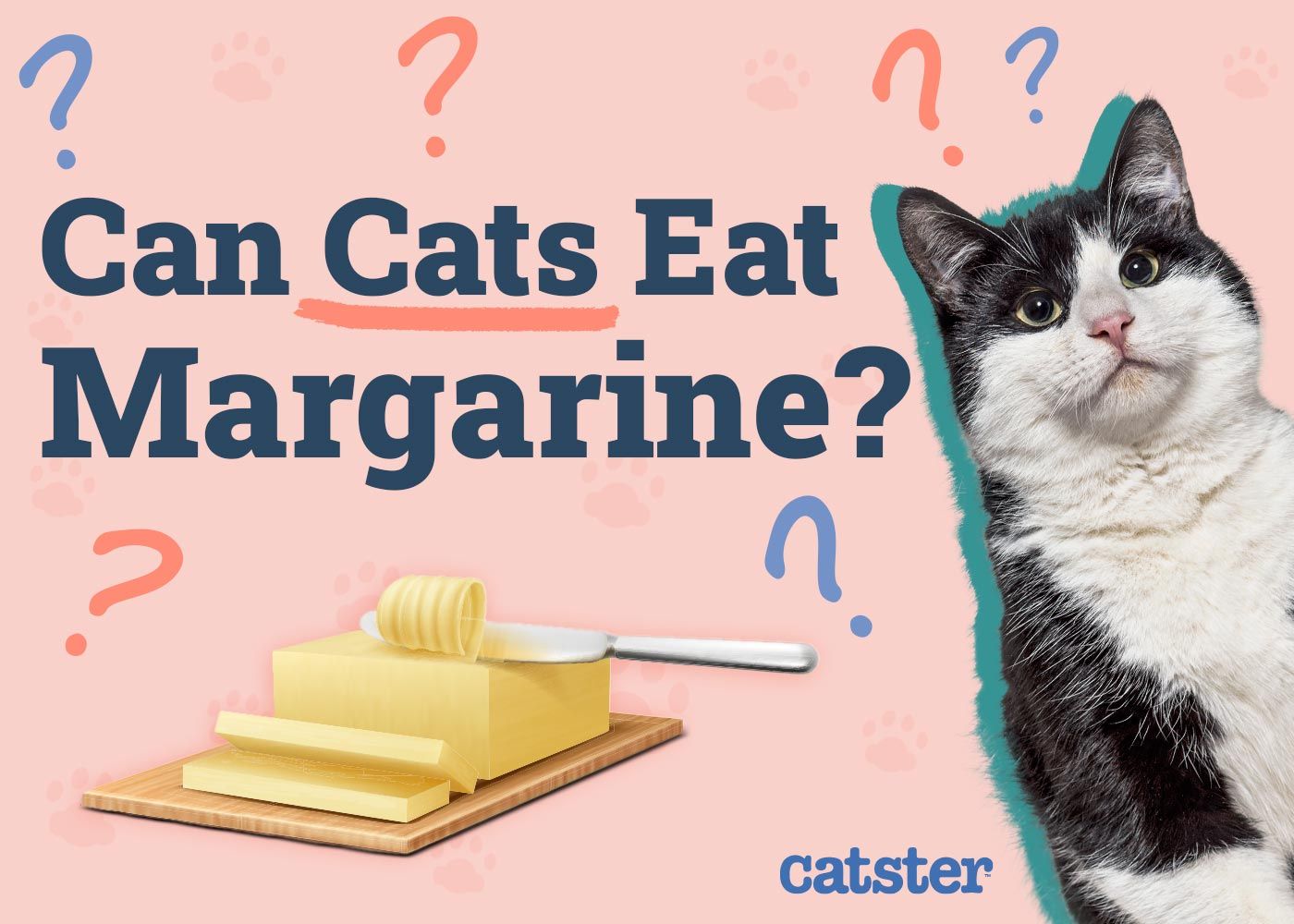
Can Cats Eat Margarine? Health Risks & Advice


In this article
Cats do the craziest things when we least expect it, and that's part of why we love them so much. There's rarely a day that passes where your cat doesn't leave you in giggles! Their eating habits tend to mimic this behavior as you'll find them with their heads in a jar of the most unusual foods and condiments that you've never seen them show any interest in before.
Although most cat owners don't feed margarine to their cats as a snack or treat, many wonder whether margarine is toxic to them when they've walked in on their furry friend licking it. If this has happened to you, you don't need to worry. Although margarine is unhealthy for cats in large quantities, a lick or two won't make them sick, and it's not a life-threatening snack.
Now, let's discuss why cats shouldn't eat margarine, the adverse effects it can have on them, the importance of the right fats in their diets, and how to stop cats from sneaking into your kitchen to steal a lick or two of margarine.

Why Cats Shouldn't Eat Margarine
There are several reasons why you should keep your cat away from margarine. A few of them are because it's high in bad fats, lacks essential vitamins and minerals, is derived from GMO crops, and contains preservatives. Your cat won't benefit from margarine since it's mainly made of vegetable oils, water, and salt.
Cats need a significant amount of animal protein in their diet. Margarine is not a complete protein source and, therefore, lacks the essential amino acids cats need. Instead, margarine is a highly processed food and is high in calories, unsaturated fat, and sodium.
Although cats need sodium in their diet to avoid deficiency, they should only consume 42 mg per day. Too much sodium can lead to anorexia, along with other severe conditions. In a typical tub of margarine, there is 786 mg of sodium per 100 g. Margarine was created for human consumption and isn't designed for a cat's smaller and more sensitive stomach.
What Happens When Cats Eat Too Much Margarine?
A little bit of margarine here and there isn't the end of the world, and your cat isn't likely to feel sick. However, giving your cat the freedom to climb up on your tabletop and eat margarine as they please can lead to big problems.
Although margarine was created for humans, too much of it can have adverse effects on their bodies. It has the possibility of causing an increase in chronic inflammation, blood cholesterol, and heart disease. Because it's high in calories, humans need to limit their margarine intake; otherwise, they will gain weight.

Your cat's body is much smaller than a human's and won't be able to process and digest large amounts of margarine. They'll also feel and display the negative effects much sooner than humans. Too much margarine will lead to gastrointestinal issues, such as vomiting, stomach pain, bloating, gas, and diarrhea.
Margarine will also make your cat feel full, and they'll turn their noses up at their food. By doing that, they're filling up on a human food that doesn't benefit them and will be losing out on the nutrients they need from the food specifically designed for them.
Another dangerous result will be unhealthy weight gain from the high caloric content, which can lead to obesity.
Why Fats are an Essential Part of a Cat’s Diet
High fat levels, like those in margarine, are dangerous to cats and should be avoided. However, the fats in their cat food are vital to their health. Not only do the right fats in the right amounts give your cat the energy they need to play, chase, and lead active lifestyles, but they also increase the absorption rate of a few vital vitamins, protect them from bacteria and viruses, give them the feeling of being full to stop them from over-eating, and aid in the nerve signal transmission speed, along with so much more.
Cats need more than just fats in their diet, of course. It should also consist of animal protein, a few carbohydrates, vitamins, and minerals. It's crucial to provide your cat with high-quality foods designed for them because they'll contain the nutrients that their bodies need without ingredients that could be harmful to them.
A cat's nutritional needs differ from those of humans and other pets. It's best to keep your cat away from human food products, such as margarine, that'll have more negative effects on their bodies than good. Check with a vet to be sure which foods are safe for your cat and which are not.
Keeping Your Cat Away from Danger Zones
Keeping your cat out and away from "danger zones" such as your kitchen—which contains toxic cleaning detergents, sharp objects, and foods that can make them sick—can feel like an impossible task. Thankfully, it is possible to achieve this with a lot of patience, trial and error, positive reinforcement, and training.
If your cat is constantly in your cupboards looking for boxes or jars to get into, they're probably hungry, and you may need to feed them more often. Always check your cat's food packaging to see how much they require for their weight. If they're still digging in your pantry, take them to the vet since there may be an underlying health issue, or they may have parasites like worms.

Before getting upset with your cat for taking a few licks at the margarine, you must determine whether you have the grounds to be. No matter how well-behaved they are, food left unsupervised is too tempting for a cat to pass up. You can keep your cat in another room when working with foods that could harm them or store them away securely.
If you can't keep them out of the kitchen, you need to redirect them. Distracting them with their favorite toy, a snack, or a cat food puzzle can keep their attention off your food and on their activity.
Lastly, if your cat can't stay away from your pantry, you may have to place a few things around to change their mind, which is called adverse training. You can leave aluminum foil around the areas you don't want your cat to enter, such as the pantry floor or along each shelf. Cats hate the look, sound, and feel of it and will avoid it to the best of their abilities.

Conclusion
Cats won't suffer ill effects from a few licks of margarine. However, too much can be dangerous and result in gastrointestinal issues, which can be painful and uncomfortable. The high caloric content in margarine can cause obesity over time. Instead, give your furry friend high-quality cat foods containing all the necessary nutrients. Although the fat in margarine isn't healthy for cats, fats shouldn't be removed from their diets.
See Also:
Sources
Featured Image Credit by: jackmac, Pixabay
Expert cat care, straight to your inbox
News, insights, and useful advice, delivered to you.

No spam — unsubscribe anytime.
By signing up, you agree to our Terms & Conditions and Privacy & Cookies Policy.
How useful was this post?
Click a star to rate. You can leave written feedback afterwards. (We read all feedback.)
Christian started writing for a local newspaper as a teenager, and he's been involved in the publishing industry for most of his adult life. Combining his love of writing with a passion for animals, he is currently the Director of Editorial at Pangolia and the Editor-in-Chief at Catster.
Christian lives in the Philippines with his wife, son, and four rescue cats: Trixie, Chloe, Sparky, and Chopper.