Can a Cat Hair Pierce Human Skin? Vet-Approved Facts, FAQ & Advice


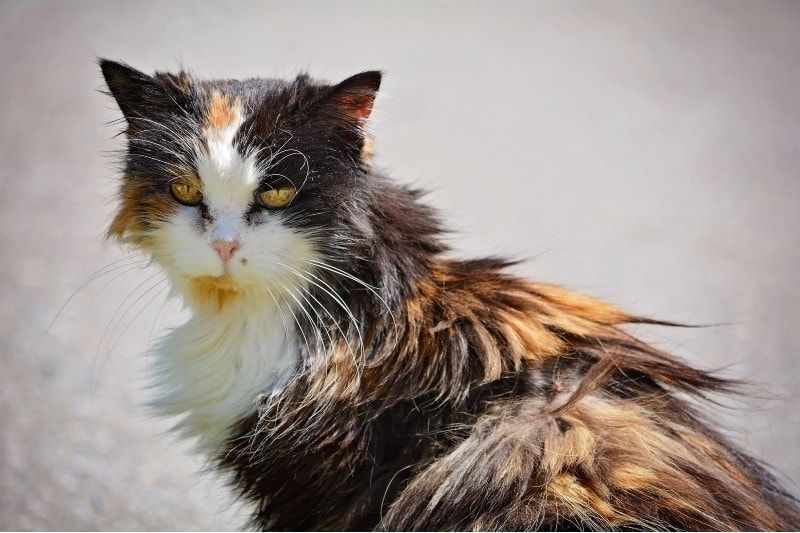
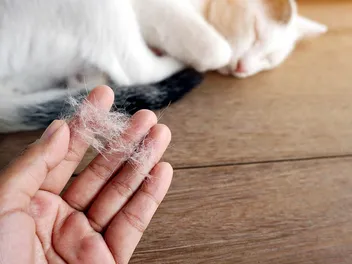
If you are a cat lover, you know that companionship goes hand in hand with hairy furniture and the odd stray that makes it into your morning coffee or slice of pie. Surprisingly, these tiny hairs can also make their way into human skin, like little splinters.
You may have heard of something called a hair splinter. It may have been discussed while you were getting your hair cut or your dog groomed, but they do exist. A hair splinter occurs when hair hits the skin at the right angle and pierces the top layer. They are most common with dog groomers and hair stylists, and while it sounds almost impossible and minor, they can be extremely painful and prone to infection.

Can a Cat Hair Pierce Human Skin?
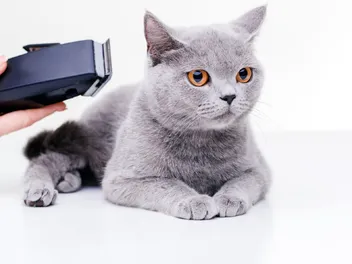
While the occurrence is rare, cat hair can indeed pierce human skin, especially if it is coarse, thick, short, and freshly cut. Freshly cut hair is very sharp, and when it makes its way to the floor after being cut, it can hit the skin at the perfect angle and pierce it.
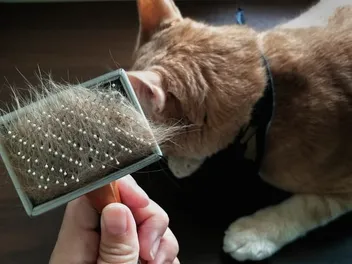
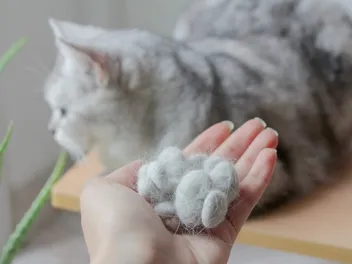
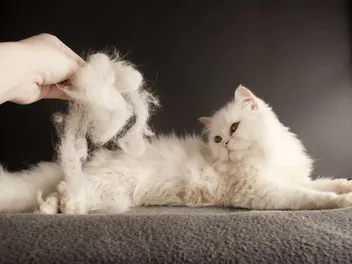
Although they can occur anywhere, hair splinters usually affect your fingers and feet. They can develop when handling cat hair often, so groomers are experienced with the phenomenon. Your cat's coat will also greatly influence the likelihood of getting a hair splinter. There is almost zero chance if you have a hairless breed, but cats have different coats, and some may have coarser or shorter hair than others.

The Coat of a Cat
A cat’s coat includes three distinct types of hair: down hair, awn hair, and guard hair.
Down hair is the soft and silky hair that makes up the undercoat that provides insulation and keeps the cat warm. However, some cats don’t have this layer.
The awn hairs are coarser and longer than the down hairs and act as a protector for the down hair and insulation. The longer, stiffer hairs that protrude past the awn hairs are known as guard hairs. These hairs keep the cat dry and are what determine the base color of a cat.
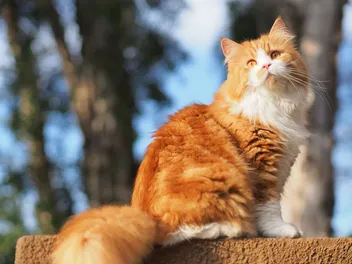
All cats have fur, but the texture and length vary between breeds. Some breeds, like the American Wirehair and American Shorthair, have coarse coats. The American Wirehair has a particularly dense coat of hair that is wire-like. It is stiff and can feel similar to Velcro. Owning or grooming a cat with this coat will increase your chances of a hair splinter.
How Do You Remove a Hair Splinter?
If you are one of the rare few to find a cat hair splinter in your skin, you may feel alarmed and uncertain, and perhaps you may feel a little pain.
Here is what you should do:

Are Hair Splinters Dangerous?
Hair splinters are usually minor injuries and can easily be removed. However, they can become infected and turn into something more serious.
Cutaneous pili migrans is a rare condition that can happen when the hair splinter causes a creeping eruption. The hair moves through the skin, causing a dark line often confused with a parasitic skin infection. In this case, your doctor must make a small incision to remove the hair.
You can typically take care of a hair splinter on your own at home, but you will need to see your doctor if you are worried or if you experience any of these symptoms:
- Inflamed or swollen skin
- The affected area feels warm
- Pain
- Pus or other type of discharge
- If it is near your eye
Keeping Your Cat’s Coat Healthy Can Help Reduce Splinters
If your cat has a healthy coat that is well groomed, you might be less likely to experience a hair splinter. However, this can’t be avoided 100%. A well-balanced and complete diet is essential for your cat's overall skin, coat, and general health.
For the health of the skin and coat, there are two essential fatty acids that your cat’s diet must include: linoleic acid and arachidonic acid. Linoleic acid preserves the health of the skin and coat, and cats with insufficient linoleic acid may have poor skin and haircoat, abnormal growth, and weakened immune systems. The two acids are omega-6 fatty acids, which are found in animal tissues like chicken fat and are present in most conventional cat diets.
Keep an eye on your cat's weight. Weight gain makes it difficult for cats to groom themselves, which can cause skin issues and therefore affect their coat.
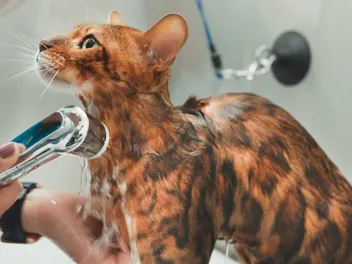
If you choose to bathe your cat, use a pet-friendly shampoo that won’t dry out or irritate their skin. Skin problems can also be caused by fleas and over-grooming, leading to further irritation. Regular flea – and other external parasite – prevention can help your cat's skin and coat significantly. Because fish oil supplements have anti-inflammatory properties, they can be helpful for itchy or irritated skin. There are other excellent fatty acid sources, such as corn or canola oil. The best course of action is to always talk to your veterinarian first.
Conclusion
While it is a rare phenomenon, cat hair can pierce human skin. If that happens, it is usually referred to as a hair splinter and is more common with human hair or dog hair since cat hair is typically finer. You are more likely to experience a cat hair splinter if your cat's coat is short and coarse and if you are around cat hair often. They are usually minor issues that can be removed at home, but in some cases, they can become infected and require a doctor’s assistance.
Sources
Featured Image Credit: Petra, Pixabay
Expert cat care, straight to your inbox
News, insights, and useful advice, delivered to you.

No spam — unsubscribe anytime.
By signing up, you agree to our Terms & Conditions and Privacy & Cookies Policy.
How useful was this post?
Click a star to rate. You can leave written feedback afterwards. (We read all feedback.)
Christian started writing for a local newspaper as a teenager, and he's been involved in the publishing industry for most of his adult life. Combining his love of writing with a passion for animals, he is currently the Director of Editorial at Pangolia and the Editor-in-Chief at Catster.
Christian lives in the Philippines with his wife, son, and four rescue cats: Trixie, Chloe, Sparky, and Chopper.