Applehead vs. Wedgehead Siamese: Key Differences (With Info & Pictures)


In this article
Siamese cats are one of the most popular and recognizable cat breeds, with their pointed coats, unique vocalizations, and deep blue eyes. The Siamese breed hails from Thailand, formerly known as Siam, and has been revered in the region for centuries. It wasn’t until the late 1800s that the breed graced the shores of the United States with their presence.
At first, only the classic seal point was shown and accepted, but other color variations were soon developed. With this development came not only differences in coat colors and markings but also other drastic changes in appearance. There are now three different accepted varieties of the Siamese: the traditional or “Applehead” Siamese (the original breed that was first imported to the U.S.), the classic Siamese, and the modern or “wedgehead” Siamese.
In this article, we’ll take a look at the two most popular and well-known varieties, the applehead and wedgehead Siamese, and parse out exactly what makes them so different.

Visual Differences

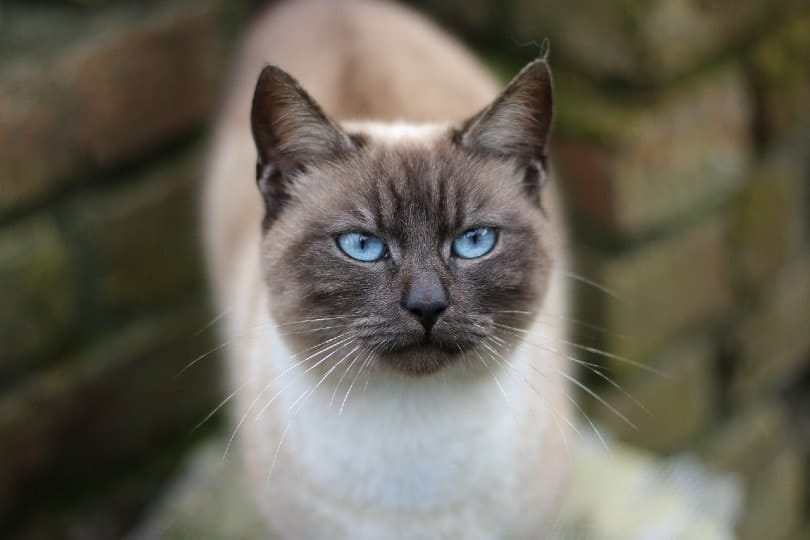
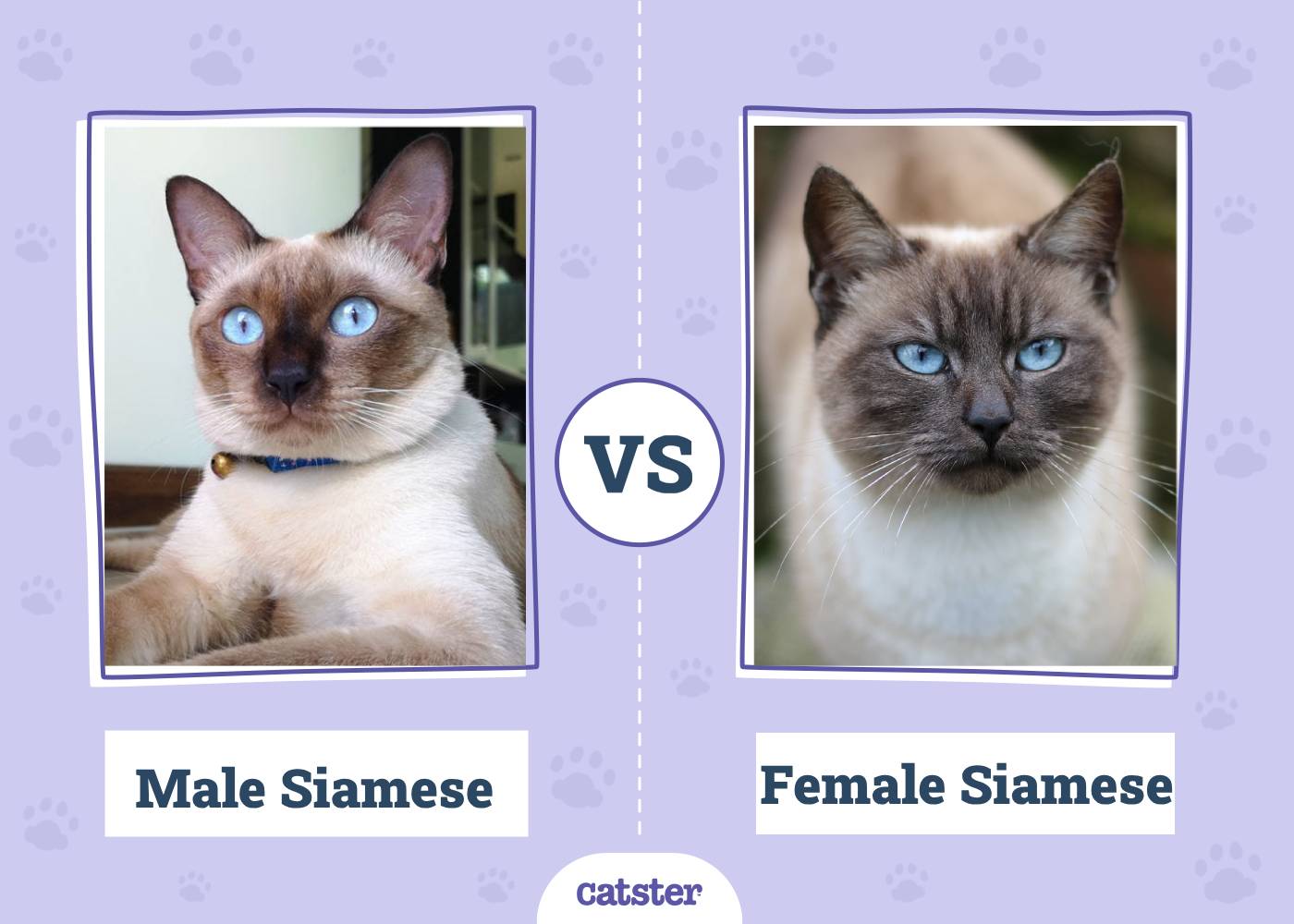
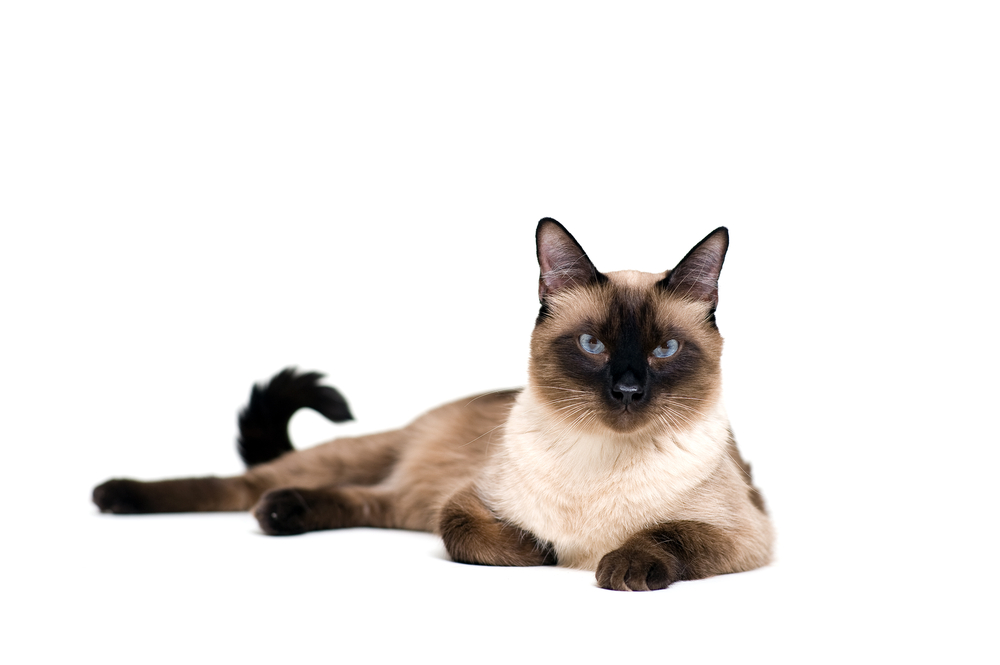
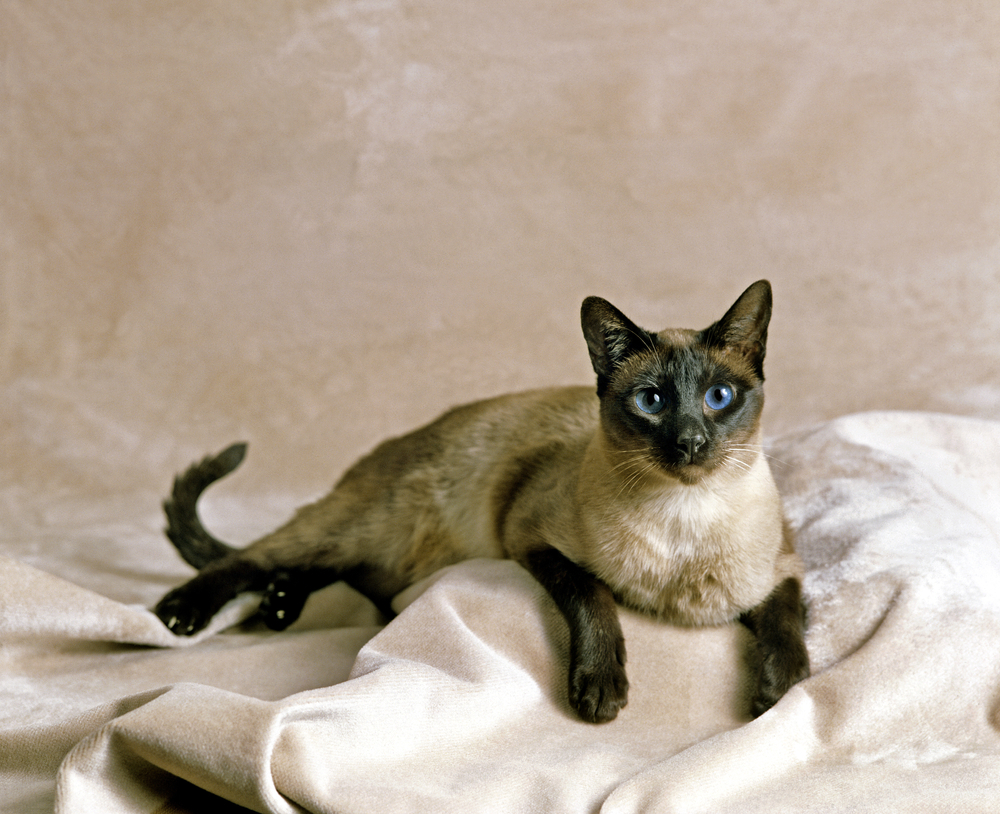
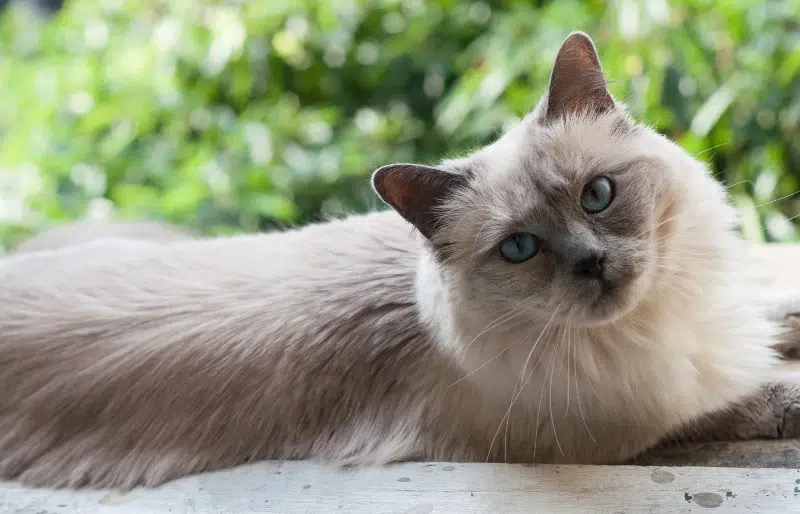
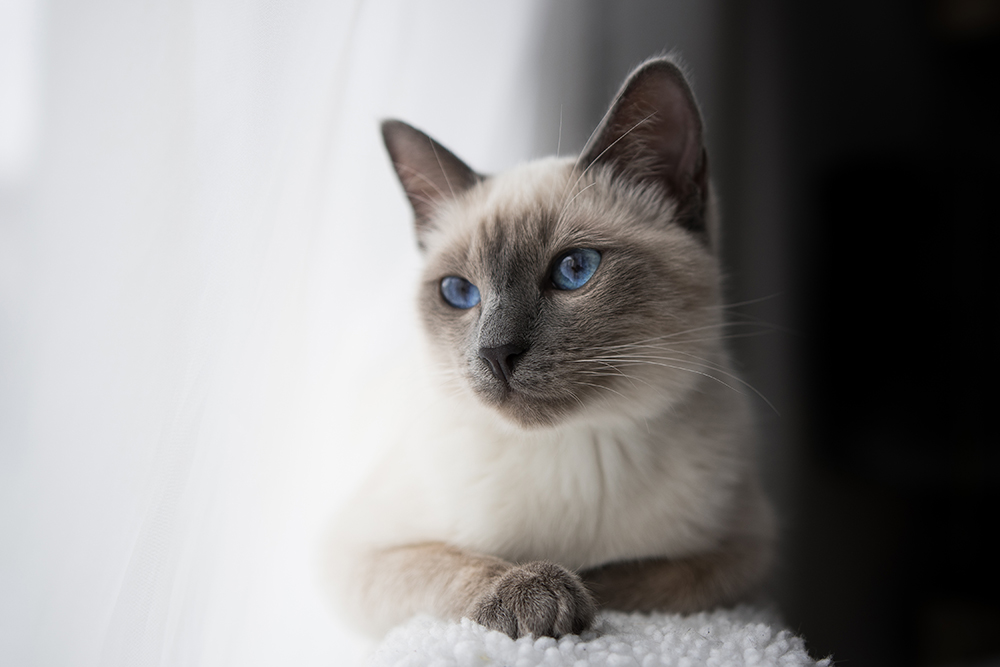
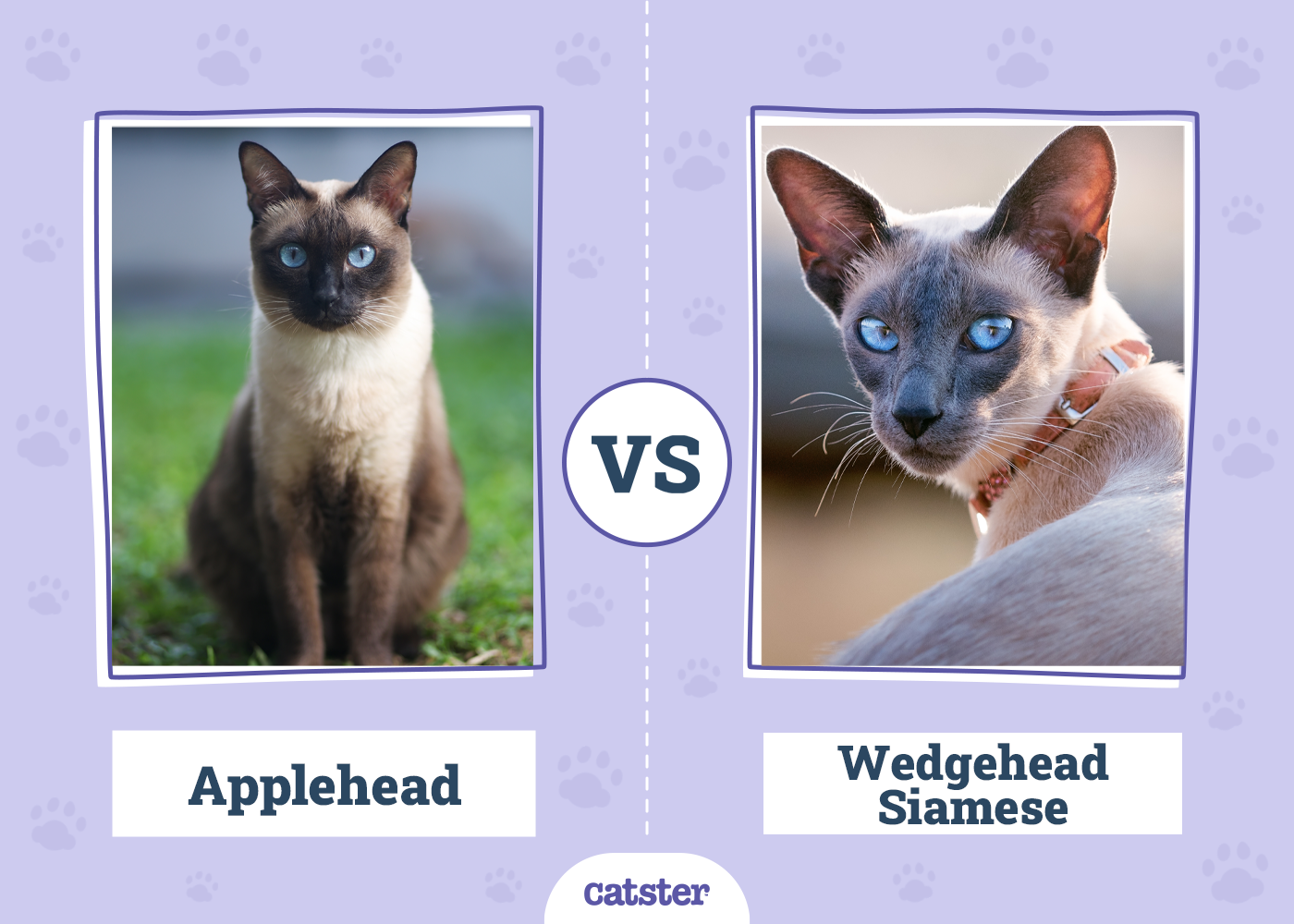
The main distinguishable visual difference between the applehead and wedgehead Siamese is, of course, their uniquely shaped heads. The applehead variety, as the name suggests, has a large, round head with a more robust, moderate body, typically heavier-boned than the wedgehead. Their eyes are also slightly rounder in shape, and they generally have a proportionally shorter tail than the wedgehead. The wedgehead Siamese has a far more extreme, wedge-shaped head, with a lean and elongated body, wide-set ears, and a long, thin tail. Their eyes are more slanted than the applehead, and due to the unique shape of their head, they may appear larger or longer despite often weighing less.
At a Glance

Applehead Siamese Overview

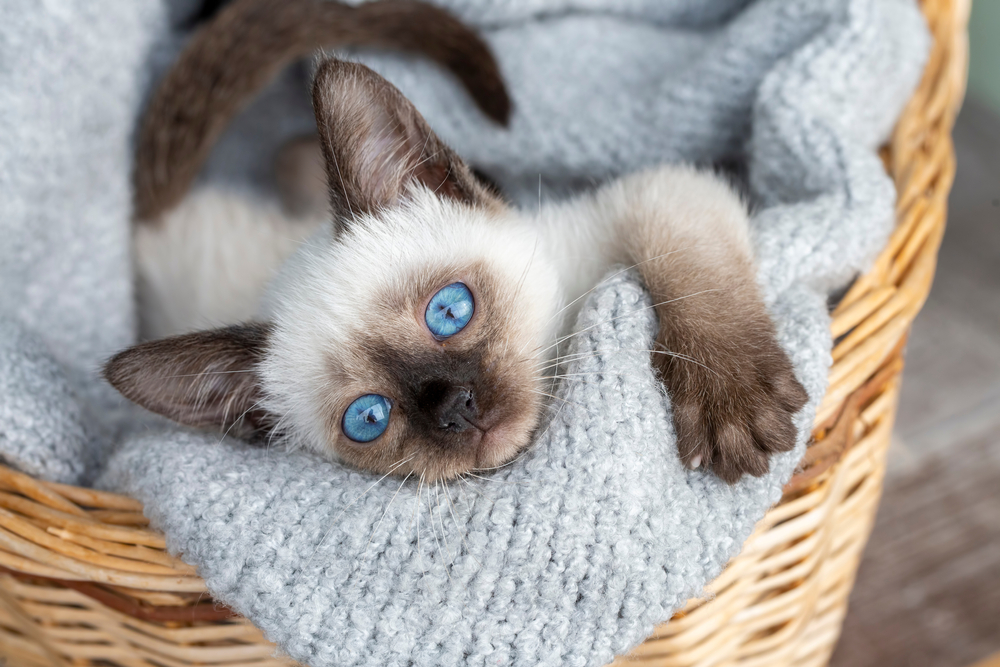
The applehead, or traditional Siamese body conformation type, is the original breed that was brought over from Siam in the late 1800s, and the breed had likely exhibited this general appearance for centuries. They were treasured cats of Siam’s royal family and were often given as gifts to other royalty and heads of state. These cats were even said to have wisdom and mystical powers and were traditionally believed to receive members of the royal family’s soul upon their death.
The unique and beautiful coat and markings of these cats made them instantly popular upon their arrival in the U.S., and the breed has spread and flourished widely since.
Personality / Character
The applehead Siamese has all the personality traits commonly associated with the breed. They are affectionate, intelligent, playful, gentle, and vocal, although they are often perceived as the quieter Siamese conformation type and are generally less intensely vocal than the wedgehead type. They are attention seekers by nature and love to be close to their human caregivers, so much so that they are prone to developing separation-related stress when left alone for long periods. This is why many Siamese owners and breeders recommend getting a pair of Siamese cats rather than a single cat.
While applehead Siamese cats are an active and playful breed, they are not as playful as their wedgehead counterparts and prefer to laze on their owner's laps or the sofa for most of the day.
Training & Exercise
All Siamese cats, including appleheads, are extremely intelligent and easy to train. Siamese cats are widely considered to be “dog-like” cats in behavior and temperament, and since they love to be close to their owners as much as possible, they are usually a breeze to train. Positive reinforcement methods are ideal, and it's best to begin training as early as possible to avoid any bad habits from forming.
Siamese cats are moderately active cats, but they still need regular exercise every day to stay healthy and happy. They do not need a huge amount, though, and around 30–45 minutes of interactive play is plenty. Balls, fetching games, lasers, hide and seek, and scratching posts and climbing trees are all great ways to provide them with adequate exercise.

Health & Care
The applehead Siamese has a short and smooth coat that is a breeze to keep groomed. Even just regular petting and stroking is usually enough to keep their coat smooth, but brushing once or twice weekly will help remove any loose hair.
The applehead Siamese is considered a generally healthy Siamese conformation type, with fewer extreme structural traits than modern wedgehead lines. They have a long average lifespan, commonly ranging from 12–20 years, with exceptional individuals occasionally reaching their early 20s.
Like all Siamese cats, appleheads can be more prone to certain inherited health issues, such as amyloidosis, asthma, and dental disease, with eye conditions like progressive retinal atrophy being less common. Regular veterinary checkups and responsible breeding are important for keeping them healthy long term.
Suitability
The applehead Siamese is, like all Siamese cats, an ideal family cat with strong social bonds and affection toward its caregivers. They are friendly and gentle with children and often do well with other cats and dogs, too. They have an incredibly long lifespan, so bringing home an applehead Siamese is quite the responsibility.
Wedgehead Siamese Overview

The wedgehead Siamese is the most recently developed Siamese conformation type and is a favorite for cat shows. In fact, this body type is simply referred to as “Siamese” by many registries and breeders, even though it represents a more extreme, selectively bred version of the classic Siamese. The wedgehead Siamese has an extremely distinguishable wedge-shaped head, with a muscular, long, slim, and fine-boned body, long legs, and long, thin tail.
These varieties have longer muzzles than the applehead, with large, wide-set ears. They are also often more vocal than the applehead, with a distinct voice.
Personality / Character
Wedgeheads are highly active, highly vocal, and extremely affectionate cats. They are attention-demanding cats like all Siamese, but arguably more so than other Siamese body types, and they will let you know when they want something by their almost incessant vocalizations! These cats love to be wherever their owners are and will suffer from separation anxiety if left alone for long periods.
Wedgehead Siamese cats, like most Siamese, are exceptionally loving and affectionate and almost dog-like in the bonds that they form with their family. They are happiest when curled up on their owner’s lap (or as close as possible) and are commonly observed following their owners around the home.
Training & Exercise
The wedgehead Siamese is highly intelligent and loves to interact with their owners as much as possible and is thus a breeze to train. They are more active and agile than their applehead counterparts, but they still don’t require a massive amount of exercise. Around 30–45 minutes of daily interactive play is perfectly fine for this breed, and they love interactive toys that mimic their natural prey instincts. Due to their lithe and athletic bodies, these cats have amazing agility, and they’ll love a cat tree to climb on and get above the action.

Health & Care
Grooming these cats is a breeze, and a light brushing once or twice a week is perfectly adequate to remove any loose hair. Unfortunately, the wedgehead Siamese has been bred to have a more extreme body shape, which can increase the risk of certain health problems compared to other Siamese types.
Due to the unique shape of their head, they have less space than usual for teeth to grow and are prone to dental issues, so they will need regular teeth brushing to ensure dental health. These cats are also at higher risk of both kidney and heart disease, as well as respiratory issues due to their triangular heads.
Suitability
The wedgehead is as friendly, affectionate, and loyal as any Siamese cat, making them ideal family companions. They are great with children and dogs when properly socialized and slot perfectly into most family situations. These cats are attention-demanding and require an owner who is around frequently. If you are away at work all day, this type may not be the ideal choice.
What Are the Differences?
While the applehead and wedgehead Siamese are of the same breed, there are notable physical differences between the two. Personality-wise, the two are similar, and both make great family companions that are easy to train and gentle and friendly with small children.
Applehead Siamese cats are fairly simple to tell apart from the wedgehead variety; they have more stocky, muscular, and larger bodies, rounder eyes, and a proportionally shorter tail. Wedgehead Siamese cats are generally more slender, with lithe and slinky bodies and slanted eyes that appear large on their unique triangular-shaped heads. Wedgehead Siamese cats can be more prone to certain health problems because of their more extreme body shape, but many still live long, healthy lives with good breeding and regular vet care.
Related Read:
Featured Image Credit: Left - MLARANDA, Pixabay | Right - Narko Polo, Shutterstock

Expert cat care, straight to your inbox
Vet-reviewed advice, behavior tips, and the best of Catster. Free, and you can unsubscribe anytime.
By signing up, you agree to our Terms & Conditions and Privacy & Cookies Policy.
Christian started writing for a local newspaper as a teenager, and he's been involved in the publishing industry for most of his adult life. Combining his love of writing with a passion for animals, he is currently the Director of Editorial at Pangolia and the Editor-in-Chief at Catster.
Christian lives in the Philippines with his wife, son, and four rescue cats: Trixie, Chloe, Sparky, and Chopper.
Join the conversation
Ask a question, share your story, or send private feedback.