10 Vet-Verified Types of Cat Collars and Their Uses (With Pictures)


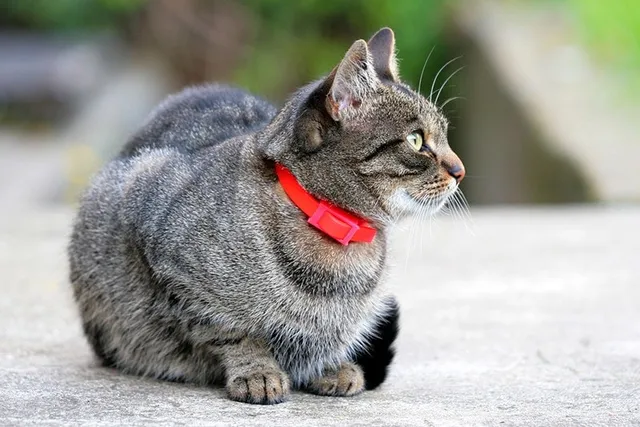
When most people think about cats, leashes and collars are often the last things that come to mind. Neither indoor nor outdoor cats need to be walked, so what’s the point? Cat collars can play an important role when it comes to keeping your cat parasite-free, healthy, and, not to mention, providing a quick, accurate, and easy means of identification.
Whether your cat stays inside or enjoys a regular solo romp around the neighborhood, providing your pet with a collar is important for identification and safety. Keep reading for more information about the most popular types of cat collars and their uses.

The 10 Types of Cat Collars
1. Simple Breakaway Collars

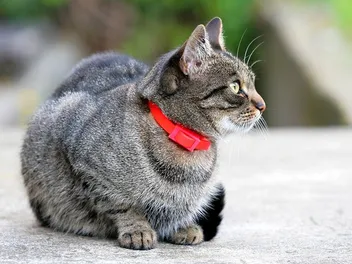
Breakaway collars are made of all sorts of materials. The key is that they feature a closure designed to break open if your cat’s collar gets caught. Some older collars feature buckle-like closures, but they can restrict your cat’s breathing if the collar snags on something while your pet is wearing it.
The breakaway products have a downside; they come off pretty easily when working as designed! They aren’t great options if you’re interested in walking your cat or allowing your pet to explore the backyard unsupervised on a long leash, as cats can break free just by exerting a bit of pressure on the collar.
Finding the right cat collar can be tricky with so many options on the market. Our favorite is the Hepper Breakaway Collar, a durable hemp collar with adjustable slip-locks, a reliable quick-release buckle, and an included jingle bell to keep your local wildlife safe. This collar is stylish and practical, perfect for any cat!

- Hemp-Hemp Hooray - hemp breakaway cat collars are long-lasting and resistant to UV rays – The tight but breathable hemp knitting provides a stretch cat collar that's as durable as your pet
- What the neck?! - Our cat breakaway collar has adjustable sizing with metal slip-locks, and softens with use. This means its ideal bought as kitten collars for girls or kitten collars for boys
- Breakaway Safety - Cat collars breakaway to ensure that when out adventuring, the material getting caught doesn't mean your cat will be too. This cat safe collar gives you peace of mind, wherever they are
At Catster, we’ve admired Hepper for many years and decided to take a controlling ownership interest so that we could benefit from the outstanding designs of this cool cat company!
2. Buckle Collars

These old-fashioned collars feature a sturdy buckle that’s easy to fasten. Most cats can wiggle out of the collars without too much trouble, but that often happens when a cat has four feet on the floor and is attempting to avoid a trip to the veterinarian.
As long as there’s a human around to unbuckle the collar, problems are unlikely to arise. But outdoor cats (or escaped indoor kitties) wearing buckle collars who get caught in vegetation can die of strangulation or suffer serious neck and spinal injuries.
3. Flea Collars

There are several options for feline flea control, including pills, topical medications, and flea collars. Pills are great options for severe infestations, but topical medications work well and won’t break the bank. Flea collars are a good choice if you don’t want to use topical medications.
Flea collars are simple to use. Most last for up to 6 months, making them ideal for pets that don’t relish too much human meddling. They cause skin irritation in some pets, and you’re probably looking at a visit to the veterinarian if your buddy manages to remove and eat a substantial bit of one of these collars.
4. Soft Protective Collars

Soft fabric Elizabethan collars are a more comfortable alternative to traditional, rigid plastic cones. They are designed to prevent cats from licking, biting, or scratching wounds, surgical sites, or irritated areas while being gentler on the neck and less stressful to wear.
These collars are usually made from lightweight, padded, or flexible fabric, allowing better mobility and making it easier for cats to eat, drink, and rest compared to hard plastic options. While they can be more comfortable, they may not be suitable for all injuries, as some cats can still reach certain areas. Always ensure the collar fits properly and follow your veterinarian’s recommendations to keep your cat safe during recovery.
5. GPS Collars

GPS collars are great if you live with an adventurous outdoor cat. They provide peace of mind if you have a cat that roams far and wide. The collars come with a small GPS transmitter that lets you use satellite technology to pinpoint your cat’s whereabouts. Most allow you to follow your cat’s movements through an app on your cell phone.
While these can be a fantastic way to keep track of your cat, remember that most of these devices use cell phone technology, meaning you may not be able to use the GPS to find your cat in some rural locations. Also, they often won’t work if you’re in a country other than where you purchased and initially set up the monitoring system.
6. Bell Collars

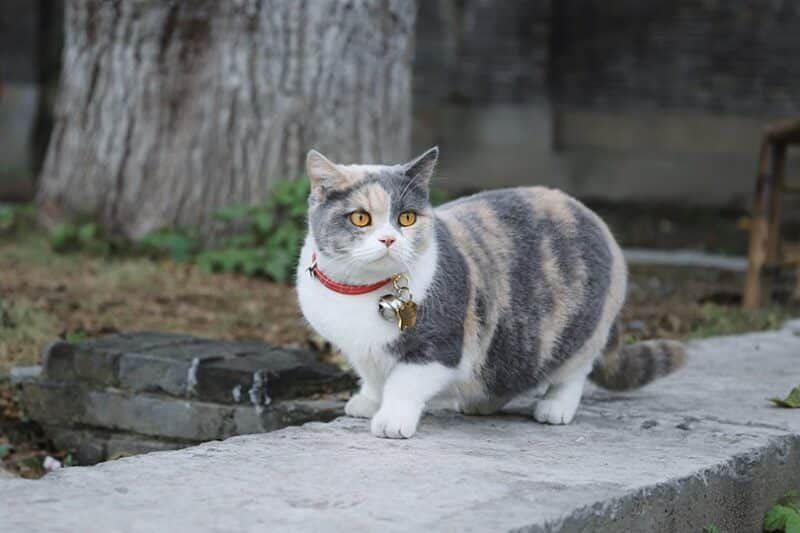
Bell collars are essential for any outdoor cat! Cats are talented predators responsible for billions of avian deaths every year. Domestic cats kill between 1 and 6 billion birds and possibly as many as 22 billion small mammals and reptiles annually in the continental United States alone. Kitties that hunt can drive bird and mammal populations to the point of extinction.
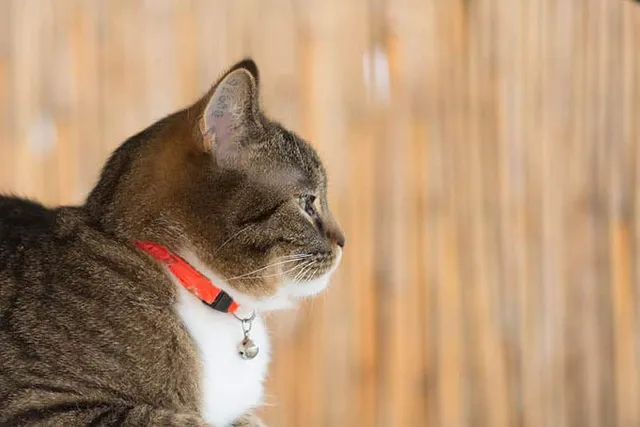
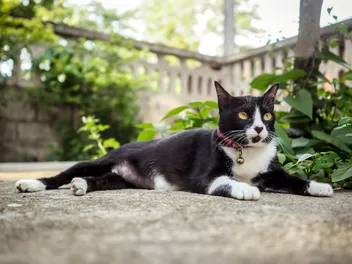
Bell collars alert wildlife that your cat is nearby and on the prowl, giving birds, mice, and other creatures the chance to get away. Make sure you pick a bell collar featuring a breakaway closure so your cat won’t get injured if the collar snags on a tree branch or bush.
7. Elastic Collars

Elastic collars are stretchy products made with elastic. They’re often marketed as promising alternatives to breakaway collars. While these products come in many fun colors and often feature adorable prints, they’re not ideal for outdoor cats. Elastic collars expand to allow cats to escape if the collar gets caught.
The problem is that cats don’t just move backward when their collar catches on something. Most squirm, struggle, and use their entire bodies to escape. Elastic collars stretch but don’t break, which can result in a struggling cat’s mouth, arm, or leg getting ensnared.
8. Reflective Collars

Reflective collars are ideal for outdoor cats who like to explore during dawn and dusk, when cats tend to be most active. Outdoor cats have an average lifespan of 2–5 years. On the other hand, indoor cats live an average of 10–15 years primarily because they don’t end up in fatal encounters with cars or other animals and don’t come into contact with animals carrying contagious diseases.
Recent studies using GPS collars have shown that cats cross the street close to where they live with surprising frequency. Reflective collars make cats easier for drivers to see and, therefore, avoid.
9. Personalized Collars

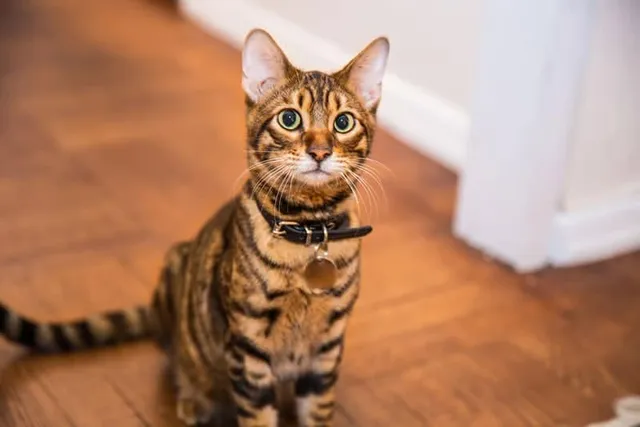
Personalized options display identifying information on the collar, so you don’t need to worry about outfitting your cat with a metal ID tag featuring their name and contact information. While it’s always a good idea to microchip your cat, an ID tag or personalized collar provides an easy way to locate you if your pet heads out on an unauthorized adventure or gets lost or injured.
Having the information front and center on your cat’s collar is the best way to prevent your cat from winding up in a cat shelter if they somehow become disoriented and can’t find their way home. And they’re great for keeping things nice and quiet indoors since your cat won’t need to wear a jangly ID tag.
10. Harnesses

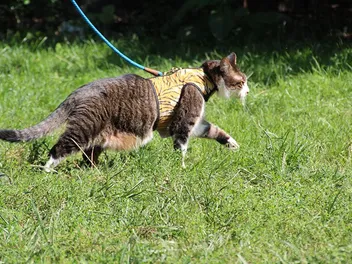
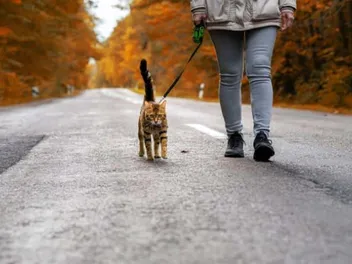
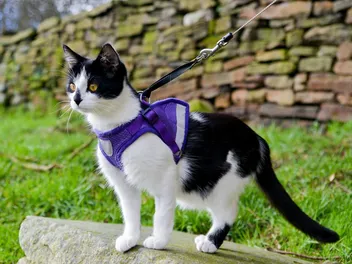
The best cat harnesses are sturdy, comfortable, and easy to attach to the leash. Hepper's Cat Harness & Leash Set provides that and more, which is why we highly recommend it. The leash attachment is usually between the cat’s shoulders to limit the pressure exerted on your cat’s neck.
Since they feature two closures in different places, harnesses make it difficult for cats to squirm free. But keep in mind that a motivated cat can free themselves from a harness if given enough time, so your cat will still need to be supervised when wearing one.
At Catster, we’ve admired Hepper for many years and decided to take a controlling ownership interest, so that we could benefit from the outstanding designs of this cool cat company!

Conclusion
Any product you purchase should feature a breakaway closure since indoor cats escape from time to time and must navigate the dangers of the great outdoors. Cat harnesses are fantastic options for taking your cat to the veterinarian or going for a walk with your buddy. Since harnesses are designed to distribute weight, your cat won’t put dangerous amounts of pressure on their neck during those inevitable escape attempts.
Related Read: What Are E-Collars for Cats? When Should I Use Them?
Sources
Featured Image Credit: Raychan, Unsplash
Expert cat care, straight to your inbox
News, insights, and useful advice, delivered to you.

No spam — unsubscribe anytime.
By signing up, you agree to our Terms & Conditions and Privacy & Cookies Policy.
How useful was this post?
Click a star to rate. You can leave written feedback afterwards. (We read all feedback.)
Lorre Luther is a writer who is firmly convinced that cats are smarter than humans. She left her law career in the United States and moved to the Netherlands to follow her dream of becoming a writer. Lorre currently lives in Rotterdam, she enjoys traveling and greatly appreciates the beauty of nature. Lorre has a spot for animals and admires the intelligence of cats.