Cat Vaccination: How I Balance the Risks & Benefits

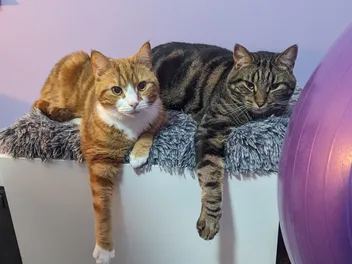
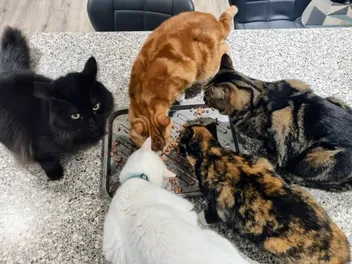
Hi, I’m Dr. Karyn! Read my introduction to learn more about me and meet my five hilarious cats: Clutch, Cyril, Alex, Zelda, and Zazzles.
You might assume that as a vet, I have a pretty rigid stance on vaccination, but just like you, I want to make sure that the choices I make are based on facts and science, and are right for my cats, and my situation.
In veterinary practice, our recommendations need to be in keeping with the manufacturer guidelines; it simply isn’t practical to have a multitude of different options for a multitude of different scenarios. With that in mind, there are three messages I would like all cat owners to take home:
Vaccination ABSOLUTELY saves lives.
YOU have the final say on how often and what your cats are vaccinated against (with the exception of rabies).
Your decisions about vaccination should be based on FACTS, not FEARMONGERING.
I often get asked “Is vaccination safe?” and the honest answer is that introducing a foreign agent into the body to elicit an immune response is not 100% safe, but it is much safer than leaving your pet exposed to the risks of contracting deadly viruses. So you might want to know:
Do I vaccinate my cats? Yes.
Do I strictly adhere to the manufacturer guidelines? Not completely.
Am I aware that I am taking a risk by deviating from those guidelines? Yes, but I base my decision on the risk factors for my specific situation.
If you’d like to know what influences my decisions about vaccinating my cats, we’ll need to get some of the nitty gritty stuff out of the way. Trust me, you’ll come away feeling a lot more confident about making the right choices for your cats with a bit more knowledge under your belt.


How Does Vaccination Work - In a Nutshell
The practice of exposing humans, and later, animals, to a small dose of an infectious agent to trigger an immune response dates back to at least the mid 15th century, possibly even earlier than that. When Smallpox was busy wiping out hundreds of millions of people around the world, a process called variolation emerged, where a small amount of the fluid from a smallpox lesion was injected into a healthy human. This was a risky procedure as the chances of developing a fulminant case of smallpox were extremely high, but it did start to prove that a small dose of the virus could create enough of an immune response to render the patient immune.
But it wasn’t until a man named Dr Edward Jenner (honestly, you can’t go anywhere without hearing about a Jenner these days!) discovered that the same immune response could be achieved by using cowpox – a related but much safer poxvirus.
How does it work?

When a virus enters the body, it triggers the immune system to release pathogen-fighting cells like neutrophils, monocytes, and lymphocytes (T cells and B cells). After a while, the body starts producing lymphocytes that are more specifically adapted to fighting the viral particles, resulting in a faster, stronger attack.
If the virus is successfully killed, the bone marrow keeps producing cells that can target that particular virus, called memory B and T cells. These memory cells may last for months, a few years, or a lifetime, depending on the virus and the individual.
The problem with relying on our natural immune response to a virus is that it’s a game of chance. We only develop a natural immunity if we survive, and we may end up with long term or permanent health consequences from the infection.
This is where vaccination comes in.
A vaccine uses an inactive version of the virus to ‘trick’ the immune system into producing an immune reaction and creating memory cells, without causing the actual infection. This often results in the patient feeling unwell or showing some mild symptoms of the virus, but this is simply a sign of the immune system responding.
Here’s where it gets a bit more technical.
In order to trigger a good enough response to the inactivated virus, most vaccines contain something called an adjuvant. This adjuvant is what really fires up the immune system, making sure it gets to the stage of making memory cells, and it is the body’s response to this adjuvant that usually creates the majority of side effects. But, the more powerfully the body responds, the more likely it is to create a good supply of memory cells, so that the next time the body encounters the virus, it can fight it off quickly and efficiently.

The Biggest Issue With Feline Vaccination
Just like with humans, cats often suffer from various side effects of vaccination, including lethargy, fever, or swelling. It might be unpleasant for a day or two, but it is an expected reaction. True adverse vaccine reactions, where the injection triggers an extreme allergic or systemic reaction, are very rare.
The worst potential side effect to vaccination in cats is something called an injection site sarcoma – a type of malignant tumor that can form where a vaccination has been given. This nasty tumor requires aggressive treatment, including surgical removal of the mass.
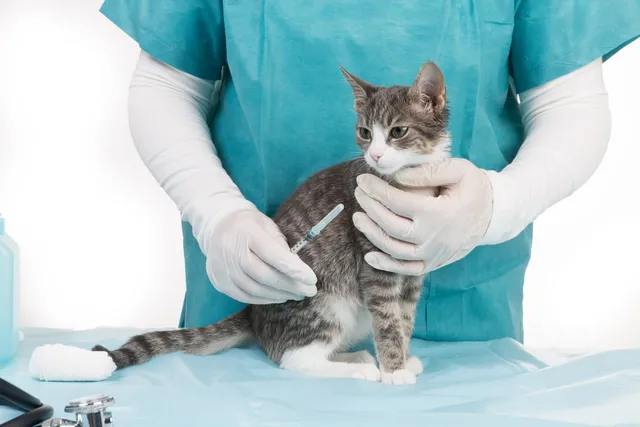
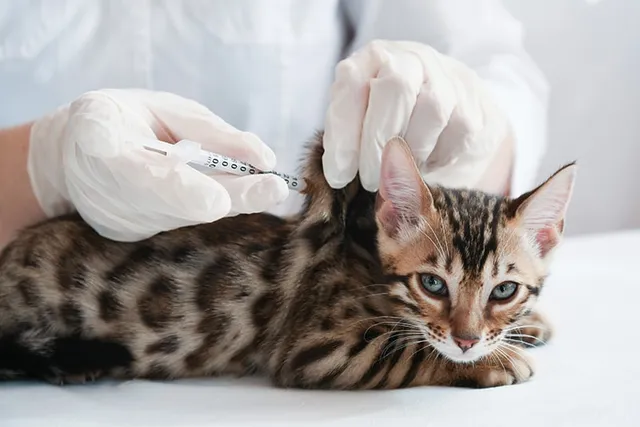
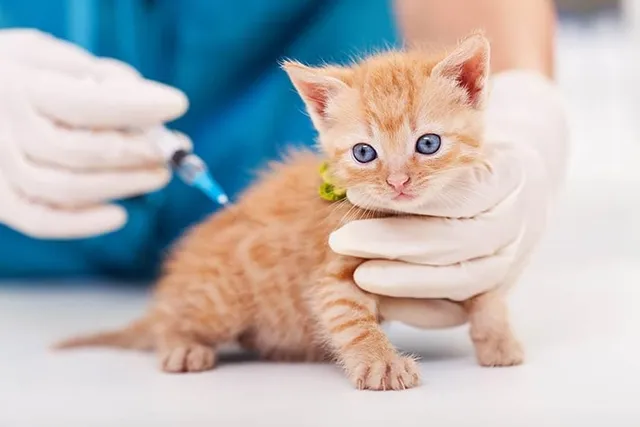
Feline vaccines are traditionally given in the scruff, because there is lots of loose skin, so it is much easier to inject, as well as more comfortable and less stressful for the cat. But if an injection site sarcoma grows in this location, it is difficult, if not impossible, to completely remove the tumor as it often extends to the spine.
To combat this, it has been recommended that cats be vaccinated over a limb, as this would allow amputation if needed to completely remove the cancer. But, the lower down the limb we go, the less loose skin there is, and the more painful and stressful the injection becomes, so it can be a bit of a case of weighing up the risks and benefits, as well as finding other ways to reduce the chance of this effect.
Studies have found that the Feline Leukemia Virus Vaccine appears to have a higher risk of inducing a sarcoma, possibly due to the fact that the virus itself attacks the bone marrow and immune system.
One method to reduce risk is giving leukemia vaccines every 3 years, rather than annually.
One company has created a non-adjuvanted vaccine, in the hopes that this will result in less intense side effects, but this vaccine does not give a long-lasting protection as ones that contain an adjuvant, so it is supposed to be given annually.

Risk/Benefit Analysis
This is where your decision-making comes into play. You need to be aware, and honest, about the sort of risks your cats face, and talk to your vet about how to make sure they stay protected.
Cats in breeding colonies, shelter conditions, or that live outdoors with a higher risk of interacting with other cats, should be vaccinated against leukemia virus according to the manufacturer recommendation.
For cats living indoors, once they have received a complete primary vaccination course, and I generally recommend that they have their kitten course, plus one a year after, you may want to think about whether or not they need to continue with this particular vaccination. While viruses like cat flu can be transmitted through the air and on surfaces, the leukemia virus requires direct cat-to-cat contact.
If you do decide to go down the route of not vaccinating against leukemia virus, it is vital that you ensure any new cats entering your home have had either a complete vaccination course, or have been tested for the virus before coming into contact with your cat.
My cats are 100% indoor, and are no longer vaccinated against leukemia virus - they have zero risk of exposure. I do, however, vaccinate them against the cat flu viruses every three years.
You might be wondering, Why risk using the leukemia vaccine at all?
When a cat becomes infected with feline leukemia, there is a window of time where, if the virus is successfully eliminated, the cat will survive and have gained natural immunity - Yay!
BUT, we don’t know exactly how long that immunity lasts, AND if the virus is not eliminated within that window of time, the cat will develop feline leukemia, a debilitating disease that often leads to suffering and death.
A few statistics:
Around 3% of cats in the United States and Canada are infected with feline leukemia.
Feline leukemia is fatal in 80-90% of cases.
The incidence of injection site sarcoma is between 1 in 1000 and 1 in 30,000 (0.1 to 0.003%)
Are vaccines safe?
Of course they’re not completely safe – we are manipulating the immune system with an artificially altered version of a virus. Does that sound safe to you? But it’s a hell of a lot safer than taking our chances of surviving the actual virus.
The fact is, if we are putting something into the body to elicit a reaction, side effects are inevitable. If a drug or vaccine claims to have zero side effects, it probably doesn’t have any therapeutic effects either.
I hate that we live in a world where big pharmaceutical companies profit from disease, and I think that we’re right to do our own research and ask questions.
BUT, the fact that big pharma makes money from vaccination, does not mean that vaccination is bad.
Is it really crappy that there are people that stand to make billions from every viral outbreak? Absolutely! But that shouldn’t mean that we stop protecting our pets.
Natural immunity might work, but it only works if your cat survives.
This article is a part of Christopher and Olga's series.

Expert cat care, straight to your inbox
News, insights, and useful advice, delivered to you.

No spam — unsubscribe anytime.
By signing up, you agree to our Terms & Conditions and Privacy & Cookies Policy.
How useful was this post?
Click a star to rate. You can leave written feedback afterwards. (We read all feedback.)
Dr. Karyn Kanowski BVSc MRCVS (Veterinarian)
Dr. Karyn comes from Queensland, Australia, and has lived in the UK for the past 10 years. In 2010, she graduated from The University of Queensland School of Veterinary Science and also has a Bachelor’s degree in Zoology. She is passionate about using evidence, experience, and owner collaboration to provide the best solutions for pets, and believes in making reliable information about animal health accessible to all. Dr. Karyn shares her home with five cats, four dogs, and one husband. When she is not in the scrubs, she spends her time writing, gardening, and cleaning up pet hair!