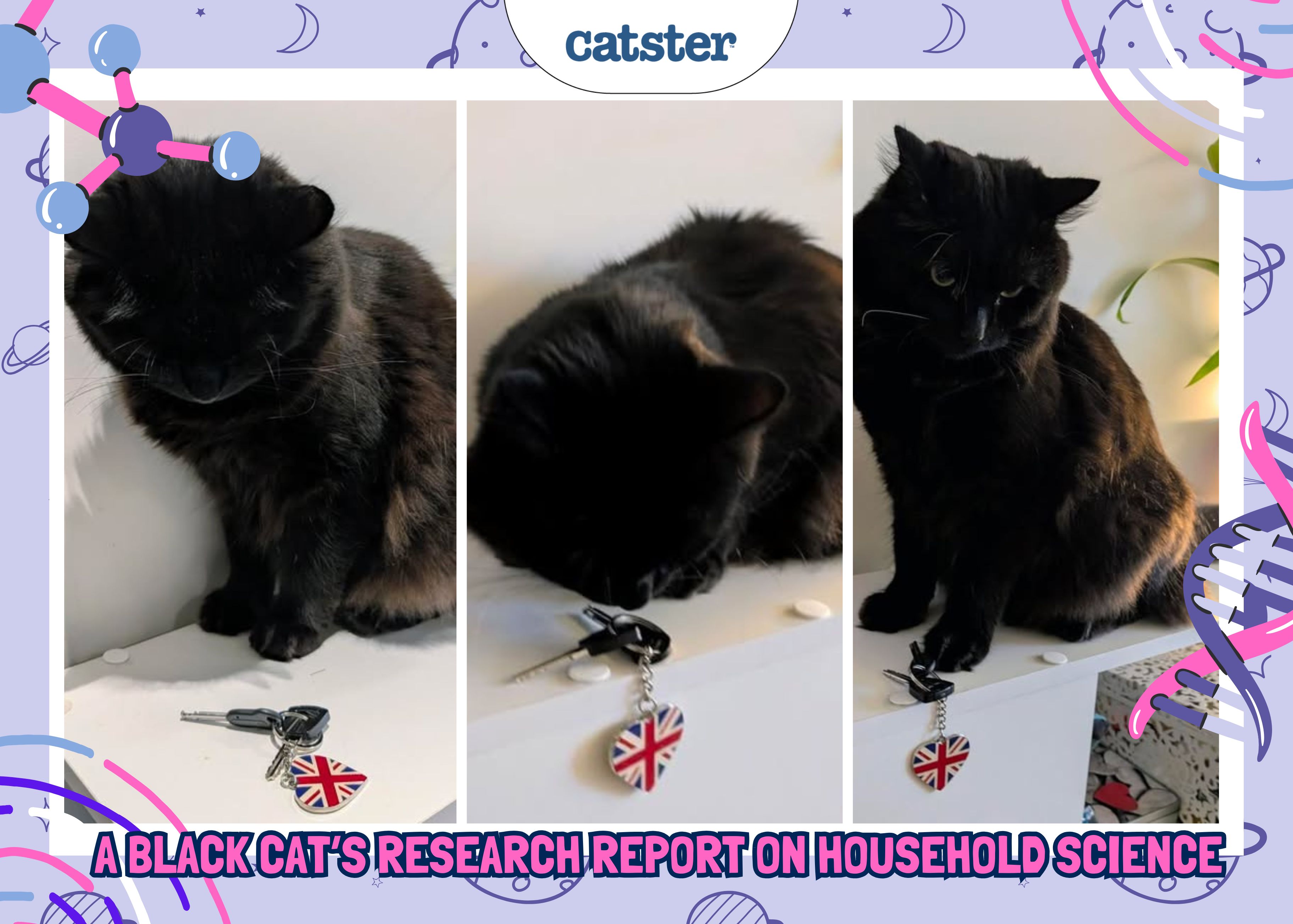
Redefining Physics With The Laws of Thermo-CAT-namics

Disorder by Design
According to the Second Law of Thermodynamics, everything tends toward disorder. Energy disperses. Neat things become messy. Order breaks down. It is not a failure of housekeeping; it is a feature of the universe.
In science, this process is called entropy.
In my house, with Frankie and Ele, it is called Tuesday.
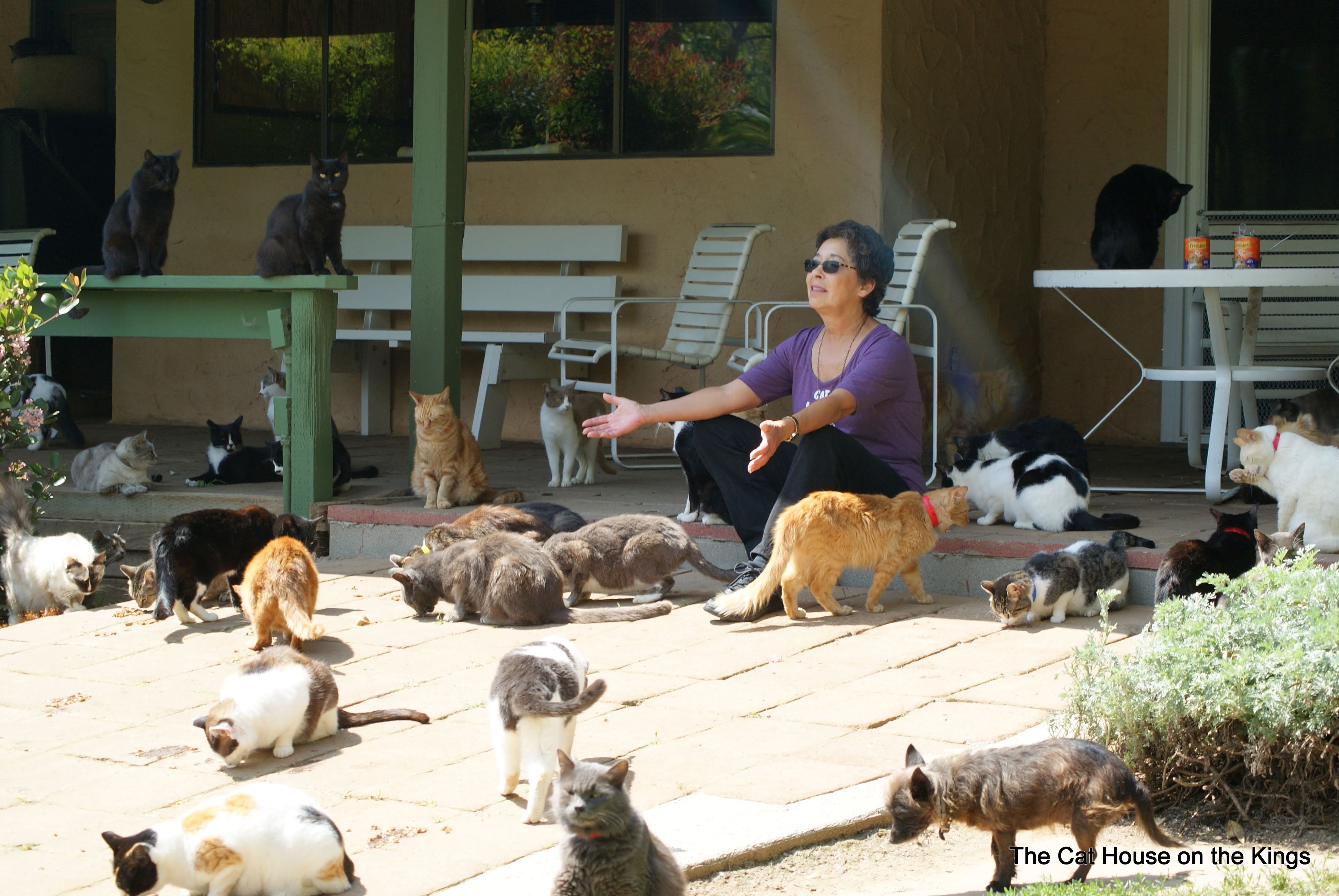
I have watched clean rooms slowly become cat-shaped disaster zones. A neatly folded blanket becomes a burrow. A pen left on a desk vanishes under the couch. A fresh bedspread turns into a wrestling mat. Nothing happens all at once, and nothing looks planned. But somehow, by the end of the day, the evidence is everywhere.
The house has not fallen apart – It is simply governed by cats.

Pawprints in Physics
The laws of thermodynamics developed over centuries, shaped by steam engines, equations, and, one suspects, a few cats working quietly behind the scenes.
Official history gives credit to names like Carnot, Boltzmann, and Maxwell. Fair enough. But anyone who has lived with a cat knows that, surely, the study of disorder could not have advanced without feline assistance.
A cat knocking over the same object again and again is not merely being difficult. It is demonstrating an irreversible process.
A cat scattering a neat stack of papers across the floor is not making a mess. It is exploring statistical variation.
And Maxwell’s famous “demon,” the imaginary creature that sorts particles, has always sounded suspiciously like a cat deciding to enter a room based on temperature, mood, and whether the door is closed.
Cats may never have received formal credit, but their pawprints are all over the theory.
Cats as Cosmic Custodians
Cats do not merely live in a chaotic universe. They help maintain it.
Not out of mischief, exactly, although mischief is often involved. Their work seems larger than that. If the universe tends toward disorder, then someone has to make sure the process stays on schedule. Cats appear to have accepted this responsibility with confidence, persistence, and complete indifference to human expectations.
They do not just implement entropy; they embrace it.
A room is never simply messy after a cat has passed through; it has been edited. The blanket is not where it was. The cushion has shifted. The paperclip has disappeared. A single strand of fur now occupies the one place you just cleaned.
This is the beauty of Thermocatnamics. It explains why life with cats always trends toward beautiful chaos. Their messes are reminders that perfection is fragile, order is temporary, and every peaceful household is only one paw away from revision.

The Physics of Disruption
Most homes begin the day in a state of potential order. Pillows are fluffed. Counters are clear. Rugs are flat. For a brief and foolish moment, humans may even believe the household is under control.
Then a cat enters the room.
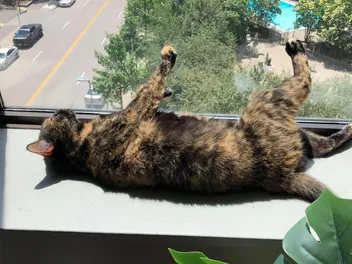
Some disruptions are subtle. A nap shifts three cushions out of place. A tail flick moves the remote just far enough to be annoying. One paw tests the edge of a magazine, a coaster, or a receipt.
Other disruptions are more dramatic. A cat leaps into a paper bag, attacks the blinds, or performs a low-gravity experiment with items light enough to be nudged off a counter, but heavy enough to result in a satisfying crash.
These are not accidents. They are expressions of feline physics.
If you live with cats long enough, you begin to notice patterns. Certain areas of the house refuse to stay clean. Boxes collapse into shredded playgrounds. Small objects disappear and return days later in places they definitely were not left. Plants lose soil. Laundry gains fur. A peaceful room develops evidence of invisible work.
It is not random chaos.
It is a system.
Cats may not know the laws of physics, but they follow them in spirit: what goes up must be pawed down, what is tidy must be tested, and what looks peaceful probably has fur floating through it.

Trouble Zones: Domestic Entropy
Cats do not disrupt everything equally. According to the principles of Thermocatnamics, they choose their battlegrounds with precision. Over time, most homes develop unofficial entropy zones. These are the places where chaos is not random, but routine.
The Rubber Band and Pen Zone
Pens and rubber bands never stay where you put them. You leave them on a desk, in a drawer, or beside a notebook, and somehow they end up under the couch, behind a chair, inside a shoe, or are simply never seen again.
Cats bat them around, carry them off, or knock them just out of reach. This is not stealing. It is research. If it moves, it is fair game. If it rolls, even better.
The Plant Instability Sector
Potted plants rarely stand a chance. It begins with a few innocent sniffs. Then the soil gets pawed. Leaves get chewed. Pebbles scatter across the floor.
The safest plants are either cat-safe, unreachable, or resigned to a short career.
The only way the plant survives is if the cat gets bored and moves on to more urgent scientific work.
The Keyboard Catastrophe Field
Your keyboard emits productivity. Cats sense this.
They respond by planting themselves directly across the keys, generating spontaneous code, system alerts, or entire emails written in a language known only to cats.
This is important work that must be respected.
The Fresh Sheet Zone
You put clean sheets on the bed. They are smooth, neat, and ready for sleep.
Then a cat appears.
One paw slips underneath. Then the whole cat follows. The blanket shifts. The fitted sheet loosens. A small lump moves beneath the fabric with great purpose. By the end, the bed looks slept in by someone very small, very furry, and deeply satisfied.
Each mess marks a moment of feline intent: unruly, precise, and unmistakably personal.

The Feeding-Time Singularity
Not every disturbance belongs to a place. Some arrive on schedule.
Cats do not care about your calendar, your workflow, or your sleep cycle. Their vocal interventions range from soft background commentary to full theatrical protest.
If it is anywhere near mealtime, they initiate the Feeding-Time Singularity. A gentle nudge becomes a meow. The meow becomes a performance. The performance becomes a household emergency, at least according to the cat.
This may happen during a phone call, a quiet moment of focus, or at 4:30 in the morning, when the universe apparently requires snacks.
It is not mischief.
It is Thermocatnamics.

Agents of Chaos
It is easy to think of cats as charming freeloaders with strong opinions about breakfast, but after years of living with Frankie and Ele, and watching their systematic dismantling of household order, I have reached a different conclusion.
Cats are not just playing with chaos.
They are managing it.
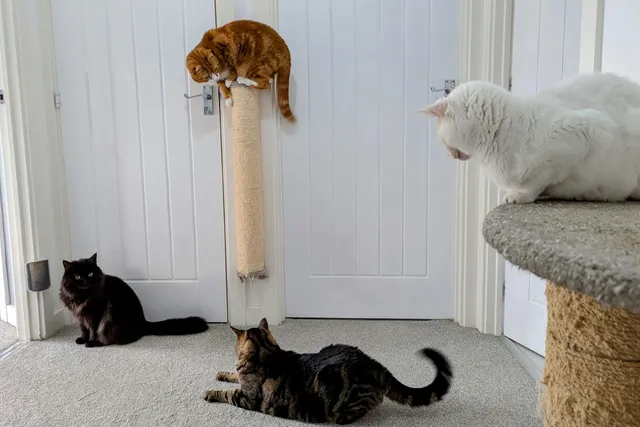
Their methods are elegant. A single tail flick relocates a pen to a place no human can reach. A carefully chosen nap erases all evidence of folded laundry. A sudden burst of energy turns a quiet hallway into a racetrack. Even silence can be suspicious, because somewhere a box is being inspected, a blanket is being rearranged, or a small object is being moved to a place where human hands cannot follow.
They do not disrupt out of spite. At least, not always.
They knock things around with ritual precision. They enforce the principles of Thermocatnamics with patience, confidence, and fur-lined authority. In my house, Frankie and Ele are committed professionals.
Every day, they clock in.
Every day, disorder advances.

Disorder Achieved
Cats do not just live in a universe that tends toward disorder. They make sure it gets there on time.
So yes, messes happen. Pens disappear. Blankets shift. Plants suffer. Fresh sheets lose their dignity. But in a house with cats, disorder is not really failure. It is evidence of life unfolding with paws, whiskers, and very strong opinions.
Frankie and Ele have taught me that a perfectly ordered home is probably not the goal anyway. A little chaos means someone is exploring. Someone is playing. Someone has found a warm place to nap, a box to inspect, or a household object that clearly needed to be tested against gravity.
Every pawprint is proof that order was never going to have the final word.
When the end of the universe finally arrives, I am fairly certain my cats will be there, sprawled across freshly washed sheets, radiating satisfaction.
Disorder: complete.
Equilibrium: achieved, cat style.
The Second Law never stood a chance.
Expert cat care, straight to your inbox
News, insights, and useful advice, delivered to you.

No spam — unsubscribe anytime.
By signing up, you agree to our Terms & Conditions and Privacy & Cookies Policy.
How useful was this post?
Click a star to rate. You can leave written feedback afterwards. (We read all feedback.)

David W. Falls writes for Catster, sharing practical advice and expert insight for cat owners.