The idea of “mindfulness” means paying attention to what’s happening at the moment. I’m not thinking about the troubles of the past or what might happen in the future. While paying attention to the moment at hand, I can consider my feelings and those around me to better understand the emotional sensations that said feelings provide me, whether I like it or not. The American Psychological Association defines mindfulness as “the awareness of one’s internal states and surroundings” in the present moment 1.
So, I don’t think I’m too far off when it comes to defining “mindfulness” for myself. One thing that I’ve discovered is that my cats teach and remind me of mindfulness on a daily basis, which is just one more reason that I love and appreciate them so much!
Are you wondering how your own cat(s) might be able to teach you about mindfulness? Read on to learn about my experiences and therefore, what you might be able to expect from your kitties!
How Cats Teach Us Mindfulness Every Day
1. Adaptation
One way that my cats teach me about mindfulness is through adaptation. While cats are typically creatures of habit like we humans are, they face challenges that include an unexpected change in routine or expectations, and many (like my own cats) tend to do so by quickly adapting to said challenges. For example, if dinner is not served at the expected time, a cat is likely to accept the situation and figure out something else that they can do to take care of their needs, such as drinking water or snoozing until food is available. They might even hunt if they’re allowed outdoors.
It’s important to note that some cats adapt more easily than others. Some adapt to change particularly poorly, especially older felines 2. However, most cats adapt to small changes well when their overall household schedule is on track. That’s when we can tap into their adaptation skills and learn how to better apply them in our own lives.
If I’m washing my cat’s bedding and they want to take a nap, they’ll go to their nap spot and realize that no comfort is available at the time. Instead of pouting and meowing about it, they head to the couch or my bed and curl up for a nap, anyway.
We humans might get “hangry” and upset if dinner isn’t served when expected. In fact, such a scenario can ruin our entire night if mindfulness isn’t in play. I find that being mindful of such a situation can help me put everything into perspective so I don’t react as if it is the end of the world. Adaptation helps keep me grounded and take a realistic look at the situation.
2. Patience
Image Credit: Maximilian100, Shutterstock
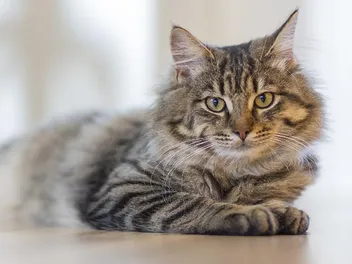
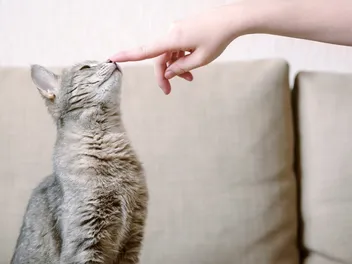
Another way that my cats help teach me mindfulness is when they display their true patience in situations that would otherwise be distressing. For example, they might be waiting for a treat or an opportunity to play with a certain toy. If they don’t have access to such things right when they want that access, they won’t usually spend much time dwelling on it.
Instead, they will find something else to do while they wait—even if that just means snoozing for a bit. They might just sit there patiently, staring as they try to will into existence the circumstances that they want to unfold. We also must practice patience with our cats as part of a give-and-take relationship, especially when it comes to teaching them what we do and don’t want them to do.
Unfortunately, I tend to want what I want, when I want, no questions asked. So, I can get frustrated when things don’t go my way right away. But taking lessons from my cats, I can take a step back and decide to be patient rather than irritated, and things tend to go much better for me in terms of mental health and happiness when all is said and done.
3. Contentment
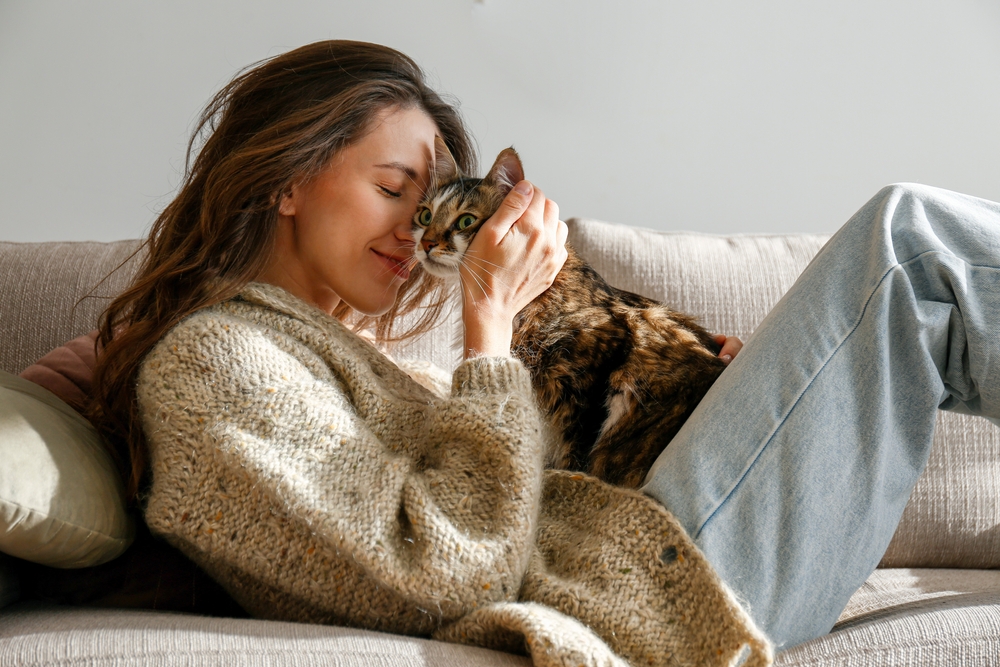
Being content with my situation and surroundings can be tough when things are not going my way. Fortunately, my cats help teach me how to be content through mindfulness. I watch my cats figure out what the situation is, even when it isn’t ideal, then accept it and figure out how to gain contentment out of it overall.
They might want to eat dinner, but I’m busy finishing up work, so it’s going to be a bit late. Instead of sitting around and pouting, they’ll come to me and ask where the food is with their eyes. If they don’t get results from that, they’ll simply lie down and hang out with contentment until the dinner bell rings.
I have friends who say that their cats don’t seem to display contentment when they are expecting something like food, but that doesn’t seem to be the case for my feline family members. This is good for me, as their contentment provides me with a good example of a positive frame of mind that I can practice in my own life.
4. Exploration
Image Credit: Irina Nedikova, Shutterstock
It can be easy to get comfortable with our surroundings and stop exploring the outdoors or even the closets of our own homes as time goes on. It’s more convenient to hang out and watch television or only handle the most urgent chores while ignoring the thought of exploring what is all around us. Without this interest, we can miss many awesome things that make us happy and feel inspired in the world that we live in.
My cats love to explore, even when they can’t get outside of the house. They take the time to check out every new item that enters our home, and they will re-explore objects and spaces repeatedly to see if anything new has developed. They even explore paper bags that I’ve just emptied after a trip to the grocery store.
If I am not mindful and make a point to be aware of my surroundings, I don’t typically have an urge to “explore” anything at all. However, the actions of my cats help me to encourage my explorative side, which can be fun and eye-opening.
How You Can Be More Aware of Your Cat’s Mindfulness at Home
The best way to make yourself aware of your cat’s mindfulness so you can learn lessons from them is to simply pay attention to their mannerisms, actions, and responses as you interact with them. How do they behave when their food isn’t served exactly when they expect it to be? How do they react when their favorite bedding isn’t where it usually is? What do they do when they are faced with a challenge, like being teased by kids who happen to be visiting? Your cats can teach you just as much as you can teach them about the ins and outs of life!
Image Credit: Kristi Blokhin, Shutterstock
Final Thoughts
Cats are great teachers in various ways, including being mindful. Mindfulness is something that we can all benefit from, so it’s a pleasure to learn a few lessons from a feline that doesn’t have a clue how much we need it in our lives! If you’re interested in being more mindful overall, make it a point to observe your kitty and learn how they incorporate mindfulness into their life.
Rachael has been a freelance writer since 2000, in which time she has had an opportunity to research and write about many different topics while working to master the art of fusing high-quality content with effective content marketing strategies. She is an artist at heart and loves to read, paint, and make jewelry in her spare time. As a vegan, Rachael is obsessed with helping animals in need both in her community and anywhere in the world where she feels she can make a difference. Animals also happen to be her favorite topic to write about! She lives off the grid in Hawaii with her husband, her garden, and her rescue animals including 5 dogs, a cat, a goat, and dozens of chickens.
If you have ever considered letting your cat taste your beer, here’s why you should not contemplate this possibility anymore. Sharing beer—or alcohol...
Cats are known for their curious nature and love of exploring new things. But get them around citrus fruits like lemon, and you may be surprised by their reaction. Cats do not like the scent of lemon, and the smell...
Rescue cats often make wonderful pets, but while many quickly adapt to their new environment, some may exhibit certain behavioral challenges. Understanding and addressing these common problems can help improve the bond between you and your new pet. Here, we...
Have you ever watched a cat drink water before? It’s not something many people think too much about, but it’s truly an amazing feat of physics that requires perfect timing and balancing inertia with gravity. Sounds unbelievable? Keep reading to...
Millions of people take their cats to the vet each year to have the vet spay them. It’s a routine surgery, in general veterinarians can spend between 15 to 20 minutes on the procedure. That’s why we came up with...
Cats need to play and move around daily to stay healthy. They can play with you, with other pets in your home, or with other family members. The important thing is that they find a way to play and get...
If you live in a cat-filled home, you know that there are lots of things both of you share. But can you share illness? It’s widely known that cats and people can pass certain things back and forth, like certain...
Regular fecal testing is an important aspect of preventative care for cats, and an essential diagnostic tool if your feline is feeling under the weather. If your veterinarian asks you to provide a stool sample for your cat, however, it...
Cats vocalize for a variety of reasons, including to communicate their needs and desires to other cats and humans. The sounds they make include meowing, purring, yowling, and hissing. Each of these vocalizations has a different meaning and purpose. For...
Cat Mindfulness: How I Learn Consciousness From My Cat Every Day
The idea of “mindfulness” means paying attention to what’s happening at the moment. I’m not thinking about the troubles of the past or what might happen in the future. While paying attention to the moment at hand, I can consider my feelings and those around me to better understand the emotional sensations that said feelings provide me, whether I like it or not. The American Psychological Association defines mindfulness as “the awareness of one’s internal states and surroundings” in the present moment 1.
So, I don’t think I’m too far off when it comes to defining “mindfulness” for myself. One thing that I’ve discovered is that my cats teach and remind me of mindfulness on a daily basis, which is just one more reason that I love and appreciate them so much!
Are you wondering how your own cat(s) might be able to teach you about mindfulness? Read on to learn about my experiences and therefore, what you might be able to expect from your kitties!
How Cats Teach Us Mindfulness Every Day
1. Adaptation
One way that my cats teach me about mindfulness is through adaptation. While cats are typically creatures of habit like we humans are, they face challenges that include an unexpected change in routine or expectations, and many (like my own cats) tend to do so by quickly adapting to said challenges. For example, if dinner is not served at the expected time, a cat is likely to accept the situation and figure out something else that they can do to take care of their needs, such as drinking water or snoozing until food is available. They might even hunt if they’re allowed outdoors.
It’s important to note that some cats adapt more easily than others. Some adapt to change particularly poorly, especially older felines 2. However, most cats adapt to small changes well when their overall household schedule is on track. That’s when we can tap into their adaptation skills and learn how to better apply them in our own lives.
If I’m washing my cat’s bedding and they want to take a nap, they’ll go to their nap spot and realize that no comfort is available at the time. Instead of pouting and meowing about it, they head to the couch or my bed and curl up for a nap, anyway.
We humans might get “hangry” and upset if dinner isn’t served when expected. In fact, such a scenario can ruin our entire night if mindfulness isn’t in play. I find that being mindful of such a situation can help me put everything into perspective so I don’t react as if it is the end of the world. Adaptation helps keep me grounded and take a realistic look at the situation.
2. Patience
Another way that my cats help teach me mindfulness is when they display their true patience in situations that would otherwise be distressing. For example, they might be waiting for a treat or an opportunity to play with a certain toy. If they don’t have access to such things right when they want that access, they won’t usually spend much time dwelling on it.
Instead, they will find something else to do while they wait—even if that just means snoozing for a bit. They might just sit there patiently, staring as they try to will into existence the circumstances that they want to unfold. We also must practice patience with our cats as part of a give-and-take relationship, especially when it comes to teaching them what we do and don’t want them to do.
Unfortunately, I tend to want what I want, when I want, no questions asked. So, I can get frustrated when things don’t go my way right away. But taking lessons from my cats, I can take a step back and decide to be patient rather than irritated, and things tend to go much better for me in terms of mental health and happiness when all is said and done.
3. Contentment
Being content with my situation and surroundings can be tough when things are not going my way. Fortunately, my cats help teach me how to be content through mindfulness. I watch my cats figure out what the situation is, even when it isn’t ideal, then accept it and figure out how to gain contentment out of it overall.
They might want to eat dinner, but I’m busy finishing up work, so it’s going to be a bit late. Instead of sitting around and pouting, they’ll come to me and ask where the food is with their eyes. If they don’t get results from that, they’ll simply lie down and hang out with contentment until the dinner bell rings.
I have friends who say that their cats don’t seem to display contentment when they are expecting something like food, but that doesn’t seem to be the case for my feline family members. This is good for me, as their contentment provides me with a good example of a positive frame of mind that I can practice in my own life.
4. Exploration
It can be easy to get comfortable with our surroundings and stop exploring the outdoors or even the closets of our own homes as time goes on. It’s more convenient to hang out and watch television or only handle the most urgent chores while ignoring the thought of exploring what is all around us. Without this interest, we can miss many awesome things that make us happy and feel inspired in the world that we live in.
My cats love to explore, even when they can’t get outside of the house. They take the time to check out every new item that enters our home, and they will re-explore objects and spaces repeatedly to see if anything new has developed. They even explore paper bags that I’ve just emptied after a trip to the grocery store.
If I am not mindful and make a point to be aware of my surroundings, I don’t typically have an urge to “explore” anything at all. However, the actions of my cats help me to encourage my explorative side, which can be fun and eye-opening.
How You Can Be More Aware of Your Cat’s Mindfulness at Home
The best way to make yourself aware of your cat’s mindfulness so you can learn lessons from them is to simply pay attention to their mannerisms, actions, and responses as you interact with them. How do they behave when their food isn’t served exactly when they expect it to be? How do they react when their favorite bedding isn’t where it usually is? What do they do when they are faced with a challenge, like being teased by kids who happen to be visiting? Your cats can teach you just as much as you can teach them about the ins and outs of life!
Final Thoughts
Cats are great teachers in various ways, including being mindful. Mindfulness is something that we can all benefit from, so it’s a pleasure to learn a few lessons from a feline that doesn’t have a clue how much we need it in our lives! If you’re interested in being more mindful overall, make it a point to observe your kitty and learn how they incorporate mindfulness into their life.
See also:
Featured Image Credit: Anastasija Kru, Shutterstock
Contents
Want content like this delivered to you?
Sign Up For Our Newsletter
News, insights, expert advice, and everything cat
* By submitting, you agree to our Terms & Conditions and Privacy & Cookies Policy.
How useful was this post?
Click on a star to rate (you can leave written feedback after clicking submit)
Help us improve Catster for pet parents!
Your feedback really matters.
What did you like about this post? Also how can we improve it?
Authored by
Rachael GerkensmeyerJoin the conversation
Talk With A Vet Online
Peace of mind,
anywhere, anytime
Affordable vet advice
Chlamydia in Cats: Our Vet Explains the Signs, Prevention & Treatment
You’ve probably heard about chlamydia, but maybe not in reference to your feline friends. In kitties, chlamydia infections often take on the form...
13 Signs You’re a Cat Person: Fun Ways to Tell
Do you want to get your first pet but aren’t sure which one? Maybe you’re aware of the stereotypes placed on those labeled...
How to Remove Cat Litter Smell From a Room: 8 Vet-Verified Tips & Tricks
Cat owners love their cats; there’s no denying that. But not one has ever remarked how much they love the smell associated with...
Can a Cat Give a Dog Parvo Virus? Our Vet Answers
The short answer is, no. A cat cannot give a dog parvovirus. Both species can become infected with parvovirus, but the virus that...
More related
8 Vet-Verified Seal Point Cat Facts: Info, Pictures & Breeds
Seal point cats have an ivory, cream, or light fawn coat with dark brown/brownish black (seal) points on the face, ears, paws, and...
Can Cats Drink Beer? Our Vet Explains
If you have ever considered letting your cat taste your beer, here’s why you should not contemplate this possibility anymore. Sharing beer—or alcohol...
Lykoi Cat Breed (Wolf Cat): Pictures, Info, Care Guide & More
The Lykoi, otherwise known as the “werewolf cat” for obvious reasons, might be one of the most interestingly horror-like cat breeds in existence....
10 Types of Veterinary Specialists & What They Do: Vet Approved Guide
Many cat parents may think their local veterinarian is the only option for their cat’s well-being and health, but this is not the...
Keep reading
Do Cats Like the Scent of Lemon? Vet Reviewed Facts
Cats are known for their curious nature and love of exploring new things. But get them around citrus fruits like lemon, and you may be surprised by their reaction. Cats do not like the scent of lemon, and the smell...
Rescue Cat Behavior: Vet-Reviewed Problems & How to Help
Rescue cats often make wonderful pets, but while many quickly adapt to their new environment, some may exhibit certain behavioral challenges. Understanding and addressing these common problems can help improve the bond between you and your new pet. Here, we...
How Do Cats Drink Water? Vet-Approved Facts
Have you ever watched a cat drink water before? It’s not something many people think too much about, but it’s truly an amazing feat of physics that requires perfect timing and balancing inertia with gravity. Sounds unbelievable? Keep reading to...
How Long Does It Take to Spay a Cat? Surgery Details Revealed
Millions of people take their cats to the vet each year to have the vet spay them. It’s a routine surgery, in general veterinarians can spend between 15 to 20 minutes on the procedure. That’s why we came up with...
How Much Playtime Do Cats Need? Why It’s Crucial for Your Cat’s Health (Vet-Verified)
Cats need to play and move around daily to stay healthy. They can play with you, with other pets in your home, or with other family members. The important thing is that they find a way to play and get...
Can Cats Catch the Flu From a Person? Vet Approved Facts & FAQ
If you live in a cat-filled home, you know that there are lots of things both of you share. But can you share illness? It’s widely known that cats and people can pass certain things back and forth, like certain...
How To Get a Stool Sample from a Cat: 4 Vet-Reviewed Steps
Regular fecal testing is an important aspect of preventative care for cats, and an essential diagnostic tool if your feline is feeling under the weather. If your veterinarian asks you to provide a stool sample for your cat, however, it...
Can My Cat Understand Human Meows? Vet-Reviewed Communication Explanation
Cats vocalize for a variety of reasons, including to communicate their needs and desires to other cats and humans. The sounds they make include meowing, purring, yowling, and hissing. Each of these vocalizations has a different meaning and purpose. For...