11 Signs to Look for When Inspecting a Cat Boarding Facility (Vet Reviewed)


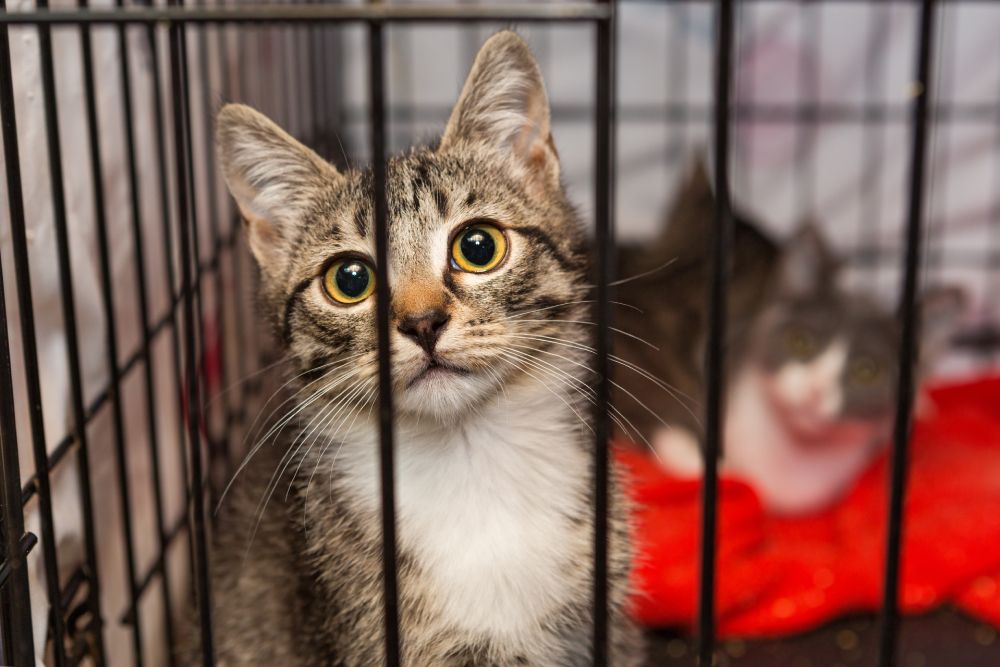
It can be nerve-wracking to leave your cat when you go out of town, especially if your cat is going to stay somewhere outside of your own home. Boarding facilities can be intimidating to people and animals alike because they are such different environments from what most are used to.
If you’re planning to leave your cat at a boarding facility, it’s recommended that you visit the facility ahead of your booking. This will allow you to get a feel for how things are run and talk to the employees about any special needs your cat has. Before you visit, though, you should know what to keep an eye out for.

The 11 Signs to Look For When Inspecting a Cat Boarding Facility
1. Touring
One of the biggest red flags that a boarding facility can have is not allowing you to tour the facility prior to scheduling. There are some exceptions to this; for example, many facilities restricted visitors during the COVID-19 pandemic. However, the vast majority of facilities will allow visitors to check out their boarding areas.
Keep in mind that if you’re looking at boarding your cat at a vet clinic, they may restrict the areas that you’re allowed to tour for the safety and health of the animals, but the areas where your cat may be boarding or playing should be available for tours.

2. Scheduling
The scheduling process with a good facility should be relatively painless, but the scheduler should ensure they have all of the pertinent information from you or let you know what information to bring with you. Boarding facilities that don’t require vaccination records can increase the risk of your cat getting sick, so stick to places that need to see current vaccine records before boarding.
3. Cleanliness
As cat owners, we all know how difficult it can be to keep things clean with one pet in the home. At boarding facilities, they’re potentially dealing with dozens of animals at the same time. This means that maintaining cleanliness is a major task, but it’s also an essential part of keeping things hygienic and maintaining the health and safety of the animals and staff.
A boarding facility may not be as spotless as your home, but if you’re seeing lots of dirty litter boxes, trash and waste on the floor, and dirty enclosures, it’s best to find another place that is able to maintain cleanliness better.
4. Health
If you’re visiting a boarding facility and you’re noticing sick animals, it’s best to go elsewhere. Sneezing, watery eyes, and lethargy of the animals in the facility can be signs of problems. Boarding facilities carry a high risk of spreading illness, and facilities that openly accept sick animals or keep them in the same area as healthy animals are making it easier for illnesses to spread. Vet clinics that provide boarding should have separate areas for sick and healthy animals, and contagious animals should be kept in isolation.
5. Ventilation
Boarding facilities require stronger ventilation than the average home due to the number of animals on the premises. If you’re touring a facility and it seems stuffy, humid, hot, or poorly ventilated, it’s potentially not going to be safe for your pet.
Some facilities may have standalone buildings for boarding pets, while others may not have central heat and air. Make sure these facilities have plenty of ventilation throughout the space, since standalone buildings and areas lacking central heat and air are at an increased risk of poor ventilation and becoming very hot or cold based on the outdoor temperature.

6. Staffing
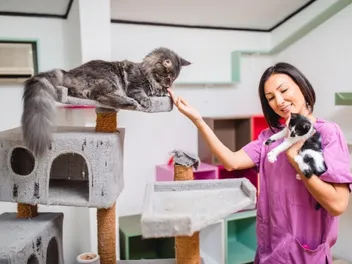
The staff during your tour should be helpful and willing to answer questions. You also should see multiple staff members present. If you’re touring a facility that only has one or two employees caring for dozens of pets, they may be understaffed and not able to provide the level of care that you’ll want for your cat.
If there are visibly messy areas, there should be staff members actively working to clean those areas. If you notice staff members not working when there are obviously tasks that need to be done, it’s probably best to go elsewhere.
7. Staff Training
Boarding facilities require hard work, often for relatively low pay, so turnover can be high with employees. Because of this, some facilities hire people without experience and offer them minimal training, which can lead to problems. The staff at the facility should, at minimum, be trained in properly handling frightened animals, as well as properly cleaning the enclosures. They should also know about the proper feeding and watering for the animals in their care.
If your cat requires any type of medication, ensure that there will always be a staff member present who has been trained to administer the medication. This is especially important if your cat receives routine injections, like insulin.

8. Enclosures
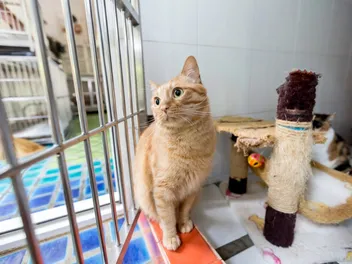
In an ideal boarding environment, cat enclosures will have multiple levels and space for resting, playing, and climbing. Some facilities don’t have the capacity for this, and depending on what facilities are in your area, your cat may have to stay in a one-story enclosure. However, the enclosure should always provide them plenty of space to move around a bit. If your cat only has space for a litter box and a bed, the enclosure is likely too small.
For facilities with smaller enclosures, ask if your cat will have a safe place to play multiple times per day outside of the enclosure. Never board your cat at a facility that boards multiple pets to an enclosure unless you specifically ask for them to board your own pets together.
9. Emergency Planning
There should always be an emergency plan in place at boarding facilities. While we all hope that nothing will happen to our cats when we board them, accidents and emergencies can occur at any time. The staff should have a place in their system to list your preferred veterinarian and any emergency contacts needed. Ideally, you should leave your contact information, as well as the contact information of a family member or friend who will be in the area while you’re away. This will allow you to have someone making decisions about your cat if you’re unable to be reached.
You’ll also want to ask what type of emergency plan is in place for emergencies within the building, like a fire. Have the staff been prepared and trained to save the animals in the building?

10. Personal Items
Some boarding facilities don’t like to take personal items due to the risk of them getting lost or destroyed. Choose a boarding facility that will allow you to bring personal items and actually keep them with your pet. Some facilities will take personal items but then keep them put away until you return. Ensure the items, whether they’re toys, bedding, or something else, can be kept with your cat to provide them comfort and normalcy while you’re gone.
Ask before boarding if you should provide your cat’s food as well. Most facilities have food on hand when needed, but it’s best to keep your cat on the same food they’re used to to make the boarding stay less stressful.
11. Other Animals
The ideal boarding environment for cats is a facility that only allows cats. Dogs can be noisy, leading to extreme stress for cats, especially those that are already nervous. If your cat must stay at a facility that boards dogs and cats, it’s important to ensure that the cats are kept in a space that is separate from the dogs. The cat area should be quiet and calm, allowing the cats to feel safe during their stay.
Conclusion
It’s necessary to check out facilities before taking your cat to them for boarding, and in some cases, you may need to visit multiple facilities in your area to find the right one. Now that you know what to look for and what to avoid, it should be easier for you to find the perfect boarding facility for your cat. Keep in mind that even with the best care, your cat may come home feeling stressed or acting differently than normal.
See also:
Featured Image Credit: Okssi, Shutterstock
Expert cat care, straight to your inbox
News, insights, and useful advice, delivered to you.

No spam — unsubscribe anytime.
By signing up, you agree to our Terms & Conditions and Privacy & Cookies Policy.
How useful was this post?
Click a star to rate. You can leave written feedback afterwards. (We read all feedback.)
Brooke Billingsley, a former veterinary assistant for nine years, became a nurse in 2013. She lives in Arkansas with her boyfriend of five years, surrounded by her beloved pets: three dogs, two cats, five fish, and two snails. Brooke has a soft spot for special needs animals, caring for a three-legged senior dog and a widely known cat with acromegaly and cerebellar hypoplasia. She has developed a keen interest in fish keeping and is always learning how to provide the best environment for her aquatic pets. In addition to her passion for animals, Brooke enjoys gardening and maintains a vegetable garden during the summer. She stays active with yoga and received her 200-hour yoga teacher certification in 2020. Brooke also hosts a podcast that delves into folklore and myth, dedicating her spare time to research and writing. She embraces the philosophy that every day is an opportunity for learning and growth, continually working to acquire new skills and knowledge.