Where Can I Leave My Cat While on Vacation? 3 Vet-Reviewed Options


In this article
There will come a time in your stint as a cat owner when you’ll need to go away for a night or a weekend, or even sneak off for a weeks-long vacation for a mental reset. While we all need time away from home occasionally, the problem for cat owners is what we’re to do with our beloved family pets while we’re gone.
If you’re faced with an upcoming trip and aren’t entirely sure what you’re going to do with your cats, we can help. Read on to find three great places you can leave your kitties while you’re away, as well as tips on preparing your kitty for time spent home alone.
Make sure your cat is healthy before you leave, and truthfully disclose all of the veterinary info, including any underlying health issues or predispositions, ongoing medication, and a number of the emergency vet and the usual clinic, to the friend or pet sitter who will be looking after your kitty.

Top 3 Places You Can Leave Your Cat While You’re on Vacation
1. Your House

Now, hear us out. We do not recommend leaving your cat(s) alone for longer than a day, as that’s just plain irresponsible and dangerous. Kittens, young cats, those with health issues or needing to take daily medications, and older cats, should not be left alone, and someone should be always looking after them.
But, if you’re going somewhere for the night and you have a healthy and independent adult cat, it may be okay to just leave them at home, provided you have automatic feeders and a way to check on them, such as pet cameras or a helpful friend or neighbor. Depending on how many cats you have, you may also want to set out an extra litter box to ensure they stay as clean as possible during your night away.
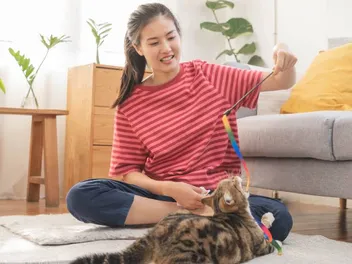
However, you can also leave your pets at home if you’re leaving for a week or two (or more), but only if you invest in a responsible and verified pet sitter. These highly dedicated professionals can visit your home once or twice daily to check on your pets, feed them, play with them, and change their litter box. Make sure they come several times before your trip and spend some time with you and the cat so your cat can get used to them and they can learn all there is to know about your kitty and their habits.
Alternatively, you can pay for a live-in sitter who will stay at your home the entire time you’re gone. The benefit of the latter is that your cats will have someone to interact with them for the whole duration of your trip. This is recommended for anything longer than a few days in order for your cats to be well looked after and not lonely. Of course, you should expect to pay more for a live-in sitter, but it will be worth your while, especially if you have anxious cats that don’t do well alone.
Leaving your cats at home while you’re away is a great option for older cats that may be set in their ways and not okay with the upheaval of moving to a new place while you’re gone. It might also be the best option for cats that are easily stressed out or those suffering with any mobility issues, poor vision, cognitive decline, or anxiety that will make it more challenging to adapt to unfamiliar environments.
2. A Friend’s House

If your cats are pretty easygoing, you can take them to a family member or friend’s house while on vacation. We do not recommend this option if your kitty has one of the previously mentioned health issues or anxiety, as the stress of a new environment can be awful for anxious pets and may increase the risk of certain stress-related issues, like urinary tract disorders.
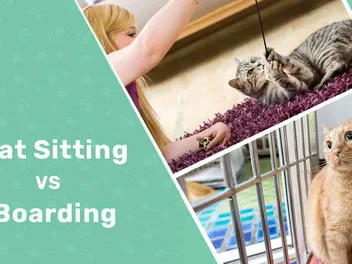
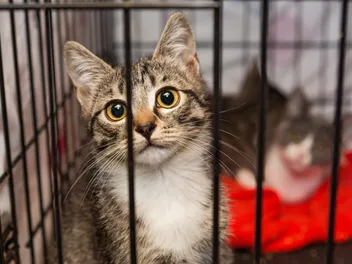
3. A Boarding Facility

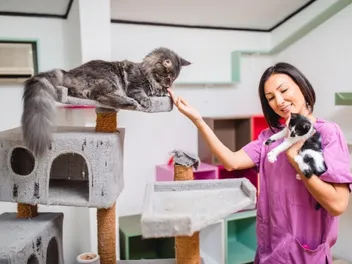
Boarding facilities are professionally run businesses where your cat will be supervised for much of the day and provided with one-on-one time.
Some boarding facilities aren’t just for cats, but even then, there should be dedicated and separate areas for each species, ideally in completely different buildings. Well-organized facilities also have specialized people minding specific blocks without coming in contact with other departments. This way, the animals become familiar with them and the scent transfer between the species is minimized.
Boarding facilities aren’t just for cats, however. Kitties that are easily stressed or anxious probably won’t appreciate being kept in the same facility as dogs. Even if the two species are kept separate, your cats can pick up on the scent and sounds of the other animals, which may cause stress and acting out behaviors.
Kitties that are easily stressed or anxious probably won’t appreciate being kept in the same facility as dogs. Even if the two species are kept separate, your cats can pick up on the scent and sounds of the other animals, even other cats, which may cause stress and change in their behaviors. Some cats may experience loss of appetite, toileting outside of the litter box, or even holding in urine and feces for longer than normal. Some cats may be more prone to urinary tract disorders as a consequence of prolonged stress, alongside other risk factors.1
We highly recommend touring any potential boarding facilities before leaving your kitty there. A tour allows you to get a feel for the staff and how the business is run. It’ll also allow you to ask questions and ensure the operators fully understand your cat’s needs.
How to Prepare Your Cat and Home
If you decide to leave your cats at home while a friend, pet sitter, or a neighbor checks in on them once or twice daily or stays in your home, there are some things you should do before leaving to ensure their safety. It goes without saying that your healthy adult cat should not be left alone without anyone checking on them for longer than 24 hours, or even less, depending on the cat, their health, and their age. Health issues could arise, or they may get injured and deteriorate if no one is there. For your cat’s health and well-being primarily, but also for your own peace of mind, it’s important to get someone to look after them for anything longer than a night's absence.
If you are away for the night, investing in a pet camera may be a great opportunity in order to monitor your cat’s behavior and make sure they are okay. Kittens, young cats, sick cats, and old cats that have higher care requirements should not be left even for the night.
Give the Pet Sitter Your Vet’s Details
Looking after someone’s pet is a huge responsibility and should not be taken lightly. Even if you’re just going away for the weekend or a few days, it’s important your pet sitter has all the necessary info in case there would be any health concerns with your cat. They should know if your cat is suffering with any conditions, taking any medications, and which vet they go to, all in combination with emergency contact info. This will make it easier for them to care for your kitty.
Remember you can always have an online vet on your contacts for any emergency.
Tidy Your Home
Leaving your home tidy will not only ensure your pets are safe while you’re gone, but nothing beats coming home to a clean house. Cats can get into all sorts of trouble if things are left out, so make sure there’s nothing on the floor they can eat (e.g., hair ties). Empty the garbage cans and do a thorough vacuuming job to ensure your mischievous babies can’t get themselves into any trouble.
Move Your Plants
Your houseplants may be like your second babies, so do them a favor and move them far out of your cat’s reach. While your kitty may not show interest in your plants while you’re around, boredom may make their curiosity get the best of them. Unfortunately, many types of plants are toxic to cats, so failure to place them somewhere your kitties can’t get at them may mean exposure to the toxin - either the leaves, vase water, pollen, or flowers - which will require urgent veterinary care. Some plants are much more dangerous than others and, alongside signs of a stomach upset and drooling, may lead to kidney damage and more.

Leave Out Extra Water if You’re Away for the Night
This only applies if you are away for a night ( not longer than 24 hours) and if you have an independent adult healthy cat. It’s just not safe or responsible to leave a cat without supervision for anything longer than this. Too many things can go wrong. Instead, get a pet sitter or a good friend to check on your cat or stay at your home.
In the case of a short, 24-hour absence, your automatic feeders will take care of your pet’s food needs while you’re gone, but it is essential that you set out extra water for them, too. Pumps can fail in electric fountains, and cats can tip over bowls, so setting out extras will ensure your kitty will have a backup water supply in case something happens to their primary water source.
Leave Your Scent
If your cats are particularly bonded to you, leave out a blanket or article of clothing with your scent so they can smell you while you’re away. This can help alleviate any stress or anxiety they may have in your absence. The company of a familiar pet sitter, friend, or family member will also help to reduce their boredom and reassure them while you’re away.

Final Thoughts
Choosing where and with whom to leave your cat while you’re away on vacation will depend entirely on your kitty's personality, age, health, and preferences. You should never leave your cat alone for longer than 24 hours without someone checking in on them or staying at your house, or even less than 24 hours in the case of kittens, young cats, old cats, or those with underlying health issues or medication requirements.
So, you may wish to explore options, such as calling on your friends for help, hiring a pet sitter, or hiring a boarding facility.
Learn how to live a better life with your cat on Catster:
Featured Image Credit: Natalia Lebendinskaia, Shutterstock
Expert cat care, straight to your inbox
News, insights, and useful advice, delivered to you.

No spam — unsubscribe anytime.
By signing up, you agree to our Terms & Conditions and Privacy & Cookies Policy.
How useful was this post?
Click a star to rate. You can leave written feedback afterwards. (We read all feedback.)
For Chantelle, writing and animals are the two driving forces in her life. Growing up on the Canadian prairies surrounded by pets, she now shares her home with five cats, two guinea pigs, and a bearded dragon. Chantelle, her husband, and their child pride themselves on being dedicated pet parent, even spending a fortune on wall-mounted cat shelves to provide their cats with an indoor jungle gym. When she's not snuggling with her cats or photographing their humorous moments, Chantelle is exploring the Rocky Mountains, rewatching her favorite Netflix series, and reading up on various random subjects.