


The thought of looking after an adorable newborn kitten can be appealing, but it’s incredibly hard work! Whether you find yourself helping your cat support her kittens or fostering a kitten that’s been abandoned, kittens require round-the-clock care to grow up big and strong.
If you’re wondering exactly what’s involved in caring for a newborn kitten, you’re in the right place. Our guide and care sheet will walk you through everything that you need to know. From what to feed them and how to care for them and keep them warm to which illnesses you need to look out for, we have you covered.

What to Consider Before Owning a Newborn Kitten
Before you even think about owning a newborn kitten, you must be 100% sure you can meet their needs. There are two main ways that you might find yourself with a newborn kitten:
- Your cat has a litter of kittens.
- You’ve adopted, fostered, or rescued a kitten.
If your cat has a litter of kittens, you can expect her to carry out most of the care. But if she rejects some of the kittens, you’ll need to care for them yourself, much as you would for a fostered or rescued kitten. Newborn kittens don’t provide much in the way of interaction, as for the first 4 weeks, they’re completely dependent on their mother for everything that they need.
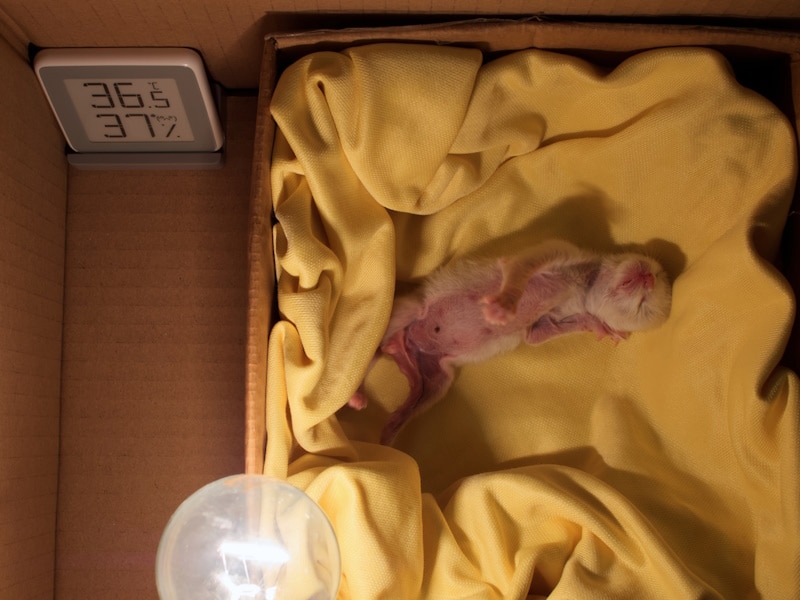
They are still high-maintenance, however! For the first 2 weeks, expect to feed them every 2–3 hours, even overnight. They’ll also need help going to the toilet. Young kittens can’t regulate their body temperature, so if there isn’t a mother cat to keep them warm, you may need to keep them in an incubator or under a heat lamp.
If you’re caring for newborn kittens, you must ensure someone can be home to look after them at all times for the first 12 weeks of their life. They should not be left alone for longer than 20 or so minutes at a time.
Where Can I Get a Newborn Kitten?
If you’re considering buying a kitten from a breeder, one won’t be ready to leave their mother cat until they’re at least 8 weeks old. Many breeders prefer to allow kittens to stay with their mothers until they’re at least 12 weeks old. This allows them to learn how to use a litter box and play independently. By 12 weeks, a kitten’s immune system will also be better developed, and they stand a much better chance of growing into a healthy and happy adult cat.
You may find yourself looking after newborn kittens if your cat has had a litter of kittens. She might not produce enough milk for all the kittens, and some cats reject their kittens, in which case you’ll need to care for them instead. If you’re fostering newborn kittens without a mother, they may come to you when they’re only a few days old.
They usually require the care of an experienced foster human who is well-versed in caring for newborn kittens. Speak to a cat rescue organization before attempting to care for kittens from a feral mother found outside. She may have just left her kittens alone while she went to find food.
What Kind of Home Does My Newborn Kitten Need?
For their tiny size, newborn kittens need a great deal of equipment! If a mother cat cares for her kittens, she keeps them warm and well-fed and helps them go to the bathroom. For humans looking after newborn kittens, you’ll need to provide all that yourself! Here’s a list of everything that you’ll need.
- Kitten milk replacer
- Bottles and teats
- Bottle brush
- Whisk
- Funnel
- Kitchen scales
- Bottle sterilizer
- Kitten food
- Shallow food and water bowls
- Heat lamp, heated cat bed, or incubator
- Thermometer
- Muslins, paper towels, or face cloths
- Kitten beds, blankets, and towels
- Hand soap or sanitizer
- Disinfectant spray
- Cleaning cloths
- Baby wipes
- Cat carrier
- Playpen or secure enclosure
- Non-clumping cat litter
- Flea comb
If a kitten is without their mother, you need to make sure you can keep them warm, as they can’t regulate their temperature in the beginning. You can use heat lamps, heated cat beds, or an incubator if you can access one. Keep a thermometer near the kitten’s bed to monitor the temperature.
As the kittens grow up and start moving around, they may be interested in playing with toys, climbing small obstacles, and investigating scratching posts. Make sure you have a secure room where they can explore without the danger of falling down stairs, falling from high surfaces, or getting trapped behind furniture. By the time kittens are roughly 4 weeks old, they’ll be starting to explore their environment, play with toys and each other, and get into all kinds of trouble!
It’s also a good idea to keep a supply of disinfectant and cleaning products on hand. Get into the habit of wiping the surfaces and vacuuming in your kitten’s room every day. A kitten’s immune system is still developing at this stage, so you want to do everything you can to minimize the chances of them picking up an infection.

What Should I Feed My Kitten?
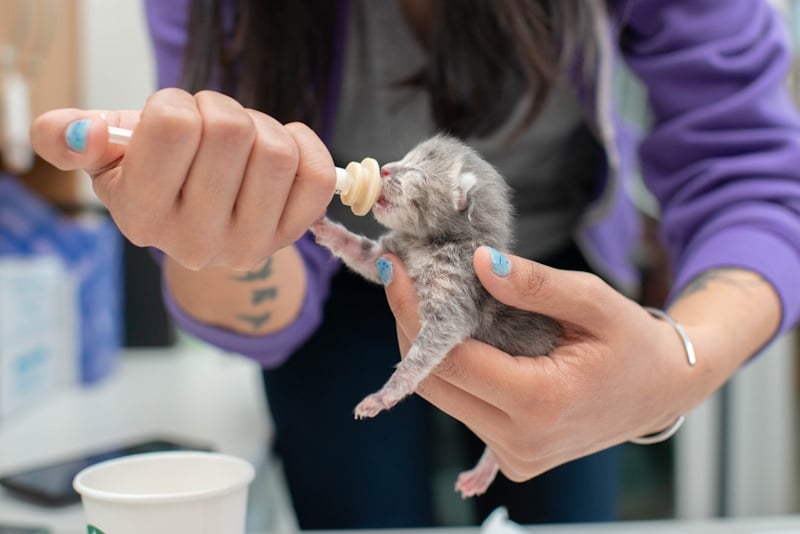
Newborn kittens without a mother to provide milk should be fed a kitten milk replacer. The exact amount will depend on the brand, so be sure to follow the manufacturer’s instructions. As a rough guide, newborn kittens will need roughly 2–6 milliliters per feed, increasing to 18–22 milliliters by the time they are 5 weeks old.
Do not be tempted to feed your kitten cow’s milk. It can disrupt their digestive system and make them sick. In an emergency, you can use goat’s milk as a short-term substitution until you get a hold of a kitten milk replacer. This should be available at vets, online, and in pet stores.
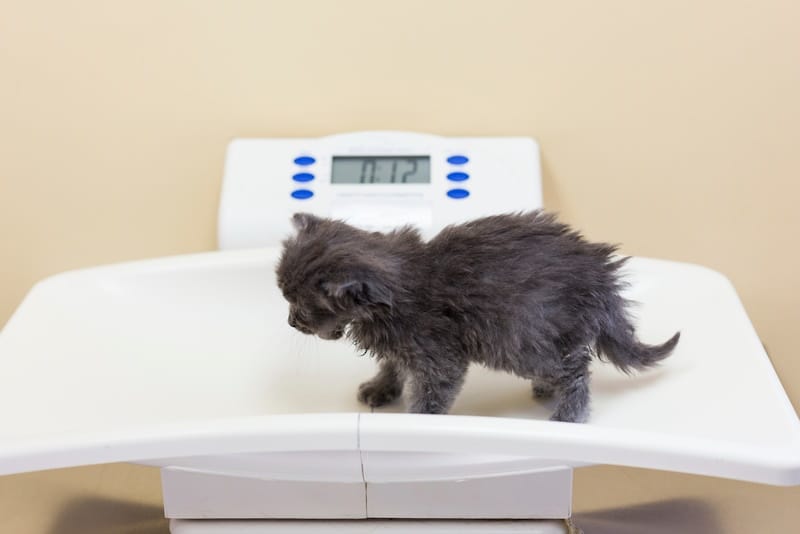
It’s a good idea to weigh your kitten daily to ensure that they’re putting on a healthy amount of weight. Newborn kittens usually weigh around 3.5 ounces and should gain an additional 10–14 grams each day. By keeping a close eye on your kitten’s weight, you can make sure they’re growing as much as they should be.
As kittens start to be weaned at around 4–6 weeks, provide a constant source of fresh and clean water. At this point, you can offer them a bowl of soft kitten food, and pâté-type textures are usually well received! Mix a small amount of kitten food with the pre-prepared formula and put it in a shallow bowl. Expect the kittens to get messy as they explore these new taste sensations!
It’s also a good idea to provide a shallow bowl of formula as kittens get used to transitioning to solid food.
How Do I Take Care of My Kitten?
Newborn kittens need round-the-clock care, so be prepared for sleepless nights. As they grow up, the frequency of feeding will reduce, but there’s still much you need to do to take care of them.
Feeding
- Age 0–1 week: Feed every 2–3 hours
- Age 2 weeks: Feed every 3–4 hours
- Age 3 weeks: Feed every 4–5 hours
- Age 4 weeks: Feed every 5 hours
- Age 5 weeks: Feed every 5–6 hours
At 6 weeks old, you can start weaning kittens onto soft kitten food. Keep everything clean when you feed your kitten to minimize the chances of them picking up bacteria or an infection. It’s a good idea to use an apron for feeding purposes only and launder it regularly.
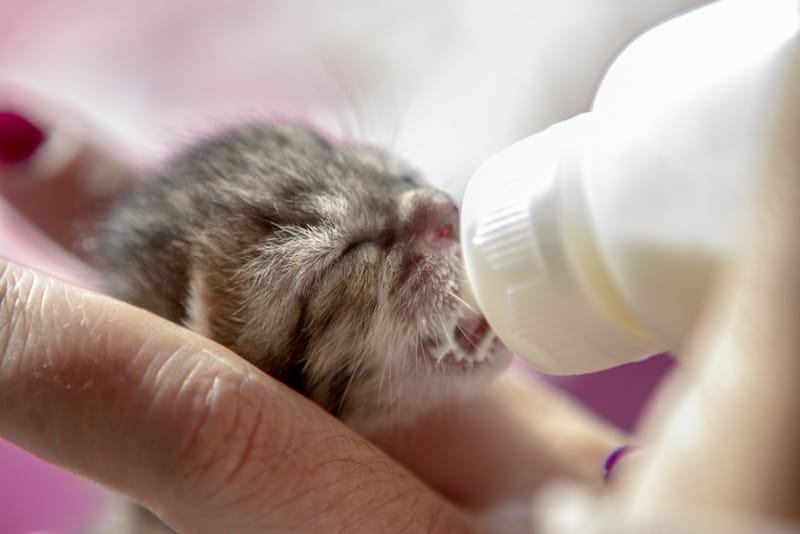
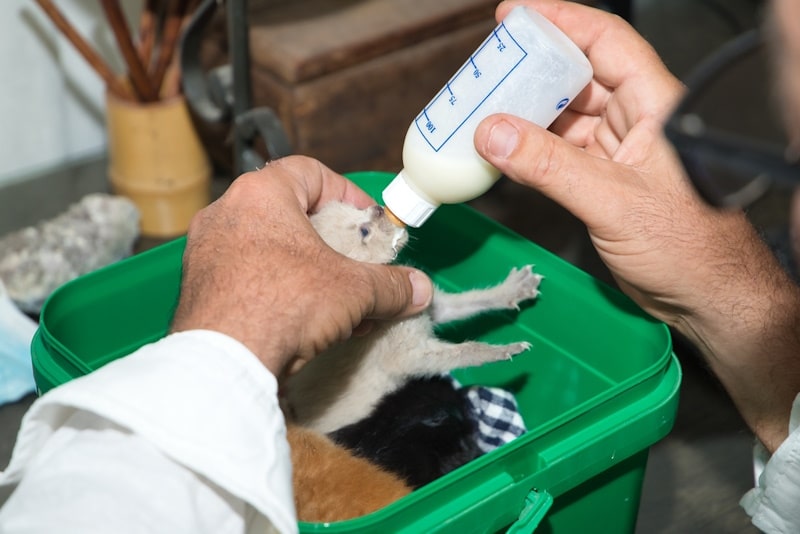
Feed your kitten by allowing them to lie on their stomach. Some kittens prefer to be held in your lap, while others like to be on a towel on a flat surface like a table. Stroking your kitten’s forehead can encourage them to start suckling.
Allow the kitten to set the pace, and you may need to support their neck with your free hand, especially for a newborn kitten. Once the kitten has had their fill of milk, encourage them to burp by patting their back. Next is helping your kitten go to the bathroom, which you’ll need to do after every meal.
Helping Them Go to the Bathroom
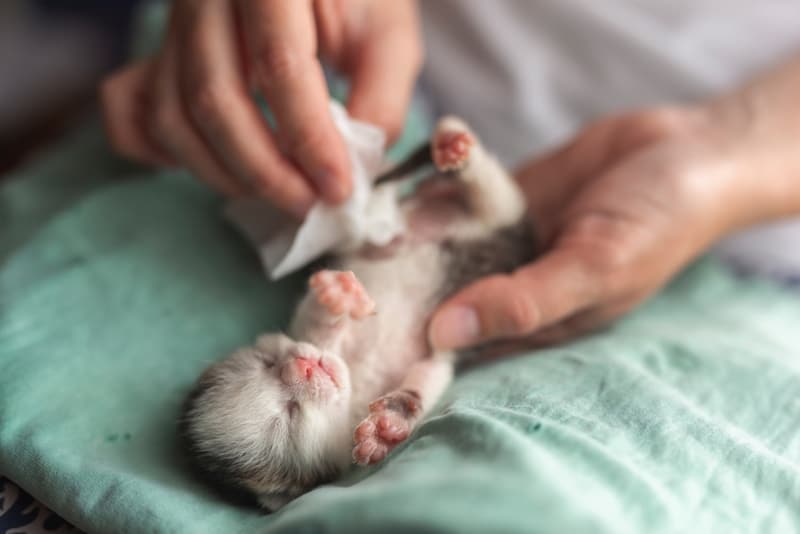
Newborn kittens need help going to the bathroom. If their mother cat can’t help them, you must do the job instead! After your kitten has had their meal, use a cotton ball dipped in warm water and rub it over their bottom in a circular motion.
You may also need to rub your kitten’s belly. This should stimulate them to urinate and defecate. After they’re done, clean their bottom again with another cotton ball. Kittens will need help going to the bathroom for the first 4 weeks, after which time, you can introduce them to the litter box.
Litter Box Training
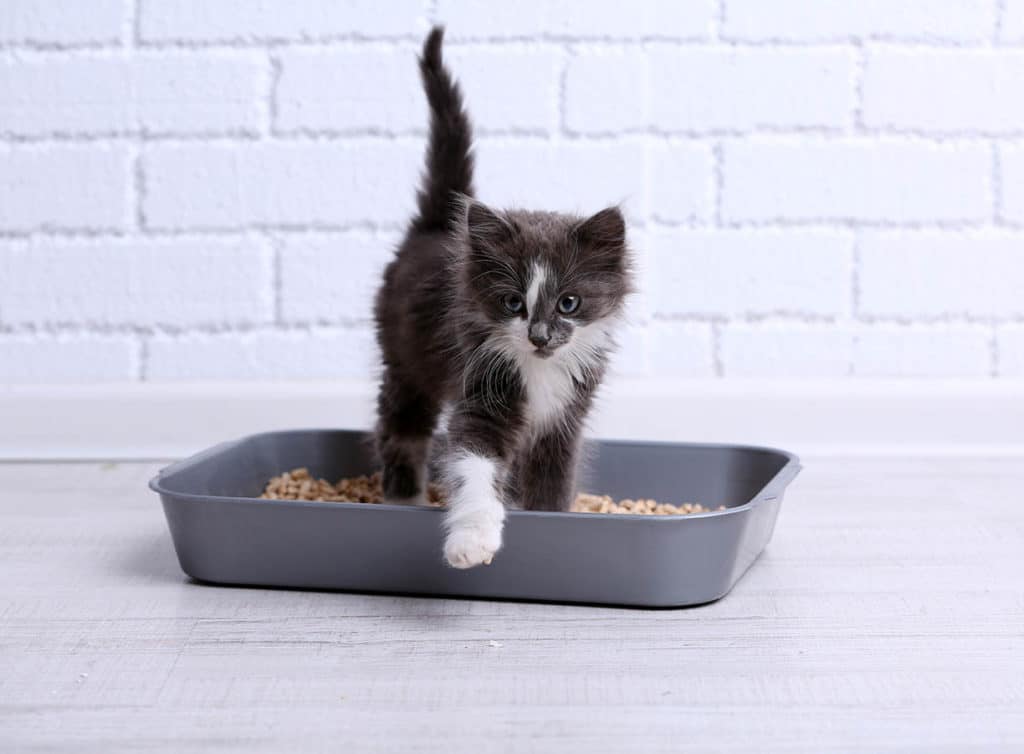
Luckily, kittens are skilled at learning how to use the litter box. At around 3-4 weeks, you can place the kitten in a litter box and stimulate them to go to the bathroom like you’ve been doing. By 5 weeks old, kittens shouldn’t need help using the litter box to do their business.
Exercise
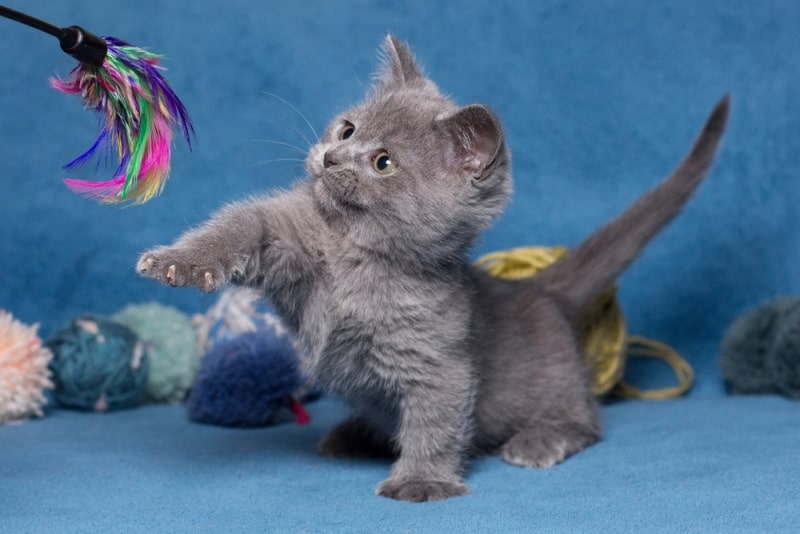
Kittens will spend most of their time in bed for the first 4 weeks. They’ll soon start to explore their new environment on wobbly legs as they work on improving their coordination. They won’t need much exercise before they tire out and head back to bed for something to eat and a nap!
Keep the area where your kittens exercise pretty small, so there’s less chance of them getting into trouble. You can give them a few toys at this point. Kittens should be allowed to choose when they want to exercise, so make sure they can always leave their bed from 4 weeks onward.
Socialization
Kittens will usually learn socialization skills from their mother. If your kitten is brought up without their mother cat, they need help to develop their socialization skills. If you have a single foster kitten, you may want to see if you can find other kittens to play with them if your vet recommends that as a possibility.
You can also develop a kitten’s socialization skills by allowing them to interact with various people and other animals and expose them to different sights and sounds. Making these experiences positive by rewarding your kitten with their favorite treat will help them grow into a confident adult cat.

Vaccinations
Kittens will be due their first vaccinations at roughly 6 weeks and again at 12 weeks. Recommended vaccinations will vary depending on your location but can include:
- FVRCP: A core vaccine that covers feline viral rhinotracheitis, calicivirus, and panleukopenia
- Rabies (core): Protects against rabies, a fatal virus that can be transmitted to humans
- FeLV (optional): Protects against feline leukemia virus
- FIV (optional): Protects against feline immunodeficiency virus

How Do I Know If My Kitten Is Sick?
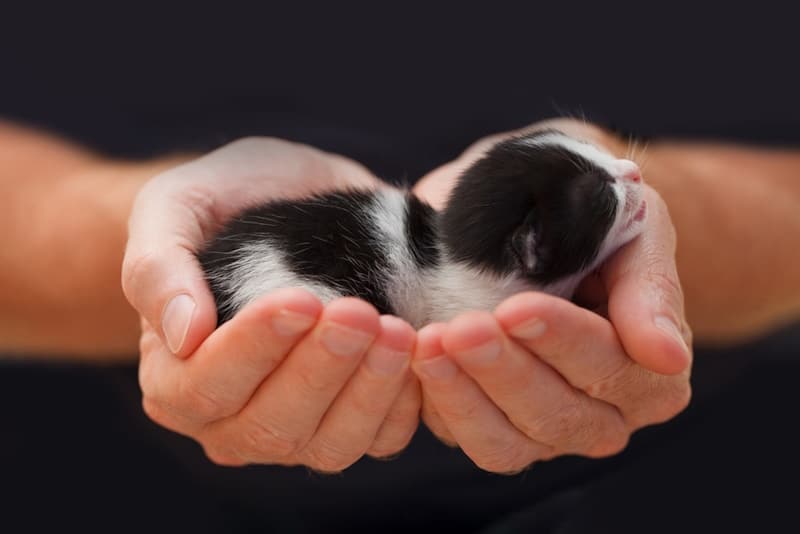
Keep a close eye on your kittens; if anything seems out of the ordinary, contact your vet for advice. Newborn kittens are defenseless and fragile. As their tiny bodies grow and mature, they’re also working on building a robust immune system to fight off infections. Until 12 weeks of age, a kitten won’t have a fully functioning immune system. They can pick up a few different illnesses during this time. The main things to watch out for with newborn kittens are the following.
- Upper Respiratory Tract Infection: This is a common illness for kittens, especially those who may have been abandoned or born outside. Abandoned kittens often haven’t had access to the vital first milk or colostrum from their mothers. This can make it more likely that they pick up infections. The signs of an upper respiratory tract infection include decreased appetite, heavy breathing, sneezing, runny eyes, and a discharge from the nose. They may also be lethargic. Kittens with a respiratory infection may not need antibiotics, but they will need veterinary help.
- Fleas: They are common on small kittens, and as they’re too young for conventional treatments, you’ll have to remove the fleas manually. You can bathe each kitten using a mixture of warm water and pure castile soap. In an emergency, Dawn dish soap can also be used. Don’t use other dish soap brands, as they contain irritants. After bathing, ensure the kittens are kept warm until fully dry. You can also use a flea comb to remove fleas, but some will inevitably jump off!
- Dehydration: A newborn kitten can become dehydrated if they’re not drinking enough milk. A kitten’s urine should usually be a pale straw color. If it’s any darker, they may be dehydrated. Another way to test for dehydration is to pull up the skin between their shoulder blades. If it quickly drops back into place, they’re fine. If their skin remains pulled up, the kitten is dehydrated. Speak to your veterinarian; they may recommend subcutaneous fluids or a supplement you can add to your kitten’s formula.
Newborn kittens that have been abandoned should be taken to the vet for an assessment. After that, either speak to your vet if you think the kittens have picked up an illness or schedule another wellness check at around 9 weeks when their first set of vaccinations is due. Kittens should have a booster vaccination at 12 weeks old. At this point, the critical time has passed.
Conclusion
The rewards of watching a tiny, helpless newborn kitten grow into a strong, playful 4-month-old kitten ready to leave for their new home are huge. But there’s also a great deal of hard work involved! Looking after newborn kittens takes time and dedication and isn’t easy.
By following this guide, you’ll have all the information you need to care for your newborn kittens. Getting your vet involved is always a good idea, and local shelters may also be happy to provide advice. If there are any experienced kitten fosterers in your area, it can be a great way to learn new techniques and pick up plenty of advice. If you’ve ever raised a kitten from a newborn, let us know what it was like!
See Also:
Featured Image Credit: Rudak Hanna, Shutterstock