


Inappropriate elimination can be difficult to deal with, resulting in ruined belongings and strained relations between cats and their favorite people. It’s one of the most commonly reported behavioral problems in cats.
Litter box issues are often caused by stress, which is usually linked to environmental factors. Providing comfortable, feline-friendly places for cats to relieve themselves is one of the first steps to fixing inappropriate elimination. Once the environmental issues are rectified, cats usually return to their litter boxes as long as there are no underlying health concerns.
Cats can develop aversions to their litter boxes, which can be based on one factor or a combination of several. It sometimes requires trial and error to find what’s right for your cat. Below, you’ll find helpful tips to retrain your cat to use the litter box.

The 13 Tips to Retrain a Cat to Use a Litter Box
1. Keep the Litter Box Clean
Keeping your cat’s litter box as clean as possible is essential. Cats can smell far better than humans, and the litter box odors can quickly become overwhelming. Daily scooping is necessary for clumping and non-clumping products, and the litter must be regularly thrown out and replaced.
Litter boxes also need to be cleaned weekly with soap and water to eliminate bacteria and odors. Most models last several years, but if the plastic retains odors after cleaning, replace it with a new litter box.
Combating tough cat litter smells is an ongoing battle for pet parents but luckily, there are products out there designed to help! Two products that significantly reduce odors are the Hepper Litter Additive and the Hepper Enzyme Spray. At Catster, we’ve admired Hepper for many years and decided to take a controlling ownership interest so that we could benefit from the outstanding designs of this cool cat company!
Image
Product
Details
Best Enzyme Cleaner

Hepper Advanced Bio-Enzyme Pet Stain & Odor Eliminator Spray
CHECK PRICE
Best Litter Additive
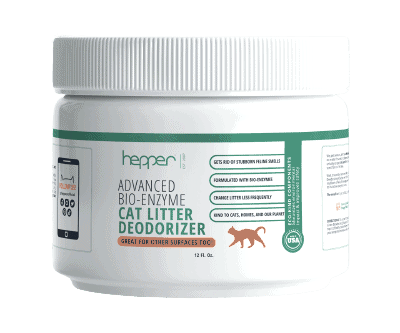
Advanced Bio-Enzyme Cat Litter Deodorizer
CHECK PRICE
2. Clean Up Accidents Thoroughly
If your cat uses the bathroom on the floor or carpet, you can use an enzymatic cleaning product that prevents them from returning to the same spot. Stay away from cleaners that have ammonia or other toxic ingredients.

3. Schedule a Medical Check-Up
Make sure to take your cat for a checkup to ensure that their elimination problems aren’t related to a health issue. Some health problems can prompt cats to use the bathroom in inappropriate places, and they must be treated promptly before they get worse.
4. Determine the Type of Litter Your Cat Prefers
Cats have distinct preferences about the type of litter they use, but many prefer unscented, clumping clay formulas. If you’re not sure what type of litter your cat likes, you can experiment with a few types to see which they prefer. However, some materials require special litter boxes with liners to collect the urine.
5. Try Different Litter Box Styles
Cats can be picky about the type of litter box, but large, uncovered models are the most common. They provide cats with clear views of what’s going on around them.
However, some cats are more comfortable using covered boxes, and it may be helpful to provide both types to see which one your cat prefers.

6. Think About Location
The litter box’s location can be important to some, but not all, cats. Most cats prefer their litter boxes to be located away from their food and water bowls, and they typically don’t enjoy using the bathroom in places where they can be easily surprised.
Placing the box in a quiet area away from noisy appliances is ideal.
7. Determine if You Need Multiple Litter Boxes
If your cat is older or has trouble getting around, you can place a few litter boxes in multiple locations around the house to make it easy for them to get to the bathroom. You can put them on every floor if you live in a home with stairs. Also make sure they can easily get in and out of the litter box if they have mobility problems.
If you have more than one pet, provide at least one litter box per cat and one extra so your cats don’t need to share bathroom facilities. It can prevent resource competition, which is stressful, particularly for the cat on the receiving end of the exclusionary behavior.

8. Make Preferred Elimination Locations Unattractive
Cats that like to pee in specific spots can be deterred by making the area less inviting. Upside-down carpet runners can work since many cats don’t like to put their paws on the little bumps and aluminum foil is also sometimes used to deter cats. Placing some dried cat food in the area may also help prevent your cat from continuing to use the location as a bathroom.
9. Avoid Punishment
Litter box issues can emerge when anxious cats aren’t comfortable in their environments. They can be remedied by determining what is upsetting your cat and resolving it.
For instance, moving the litter box to an area with less foot traffic provides more privacy and convinces your cat that they’re in a safe location. Punishment rarely works with cats, can increase their stress, and makes further litter box issues more likely.
10. Try Different Litter Depths
Many cats prefer to have about 2 inches of litter in their boxes. However, it depends on your cat’s preferences, and some cats may prefer far more litter in their boxes than others.

11. Use a Large Litter Box
Cats generally like nice, roomy litter boxes with plenty of space to dig and turn around. Providing a larger litter box may change your cat’s opinion about their bathroom facilities.
12. Avoid Using Liners in Standard Litter Boxes
Although litter box liners are required for some types of litter, they shouldn’t be used with clay litter in standard models. Some owners think they’ll have to scoop the waste less if they have liners, but daily scooping reduces odors and makes the box more appealing to your cat.
13. Get Help If You Need It
If you’ve ruled out medical issues and tried everything under the sun, but still can’t seem to get your buddy to head back to their litter box, consider enlisting the help of a veterinary behavioral specialist. They can identify what’s causing the problem and create a plan to retrain your cat to use the litter box.
If you need to speak with a vet but can't get to one, head over to PangoVet. It's an online service where you can talk to a vet online and get the advice you need for your pet — all at an affordable price!


Conclusion
Inappropriate elimination is a common issue in cats, but it can be corrected by visiting your vet for an examination and providing your cat with bathroom facilities they’re happy to use in an environment that meets their needs.
After determining that the problem isn’t related to a health issue, you can use our tips to convince your cat to return to the litter box. However, veterinary behaviorists can help if your efforts are unsuccessful.
See Also:
- How to Get Rid of Cat Pee Smell: Tips for Every Surface
- How To Litter Train An Older Cat: Vet-Approved Steps
Featured Image Credit: Lightspruch, Shutterstock
 The 13 Tips to Retrain a Cat to Use a Litter Box







2 Responses
Karissa my cat is not using the litter box and using the area with my new carpet to do bathroom on
Hi Barry, we are sorry to hear about Klarissa, have you tried changing the litter? Also, we recommend cleaning that carpet very well using an enzymatic cleaner to remove any leftover scent. Please see some more tips and recommendations here:
Why Is My Cat Pooping Outside the Litter Box? 5 Vet-Reviewed Reasons & Tips to Stop It: https://www.catster.com/cat-behavior/why-is-my-cat-pooping-outside-the-litter-box/
Why Is My Cat Peeing Outside the Litter Box? 7 Possible Vet-Approved Reasons:
https://www.catster.com/cat-behavior/why-is-cat-peeing-outside-litter-box/
Why Does My Cat Pee In The Litter Box But Poop On The Floor? 9 Vet-Reviewed Reasons & Solutions: https://www.catster.com/cat-behavior/why-cat-pee-in-litter-box-poop-on-floor/
We hope this helps!