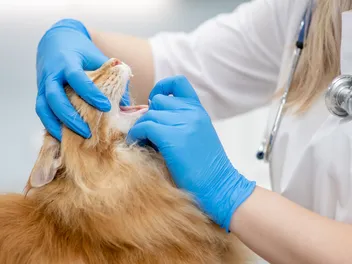
How Many Teeth Does a Cat Have? Vet-Approved Facts & Infographic



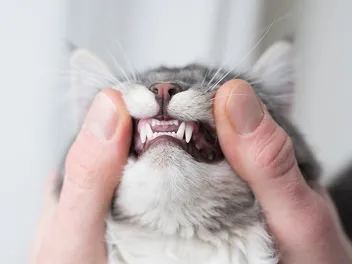
If you've ever watched your cat eat or peered into their mouth, you'll have noticed their impressive pearly white teeth. Cats have roughly as many teeth as us humans, with kittens sporting 26 deciduous (baby teeth) and adult cats boasting 30 permanent teeth. Feline teeth are much sharper and more violent looking than our teeth, as they lack flat surfaces to grind plant matter but have jagged edges that evolved to help them hunt, kill, and eat prey.
To be more specific, cats have four distinct types of teeth that work together by performing subtly different functions. As a quick reference, let's see what these teeth are and what they do!

Types and Number of Cat Teeth
- Canines: A cat's top two canines are the wickedly jagged teeth used to puncture and trap prey in the wild, but they're less used by modern house cats that dine primarily on dry kibble.
- Incisors: Cats have six top incisors and six bottom incisors. These tiny teeth are used to help grip prey, pick up food, and for grooming.
- Premolars: Your cat has six top and four bottom premolars, which are wider teeth used to break up large food chunks.
- Molars: At the back of their mouths, cats have two top molars and two bottom molars. These are used in nature to crush bones, but they're also useful for crushing dry cat food.

What Are Cat Teeth For?
Cat teeth are a marvel of evolutionary history, honed through millions of years and countless feline iterations into nearly perfect hunting mechanisms for our modern house kitties. Felines are true carnivores with sharp teeth that reflect that, even if your cat doesn't hunt their own prey. Canine teeth are also essential for self-defense, and both premolars and molars are used for crushing bone and other hard foods.
Do Cats Teethe?
Yes, cats have a teething phase like baby humans and young puppies, as their baby teeth grow at 3 to 4 weeks old. These deciduous or milk teeth will start to fall out at 3 to 4 months, when your cat is growing out of kittenhood. You probably won't even notice if it happens unless you stumble across one of their milk teeth! Teething can be accompanied by mild but harmless signs that resolve with time. If you are concerned about any signs your kitten is showing, though, get them checked out by your vet to rule out any other problems.
Common Kitten Teething Signs:
- Drooling
- Red or inflamed gums
- Reduced appetite
- Eating hard food slowly/with difficulty
- Chewing on soft objects
- Signs of discomfort, such as rubbing/pawing at their face
If your cat is showing any of these signs, we recommend speaking with a vet.
Cats vs. Other Animals: Who Has the Most Teeth?
Cats have impressive teeth designed for hunting and killing, but you might be wondering whether other animals have more teeth or how their teeth are different. For instance, do cats have more or less teeth than dogs or humans?
Cat vs. Nature Teeth Comparison:
- Dogs: 42 teeth
- Humans: 32 teeth
- Cats: 30 teeth
- Tigers: 30 teeth
- Lions: 30 teeth
- Grizzly bears: 42 teeth
- Snails: 14,000 microscopic "teeth"
- Great white shark: 300 teeth
The Importance of a Cat's Dental Hygiene
Helping your cat keep their teeth, gums, and mouth in healthy condition will stave off periodontal (gum) disease, which plagues around 70% of cats by the time they reach 3 years old. Periodontal disease is inflammation and infection of tissues surrounding the teeth caused by the accumulation of plaque, tartar, and gingivitis. This is caused in part by poor dental hygiene. Periodontal disease is pernicious and can result in permanent dental damage. If left untreated, teeth can be lost due to the damage and loss of their supporting tissues.

How to Improve Your Cat's Oral Hygiene
The best way you can help your cat fight off dental diseases like periodontal disease and gingivitis is to aid your cat in keeping their mouth clean. To be more specific, you can refer to our shortlist of feline dental hygiene problems right here.
Feline Dental Tips:
- Make sure your cat has access to fresh water at all times; water helps wash away lingering food debris that can contribute to poor oral hygiene and dental disease.
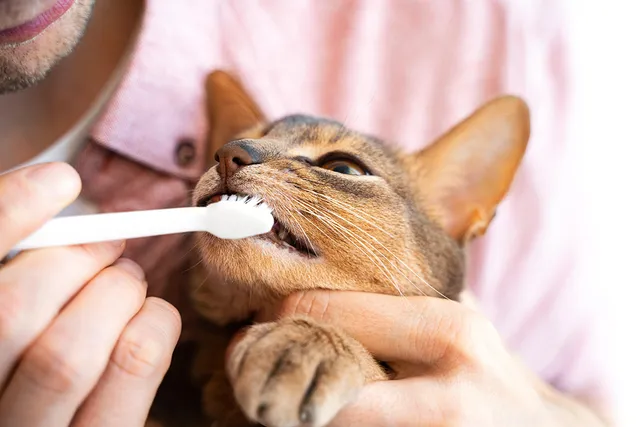
- Brush your cat's teeth, ideally daily, and gently massage their gums to remove plaque and food debris and keep the gums free of harmful bacteria. Teaching your cat to accept tooth brushing can take some time and should always be introduced slowly and gently.
- Treat your cat to dental treats approved by the Veterinary Oral Health Council, which are proven to be effective at improving your cat's oral health.
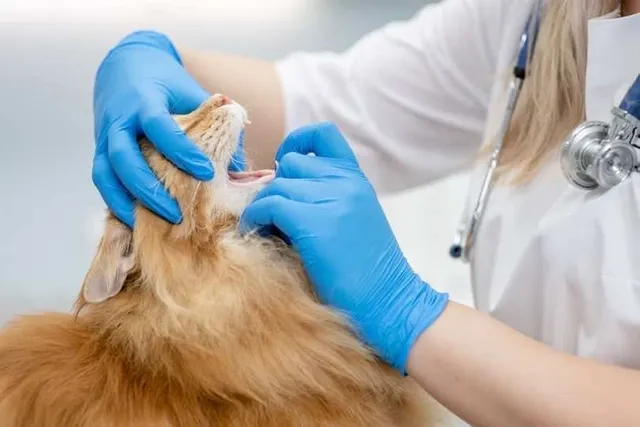
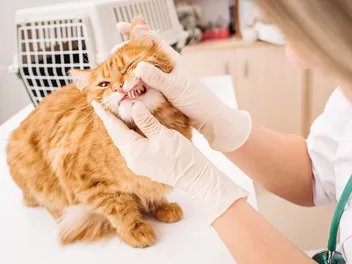
- Take your cat to your vet for an annual checkup or straight away if you notice any changes in their behavior, eating, or grooming habits. They'll be able to provide more personalized information on your cat's dental health and diagnose early signs of dental conditions.

Final Thoughts
Cats have 30 teeth, the same as modern lions and tigers but fewer than dogs or bears. A cat's teeth are finely tuned by millions of years of evolution to rip and tear their prey and even strategically trap prey by impaling it. As our feline companions, though, they mostly just use their teeth to grind up kibble and mock hunt around the house.
See also:
Sources
Featured Image Credit: Oscar Wiedemeijer, Shutterstock
Expert cat care, straight to your inbox
News, insights, and useful advice, delivered to you.

No spam — unsubscribe anytime.
By signing up, you agree to our Terms & Conditions and Privacy & Cookies Policy.
How useful was this post?
Click a star to rate. You can leave written feedback afterwards. (We read all feedback.)
Codee Chessher is a freelance writer with extensive knowledge on a variety of subjects that include travel, DIY, pets, and more. He has a colorful past but the written word was always his first love. He believes there's nothing a well-worded sentence can't accomplish!
When not writing, Codee enjoys reading fantasy novels, tackling DIY projects around the house, and memorizing useless pop culture trivia. He has lived in many places around the US, and most recently resides in northern Mexico.