Get

In Your Inbox

Catster is reader-supported. When you buy via links on our site, we may earn an affiliate commission at no cost to you. Learn more.

Cat Losing Whiskers: Is It Normal & Should I Worry? Vet-Reviewed Facts

Share

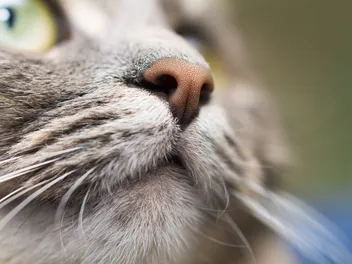
cat looking up

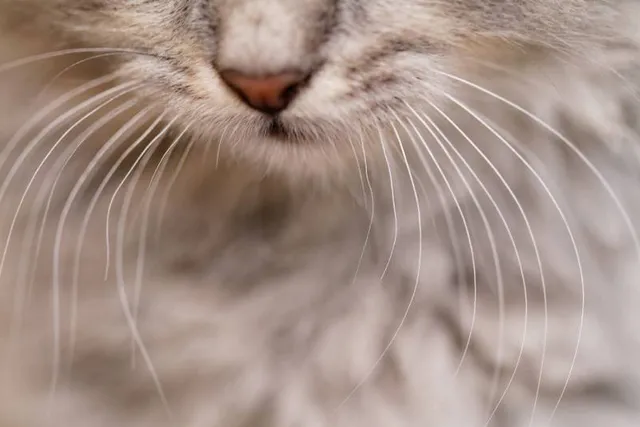
It can be deeply worrying if your cat’s whiskers start to fall out. While this phenomenon could be cause for concern, a cat losing whiskers naturally happens as part of the shedding process and they will normally regrow them. Unlike humans, they do not naturally lose whiskers as they age, but you may see some graying.

Naturally, you want the best for your cat and ensure that they are healthy and free from stress and distress, which is why you’re concerned about the loss of their whiskers. Read on to see whether there is cause for concern, what you can do if your cat is losing whiskers suddenly, and the possible causes.

divider 2 cats

Why Do Cats Need Whiskers?

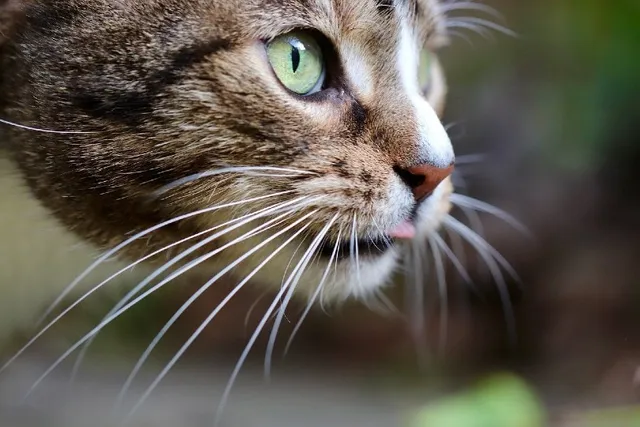
Whiskers are incredibly important to cats. They are highly developed sensors and are used throughout the day. They enable navigation through a cat’s environment, working similarly to an insect’s antennae. If a cat can fit their whiskers through a gap, they should be able to fit the rest of their body through.

They also help the cat land on their feet because they work as proprioceptors that send messages to the brain to inform them of a change in the position of their limbs. Without whiskers, a cat can lose balance, get stuck in small spaces, and lose confidence in their ability to traverse the local surroundings.

You are free to use this image but we do require you to link back to Catster.com for credit

Do Cats Shed Whiskers?

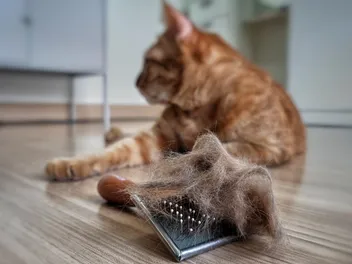
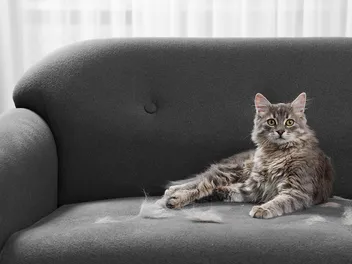
A cat’s whiskers naturally grow, shed, and regrow. They are continually being replaced, but your cat will only usually shed one or two at a time. However, it is unlikely that you will ever notice your cat shedding a whisker. If you see one on a couch or the floor, you may mistake it for ordinary hair.

divider 2 cats

Other Causes

While you won’t notice your cat losing one or two whiskers, you will notice if they start to fall out in clumps or larger volumes. If that occurs, it’s unlikely that it’s due to natural shedding, and one of the following reasons may be the culprit.

1. Allergic Reaction

Cats suffer from allergies just like we do. While we have runny noses and puffy eyes, cats usually show an allergic reaction through skin inflammation and other dermatological problems. Therefore, if your cat is losing whiskers, it could be a sign of an allergy.

In particular, it is likely to be a food allergy or an allergic reaction to something in the cat’s local environment. It is more common for a flare-up to occur in the area that comes into contact with an allergen, but considering a cat’s whiskers are often the first thing through a gap and into a new area, it could lead to a loss of whiskers.

tortie cat eating from metal bowl
Image Credit: Jaromir Chalabala, Shutterstock

2. Local Infection

Bacterial and fungal infections can affect your cat in the same way as an allergic reaction. They can experience a flare-up on their skin or hair. It can also cause their whiskers to fall out. Even ringworm, a fungal infection, can cause your cat to lose whiskers.

You will need to seek veterinary advice as soon as possible, and the vet will likely treat the problem with medication.

If you need to speak with a vet but can't get to one, head over to PangoVet. It's an online service where you can talk to a vet online and get the advice you need for your pet — all at an affordable price!

PangoVet_Mention-in-Content for PangoVet2 save money

3. Physical Trauma

If your cat suffers a physical wound, it could affect their whiskers. Specifically, if your feline has a wound around the base of their whiskers, it could cause some to fall out. Injuries can be caused by other animals, including cats, dogs, and wildlife.

It could be caused by your cat rubbing against trees, buildings, and other objects that might have a sharp edge. The only real way to prevent such accidents is to stop your cat from going outdoors unaccompanied.

cat-rubbing-its-face-on-wood
Image Credit: bombermoon, Shutterstock

4. Feline Acne

Surprisingly, cats suffer acne in much the same way as their owners can. It usually starts at the chin, but if an outbreak is bad enough, it will make its way across the cheeks to the whiskers. Acne can be prevented by using metal or ceramic feeding bowls and ensuring they are washed frequently. One of the leading causes of feline acne is a build-up of bacteria making its way from the bowl to your cat’s face.

divider 2 cats

Will They Regrow?

In most cases, a cat’s whiskers will regrow. You must ensure that the cause of the whisker loss has been treated. You can take your cat to the vet and consider an elimination diet to determine if they have any allergies.

Look for signs of injuries and treat fleas, ringworm, or other infestations that crop up. If your cat suffers from acne, try changing to metal or ceramic bowls and wash them every day.

divider 2 cats

Conclusion

A cat relies heavily on its whiskers, for everything from navigating its local surroundings to ensuring that it can balance effectively and efficiently. Although a cat does naturally shed and regrow whiskers, if they’re losing too many quickly, it could be a sign of illness, infection, or another problem.

If you can identify the cause, such as acne or an allergic reaction, take steps to remedy the problem or consult a veterinarian to help resolve the problem.


Featured Image Credit: Melani Marfeld, Pixabay

Want content like this delivered to you?

Sign Up For Our Newsletter

News, insights, expert advice, and everything cat

* By submitting, you agree to our Terms & Conditions and Privacy & Cookies Policy.


How useful was this post?

Click on a star to rate (you can leave written feedback after clicking submit)

Help us improve Catster for pet parents!

Your feedback really matters.

What did you like about this post? Also how can we improve it?

Join the conversation

4 Responses

  1. I just noticed that my 16.5 year old cat lost the whisker above his left eye. I don’t see other symptoms. Should I be concerned?

    1. Hi Michel, while it is normal for cats to shed whiskers, they usually do only a couple at a time. Keep a close eye on your cat for any signs of concern and if you wish, feel free to book a one-on-one consultation at www.pangovet.com for advice and tips. Thanks for reading us!

  2. My cat is seemingly losing a whisker a day. There's no visible reason; no infection or irritation. There's no change in his environment. I've been more stressed, but he hasn't seemed stressed at all. I don't know if I should be concerned or not.

    1. Hi Amanda, one whisker a day is not normal, consider taking your cat to the vet to rule out medical causes. Whiskers are important for cats.

Leave a Reply

You’re very welcome to leave a comment or question. Please know that all comments must meet our community guidelines, and your email address will NOT be published. Let’s have a positive and constructive conversation.


Talk With A Vet Online

Peace of mind,
anywhere, anytime

Affordable vet advice

Why Chicken Bones Are More Dangerous for Cats Than Most Parents Realize

Chicken bones seem harmless enough, but for cats, they can cause serious damage quickly. Whether your cat swiped a piece off the counter...

Fantastic Pet Pantries and Where to Find Them

Let’s face it: times are really tough right now, and those of us in the 99% are struggling with the cost of just...

Ask Dr. Paola – Help! My Cat Refuses to Drink Water! (April 13, 2026)

Welcome to our “Ask Dr. Paola” series, where every Monday we bring expert advice straight from Dr. Paola Cuevas (MVZ) to help our...

Why Healthy Cats Still Vomit Sometimes (And How to Respond)

A cat that just vomited needs a specific kind of care, and the feeding decisions you make in the next few hours actually...

More related

How Far Can Cats Hear? Vet-Reviewed Facts & FAQ

Domestic cats are amazing creatures. They can jump five times their height, tap into the earth’s electromagnetic field to navigate, see minute movements...

Ovarian Remnant Syndrome in Cats: Causes, Signs & Treatments (Vet Answer)

You adopted your cat from a shelter, and she was already spayed. Now, several years later, she yowls and acts like she could...

Can Cats Eat Cabbage? Vet-Reviewed Health and Nutrition Advice

With all of the health benefits that cabbage is said to have, you may wonder if it is safe to give some to...

7 Vet-Verified Facts About White Cats You’ll Love to Learn

While all cats are incredible and perfect, white cats have their own special magic. Some cat-loving people claim that white cats tend to...

Keep reading

Crave Cat Food Review 2026: Recalls, Pros & Cons

Crave Cat Food is manufactured by Mars Petcare and has been on the market since 2017. The brand currently offers a limited variety of dry foods, all of which are grain-free and high in protein. The food is affordable and...

Crave Cat Food Review

5 Types of Superfoods for Cats: Vet-Approved Foods to Benefit Their Health

There are various superfoods for cats that are available to help improve their diet and replenish their body with much-needed vitamins and minerals. Many of these superfoods are easy to access and can be found at most grocery or health...

top view of a cream maine coon cat eating dry and wet pet food from feeding dish

Can Cats Eat Mushrooms? Vet-Verified Facts, Risks & FAQ

If you’re cooking a delicious mushroom risotto, you might be surprised to find your cat brushing up against your legs and showing interest in your vegetarian dinner. You might even be tempted to give your cat a piece of mushroom,...

Can Cats Eat Mushrooms

14 Signs a Stray Cat Likes or Dislikes You (Vet-Reviewed)

Many people have a few cats that tend to hang up around their houses. Maybe they gather under your front porch or show up because they know they can get a good meal at your house. While some feral or...

stray cat sitting in the street

Is Your Cat Losing Teeth? What’s Normal & When to Worry (Vet-Verified)

Dental problems are a pretty big issue among cats. In fact, it is estimated that over two-thirds of cats over 3 have some degree of dental disease. However, losing a tooth doesn’t necessarily equate to a problem. So if your...

cat with open mouth and teeth

Cat Pancreas: Feline Anatomy Explained (Vet-Reviewed)

The inner workings of the feline body are similar to our own in many ways, but as you can imagine, there are also some significant differences. One of the similarities the human and feline bodies share is that they both...

vet checking up tabby cat

How to Tell if Your Cat Is Depressed: 9 Vet-Reviewed Signs to Look For

Although cats have a reputation for being aloof, they can actually feel a range of emotions. When a cat experiences significant changes in their life, they can develop signs consistent with depression. Although they can’t tell us how they are...

a sad or sick american shorthair cat with ears dropped on the sides

How to Keep Your Indoor Cat Happy: 12 Vet-Reviewed Tips

If you want your cat to live as long as healthfully as possible, keep them inside. Indoor cats not only tend live longer than their outdoor counterparts, but they’re exposed to fewer illnesses, infections, and injuries. They will inevitably require...

woman-playing-with-her-cat

Love Cats? So Do We! Join the Catster Community

Stay informed with expert pet care insights delivered straight to your inbox! Discover professional guidance on animal behavior, feeding tips, trusted product picks, and much more.


Sign up for the Catster Email Newsletter

Stay informed with expert pet care insights delivered straight to your inbox! Discover professional guidance on animal behavior, feeding tips, trusted product picks, and much more.