Burmese Cat Health Problems: 14 Vet-Verified Issues


Bringing a cat into your home is always a fun and exciting prospect, but it also involves learning a lot about your new furry friend. You’ll need to discover the kind of food they like to eat and what litter they prefer. You’ll also need to figure out how much grooming you’ll need to do for them. And, of course, you’ll need to be sure you’re taking care of their health by going to the vet regularly.
Besides going to the vet for regular check-ups and needed shots, is there anything else you can do so your cat lives its healthiest life? One excellent way to make sure your cat is at its best is by reading up on any possible future health problems they could have.
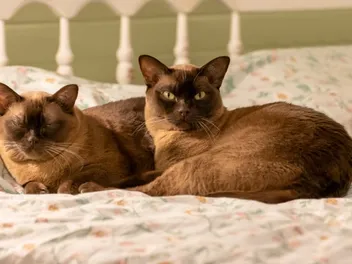
If you’ve just adopted (or are about to adopt) a Burmese, you should be aware of the following possible health issues they could one day have. This way, you and your new active, attention-loving pal can live life to the fullest!

The 14 Common Burmese Cat Health Problems
1. Burmese Head Defect
The Burmese head defect is, as the name suggests, a disease specific to the Burmese cat. And while a cat you bring home won’t have this, if you’re purchasing from a breeder before the kitten is even born, you need to inquire whether parent cats have been tested for the gene causing this.
What is Burmese head defect? This gene mutation affects how the head and facial area of cats are developed while in the womb. Because the defection isn’t conducive to life, kittens are stillborn. Both parent cats have to be carriers and pass on the gene for this to occur in kittens. However, if only one gene is passed on, a cat may still suffer from some cranium deformities.

2. Corneal Sequestration
The Burmese is prone to this eye disease that involves a piece of the cornea dying off. Once that piece has died, it will begin to take on a brownish color as the eye rejects it. While initially painless, if the cornea piece (or sequestrum) isn’t shed, the eye can become sore, develop infections or ulcers, and vision can become impaired.
Luckily, there is a treatment for this disease! If the sequestrum isn’t terribly large, you can try to help your cat shed it with the use of eye lubricants or ointments. However, most of the time, the solution will be surgery to remove the dead piece of the cornea. If you see discoloration in your Burmese’s eye, see your vet as soon as you can.
Signs include:
3. Demodicosis
This skin disease can be caused by three different types of mites that live in hair follicles. These mites typically get into the follicles after having been passed on from contact with the mama cat. While the immune system would keep these tiny things from causing issues in most cats, Burmese cats are more likely to have an immune system defect that makes them prone to having demodicosis. However, much like with fleas and ticks, mites can be treated if found. Depending on which type of mite is causing the problems, your cat can be treated with topical medications, antibiotics, or sulfur dips.
Signs that may appear are:

4. Diabetes Mellitus
Yep, cats can develop diabetes too, and the Burmese may be more likely to develop it (though it seems Burmese in Australia, New Zealand, and the United Kingdom are more prone than cats in other parts of the world). Diabetes in cats can occur due to obesity and lack of exercise, so make sure you stick to your cat’s diet (don’t give in to the pleading eyes!) and play with them at least 15 minutes a day. If you see any signs in your feline, you should talk to your vet about testing for diabetes. Treatment for diabetes in cats is much the same as with people, and depending on the severity, it can be treated with diet, weight loss, or insulin.
Signs of diabetes include:
5. Endocardial Fibroelastosis
Endocardial fibroelastosis has historically been found more often in the Burmese and Siamese breeds. What is this heart disease that affects kittens? This illness causes a thickening of the endocardium resulting in damaged heart valves. The thicker endocardium also leads to a heart murmur that hampers the heart's ability to grow. Eventually, congestive heart failure occurs.
While there are treatments that can help an affected kitten live longer, sadly, most die before they are 6 months old. Because this disease is genetic, if you’re obtaining a kitten from a breeder, you should check if the family line has been tested before purchase. And because a heart murmur is the only sign to be noticed, have your vet check your kitten’s heart soon after you get it.
Noticeable signs are:
6. Eyelid Agenesis
This eye disease is a birth defect that occurs when the upper eyelid doesn’t properly form. This deformation means the eye is constantly exposed, making it easier for dust, hair, and more to enter the eye. And it means the eye is continuously dry, which can result in irritation and redness. Long term, this defect can lead to corneal ulcers, then scar tissue, and then blindness.
If eyelid agenesis is mild enough, it may be treatable with surgery to remove any eyelashes by rubbing the eye or by applying eye lubricant. In most cases, though, eyelid reconstructive surgery will be necessary. If your kitten has been born with eyelid agenesis, talk to your vet about next steps sooner rather than later.

7. Feline Hyperesthesia Syndrome (FHS)
Feline hyperesthesia syndrome (FHS) is also known as twitchy cat disease or rolling skin syndrome. It causes muscle contractions in your pet that they are unable to control and can also affect a feline’s behavior. Not a ton is known about this disease, but Burmese are more prone to it than other breeds.
Most believe this condition comes about because of either neurological (neuropathic pain or seizures), psychological (attention-seeking behavior), or dermatological (allergies) reasons. If you see signs of this in your feline, tests will need to be done to rule out other conditions before they can be diagnosed. Treatment for FHS involves changes to the cat’s environment, medication, and behavior modification. With these, episodes should be reduced.
Signs to watch for include:
8. Feline Lower Urinary Tract Diseases (FLUTD)
FLUTD isn’t a singular disease but a category of illnesses that affect the lower urinary tract of felines. These conditions can be urinary tract infections, interstitial cystitis, bladder stones, blockages, etc. In particular, Burmese may be more likely to develop. Because all diseases under the FLUTD umbrella have similar signs, testing will need to be done to discover the exact underlying cause. Once a diagnosis is formed, your pet can be treated in a variety of ways.
FLUTD signs include:
9. Feline Orofacial Pain Syndrome
This disease is seen primarily in Burmese and involves oral and facial pain. Though it’s not known exactly what causes it, it has been theorized that the issue stems from affected cats having trouble processing sensory information, which leads them to scratch and paw at their face and mouth.
Feline orofacial pain syndrome can result in face and tongue mutilation if not treated. Because there’s no specific test to diagnose this disease, it will be a process of elimination, but once determined, it can be treated with a few methods, including keeping your kitty from attacking their face or tongue.
Signs of this can include:

10. Gangliosidosis
Gangliosidosis is an inherited condition seen in Burmese caused by the lack of an enzyme that helps metabolize certain fats. Because affected kittens can’t process these fats, the fats build up in the system causing neurological symptoms. Unfortunately, this condition is fatal, with most kittens dying before the age of 10 months. This is yet another thing you’ll want to be sure to question a breeder about before buying a kitten.
Signs of gangliosidosis include:
11. Glaucoma

You’re probably familiar with glaucoma, as it can occur in humans too, but this eye disease is a painful one that can lead to blindness if not treated. It’s caused by a watery fluid in the lens of the eye that doesn’t drain properly. Glaucoma can result in pain that is severe (though pet owners don’t always notice this pain due to felines’ tendency to conceal it), and the eye may also look swollen.
It’s wise to have your cat’s eyes checked during routine physical exams, but if signs of glaucoma suddenly appear, it should be checked straight away. While no cure exists for the condition, it can be treated in various ways, including eye drops and steroids.
Signs may be a challenge to notice but can include:
12. Hypokalemic Polymyopathy
Hypokalemic polymyopathy happens when potassium levels in the blood are too low. What causes these low potassium levels? There are several different reasons, including not eating enough, severe diarrhea or vomiting, chronic kidney disease, or because it’s inherited (as seen in some Burmese). It may not sound like much of a big deal, but low levels of potassium can cause damage to the kidneys and cause muscle weakness (which could lead to respiratory issues).
It’s easy to diagnose with a blood test, but you usually won’t see signs until the illness progresses further. So long as it’s caught fairly early, hypokalemic polymyopathy is pretty simple to treat; you’ll just have to give your cat potassium supplements to raise the levels. Your cat will also likely need routine blood tests from then on to check its potassium so issues don’t occur again.
Signs can include:
13. Pica
Pica is another condition you’ve probably heard of happening in people, but Burmese are quite prone to it too. This condition is believed to be genetic and is one where a cat eats non-food items such as leather, foam, wool, cloth, etc. Because these are things they shouldn’t be eating (and can’t digest), it can result in vomiting and blockages in the gastrointestinal tract.
You likely won’t know your cat has it until they eat something and get sick. Once discovered, though, there are ways to help your feline friend not eat stuff they shouldn’t. You’ll need to limit access to what they’ve been nomming on, stimulate them with play and food puzzles, or offer them a variety of tasty treats.
Signs of pica include:

14. Psychogenic Alopecia
This anxiety disorder can happen in Burmese more often than in other breeds. Psychogenic alopecia is when your cat excessively grooms themselves to the point that they lose hair and go bald in places. Think of it as a bad nervous habit, like chewing on your fingernails. This could happen because the cat is bored, lonely, afraid of another pet or person, has moved to a new place, and more.
Because there’s not a test for psychogenic alopecia, it will be a matter of ruling out other potential underlying conditions, such as allergens or mites. This condition can be treated with a combination of behavioral and medication therapy.
Signs of psychogenic alopecia will include:
If you suspect that your cat is suffering from any of the conditions on this list, it's best to contact your vet for more information and determine your next steps.
Conclusion
Don’t worry about getting a Burmese just because this list is on the longer side! Listed illnesses aren’t something your cat will absolutely develop but simply things the Burmese breed is more prone to getting. All cat breeds will have predispositions to certain diseases, and the Burmese is no different. Just keep an eye on your feline’s health and enjoy life together!
See also:
Feline Orofacial Pain Syndrome (FOPS): Signs, Causes & Care (Vet Answer)
Do Burmese Cats Shed A Lot? Plus Tips for Maintaining A Healthy Coat
Sources
Featured Image Credit: Seregraff, Shutterstock
Expert cat care, straight to your inbox
News, insights, and useful advice, delivered to you.

No spam — unsubscribe anytime.
By signing up, you agree to our Terms & Conditions and Privacy & Cookies Policy.
How useful was this post?
Click a star to rate. You can leave written feedback afterwards. (We read all feedback.)
Misty Layne lives out in the woods in small-town Alabama with her two Siamese cats —Serafina and Jasper. She also has an array of stray cats, raccoons, and opossums who like to call her front porch home. When she’s not writing about animals, you’ll find her writing poetry, stories, and film reviews (cats, by far, her favorite writing topic, though!). In her free time, Misty enjoys chilling with her cats, playing piano, watching indie and foreign films, photographing abandoned places, and catching up on her never-ending TBR list.