Are ZZ Plants Toxic to Cats? Vet-Reviewed Houseplants Examined


In this article
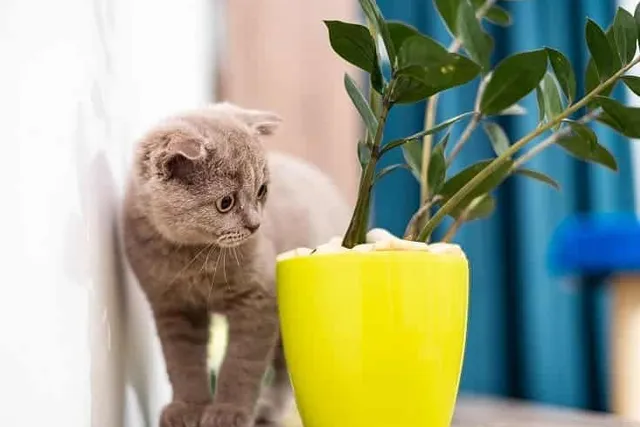
Famously known as the ZZ plant, the Zamioculcas zamiifolia is a popular houseplant due to its ability to thrive even in unfavorable conditions. These hardy plants grow to about 3 feet tall indoors and have bright-green glossy leaves that some people think resemble feathers. The plant is typically fuller at the base and tapers off at the top. People love growing ZZ plants in their homes because they don’t have to be watered often, they can handle both indirect lighting and full sunlight while growing, and they’re hard for kids to destroy.
However, before deciding whether to bring one of these beautiful plants into your own home, you should know that ZZ plants are toxic to cats and dogs. Let’s take a look at how and why ZZ plants are toxic to cats and the safe alternatives out there.

Why Are ZZ Plants Toxic to Cats?
The ZZ plant is part of the Araceae family.1 Unfortunately, all the plants belonging to this family contain a compound called calcium oxalate. This compound is toxic to cats, dogs, and even humans. It’s made up of the same materials that cause kidney stones in humans.
This compound is insoluble, so the body cannot absorb it or easily pass it through the body. Calcium oxalate is needle-sharp, which is why the compound causes damage to cells and organs within the body. Luckily, cats don’t typically eat the ZZ plant or other plants within the same family, so internal damage is incredibly rare.

How Toxic Are ZZ Plants to Cats?
Fortunately, exposure to a ZZ plant is typically not lethal to cats. However, simply rubbing up against the plant or chewing on a leaf can cause unpleasant side effects, such as drooling, vomiting, a loss of appetite, and pawing at the mouth. These symptoms are temporary but can be alarming as they develop. If your cat gets a hold of a ZZ plant and shows signs of intoxication, contact your veterinarian for guidance and recommendations for treatment. Allow your kitty to rest, and encourage them to drink water until the symptoms subside. Offering a little milk or yogurt can help bind the crystals.

What Are Safe Alternatives to the ZZ Plant?
While ZZ plants are attractive and easy to care for, they aren’t the only houseplants with those qualities. There are many beautiful houseplant options available that are simple to take care of and are safe for cats. Here are several options:
- Spider Plant — Resilient, air purifying, easy to care for
- Ponytail Palm — Large leaves, friendly to cat swats
- African Violet — Colorful, likes indoor sunlight, blooms in the spring and summer months
- Boston Fern — Requires minimum maintenance, can handle cat playfulness
- Orchid — Elegant looking, prefers partial light, requires watering weekly
- Venus Flytrap — Fun to watch in action, extremely low maintenance, does best with distilled water at watering time
- Polka Dot Plant — Has delicate leaves, native to Madagascar, can easily live in an indoor pot
- Friendship Plant — Has an intricate design, small, requires little light
- Gloxinia — Requires high sunlight, has beautiful flower blooms, thrives on liquid plant food
- Rattlesnake Plant — Has distinctly shaped leaves, needs little water, has vibrant leaves
It is a good idea to research each houseplant option to see which will do best in your home and which you are most comfortable maintaining.


A Quick Recap
ZZ plants are beautiful, but they are not the best choice for households where cats (or dogs) live. Luckily, there are plenty of gorgeous houseplant options to choose from that do not pose a threat to our feline family members. If you do decide to keep a ZZ plant in your house, place it in a room that your cat does not have access to.
Sources
Featured Image By: kyozstorage_stock, Shutterstock
Expert cat care, straight to your inbox
News, insights, and useful advice, delivered to you.

No spam — unsubscribe anytime.
By signing up, you agree to our Terms & Conditions and Privacy & Cookies Policy.
How useful was this post?
Click a star to rate. You can leave written feedback afterwards. (We read all feedback.)
Rachael has been a freelance writer since 2000, in which time she has had an opportunity to research and write about many different topics while working to master the art of fusing high-quality content with effective content marketing strategies. She is an artist at heart and loves to read, paint, and make jewelry in her spare time. As a vegan, Rachael is obsessed with helping animals in need both in her community and anywhere in the world where she feels she can make a difference. Animals also happen to be her favorite topic to write about! She lives off the grid in Hawaii with her husband, her garden, and her rescue animals including 5 dogs, a cat, a goat, and dozens of chickens.