Get

In Your Inbox

Catster is reader-supported. When you buy via links on our site, we may earn an affiliate commission at no cost to you. Learn more.

Are African Violets Poisonous to Cats? Vet-Reviewed Houseplant Safety Guide

Share

Catster_Are African Violets Poisonous to Cats

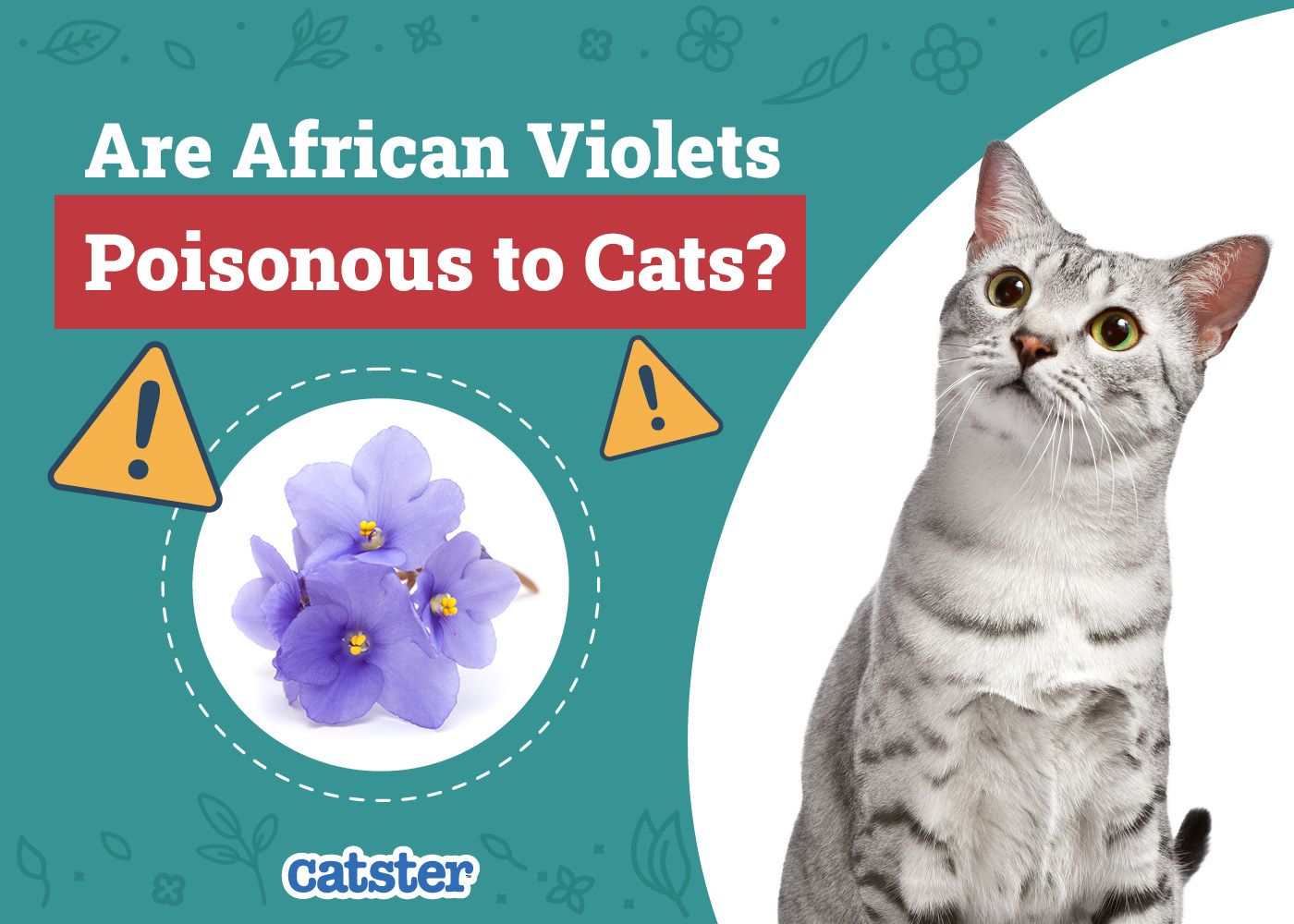
African violets are common houseplants that are relatively easy to care for. They have soft and fuzzy leaves and produce pretty and dainty flowers. Fortunately, African violets aren’t poisonous to cats, so these pet owners can have as many of them in their homes as they want. Continue reading to learn more.

divider 2 cats

About the African Violet

The African violet, or Saintpaulia ionantha, is one of the members of the Gesneriaceae family. Plants of this family, including cyrtudeiras and candy corn plants, are safe for cats and aren’t known to be toxic.

Aside from their quaint appearance and unique leaves, African violets are also popular because they’re pretty hardy if you know how to care for them. While they’re not quite for beginners, they provide just enough of a challenge for plant owners who are looking to expand their knowledge and level of care to the next step.

African Violet
Image Credit: Peggychoucair, Pixabay

divider 3 paws

Keeping Cats Away From African Violets

These plants can be enticing because of their soft leaves. While African violets aren’t toxic to cats, it can still be an inconvenience to find bitten leaves or a turned-over pot caused by a curious cat. Here are some things you can do to keep your cat away from a pot of African violets.

1. Make the African Violet Hard to Reach

african violet near window
Image Credit: O_Lypa, Shutterstock

One of the best ways to protect an African violet is to place it in a spot that’s difficult to reach. This can be a challenge, as many cats are agile and able to squeeze into tight spaces. Try to place the plant on a narrow surface that doesn’t provide enough room for your cat to stand on. Keep it away from other surfaces that cats can use to jump off of to reach it.

If you have a particularly determined cat, you may have to place the plant in a room with a door that your cat can’t access, such as a bedroom or office.


2. Use a Deterrent

There are several different kinds of cat-safe deterrents that you can use to discourage your cat from playing with plants.

One deterrent is cat tape. Cats don’t like the feeling of this tape on their paws, but it doesn’t do any damage to them. Surrounding the plant pot with cat tape can discourage your cat from picking at it.


3. Bring Home Cat Grass

cat eat young wheatgrass
Image Credit: QueenNuna, Shutterstock

If your cat just likes chewing on all kinds of plants, you can try growing some cat grass. Cat grass is actually beneficial and can help cats with digestion, reduce hairballs, and alleviate constipation.

divider 2 cats

Other Common Houseplants That Are Safe for Cats

cat-surrounded-by-house-plants
Image Credit: Foto2rich, Shutterstock

Houseplants can add more color and liveliness to a room. While they add a nice touch to a room and can be fun to care for, it’s important to bring home non-toxic plants to keep your cat safe.

Non-toxic plants to keep your cat safe:
  • Boston fern (Nephrolepis exalta bostoniensis)
  • Bromeliads (Neoregalia spp.)
  • Parlor palm (Chamaedorea elegans)
  • Red edge peperomia (Peperomia clusiifolia)
  • Rattlesnake plant (Calathea insignis)
  • Spider plant (Chlorophytum comosum)
  • Common staghorn fern (Platycerium bifurcatum)
  • Airplants (Tillandsia spp.)

Common House Plants That Are Poisonous for Cats

Different kinds of plants carry a variety of toxins that can be harmful to cats. Your cat’s clinical signs will vary depending on the type of toxin that they ingest. For example, ingesting a small amount of insoluble calcium oxalate crystals can cause skin irritation and an upset stomach, while any part of lilies can be fatally toxic to cats.

It’s best to avoid these types of common houseplants:
  • Any type of lily
  • Cyclamen (Cyclamen spp.)
  • Daffodils (Narcissus spp.)
  • English ivy (Hedera helix)
  • Garden hyacinth (Hyacinthus orientalis)
  • Kalanchoe (Kalanchoe spp.)
  • Philodendrons (Philodendron spp.)
  • Pothos (Epipremnum aureum)
  • Azalea (Rhododendron spp.)
  • Sago palm (Cycas revoluta)

If you suspect your cat ingested one of these plants, we suggest you immediately speak to a vet.

If you need to speak with a vet but can't get to one, head over to PangoVet. It's an online service where you can talk to a vet online and get the advice you need for your pet — all at an affordable price!

PangoVet_Mention-in-Content for PangoVet2 save money

divider 2 cats

In Conclusion

You can be a cat lover and plant lover at the same time. While many common houseplants can be toxic to cats, there are many non-toxic options. Luckily, African violets are safe for cats and can add fun colors to your home.


Featured Image Credit: Sunny_Smile, Shutterstock

Want content like this delivered to you?

Sign Up For Our Newsletter

News, insights, expert advice, and everything cat

* By submitting, you agree to our Terms & Conditions and Privacy & Cookies Policy.


How useful was this post?

Click on a star to rate (you can leave written feedback after clicking submit)

Help us improve Catster for pet parents!

Your feedback really matters.

What did you like about this post? Also how can we improve it?

Join the conversation

Leave a Reply

You’re very welcome to leave a comment or question. Please know that all comments must meet our community guidelines, and your email address will NOT be published. Let’s have a positive and constructive conversation.


Talk With A Vet Online

Peace of mind,
anywhere, anytime

Affordable vet advice

Do Cats Cause Schizophrenia? Scientists Find a Link – Here’s What It Means

Being a fierce advocate (and occasional recipient of) mental health support and awareness, the term ‘crazy’ is not one I like to fling...

One in 100 Cats Gets Diabetes – Here’s How to Catch It Early

One in every 100 cats develops diabetes.1 That’s not a rare, unlucky condition reserved for cats with obvious health problems. It’s common enough...

Dramatic Rescue Turns Into Dramatic Reunion

What started as a routine call for the RSPCA became a heroic, five-hour rescue featuring one trapped and traumatized cat, an emotional family...

Ask Dr. Paola – Help! How Do I Know if it’s Ear Mites! (May 4, 2026)

Welcome to our “Ask Dr. Paola” series, where every Monday we bring expert advice straight from Dr. Paola Cuevas (MVZ) to help our...

More related

Kanaani Cat: Breed Info, Pictures, Care & Traits

A Kanaani is a relatively new and rare breed of cat that originated in Israel during the 1990s. The breed was started by...

Are Oriental Shorthair Cats Hypoallergenic? Vet-Verified Breed Facts & FAQ

The Oriental Shorthair is a stylish and energetic cat breed that can bring joy and companionship to any home. If you have allergies,...

Cats Know Each Other’s Names: Science Explores Feline Cognition

If you’ve ever had a cat ignore their own name (and who hasn’t?), you may be skeptical that they would bother to learn...

Will My Cat Get Diarrhea After Changing Food? Vet-Approved Nutritional Transition Facts & Advice

There are many reasons you might decide to change your cat’s food. Maybe your vet recommends a special diet to address your kitty’s...

Keep reading

5 Cat-Safe Incense Alternatives for Your Home: Vet Approved Advice

Incense is used in many homes to freshen the air in the home and cover unpleasant smells. Unfortunately, it is generally not considered safe for homes with cats. The exposure to the smoke from the incense can be irritating to...

Close up to Mint leaves in a pot

How to Tell if Your Cat Has Separation Anxiety: 8 Vet-Reviewed Signs to Look For

You may have heard about dogs having separation anxiety, but this condition can affect cats, too. If you’re wondering if cats can have separation anxiety, they can. While cats may seem more aloof than dogs and not appear to be...

man hugging a cat

Rare Cannabinoid Company Hawaiian Choice Pet CBD Oil Review 2026: A Detailed Look

By now you’ve no doubt heard about the benefits of CBD for humans. You’ve probably also heard that this hemp product can be beneficial for dogs. But what about cats? Believe it or not, all mammals (and most other animals,...

Rare Cannabinoid CBD Pet Oil

My Cat Is a Scaredy Cat: 5 Tips to Make Them Feel More Secure

Cats can be apprehensive for all sorts of reasons. If you share your home with a scaredy-cat, finding a neutral ground and saving space for them could be pretty complicated. Certain environmental factors will stimulate different cats. Some might be...

scared British blue-point cat hiding under the bed

Is Your Cat Your Bathroom Buddy? 7 Vet-Reviewed Reasons Why Cats Sit At Your Feet

If you’re a cat owner, you know how much your feline loves to join you in the bathroom. Your cat often interrupts what feels like a private and quiet time, leaving you with the question, “Why does my cat sit...

light grey cat with rubber ducky bath bathroom shampoo

Can Cats Eat Bagels? Vet-Approved Facts & FAQ

Bagels are delicious breakfast staples enjoyed by people around the world. To create this wondrous deliciousness, bakers make dough, let it rise, and then shape it into bagels. The rounds are then boiled and baked. But can cats eat bagels?...

Can Cats Eat Bagels

9 Best Cat Litters for Odor Control in Canada in 2026: Reviews & Top Picks

One of the biggest perks of owning a cat is not having to take them outside to go to the bathroom. But even the best litter boxes can have issues. While regular cleaning is the best way to prevent smells,...

black and white cat stepping in the litter box

Why Are Cats So Much Sassier Than Dogs? Vet-Verified Personality Traits Differences

Before attempting to answer whether cats are sassier than dogs, it’s important to ensure we’re all on the same page, as the term sassy is a bit imprecise. According to the Merriam-Webster dictionary, sassy has three meanings—impudent, lively, and stylish...

dog and cat on floor

Love Cats? So Do We! Join the Catster Community

Stay informed with expert pet care insights delivered straight to your inbox! Discover professional guidance on animal behavior, feeding tips, trusted product picks, and much more.


Sign up for the Catster Email Newsletter

Stay informed with expert pet care insights delivered straight to your inbox! Discover professional guidance on animal behavior, feeding tips, trusted product picks, and much more.