Persian Cat Breed: Info, Pictures, Temperament, Traits & More
In this article
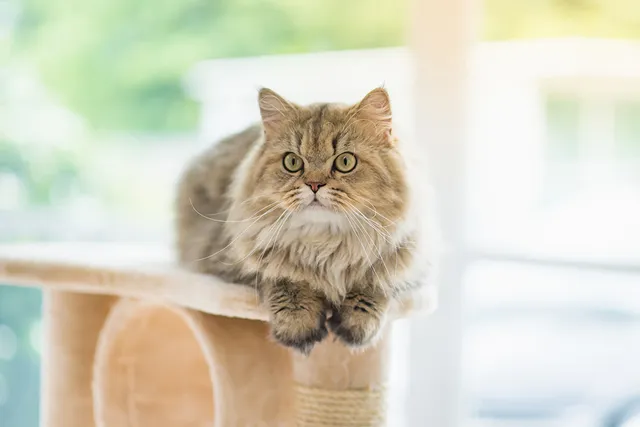
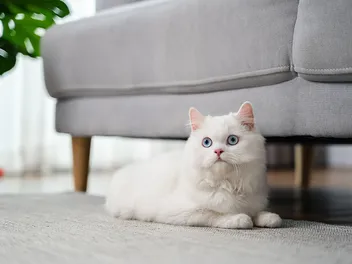
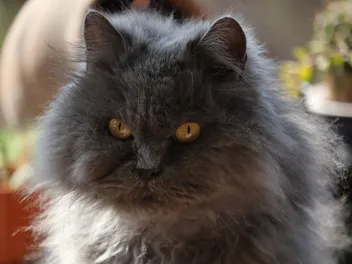
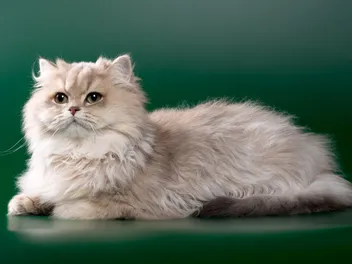
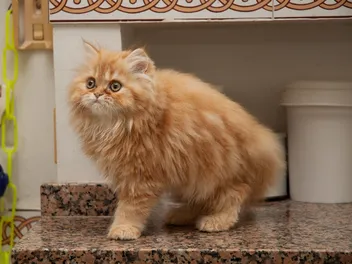
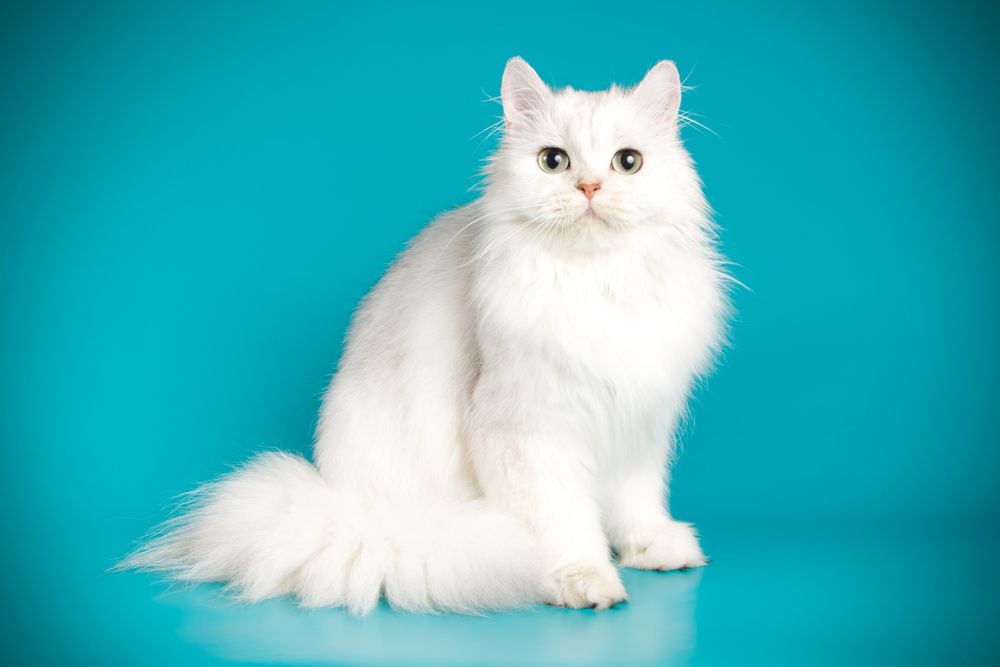
It doesn’t take an expert to recognize a Persian cat: Just look for the floofiest coat, and chances are that you’ll find a Persian! This breed has been in the top five of the most popular cat breeds for decades, which isn’t too much of a surprise when you consider their long history and lovely temperament.
So, if you've been thinking about adding a Persian to your family, read on!
Breed Overview
Height:
Weight:
Lifespan:
Colors:
Suitable for:
Temperament:
The Persian is among the oldest cat breeds; its likeness has been found in hieroglyphics as far back as 1684 B.C. They were imported from Asia and eventually found in Italy in the 1500s. They were not introduced to North America until the latter part of the 1800s.
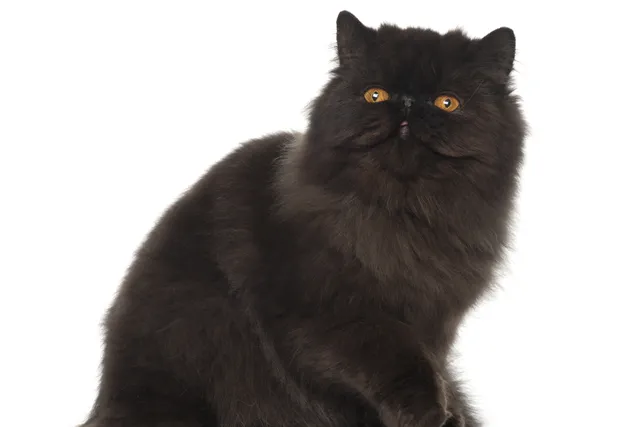
The popularity of the Persians quickly grew because of their luxurious long fur and sweet and loving natures. They come in many colors and patterns and have dense double coats.
Persian Cat Characteristics

Persian Kittens

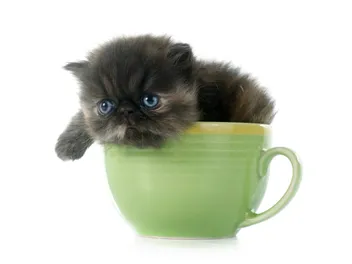
Persian kittens are little puffs of adorableness! While it should be quite easy to find a breeder of Persian cats because of their popularity, they are costly. They will be even more expensive if you plan on purchasing kittens for breeding or show purposes.
But the essential thing to do is ensure that you only deal with a reputable breeder and ask the right questions. You’ll also want to see the kittens in person so you can check how well they’ve been taken care of and ask about the medical history of the parents.
Your kitten should be about 12 to 14 weeks of age before they leave their mother and littermates. Kittens need this time to wean from their mothers (at around 8 to 10 weeks of age) and learn what they need to know on how to be a cat from their siblings and mothers.
You could also think about adopting a Persian cat or kitten from your local animal shelter or rescue group. Since Persians are common, you could luck out. These cats will be decidedly cheaper than buying from a breeder, and more importantly, you’ll be rescuing a cat from what was likely a difficult life.

Temperament & Intelligence of the Persian Cat 🧠
Persians are chill and gentle and are known to be perfect lap cats. They do best in quiet households because while they can be playful, they also enjoy just quietly hanging out with their favorite humans.
They are considered smart cats, but this is largely an individual quality. They are loving and gentle yet not particularly demanding. Persian cats have been popular since the 1500s for a reason!
Are These Cats Good for Families? 👪
Persians make wonderful family cats but would do best in homes with older children. Many small children can be noisy and rambunctious, which most Persian cats struggle to deal with.
If your children are relatively quiet, this is ideal; Persians do have playful, kittenish moments and can make great playmates.
Does This Breed Get Along With Other Pets? 🐶🐱
Since the Persian cat has a laidback personality, they generally get along well with other pets, though this depends on the other pets. Dogs that are cat savvy and gentle with felines will work well with Persians. But rambunctious, hyper dogs aren’t great fits.


Things to Know When Owning a Persian
Food & Diet Requirements 🐡
Persian cats aren’t that energetic, so they are prone to obesity, which means you should go easy on the treats. You also need to consider the Persian’s flat face, so getting a suitable bowl—something wide, flat, and elevated—will help.
You should provide your cat with a healthy, high-quality diet, which can be a combination of canned and dry food. Canned food is a great way to keep your cat at a healthy weight and give them extra water content. Finally, installing a cat water fountain is an excellent way to ensure that your pet gets enough water.
- Catster Recommends: Best Cat Foods for Persian Cats - Our Reviews & Top Picks
Exercise 🐈
Getting a Persian to exercise isn’t always easy, given how laidback they are. You can try using things like feather wands and fishing line toys to get them going. You should also provide them with things that they can climb, like cat shelves and cat trees (also for scratching).
Just bear in mind that with their flat faces, Persian cats don’t do well in hot weather or when they get overheated from too much playtime.

Training 🧶
Training Persian cats will require quite a bit of patience from you. Like many cats, they aren’t always that interested in training.
You won’t necessarily get them to perform any tricks, but if you start them young and use treats and praise, you should be able to get them used to grooming and maybe even staying off your counters.
Grooming ✂️
Grooming the Persian is not for the faint of heart. If you’re not prepared to brush your cat every day, you might want to look at other breeds because the Persian has a double coat of long, silky fur that must be brushed daily. They also need help with cleaning their hindquarters and tear stains. Many Persian owners opt for professional grooming, but either way, you should get your cat accustomed to grooming at a young age.
You should provide your cat with a cat scratcher and keep your cat’s nails trimmed—once every few weeks should suffice. Finally, you can clean your cat’s teeth using a toothbrush and toothpaste, though dental treats should help if your Persian is less than thrilled with having their teeth brushed.

Health and Conditions 🏥
Unfortunately, Persians are prone to a wide range of health conditions. It’s essential to be familiar with these issues so you know what to be on the lookout for.

Male vs. Female
Male Persians tend to be a little larger and heavier than the females, with males averaging 9 to 13 pounds and females 7 to 10 pounds.
There are also the obvious physical differences that lead to spaying females and neutering males. Having your cat fixed will help prevent male cats from spraying in the house and running away in pursuit of females. It also helps with territorial aggression.
Unspayed female cats go into heat, which can be uncomfortable for cat owners to watch and uncomfortable for the cat.
3 Little-Known Facts About the Persian Cat
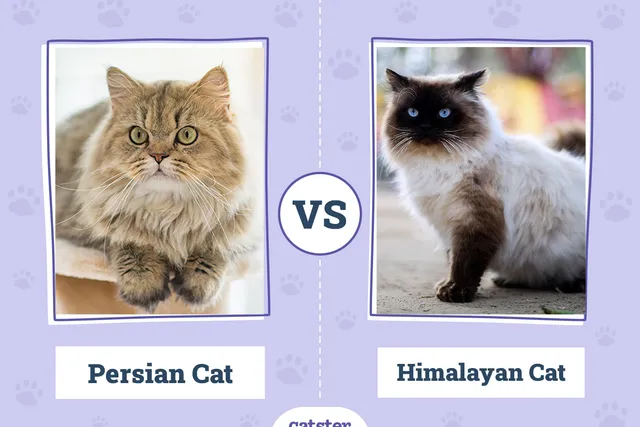
1. Himalayans are Persians.
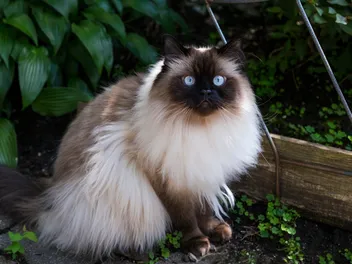
Himalayan cats originated from crossing Persians with Siamese cats. So, technically, Himalayans are Persians with pointed coloring.
2. Persian cats have been admired by historical figures.
In the 1800s, Queen Victoria, a renowned dog person, fell in love with Persians. She adopted two Blue Persian Cats and treated them like family, which overwhelmingly contributed to the popularity of Persian cats.
Florence Nightingale was also a lover and owner of a Persian cat. Throughout her lifetime, she owned 60 cats! Her favorite was Mr. Bismarck, a male Persian cat that she adopted after attempting to find a home for him.
3. Persian cats are one of the first pedigreed cats.
The first known Persian cat arrived in the United States sometime around 1875. The Cat Fanciers' Association was formed in the United States in 1906, and the Persian was one of the first breeds registered.

Final Thoughts
Persian cats are not right for every household. They need a quiet and calm environment and aren’t that active, preferring to spend their time sleeping and cuddling.
They are also indoor-only cats that will get along well with everyone in the home, including other cats and dogs, as long as they are low energy. You must be prepared for a great deal of grooming! Still, this act is a fantastic way to strengthen your bond with your cat.
If you’re looking for a loving, gentle cat that isn’t overbearing and you enjoy coat grooming, the Persian might be perfect for you!
See Also:
Featured Image Credit: Oleksandr Volchanskyi, Shutterstock
Expert cat care, straight to your inbox
News, insights, and useful advice, delivered to you.

No spam — unsubscribe anytime.
By signing up, you agree to our Terms & Conditions and Privacy & Cookies Policy.
How useful was this post?
Click a star to rate. You can leave written feedback afterwards. (We read all feedback.)

Kathryn was a librarian in a previous lifetime and is currently a pet writer. When she was a child, she hoped to work in ZOOs or with wildlife in some way, thanks to her all-consuming love for animals. Sadly, she's not strong in the sciences, so she fills her days with researching and writing about all kinds of animals and spends time playing with her adorable but very naughty tabby cat, Bella. Kathryn is hoping to add to her family in the near future – maybe another cat and a dog.