11 Orange Cat Breeds (With Info & Pictures)

Maybe it’s because they share a color with tigers or because we associate orange cats with friendly, outgoing felines. Either way, orange cats seem to be the most popular cats from New York to Hollywood. Just look at iconic cats like Garfield. But it turns out that orange cats are more social, friendly, and outgoing, at least according to National Geographic.1
Many of these are orange and white cat breeds but we still love them and all the fluffy orange cat breeds around. If you’re looking for a friendly orange feline to add to your family, there are 11 breeds that make perfect candidates.

The 11 Orange Cat Breeds
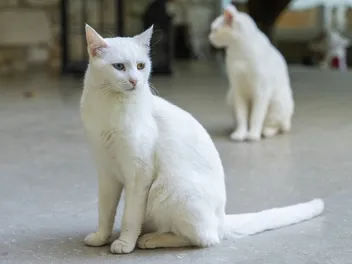
1. Turkish Angora Cat

Originating in Turkey centuries ago, the Turkish Angora is one of the oldest breeds of domesticated cats, with documentation of the breed reaching back to the 1600s. This feline developed naturally and is considered a national treasure in their country of origin. Though original Angoras were white with blue or green eyes, they now come in many colors, including an orange tabby.
For an Angora to be registered by the Cat Fanciers’ Association, its lineage must be traceable back to Turkey.
2. Scottish Fold

With folded-over ears and a soft, round face, the Scottish Fold is one of the most adorable cats ever. But they weren’t created by selective breeding. Instead, the cat developed spontaneously due to a random genetic mutation that occurred in some farm cats in Scotland. Those mutated cats were bred with British and American Shorthairs to establish the breed.
All Scottish Folds can trace their lineage back to the very first cat (Susie) to have the mutation back on that Scottish farm.
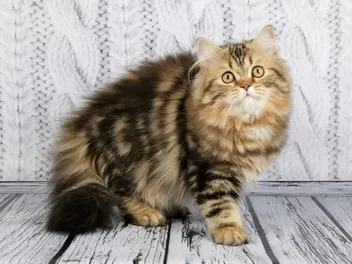
3. Persian Cat

This orange cat breed has been popular with elites and aristocrats for many centuries. Traditionally, they have a round face with a normal-length nose and a sweet expression. But with increased breeding, more flat-faced Persians have been produced and are more susceptible to various health concerns.
Though white Persians are perhaps the most iconic, orange Persians are some of the most distinct-looking tabby cats.
4. Munchkin

Also known as the sausage cat, this breed is easily recognizable by their extremely short legs. Munchkins are considered to be the first dwarf cat breed. Unfortunately, the cat is susceptible to many health concerns, and some cat associations across the globe have refused to accept the breed, including the Governing Council of the Cat Fancy, or GCCF.
5. Maine Coon Cat

As the largest of all domesticated breeds, the Maine Coon is one of the oldest North American felines. This breed even holds the world’s longest cat record in the Guinness Book of World Records. Most of these cats are orange or brown tabby, though other color variations exist. Maine Coons have earned the nickname of “gentle giants.”
This is partly due to their loving and affectionate nature, and because some males reach sizes of more than three feet long while weighing more than 35 pounds.
6. Exotic Shorthair Cat

The Exotic Shorthair is essentially a shorthaired version of the Persian cat, so it makes sense that they would also come with orange coats. Interestingly, one in four Exotic Shorthairs has long hair since many carry a recessive copy of the longhair gene. These longhair Exotics aren’t considered Persians by the Cat Fanciers’ Association, though they are considered Persians by The International Cat Association.
The American Cat Fanciers Association classifies the longhaired Exotic as a separate breed. Garfield, the cartoon cat who loves lasagna, is believed to be an Exotic Shorthair.
7. Devon Rex

With giant ears and a tiny, elf-like face mostly taken up by two large eyes, the Devon Rex is a unique-looking feline. They’re a relaxed breed that’s very social and playful. Many say they act more like dogs than cats. But this orange cat breed’s odd appearance isn't the result of human influence.
The cats developed naturally in Devonshire, England, when a stray cat gave birth to a very odd-looking kitten. That kitten went on to become the father of the entire breed.
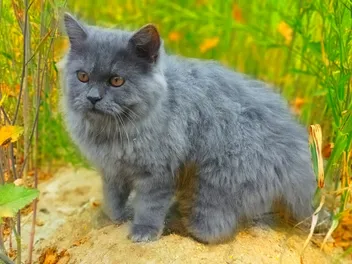
8. British Shorthair Cat

British Shorthairs are some of the cutest orange cats. They can even have orange or Sunfire eyes, completing the orange hue from head to tail, though the orange eyes look even cooler against black fur. However, the British Shorthair’s long, luxurious coat requires extra upkeep.
You’ll need to groom these cats daily to keep them looking their best. But don’t expect your British Shorthair to do much more than look cute. They are lazy cats that are largely inactive. However, they’re very loving and affectionate, which can make up for their laziness.
9. Bengal Cat

Bengal cats have a distinct appearance that’s easy to spot because of their spotted fur, which resembles a leopard. This orange cat breed was made by breeding several hybrids, including the Asian leopard cat and the Egyptian Mau. They are large cats that usually weigh more than 12 pounds, and they're known to like water.
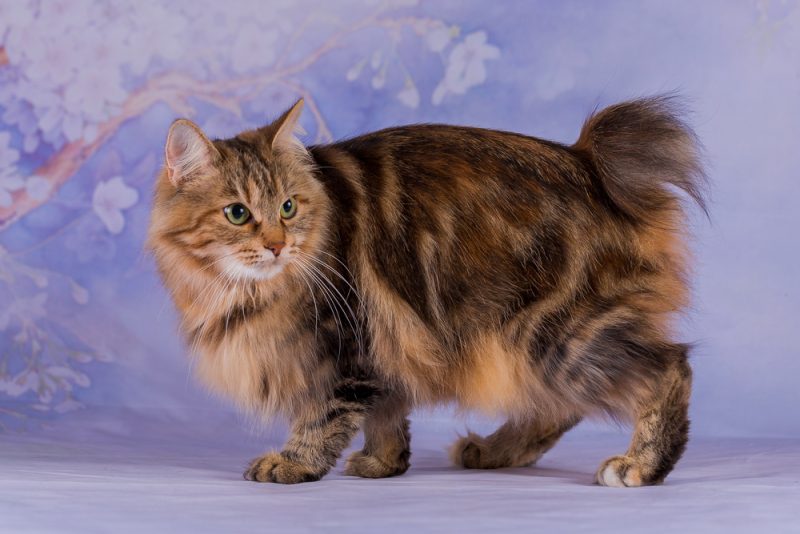
10. American Bobtail Cat

The American Bobtail is highly intelligent, with an appearance similar to a wildcat, and the breed was created by natural selection. Their bobbed tails result from a genetic mutation and help make this feline instantly recognizable. They love to play and can spend hours playing the same game without getting bored.
American Bobtails are a longhaired cat breed, though occasionally, some cats have short coats.
11. Abyssinian

Abyssinians are shorthaired cats requiring considerably less maintenance than most other orange cat breeds. That said, they’re highly active cats that need a lot of attention and socialization. Their origins are somewhat disputed, with experts debating whether the breed originates in Egypt or Ethiopia.
These cats display a ticked tabby coat with individual hairs exhibiting different colors.
Top 5 Facts About Orange Cats
1. There Are No Solid-Colored Orange Cats
Interestingly, all orange-colored cats have markings of some kind. None of them is solid-colored, and many are orange and white cat breeds. As it turns out, all orange cats wear a pattern that falls into one of four categories. Mackerel stripes are similar to tiger stripes. Ticked stripes involve alternating bands of light and dark stripes.
Classic stripes are swirled, and there’s also a spotted variety.

2. Orange Fur Equals Red Hair
Surprisingly, the same pigment that's responsible for red hair in humans produces orange cats, and it’s called pheomelanin. It can create colors that range from cream to red, so it’s a shame that there aren’t more orange-headed humans walking around!
3. Most Orange Cats Are Males
The gene responsible for an orange coat on a cat is in the X chromosome. For female cats to grow an orange coat, they’d need to have that gene occur twice, while males only need a single copy of the gene for an orange hue to take place. Because of this, only one in five orange cats is a female.
4. Orange Cats Are Marked
All orange kittens have an M mark on their foreheads. It’s a unique marking that led to many interesting stories over the years. For some people, the M stands for Mary, as in the Virgin Mary. Others believe it’s for Mohammed.

5. Most Celebrity Cats are Orange
There are famous orange cats, some real and some imagined. Think of Garfield, Milo, Heathcliffe, and even the adorable Puss in Boots from author Charles Perrault and the Shrek franchise.

Conclusion
Although cats cannot have solid orange coats, they have gorgeous orange-patterned fur, making them favorites of movie studios, authors, and everyday pet parents. From the fluffy Turkish Angora to the elflike Devon Rex, the orange coat is common in several breeds.
The temperament of orange cats varies depending on their breed, but generally, they are friendly and playful and make ideal pets for loving pet parents.
See also:
Featured Image Credit: Tovsla, Shutterstock
Expert cat care, straight to your inbox
News, insights, and useful advice, delivered to you.

No spam — unsubscribe anytime.
By signing up, you agree to our Terms & Conditions and Privacy & Cookies Policy.
How useful was this post?
Click a star to rate. You can leave written feedback afterwards. (We read all feedback.)

Christian started writing for a local newspaper as a teenager, and he's been involved in the publishing industry for most of his adult life. Combining his love of writing with a passion for animals, he is currently the Director of Editorial at Pangolia and the Editor-in-Chief at Catster.
Christian lives in the Philippines with his wife, son, and four rescue cats: Trixie, Chloe, Sparky, and Chopper.