Get

In Your Inbox

Catster is reader-supported. When you buy via links on our site, we may earn an affiliate commission at no cost to you. Learn more.

Can Orange Cats Be Female? Genetics & Rarity Explained

Share

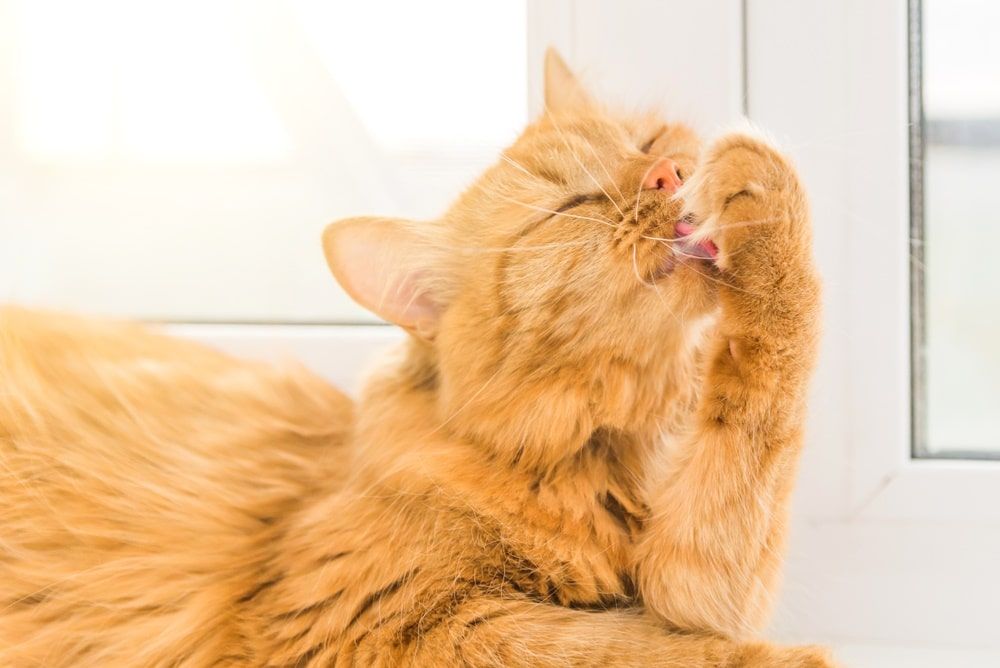
orange cat licking its paw

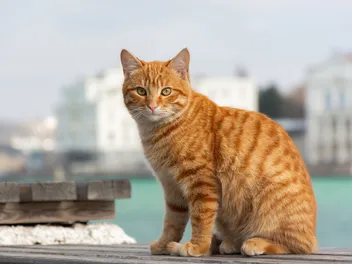
You might have heard that all orange cats are male, leading you to believe that if you spot an orange cat, it must be male. This raises the question of whether or not orange cats can be female. The idea that all orange cats are male is a myth, but like all good myths, it is rooted in a little bit of fact. Orange cats are overwhelmingly male, but not entirely. Orange cats can be female, but they are far less common; it all comes down to genetics.

Here is everything you need to know about orange female cats, including a primer on the genetics that explains why so many male cats are orange.

divider cat paws oct 2024

Can Orange Cats Be Female?

Yes. Orange cats can be female. But the reason that there is a misconception that all orange cats are male is because the vast majority of them are. Roughly 80% of orange cats are male. That means that for every five ginger cats, only one will be female, but those numbers can be slightly misleading.

Since fur color is tightly linked to the sex of the cat, the prevalence of the gene in certain cat colonies can lead to far more or fewer orange female cats than expected. For example, if there is a cat colony with a large number of orange cats, the likelihood of running into a female orange cat is much higher than if you run into a random stray on the street.

You could go your whole life without running into an orange cat that is female. Or you can run into a number of orange cats that are female. The local numbers will be dependent on the local gene pool. But the reason that there are so many orange cats that are male comes down to basic genetics.

cute orange ginger cat sleeping in cat bed
Image Credit: Alena Ozerova, Shutterstock

divider cat paws oct 2024

The Science Behind Orange Cat Genetics

In order to understand why most orange cats are male, we must first cover some basic genetic information. This gets a bit tricky, but stay with us, because it’s also really interesting!

Every characteristic we see on the outside is determined by our genotype, and the genotype comes from the chromosomes received from the mother or father. The phenotype is the external expression (physical appearance) of the genotype. Check out below for a bit more of an explanation into how this works.

You may be familiar with the X and Y chromosomes – these are the ones that determine sex. Each individual receives one of these chromosomes from their parents; the X chromosome from the mother, and either an X or a Y from the father.

XX = female

XY = male

The Y chromosome can only come from the male, so each embryo has a 50:50 chance of being male or female.

Feline coat color comes from two base color genes: yellow and black. Ordinarily, coat color is determined by the combination of these genes from both parents, with different genes dictating the pattern and dilution of the color. The one exception to this is the gene for the orange coat color in cats.

This is a particularly unusual situation for several reasons:
  • the gene for the orange coat color is unique to cats
  • the gene for orange pigmentation is only on the female (X) chromosome –  it is a sex-linked gene

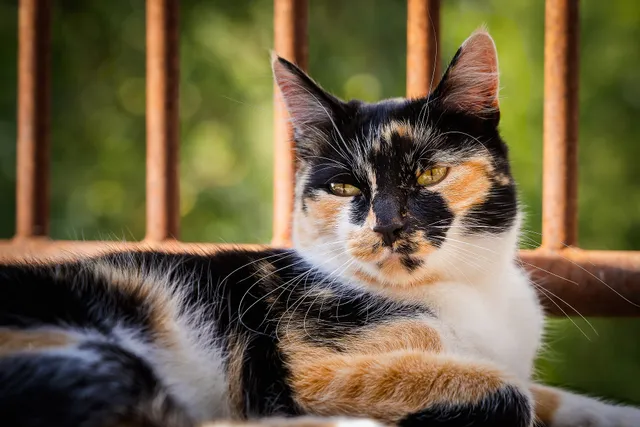
Because of this, male cats will have a 50:50 chance of being either black or orange, but they may be solid, tabby, or white and ginger variations. In males, the orange gene blocks the expression of the black gene, which is why you never see calico or tortoiseshell male cats; if there is orange, there will be no black (with the rare exception of males with an extra X chromosome). Females, however, can be either ginger, black or a combination of the two (calico, tortoiseshell). This is a very unusual situation where the two genes (black and orange) are both expressed. Here’s how it works:

Ordinarily, we would expect the XX to produce an orange female, but in this case, the rules are completely broken, and the two genes merge to create a mixture of black and orange.

Orange Cat Genetics Infographic
You are free to use this image but we do require you to link back to Catster.com for credit

divider cat paws oct 2024

How Rare Are Female Orange Cats?

Female cats that are orange in color are very rare. On average, only 1 in 5 orange cats will be female. In local populations, these numbers can be far higher or lower depending on the gene pool. Some areas will have a very low prevalence of the orange gene, while other areas might have a higher prevalence of the orange gene. Overall, if you spot an orange cat in the wild or at the shelter, statistically, it is more likely to be male. Some statistics skew even further, suggesting that 82% of orange cats are male, and just 18% female.

Are Male Orange Cats Infertile?

No. Some people believe that orange cats are infertile due to confusion about feline genetics. This idea comes from the fact that in order for a male cat to have the calico or tortoiseshell phenotype, they must have an extra X chromosome, and this is what renders them infertile.

orange-cat-using-the-treadmill
Image Credit: Vershinin89_Shutterstock

Are Orange Cats More Unhealthy Than Other Colored Cats?

No. The genes that produce the orange coat color in cats only affect that particular trait. They are not linked with any particular genetic health conditions. However, if cats are selectively bred for coat color alone, it may lead to other, potentially problematic traits, becoming more prevalent, which is why it is important to consider the whole picture when breeding for a particular characteristic.

divider cat paws oct 2024

A Bit More Detail About Predicting Phenotypes

  • For example: Blue eyes vs. Brown eyes

Each chromosome is made up of a pair of alleles, and it is the pairing of these alleles that will determine what genotype and phenotype is created. If the dominant allele is present, the phenotype will be the dominant color, so for the recessive trait to be seen, the genotype must be made up of only the recessive alleles.

Brown eyes are the dominant trait = B Blue eyes are the recessive trait = b

Predicting Phenotypes Color of the Eyes Infographic
You are free to use this image but we do require you to link back to Catster.com for credit

A very clever Austrian monk by the name of Gregor Mendel worked out a way to look at these alleles back in 1865 whilst studying peas. Using these “punnett squares”, we can predict the genotype and phenotype of offspring based on the genotype of the parents.

Determining the Color of the Eyes

You are free to use this image but we do require you to link back to Catster.com for credit

So you can see that parents that both have brown eyes can still have offspring with blue eyes, but if both parents have blue eyes, they will only have offspring with blue eyes.

These probabilities apply with each individual offspring, so it doesn’t mean that if there are four children with Bb parents, one will definitely have blue eyes, for example. It means that each child has a 25% chance of having blue eyes.

This type of genetic probability prediction can be applied to virtually any characteristic, from hair color, blood type, even genetic diseases.

divider cat paws oct 2024

Conclusion

Orange cats can be female, but you are more likely to see a ginger male. Over 80% of all orange cats are male, but that still leaves roughly 1 in 5 orange cats that are female. These numbers can be influenced by local population genetics and individual colonies. The expression of the orange coat color is based on a combination of genes that are unique to cats, and a perfect example of how cats don’t like to follow the rules, even when it comes to genetics!


Image Credit: Irzhanova Asel, Shutterstock

Want content like this delivered to you?

Sign Up For Our Newsletter

News, insights, expert advice, and everything cat

* By submitting, you agree to our Terms & Conditions and Privacy & Cookies Policy.


How useful was this post?

Click on a star to rate (you can leave written feedback after clicking submit)

Help us improve Catster for pet parents!

Your feedback really matters.

What did you like about this post? Also how can we improve it?

Join the conversation

11 Responses

  1. My two daughters and I each have a cat from the same litter. One daughter picked a black female. The other picked a pale orange female. I had no clue they were rare until now.
    And my cat, Ronald, is very orange and is probably the most curious cat I’ve ever met. I never understood the saying about a cat’s curiosity until I got Ronald lol.
    He’s like a toddler. He stands on his hind legs and investigates everything. I have some cute pictures of him “helping” me cook. Or him sitting at the table investigating what we were eating.
    He even stands up and looks into drawers or cupboards. But that’s probably because he loves boxes so much.

    1. It is so delightful that your family has a whole trio of siblings from the same litter, and your daughters truly hit the genetic lottery because pale orange females are incredibly rare! As for your handsome boy, Ronald, he sounds like an absolute comedian and a total joy to have around.

  2. I knew a woman who had an orange and white female cat. Ginger had quite the personality too. Very intelligent, cute, and a very loving soul. Lived to be quite old as she was also very healthy up until the end.

    1. Thanks for sharing her story, Lori. It's always nice to hear about cats living long, healthy, and loved lives.

  3. Hi there!
    I was searching about the rarity of femaile ginger cats., and… this article came up with a very interesting explanation! Amazing how i didn't know anything about this rarity and…I do have an entire family of 5 female ginger cats!! How can this be?? I rescued 2 ginger twin girls and one of them got pregnant without anyone knowing it and…. 3 ginger girls came out of her!! This isthe most clever family ive ever met, really….

    I stayed with the 3 kids and now this is my feline family that is always with me…everywhere!
    They swim with me, they walk with me, they can go everywhere…with no leash!

    Ans many many people are like"i cant believe they are all girls…are you sure?? Can not be…." – i have heard this so many times and I see people's faces when they think they are males and when I come up saying "sorry, she's a girl.." and when people see, Oh there's another orange…also a girl???

    Since I arrived my homecountry is Europe, it has been so funny…
    By the way, just tell you that I rescued my 2 ginger girls in a very small local island in the Maldives, where there are only around 60 people living.

    So, this is totally rare!

    The mom of the kittens has blue eyes and her sister has Brown eyes- 1 kitten has blue eyes, 2 kittens have Brown eyes.

    Wow…

    And…to make it harder and even more rare, they are all exactly the same size and same pattern…only I can distinguish the kids and the mom….ah ah!

    MEOW!

    1. Hi Ana, thanks for sharing your story, It's so cool you have been blessed with such a special female ginger cat collection. We would love to see them in our photo contest, you can submit them here:
      https://www.catster.com/submit-your-cat/

      1. Wow! Catster Editorial Team, that is a fantastic suggestion. I hope she took your advice and submitted it! What a wonderful thing you are doing! I wish I had the linguistic skills that you seem to have.

        1. What a joy, Carol James, thanks for sharing their story and if you wish to enroll them in our Cat of the Week contest, you can submit their photo in this link: https://www.catster.com/submit-your-cat/ 🙂

    2. You have been so blessed with this wonderful and rare family! I would absolutely love to see pictures of them please.

Leave a Reply

You’re very welcome to leave a comment or question. Please know that all comments must meet our community guidelines, and your email address will NOT be published. Let’s have a positive and constructive conversation.


Catster's Digital Magazine is Back!

Vet-approved health & behavior advice

Real cat stories & community features

Ask Dr. Paola – My Cat Loves Eating Grass, But It Makes Her Vomit! (June 29, 2026)

Welcome to our “Ask Dr. Paola” series, where every Monday we bring expert advice straight from Dr. Paola Cuevas (MVZ) to help our...

Learning to Speak Cat with Anthony Smith

Many cat lovers know me through Learn to Speak Cat and Cattitude – Doggonit, cartoons that explore the often mysterious, occasionally mischievous, and...

Weird Cat Behaviors That Actually Make Perfect Sense

We have been sharing our lives with cats for thousands of years, yet we still find ourselves genuinely stumped by what they get...

The Dream of Talking to Cats Just Got Closer to Becoming a Reality

If you’ve ever wished your cat could simply tell you what they wanted, you’re not alone. From the meow that wakes you before...

More related

7 Tips for Helping Your Kids Start a Pet-Sitting Business

When the kids grow eager to earn a little extra cash, it’s time for parents to foster their entrepreneurial spirit. Any parent can...

Do Cats & Rabbits Get Along? Our Vet Explains the Risks & Options

If you’re an animal lover, then you may always be seeking out new critters you can bring into your home. While cats are...

Does Vinegar Keep Cats Away? Vet-Reviewed Facts & FAQ

Cats are wonderful creatures and one of the most popular pets in the world. Unfortunately, they can be rather destructive, causing damage to...

How to Move a Cat Litter Box: 5 Vet Approved Tips to Prevent Accidents

Cats are very particular about their litter boxes, from the location to the type of box and even the type of litter you...

Keep reading

My Cat Takes Food Out of Their Bowl to Eat: 5 Vet-Reviewed Reasons

If you’ve ever had a cat for a pet, you may have seen them pawing the food out of their bowl, putting it on the floor, and then eating it. Sometimes a cat will even take the food and run...

cat by a bowl

Purina Cat Chow Naturals Food Review of 2026: Recalls, Pros & Cons

Review Summary Purina Cat Chow Naturals Dry Cat Food is a premium cat food from a company well known for making high-quality food across all of their lines. We feel that this is a great alternative to your cat’s regular...

Purina Cat Chow Cat Food Review

Why Is My Cat So Naughty? Vet-Approved Feline Misbehavior Explanation

Cats may engage in tons of behaviors that seem “naughty” to us without actually being naughty. Often, this may be the result of a cat’s unique personality, but it can also just be a normal cat behavior. For instance, many...

A cat sitting in a pile of tissues.

Is It True That All Cats Have Eyebrow Whiskers? Vet-Verified Facts & FAQ

One of the most distinct facial features of a cat would be the whiskers. While the most prominent whiskers on a cat are above the upper lip, they have them in several locations, including the eyebrows. Different cats have varying...

Anatolian cat face close up

Can Cats Eat Cranberry Sauce? Vet Reviewed Health Risks & Alternatives

Cranberry sauce is a tasty condiment or side dish that goes well with many kinds of meals. However, if you’re a cat owner, you’ll want to think twice about feeding this sweet dish to your pet. While cranberry sauce isn’t...

Can Cats Eat Cranberry Sauce

Can Cats Eat Scorpions? Vet Approved Facts & FAQ

Cats naturally enjoy hunting, and small creatures are their favorite targets. Most insects do not pose threats to cats, but scorpions (and other poisonous arachnids), armed with a venomous stinger, are more dangerous for cats to hunt. Cats can kill...

Can Cats Eat Scorpions

Is Cat Ear Tipping Cruel? Vet Reviewed Facts & FAQ

Cat ear tipping is a beneficial procedure performed on feral cats living in a community colony. While it may look strange, it is an easy way to identify cats that are neutered in the community by sight alone. This procedure...

an ear tipped cat outdoors

Do Feral Cats Play? Vet-Reviewed Cat Behavior

Feral cats are outdoor cats that have had minimal or no contact with humans and can survive independently or with minimal human intervention. They are typically wary or fearful of people, often scavenging or hunting for food, living in colonies,...

two feral cats

Love Cats? So Do We! Join the Catster Community

Stay informed with expert pet care insights delivered straight to your inbox! Discover professional guidance on animal behavior, feeding tips, trusted product picks, and much more.


Sign up for the Catster Email Newsletter

Stay informed with expert pet care insights delivered straight to your inbox! Discover professional guidance on animal behavior, feeding tips, trusted product picks, and much more.